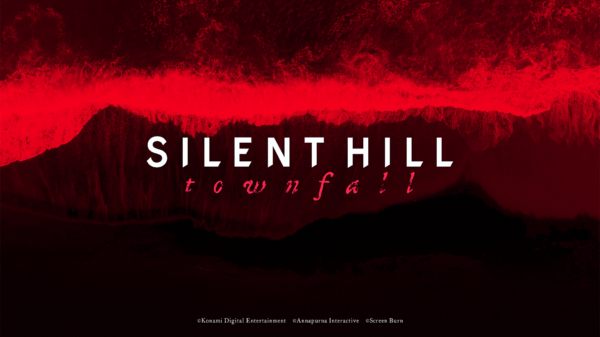
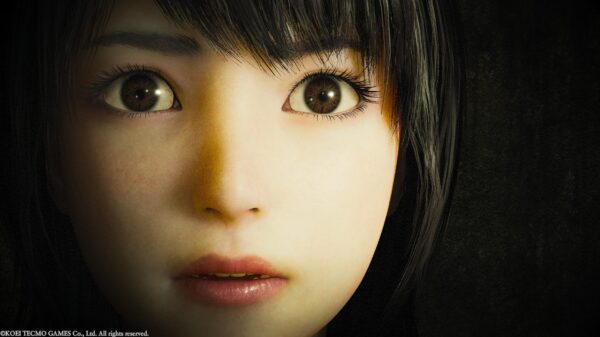




















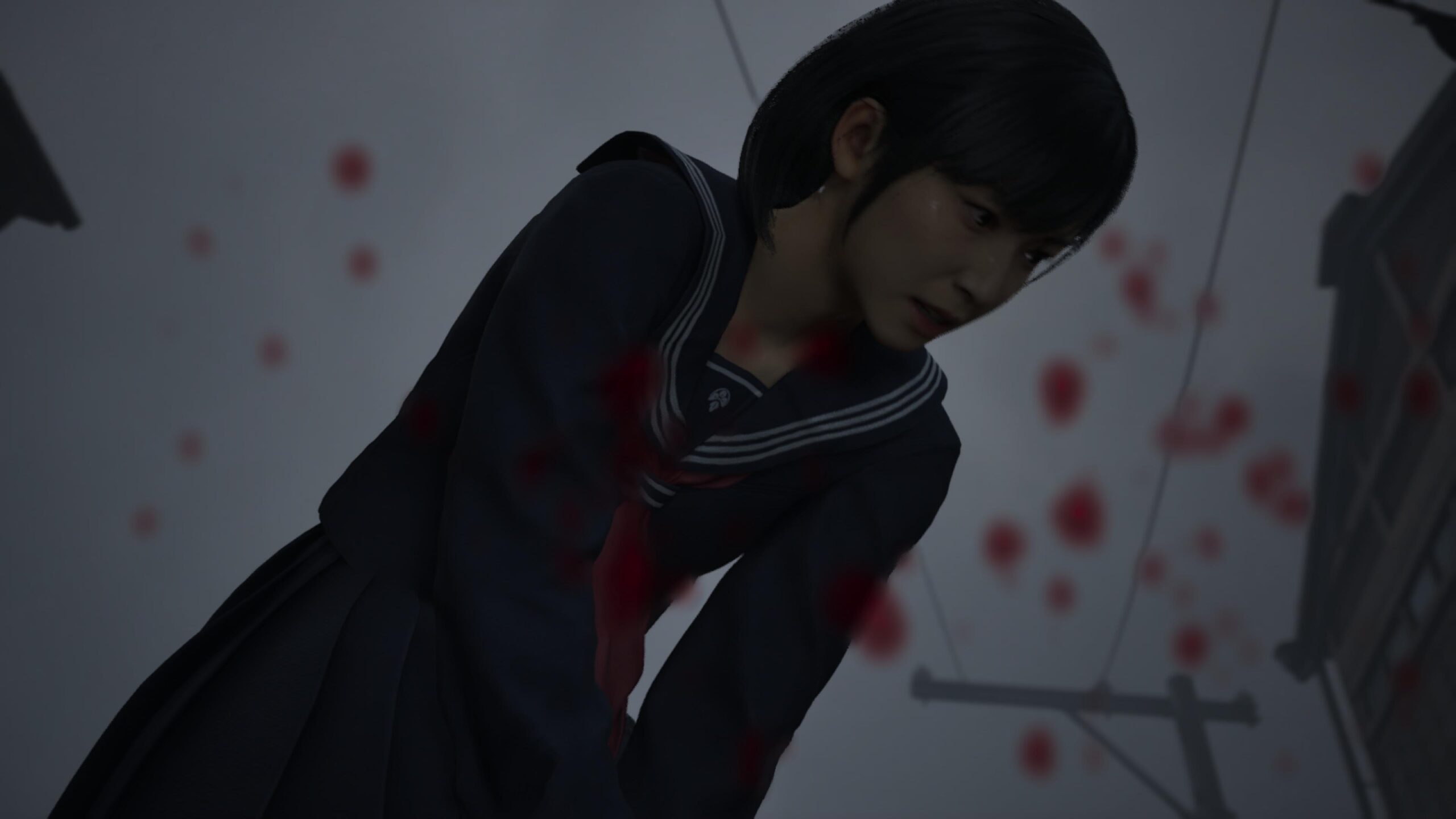

Silent Hill f takes the franchise and its evil fog to 1960s Japan, where Shimizu Hinako is stuck in a small town. While Ebisugaoka isn’t the town of Silent Hill, its thick fog created by a mysterious monster has transformed its inhabitants, forcing Hinako to fight for survival. While Hinako’s story provides plenty of intrigue and horror as the pieces are slowly revealed to you, the combat system feels lackluster.
Silent Hill f
Developer: NeoBards Entertainment
Price: $70
Platforms: Xbox Series X, PlayStation 5 (reviewed), PC
The publisher provided a PS5 code for this review
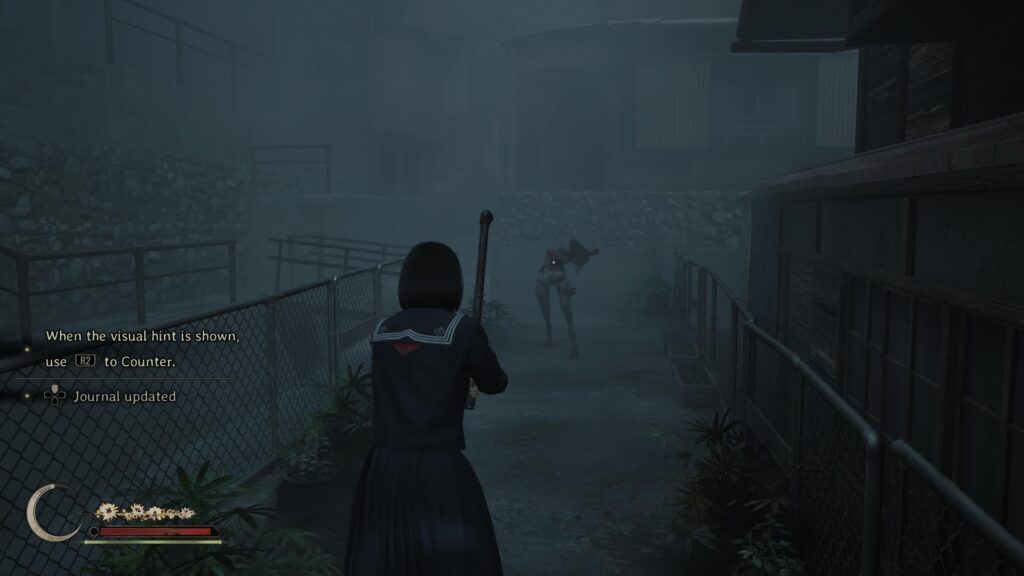
In the opening hour of Silent Hill f, the realities of 1960s Japan for women, realities that aren’t too dissimilar from other countries during that time, are bearing down on Hinako. Her older sister, too perfect for Hinako to compete with, leaves her alone with her parents. Hinako’s father is an abusive drunk, and her mother is unable to do much but try to steer her father’s anger in another direction.
These issues stem from Hinako’s childhood, where she became close friends with a local boy, Shu, and she played games for boys, like Space Invaders. Shu still feels close to his best friend, whom he calls a partner, in a way that seems dismissive of Hinako’s feminine side, while also being particularly pointed in his modern language. Like other Silent Hill games, you’ll never know for sure how much of this is the psychological torture of the fog or the real feelings these characters have.
Another example of Hinako’s role as a woman creating strife is with her friends, two of whom appear to have a crush on Shu, leading them to dislike Hinako for spending so much time with him. This builds into them attempting to leave her behind while they flee for safety, and several attempts to convince Shu to abandon Hinako completely. This half of the narrative blends well with the less direct storytelling of the Spirit Shrine, a mysterious realm that Hinako finds herself transported to on occasion. There, a mysterious figure in a fox mask offers Hinako a better life if she can go through a transformation.
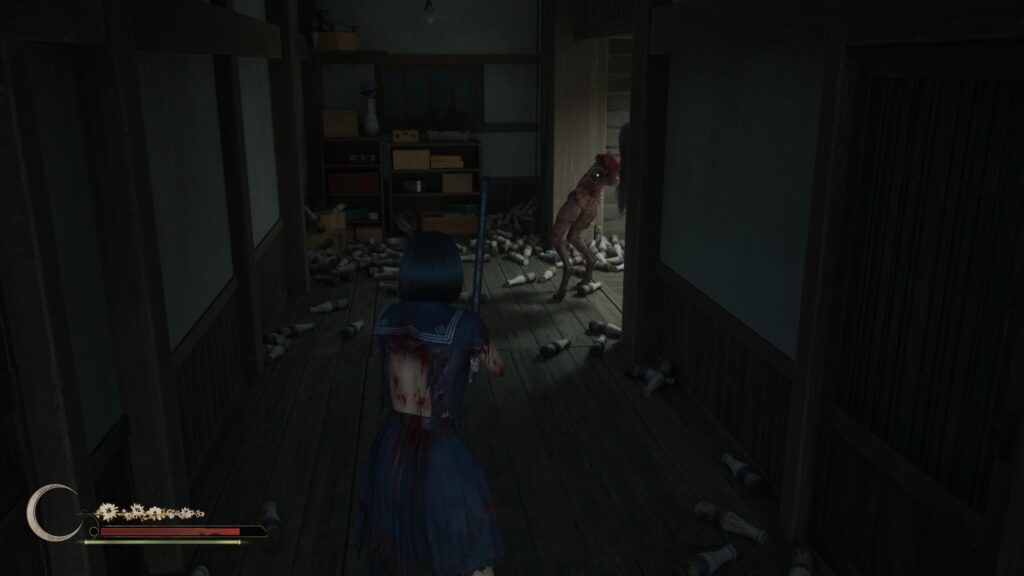
The narrative setup and payoff come together quite nicely across the 10 hours it took to complete the game. There are several different endings, with a menu appearing after completing the game providing information on how to achieve the other endings, which is a nice touch. However, it did reveal how unavoidable the first ending is.
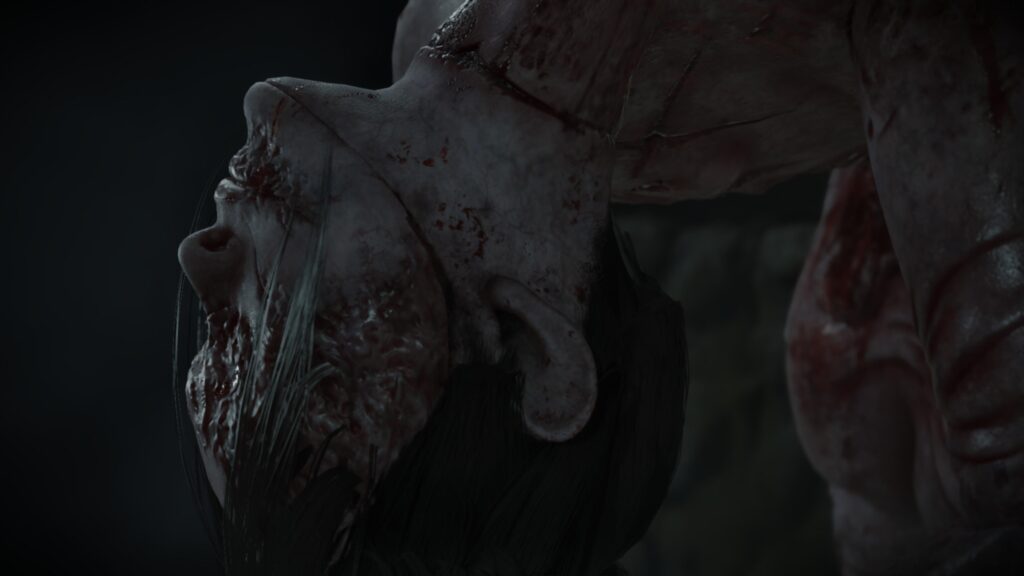
The atmosphere of Silent Hill f is sufficiently spooky, using fleshy monsters, red flowers, and thick fog to create a strong horror setting. Instances like using realistic-looking scarecrows that look like students from Hinako’s class, or the large hips and strange twisting of other enemies, all feel directly pointed in Hinako’s story, while still feeling distinctly Silent Hill. The music can swing wildly depending on where you are and what’s happening. Still, my favorite musical stings were combat music that sounds like eerie classic horror songs coming out of an old radio, creating a sound that could be believably heard during this horrifying experience.
The actual gameplay of Silent Hill f is its weakest area, with some truly obtuse puzzles and serviceable combat. The game offers three puzzle options: Story, Hard (which is considered the default), and Lost in the Fog. On hard, a few of the puzzles, like a lockbox found in middle school, left me frustrated and confused for far longer than I would have liked. Finding the solution didn’t ease this feeling, as the logic of the puzzle still didn’t click, even after solving. Most of the puzzles aren’t this brutal, but only a few actually felt satisfying to solve. There aren’t too many puzzles overall, so these frustrations didn’t overwhelm my time.
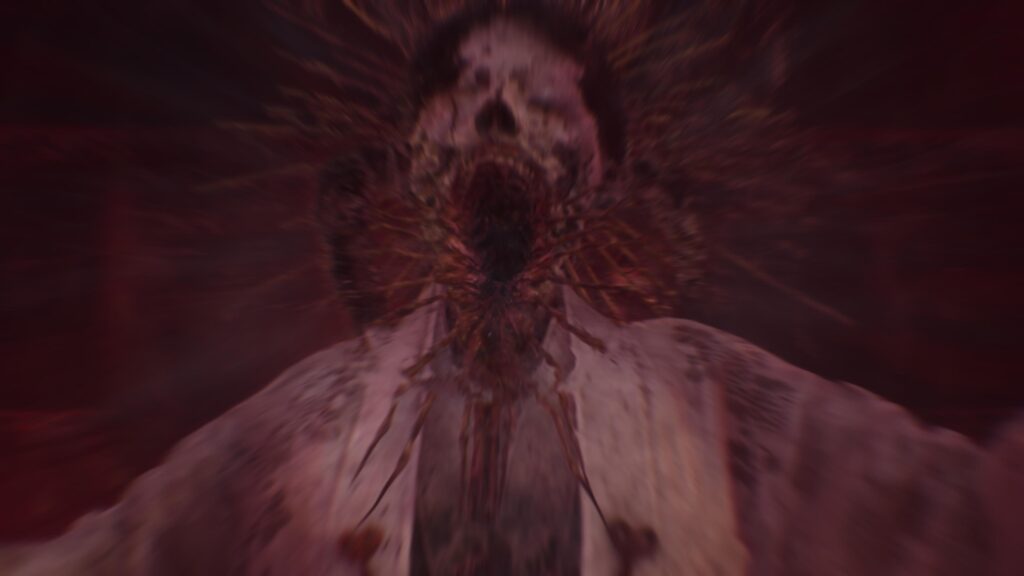
The combat isn’t bad, and never drops below boring, but it lacks variety to keep it satisfying. Silent Hill f takes on the challenge of making a survival horror game with inventory management that doesn’t have any guns in it, which creates a loop that is more intriguing on paper than in reality. You can hold three weapons at a time, all of which have limited durability. Outside of a scarecrow puzzle where wrong answers spawn enemies, I never entirely ran out of weapons, but having to manage weapons, repair kits, and finding new weapons became tedious as the game progressed.
There are several different types of weapons, including lead pipes, kitchen knives, baseball bats, sledgehammers, and others. While the heavy weapons differ from the medium and small ones, the flow of combat remains largely unchanged. You can do light attacks and heavy attacks, along with a dodge and a counter. The counter doesn’t function like a traditional parry; instead, it only works when an enemy is about to begin a heavy attack, resulting in a red flash, and you have to attack.
While that sounds like a parry with different timing, the window is incredibly short, and parrying is done by using a light attack. Since enemies don’t always flash red before attacking, this creates a loop where aggressive tactics are rewarded, which is fun. The downside is that many of the weaker enemies can easily be forced into a stun loop, where you repeatedly hit them with a heavy attack until they go down. This tactic often works since you rarely face more than a couple of enemies at once.
The survival horror economy, on the other hand, is quite enjoyable to try to maximize. You have a limited number of inventory slots. Still, since you don’t have to worry about bullets, and weapons don’t count against your inventory, you are instead presented with an overabundance of healing items and items that can be enshrined at Shrines, which serve as save points. Some items are only for exchanging for Faith, a currency used for upgrades and rolling for Omamori, which serve as equipment, but many of the best healing items can also be traded for large quantities of Faith.
Since having a full inventory means leaving precious items behind, you are highly incentivized to trade off as much of your inventory as possible, even if it means making do with minimal healing supplies. On the normal difficulty, this system doesn’t put too much pressure on you, as avoiding damage is a little too easy, but on a harder difficulty, this could create some compelling trade-offs when it comes to precious healing items.
 The Final Word
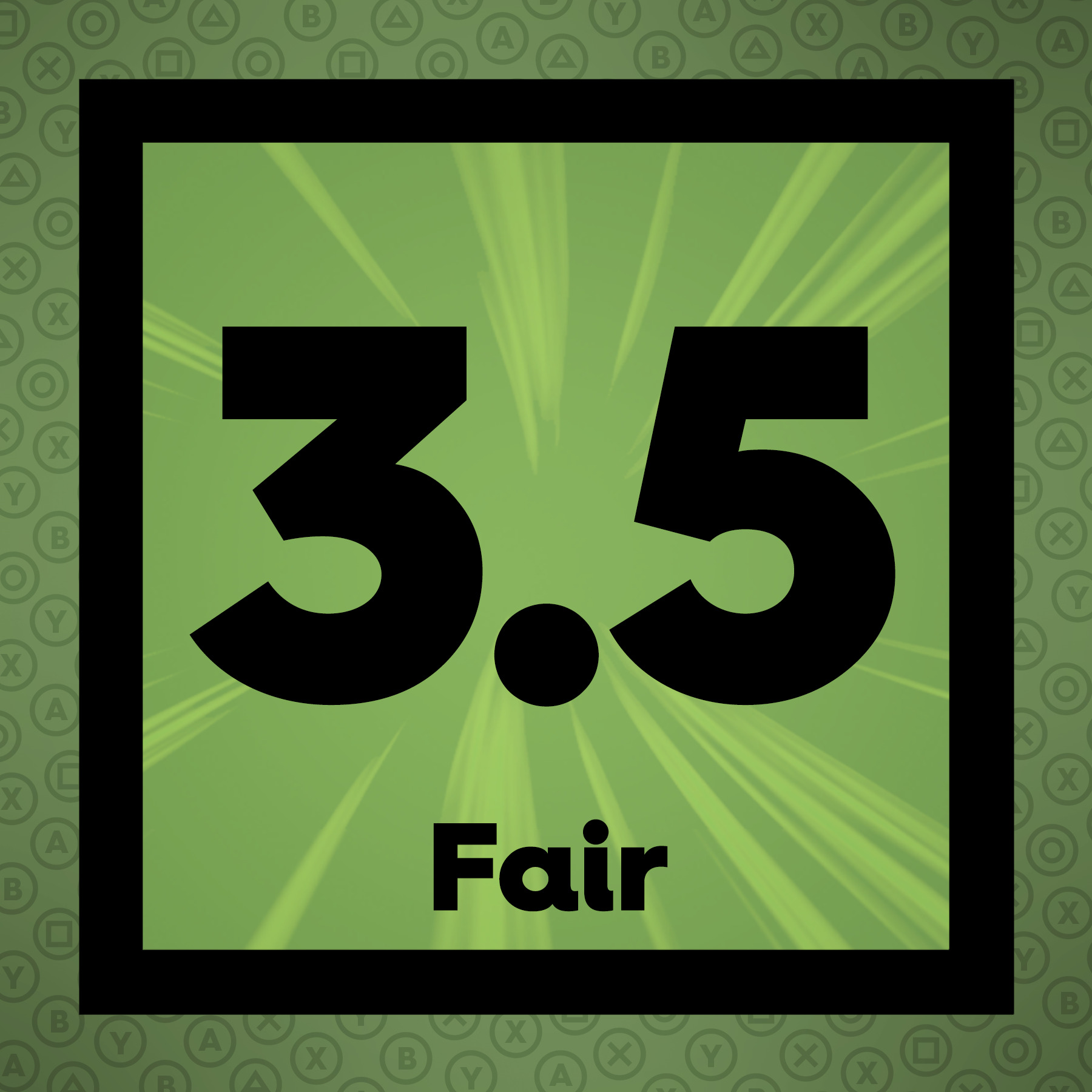
Silent Hill f delivers a compelling and creepy horror experience, with unique enemies and environments that feel smartly focused on telling Hinako’s story. The focus on societal expectations of women and the competition forced upon them, even between friends and sisters, gives the horror elements a more pointed focus. It delivers on themes throughout, and while the combat is only just fine, some of the more compelling ideas, like the economy of Silent Hill f create a compelling and spooky experience. Obtuse puzzles and a lack of variety in combat hold Silent Hill f back from reaching the peak of the survival horror genre.
MonsterVine Rating: 3.5 out of 5 – Fair