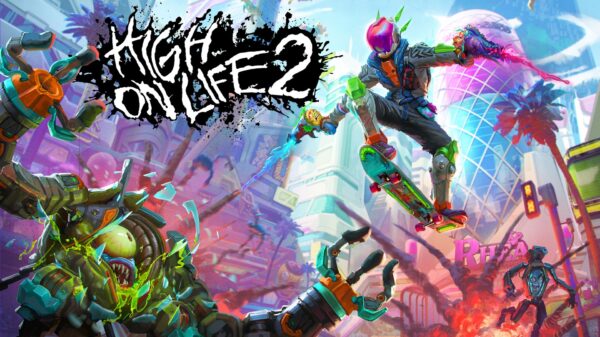



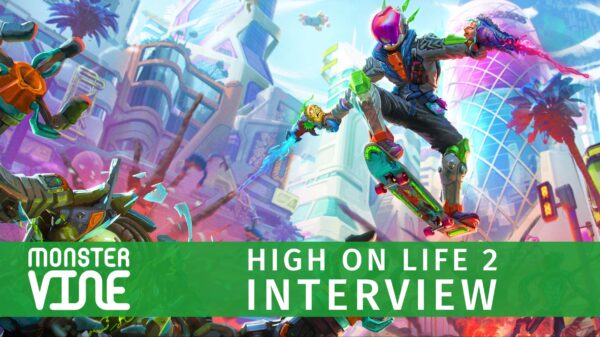

High on Life 2 builds on the breakout success of the original while taking bigger swings with its comedy, gameplay, and cast. After the first game became Xbox Game Pass biggest launch of 2022, Squanch Games had a clear opportunity and a challenge on its hands. We spoke with Narrative Director Alec Robbins about what the team learned from that debut, why skateboarding became a core feature, and how they approach writing 15+ hours of jokes in an interactive format.
Below is our full High on Life 2 interview.
The original High On Life was released on Xbox Game Pass and became the biggest launch of 2022. What did you learn from that?
Alec Robbins: Personally, I think with a comedy-focused game a service like Game Pass is invaluable because it gets your foot in the door. People aren’t always sure if they’re going to be into our style of comedy and Game Pass offers a safe way to try it out and see if we’re the right fit. Especially as a newer studio, it won us some fans that might not have given us a chance otherwise.
What influenced the decision to include the skateboard in the sequel?
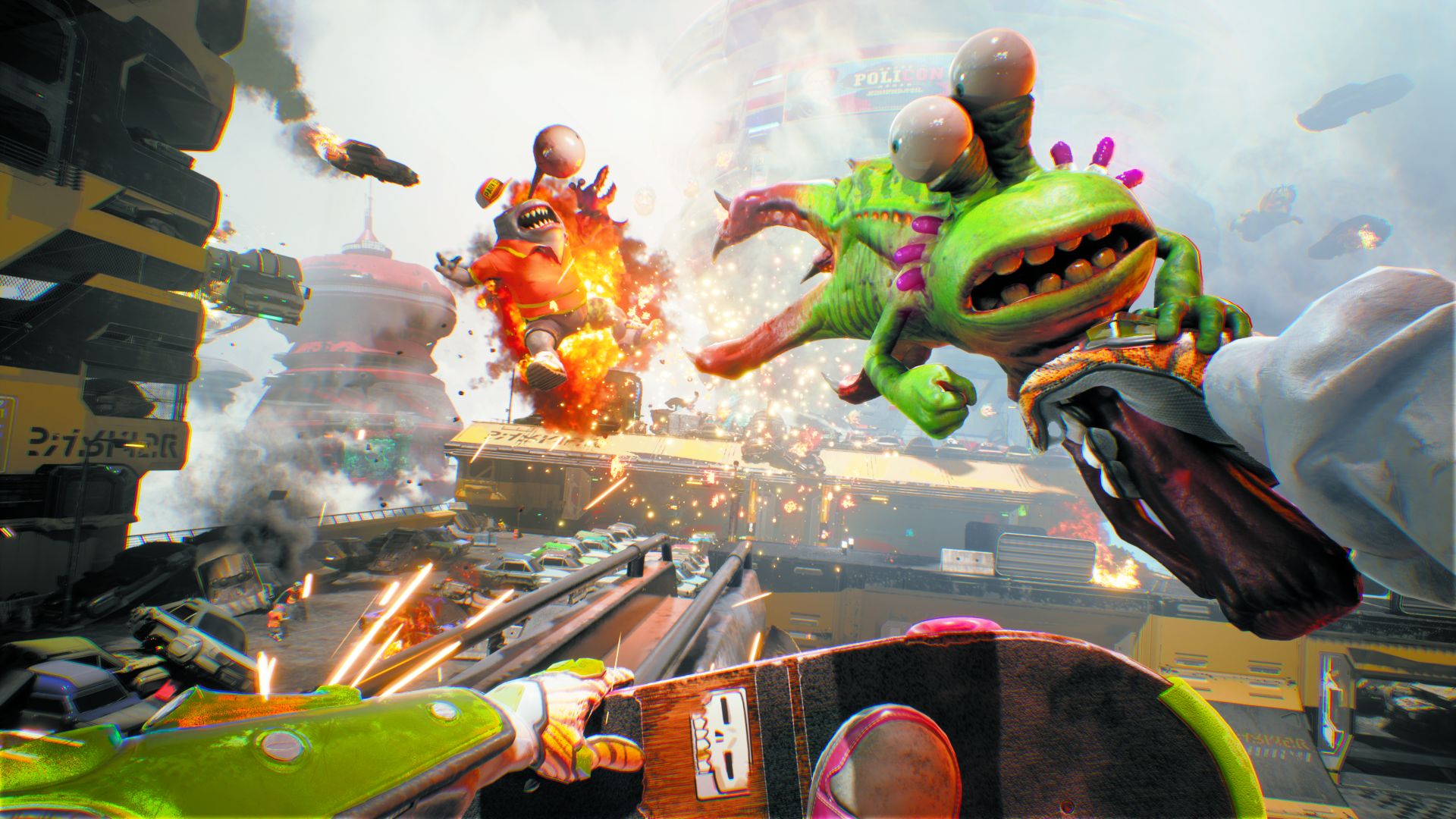
Alec: A lot of us on the team love skateboarding games. In the first game we did a little skatepark gag, and at one point an artist whipped up some concept art of an alien you could skate on – I think we were just bubbling up with ideas. Erich, our Design Director, really took it upon himself to prototype some skating mechanics early on in the development of High On Life 2, and as soon as we all tried it out we knew we had to make it a pillar of the game. It was already so fun to use back when we just had empty blockout levels.
High On Life 2 features many zany, over-the-top moments. Can you describe how it goes from an idea to executing that in the game?
Alec: Most of the time it starts with one of us going “wouldn’t it be insane if we did [x]?” If it feels like something nobody’s ever done before or it just makes us laugh, we set off on seeing how much work it would actually take to execute. Stuff like the murder mystery or the Muppy Doo boss fight are good examples of that: both were really hard to pull off, honestly. The murder mystery took multiple rewrites before we had something that felt clear and fair, and the menu-portion of the Muppy Doo fight had us sweating wondering if we wouldn’t be able to find a way to make it fun. It’s really easy to say “and then you fight the boss inside your menus!” but then you have to actually do the work and figure out what that actually means, gameplay-wise.
During the development process, do you think of certain comedians when designing the guns in the game?
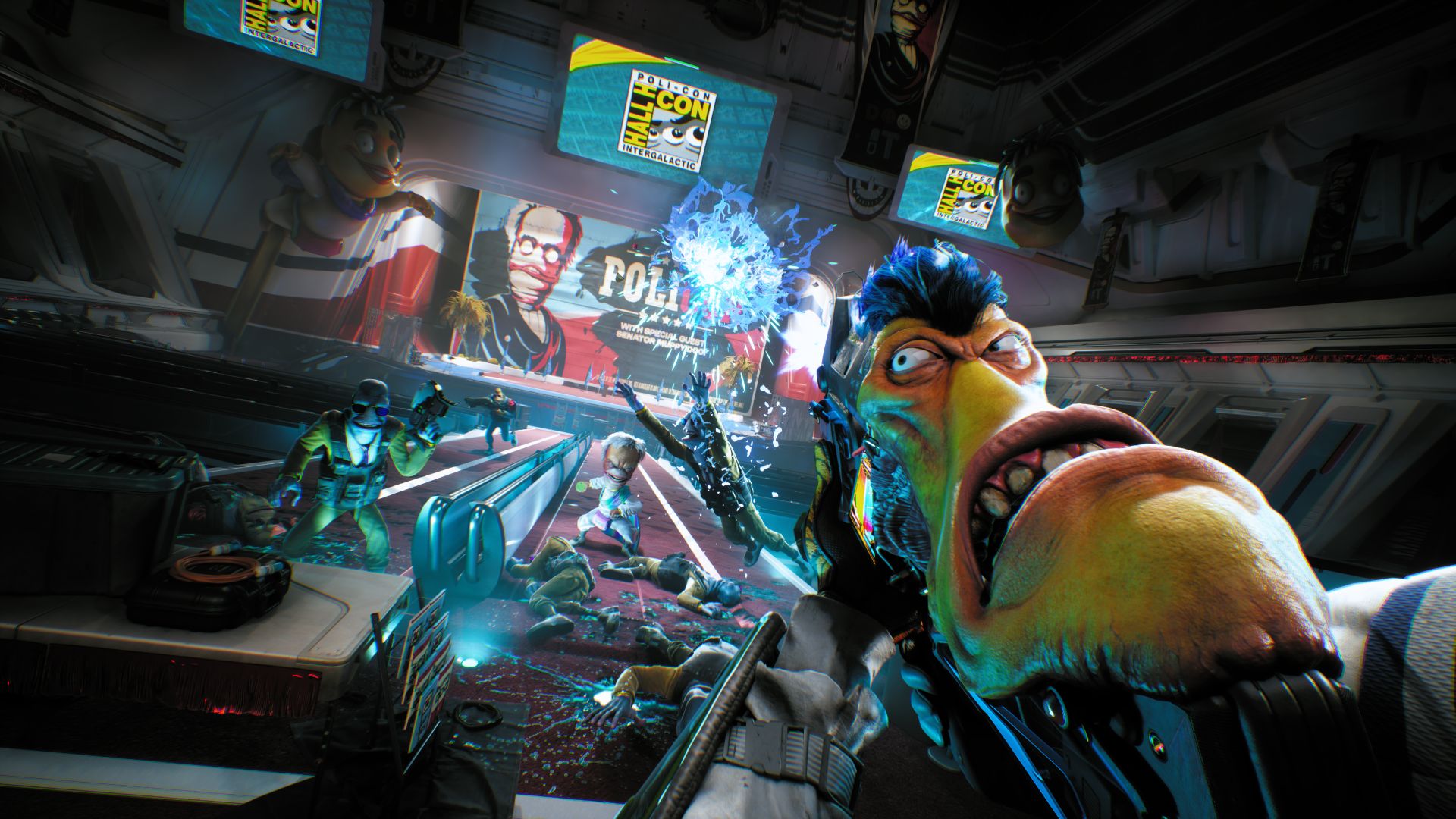
Alec: Absolutely. We have a list of performers we really want to work with, and very often that’s our starting point. There’s some back-and-forth with the rest of the team about what sort of guns we want to design for from a gameplay perspective, and art is also tossing around visual concepts at the same time. For instance, with Sheath we wanted a battle rifle and we also had an idea for a non-Gatlian gun that was just an alien whose head you cut off and squish into a rifle. I remember doing a character sketch at some point of your classic European hitman in a turtleneck – I think at this point I was imagining the gun would be a sniper rifle – and that led us towards a more deadpan, serious character. Personality-wise we’re looking for something fresh that fits into the ensemble: a no-nonsense tough guy with a deep, deep voice stands out from the rest of the cast, and Ralph Ineson very quickly came up as a potential voice with real gravitas and dramatic chops. We’re very grateful he was down to play the part. Travis is one where it went a bit in the other direction: we spent some time developing the character before landing on a performer, and as soon as we realized Ken Marino would be a perfect fit we jumped on it. Gabourey Sidibe came naturally from the idea of guns as a married couple – we’d worked with her before and knew exactly how to write for her style.
What’s the most challenging part of making comedy work in a game like this?
Alec: It’s a million times easier to write comedy for a linear medium like film or comics – with a game, we have to cede control to the player. That means we can’t always know exactly where the player is looking, so we can’t guarantee a visual gag will land. And we can’t know for sure if the player is going to do exactly what we want them to do for a joke, so we need to be okay with stuff being missable. You can shoot your sister at the very beginning of the game and trigger a fake early ending, but for many players that thought won’t even cross their mind. We’ve developed what we call “opt-in comedy”, which basically just means there are more jokes for you if you want to sit around and listen, poke around and participate… but you can also generally just skip past something if it’s not landing for you. I think that helps ingratiate ourselves to audiences a bit more. Comedy is subjective. There’s over 15 hours’ worth of jokes in this game. It’s very unlikely that every joke you hear in 15 hours is going to make you laugh. That means we have to try a lot of different styles of comedy, and we don’t want to force you to sit through a style you’re not interested in. If you like the Frasier Crane Machine gag, you can keep playing with the machine. If you like the Bike Guy, you can keep going back and checking in on his story in the hub world. If you like the animations on the TV, you can sit and watch those for as long as you want.
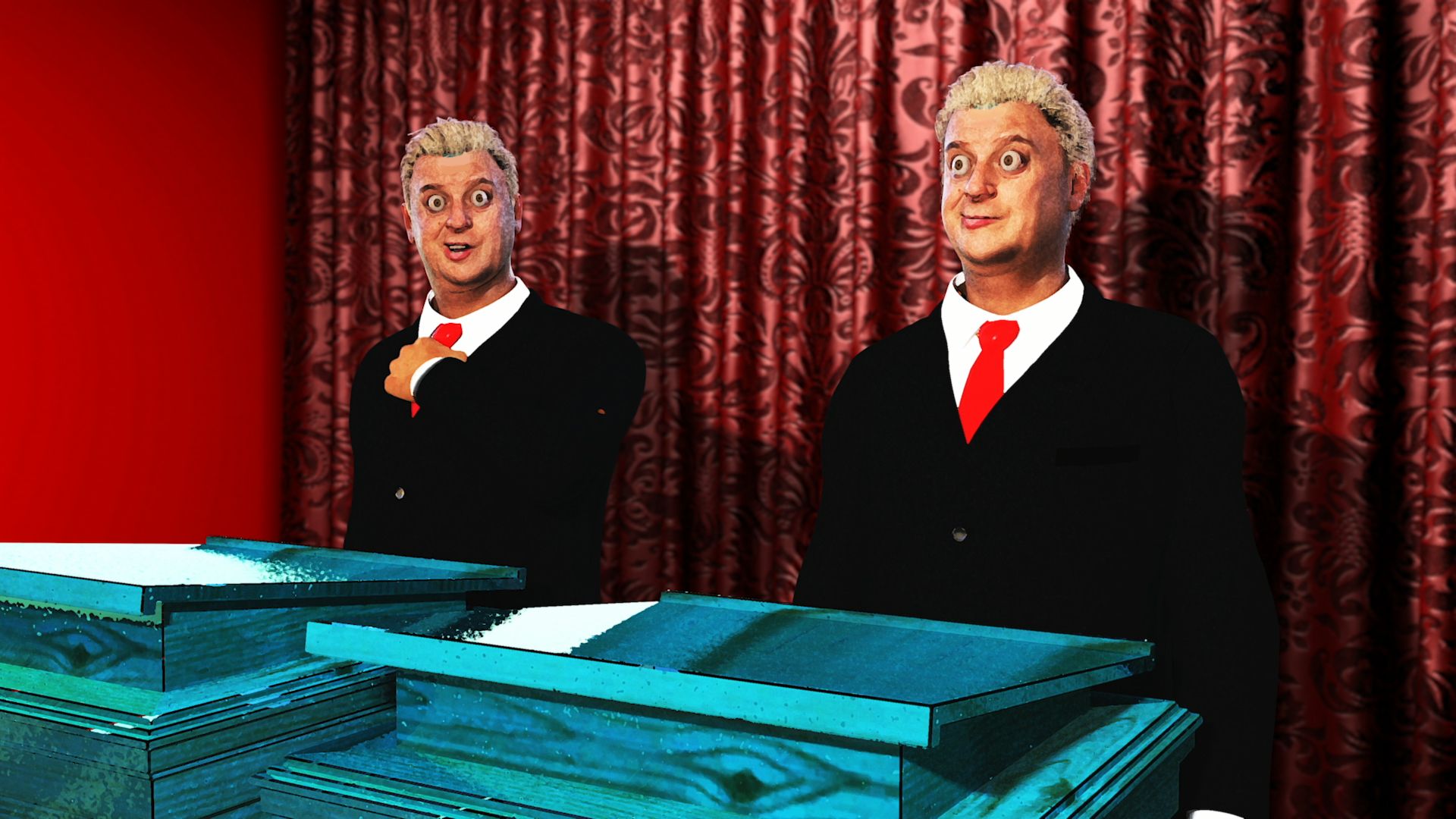
Most sequels operate on the “deliver what worked in the first game, but more.” With a game like High On Life that relies heavily on parody, how do you prevent a sequel from becoming overly self-parodying?
Alec: I generally don’t think of what we’re doing as parody – I’m really trying to be true to the story and characters we’ve built, and honor them as “real.” How does Lizzie feel about what’s happening to humans now? How would Travis react to finding out he just joined up with wanted criminals? That’s usually where we start. Other times we’re coming at it from the angle of trying to pull off a high-concept joke, and we have to figure out how to contrive a grounded on-ramp to get you there within our game world. And lastly, we’re a game that’s totally fine with breaking the fourth wall when we need to. Suit-O, a character I voice, is usually the vehicle for that – he seems to be a little bit more aware than everyone else that this is a video game, which seems fitting for your digital helper. He’s essentially the Navi or Clippy of these games, so he’s a little more omniscient. That gives us a fun means of puncturing the atmosphere and reminding players that this is just a game, after all. I think by focusing on these things, we’re never going to run the risk of self-parody. We’re just honoring the story and doing jokes that make us laugh.