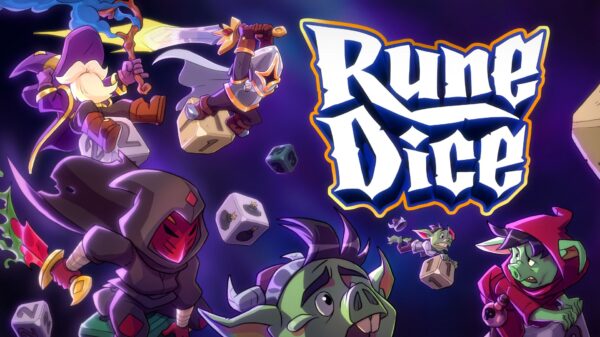
























































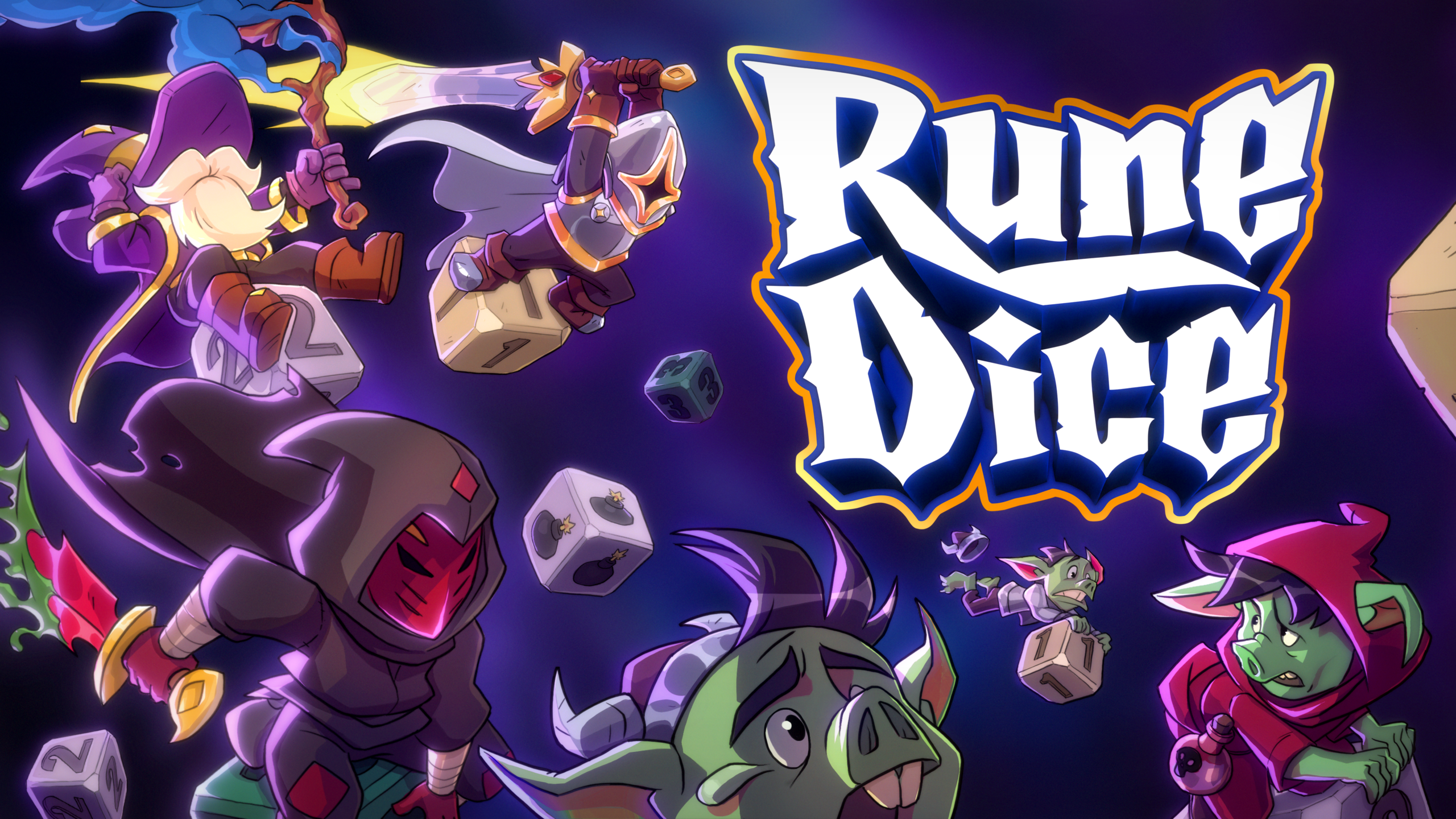

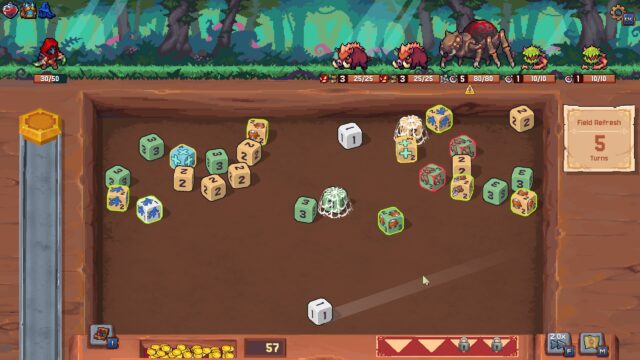
Rune Dice’s concept is deceptively simple – you have dice with runes on them representing skills, tools, or magic, and you roll them. This game isn’t just worried about what numbers you roll, however, as when you roll a “one” die and it hits another “one” die, it becomes a “two” die and queues up what’s usually an attack. Merging, as Rune Dice calls it, is key to success in this roguelite game. As enemy hordes march towards you or pelt you at range, it’s up to you to strategize a way to live long enough to face one of three bosses in this limited section of the full game.
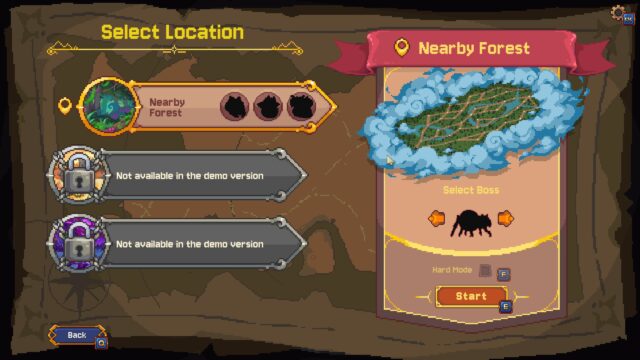
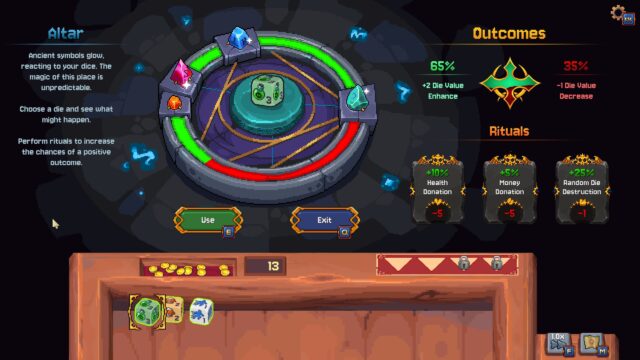
For this preview, Rune Dice only had three classes available of the touted eight, and only one area, the Nearby Forest, was available to conquer. Between the Rogue, Mage, and Warrior, I decided to go with my old World of Warcraft main, the Rogue who was named Romeo Deathbrew. As I ventured through the forest, many of the Rogue staples I expected, such as dodging, backstabbing, and poisoning, were all fair game in order to advance. Planning your route carefully and balancing harder encounters or using Magic Altars, which could destroy your die instead of enhancing it, is key, as death will end your run. No need to despair, though, as you’ll usually be greeted by a number of unlocks, and just by playing that class, you’ll level them up.
I mentioned it initially, and yes, this is a roguelite experience. While this may scare some, I feel like the team at Smart Raven Studio shows an understanding of the genre. Too often, your average roguelite experience relies on the player dying until they’ve earned their stripes or have a hyper-specific build that makes any other run pointless. Rune Dice nearly always gave me relevant unlocks on failure, or positioned my next goal as “obtain 15 Relics in one run,” so that even in failure, I felt motivated and better equipped to fight till the bitter end. While I do think reliance on RNG (Random Number Generation) and Relics is a bit too strong, this is only a preview, so hopefully the smart decisions they’ve made so far will pay dividends upon the actual release.
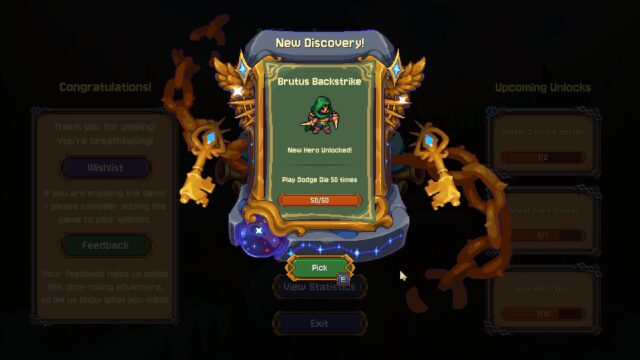
Games are snappy; I found myself surprised to be at the last boss so quickly more often than not, making Rune Dice a great game for quick sessions or just to try one more run before bed. I’m a bit puzzled by their decision to make the Warrior an unlock when it is one of the more straightforward classes, stunning and overwhelming the enemy to great success. I also think the Mage requires too much RNG to be successful, in particular with the burn build. Speaking of quirks, it took a bit of time to get my head around the fact that your initial die should be treated as if it were a pool ball, but it can be awkward if there’s no Mergeble dice to hit. Trying to do anything but combine your initial “one” die with another “one” die is haphazard at best, and can result in a wasted turn. There’s also a strange element in the fact that while you’re initially playing a form of pool, once a die Merges, it will try to jump to another compatible die using physics. This is only a preview, but part of me wonders if the game would benefit from just operating under pool rules instead of a “pool then jumping physics” ruleset.
Rune Dice is a Low-Friction Roguelite With Big Potential
While this is only a preview, Rune Dice presents one of the least frictional roguelite experiences I’ve had in my time. I look forward to the full game and what the other five classes bring to the table.
Rune Dice will release on Steam in Q2 2026.