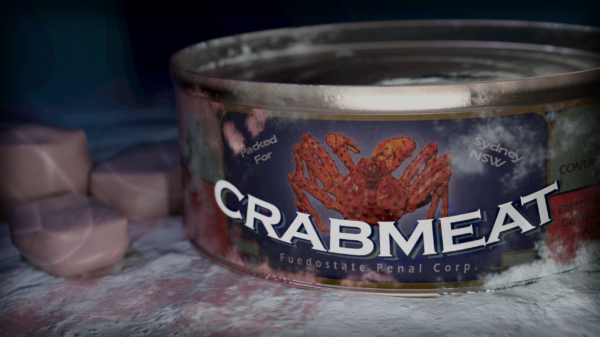










































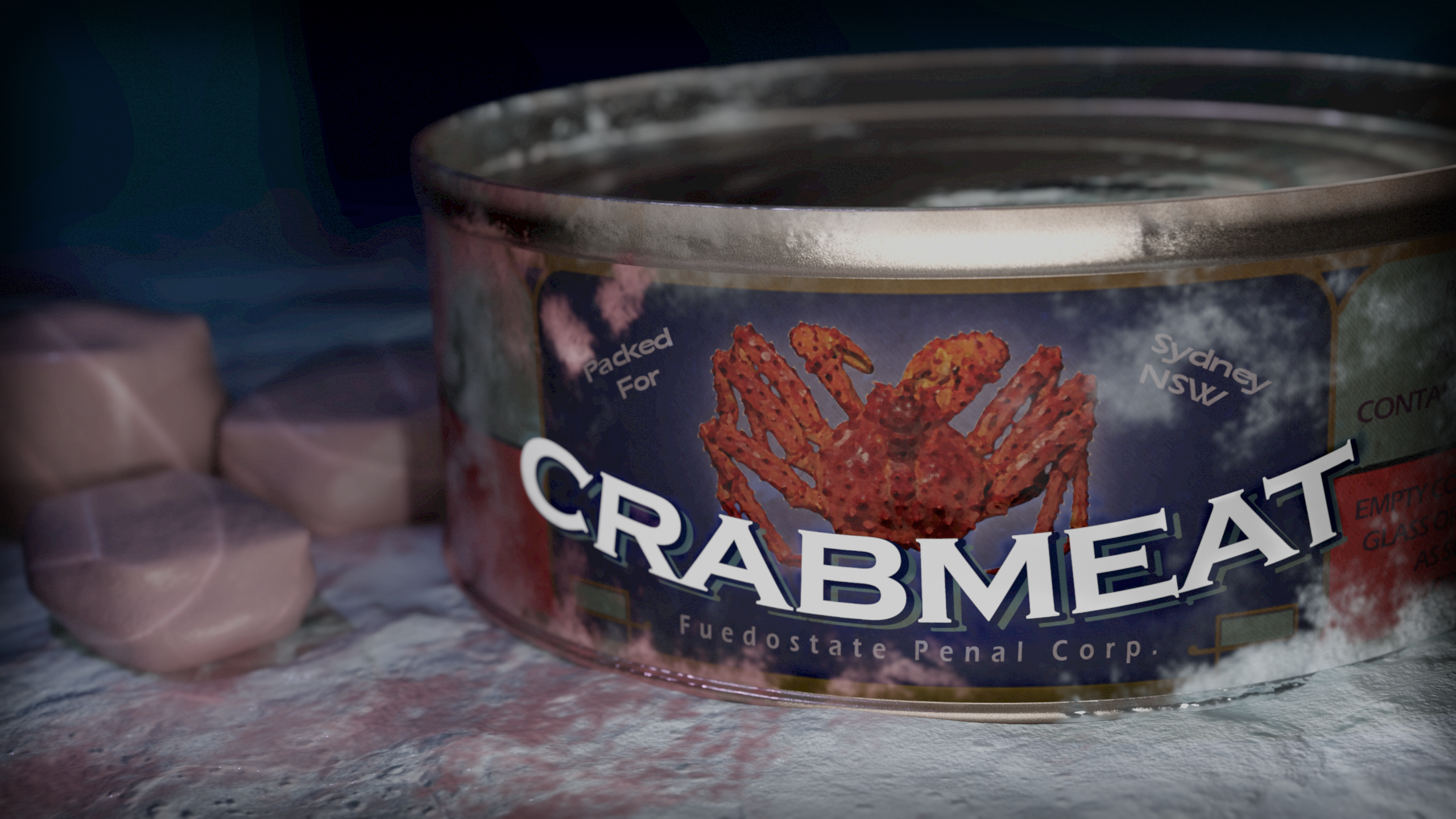

Crabmeat is a short first-person thriller game that takes a simple premise and makes it representative of something much greater. Your character overdrew their MelbBank account by $656. They spent it on rent. The punishment: revoked citizenship and one week to harvest 500kg of king crab. Even if you wanted to refuse, there are quite a few consequences to consider: your family will be expatriated, your debt will be passed onto the next of kin, and the Feudostate of Australia has seen fit to inject you with a substance that can kill you if you disobey. Contract signed, you’ve got a job to do.
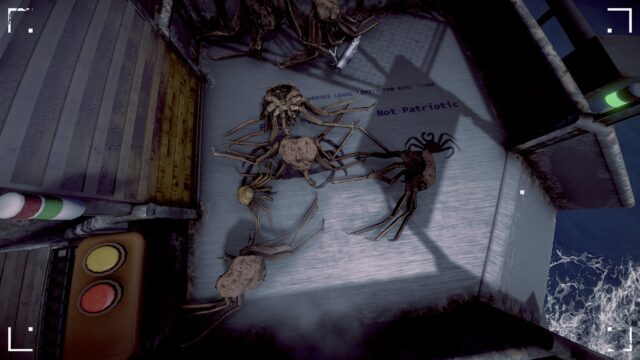
The trip to the Southern Fisheries Penal Colony is brief; I completed a couple of playthroughs in about five hours each. After mastering the controls and getting my sea legs, I can see why the developers estimated a three-hour completion to meet the quota and have some extra time. While managing the fishing vessel, you’ll find notes from previous prisoners, tools of the trade, instructions, and hazards to handle. The main method for catching the required king crab is to bait crab pots and wait for crabs to take the bait. Of course, while waiting, your survival depends on your success, so setting up another crab pot somewhere else in the Antarctic or gathering “trash” for the Feudostate will keep you busy and hopefully alive. The game is paced well in that you won’t encounter anything you’re not ready for, though it’s important for players to be mindful of the deadline and make a plan on how to navigate it. I found the gameplay loop of finding “trash”, checking on crab pots, and occasionally having to do repairs on the boat in good form, to the point I wonder if the crab battles were necessary.
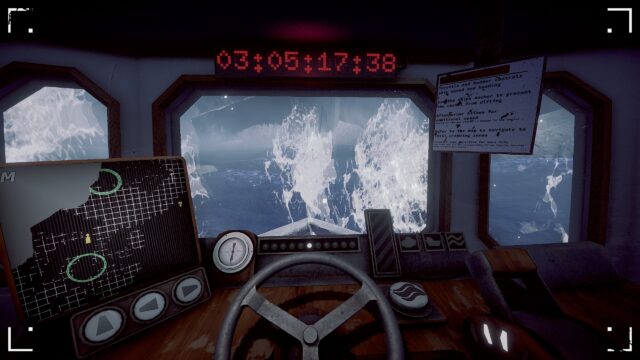
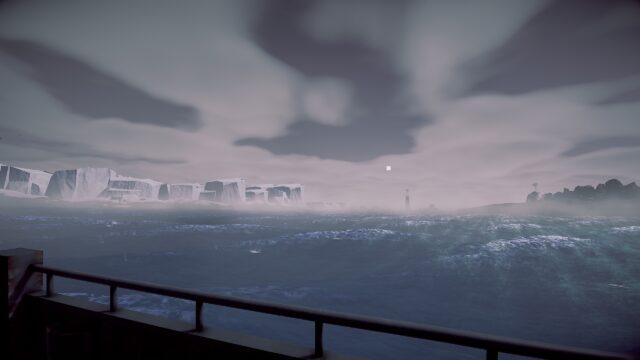
Crabmeat can be eerily peaceful at times, with your goal in mind and a beautifully rendered ocean being your lone companion for most of the journey. However, you’ll encounter Paralomis and Brachyura, who will sabotage your ship as well as attack you directly. You’ll want to make sure you’ve got your axe equipped as you walk around your boat. As an average prisoner, you can easily be killed if you can’t identify threats by sound or if you’re not careful when setting the anchor down. That small bit of time will save you quite a few game overs. Combat is done in the same manner as if you were using another tool, like the chum bucket or repair torch. You simply raise the axe (or steady your gun) and lower it. It’s hard to say why these crabs seem so interested in your ship. It’s almost as if you’re being punished for hunting the crab species itself. While these creatures are technically crabs as well, it’s unclear why the ruling body considers them parasites or even possibly “unpatriotic,” as the hopper clearly delineates. That isn’t the only question that lingers as you play Crabmeat with keys, notes, and other goods hinting at something sinister in the Feudostate.
Crabmeat’s strength is also its weakness, with it nearly being entirely diegetic. After being set loose on your week-long sentence, the game leaves you to figure out piloting the crabbing boat, crabbing itself, boat maintenance, and other odds and ends, like defending yourself. This learning curve led to a couple of moments I can only look back on with embarrassment, having misunderstood that the winch needed to be cleared of an empty crab pot before properly resuming use of the hook gun. The game’s reliance on nearly exclusive mouse control is quite clever, providing just enough friction for the player and emphasizing how mundane crabbing can be. You’ll click to move, double-click to run, click to turn slightly-left when you can’t reach that spot you need to repair with your torch, and so on. It makes encounters with enemies tense, as if you aren’t facing them; it can be hard to get a bead on them properly. While the game is short enough that I didn’t have to memorize an unwieldy amount of information, I did find myself referring back to which side of the boat the hook gun was on and the Antarctic Crabbing guide, just in case I needed to refresh myself on procedure.
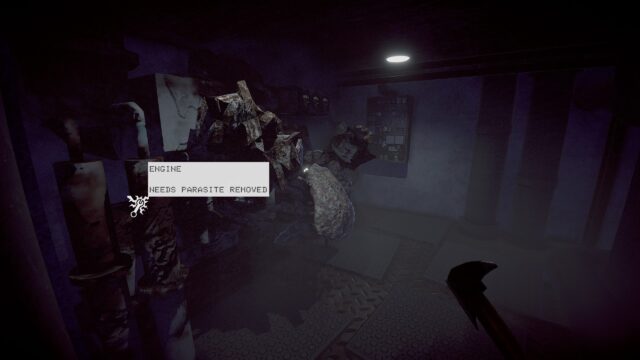
Crabmeat’s graphics manage to stand out without pushing graphics cards to their limits. Though you do not interact with many other humans, they all have an unsettling mosaic over their faces, which I’m sure is part development trick and part stylistic choice. Information is clear, and I had no trouble discerning where icebergs or other obstacles lie. Even in moments like when you’re using your torch, the UI will highlight areas that need it, which is smart, considering the engine room doesn’t have the best lighting. The seafaring experience is also more authentic through the sights and sounds you encounter as you move about. Waves will splash on your boat, sea spray will get on your boat’s window, storms will darken the sky, and make your radar equipment less reliable. I did not find some of the thriller elements all that scary or engaging, but it does make a bit more sense as you reach your final confrontation.
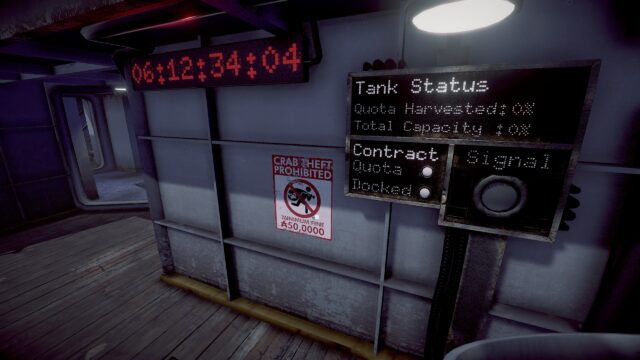
Crabmeat’s audio is sparse, and this is most likely where the “Thriller” part of the equation comes in. Many sounds you’d expect to hear, like the mechanical groaning of your ship, waves, lightning, and the uncomfortable sound of a boat making its way through icebergs, if you happen to be unfortunate enough to crash into one. This also means that when you have uninvited guests aboard, you hear their gurgling, an engine stalling, or the unexpected sound of machinery banging. It definitely should be a priority for you to address any ornery crabs, as they can and will take advantage of your blind spots while driving.
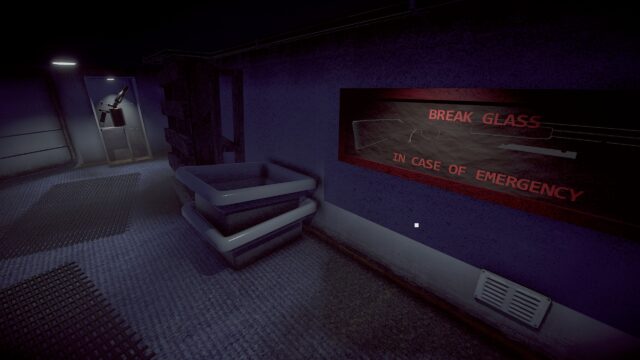
Crabmeat is a surprise, not just because of the subject matter, but because it reminds me of how some media like Get Out or Shinichirō Watanabe’s Lazarus have a stated message in their titles, but also imply something deeper as you probe them further. Your character is dealt a bad hand, and that’s even before killer crabs enter the picture. Finding more notes and reading through some of the literature provided by the Feudostate provides just enough imagery to let your mind fill in the blanks in what this is all really about, even if some answers are more gruesome than you bargained for.
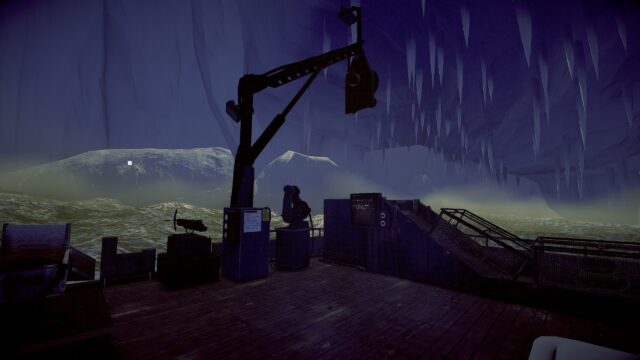
Crabmeat respects your time, plays well, isn’t overly complicated, and intrigues the player. The game is also a serene fishing experience. That is definitely saying something, considering how much of a headache crustacean annoyances can become along the way. It’s a shame there’s not a sandbox fishing mode, or at least a mode where fishing is the only objective, minus the horror, as I could see a particular type of player using this as a wind-down game. Crabmeat is also short enough and simple enough that it could very well be a good game to stream, with the occasional enemy encounter offering a jolt of tension and a clippable moment. If you’re expecting a heavy horror game or a mechanically dense experience, Crabmeat is not going to be the game for you.
Good
The Final Word
Crabmeat offers a part thriller, part fishing sim experience that explores fishing, or more specifically crabbing in a more in depth way than many games do with the obligatory fishing mini-game. Whether you’d like to find out more about the hostile crabs, the Feudostate, or just want to spend some time crabbing, this game could fulfill any of those options.