








Throughout the years, Magic: The Gathering has been breaking into the games industry little by little. It originally started with a Secret Lair drop, which featured games like Fortnite and Tomb Raider. Over time, this led Wizards of the Coast to undertake larger and more ambitious collaborations.
We saw a couple of those last year. This included a collaboration with Bethesda Game Studios, which resulted in four unique Commander decks centered around the Fallout franchise. The video game train didn’t stop there, because just a few months later, Wizards of the Coast teamed up with Ubisoft to create an entire Assassin’s Creed lineup.
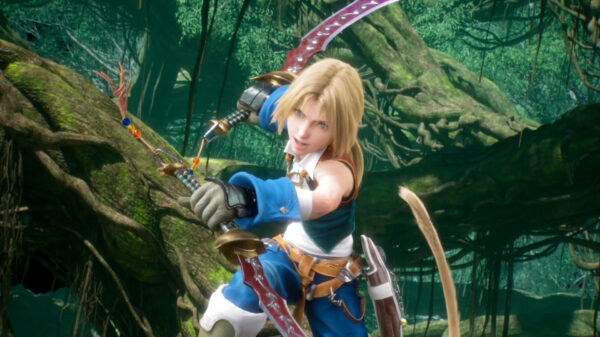
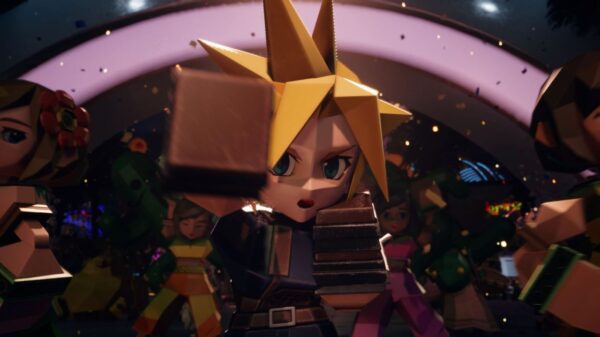
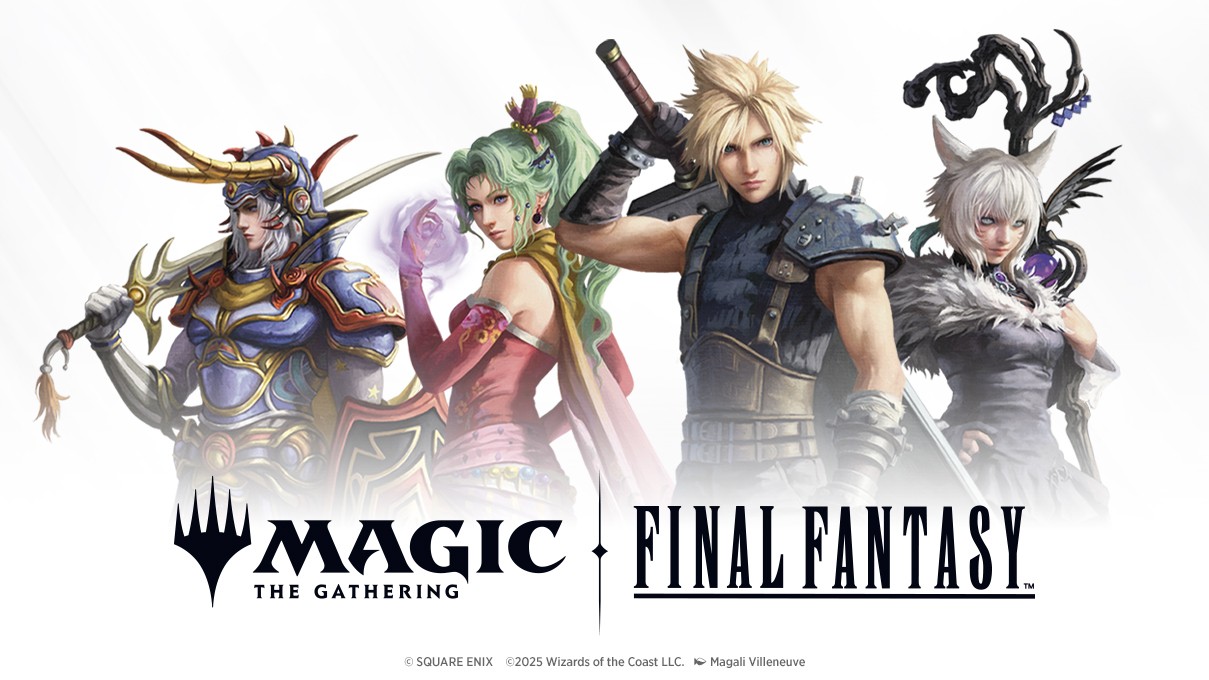
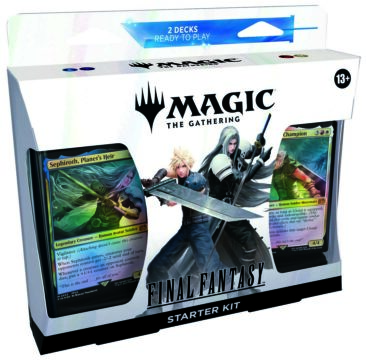
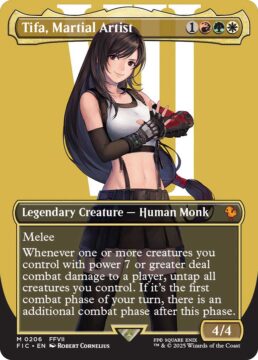
This upcoming collaboration is arguably its biggest yet and will center around Square Enix’s Final Fantasy. Players may be excited to hear that this set will also be getting the Lord of the Rings treatment, in the sense of having four commander decks drop, a starter kit, and booster packs for players to purchase.
Needless to say, Wizards of the Coast is highly confident in the upcoming release. During Summer Game Fest 2025, we got to sit down with Gavin Verhey, the principal game designer on Magic: The Gathering and the lead game designer on Magic: The Gathering – Final Fantasy, about the upcoming set.
MonsterVine: Wizards of the Coast has worked with a lot of video game IPs in the past. How do you go about deciding which ones you want to work with?
Verhey: The way the process kind of works is that there’s a team that I’m not a part of that works on upcoming partnerships. So they have reached out to some companies, and some companies have reached out to them. Try to figure out what we’re doing. Where I come in is once, you know, that their talks are a little further along, and maybe we might want to do it. They come to me and the design team, and they’re like, ‘Okay, can you evaluate this, uh, game for Magic?’ Would it be a good fit for Magic? So, we look at it, and we try to figure it out. Okay, does it have stuff you can hold all five colors, right? Magic has five colors. It’s really important. Can we fit all of the game content into five colors? Are there enough flying creatures? Does every color have big creatures, all that kind of stuff, and that informs if it should be like a Secret Lair or a Commander Deck, or a Main Set. Then, once you do that, we kind of go back, and we’re like, okay, ‘we can do this, we can’t do this, or whatever the case is.’ Final Fantasy. Super easy. I was, like, yeah, we have so much to work with. It was not a problem. We have every color represented. We have plenty of creatures of all sizes. So much, great story. No problem whatsoever.
MonsterVine: Why is it Final Fantasy is getting a full-on set, while other Universes Beyond like Fallout only received Commander Decks?
Verhey: With Final Fantasy. There’s just [so much], A it’s huge, right, and B there’s so much content, like 16 games distilled down into one magic set, like we couldn’t even put everything we want to do in here, right? This is one of the largest we’ve ever made. We made this set larger than normal to accommodate and try and get more stuff in, so it is, uh, a gigantic set. I think the thing. Mainset is 310 cards. There are four Commander decks. There are the starter kits. There’s Secret Lair, there’s so much stuff, and we still couldn’t get everything. There’s a whole bonus sheet in the set, so like there’s more than enough material and by far, earning the main set.
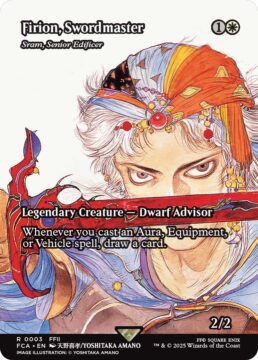
MonsterVine: Magic cards are known for their art. How do you design Final Fantasy cards to feel like they’re honoring the IP while staying true to what Magic is?
Verhey: Okay, so we did it in a bunch of different ways, and I’ll kind of cover just a ton of them here. The first one is that we worked closely with Square on this entire project, and everything went through their approval. We got our advice for all of them. We built a whole guide for artists that we sent to them. So, that way, everything will keep the look and feel of Final Fantasy. That was important. One interesting challenge was adopting the early games to our art style, right?
Because Final Fantasy I through VI is all pixels, so we’re gonna make that work, and I think it turned out great because it happens that you know on your screen are like little pixels, this big, and we get to fully render them with amazing art and tell stories like, poisoning the waters, is one of my favorite examples, right. Kefka poisons the waters of six. It’s this amazing moment, and on the screens, there’s a pixel moving around. And here you get to see Kafka laughing maniacally, pouring poison in the water, so it’s very cool. Cool. And finally, Magic has, like, really high art standards. We do a lot of incredible art. We’re used to making incredible art, and we put, you know, amazing art directors and artists on it to write descriptions and bring the world to life. So really proud of all the work that the team did.
MonsterVine: Can you talk about the creative process behind picking the four Commanders behind each deck that players can purchase
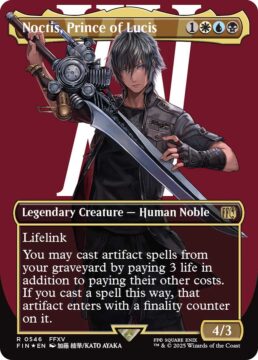
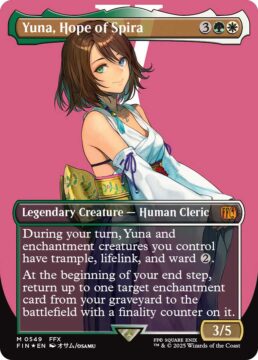
Verhey: Okay, so we have four Commander decks and decided to theme them all around games, so each deck is, like, its own bespoke game experience. You open it, and like the Final Fantasy VII deck is all Final Fantasy VII, right? So, it’s a cool experience. So, we started with what four games we wanted to do, and after a lot of discussion, we settled on VII, VI, XIV, and X as our four games. Well, from there, you gotta pick the right characters. So, for X, I was, like, well, Tidus makes a lot of sense for the face of that. You gotta Cloud on the face of VII. And XIV, there was some debate on that because of, you know, the player character yourself can’t be an option. We chose Y’shtola, who’s a very popular character. Then, for VI, we debated between Celes and Terra for a long time and settled on Terra. But, you know, we wanted the protagonist to be the faces of their Commander Decks.
MonsterVine: Previous collaborations introduced new mechanics to the game. Can we expect something like this for Final Fantasy?
Verhey: Yeah, so in Final Fantasy, there are two main new mechanics in the set. The first mechanic is a little more straightforward. It’s a Job Select. This is a mechanic where, uh, it comes in with a hero token. It’s like Living Weapon or Formian, there’s equipment. The hero shows up when you play it. He holds the equipment, it, you know? It comes with it pretty straightforward for a Magic Player. The much more unique thing that I’m excited about is our Summons, which are Saga Creatures. Never done anything quite like this before. Sagas are really popular in Magic, and we put them on creatures, and this is how we represent our summons. So, for example, let’s say you play Summon Bahamut. He comes in. He does something incredible. Boom. Huge impact. And then every turn, he does something else big. But in the final chapter, he goes away, right? He’s a Saga. He counts, then he goes away. It’s just like Final Fantasy. When you summon your summon, it shows how big thing happens, but they’re only there for a limited time. The same thing happens here in the game. I think they’re really beautiful and amazing.
MonsterVine: Can Summons be brought back once they’ve completed their final stage?
Verhey: When they’re in your graveyard, you can bring them back. Like any other creature, they work exactly like a Saga and a creature together. So, if you reanimate them, bring them back to your hand as a creature. They all work out great.
MonsterVine: Yeah, so the Cactus card has received a little bit of controversy for how powerful it is, and we just want to know. Like, how did you go about creating it?
Verhey: I’ll tell you the story of Jumbo Cactuar here. So, from the very beginning, we knew we had to do it. We had to make jokes. They’ve been there from the very beginning. If you know Final Fantasy, it deals 9999 damage. With an attack called 10,000 Needles, and we’re like that’s what we gotta do. That is what we have to do here. So, exactly what we did. We put it in. Had to make sure it was authentic to the game. The biggest debate we had the far the whole time was if it should be a one-power creature. I get a plus 9999 or zero power creature and a plus ten thousand. That’s ten thousand needles.
We knew we were gonna do it the whole time. And of course, we play-tested. It made sure it was safe. We cost it at six Mana. But ultimately, we tested it. That was fine when we released the card. And I think it’s gonna be okay, you know, the Six Mana creature takes her to attack all that kind of stuff. But to me, it’s like, it’s the first card we previewed as the first card we previewed for a reason. It’s like, we know Final Fantasy. We love Final Fantasy. We’re doing it with all the jokes and all the references that you’re gonna love. And so, that’s the story there.
MonsterVine: What sort of challenges did you face while collaborating with Final Fantasy?
Verhey: Well, you know, we all love Final Fantasy. We all love at least some of the Final Fantasy games. But we probably haven’t played all of them, right? So, like, I played some of them. You played some of them, but probably none of us has played every one of them, right? Like I tried to engage as many as possible, but I was like, XIV, I can’t do it. I can’t put the time into that. Fortunately, half of my team members did, which was amazing. But one of the biggest challenges is that everyone has their favorite Final Fantasies, and we’re taking all XVI of them and putting them in one magic set. And there’s so much good to leave on the cutting room floor, right? Figuring out what we’re gonna do and how we’re going to do it.
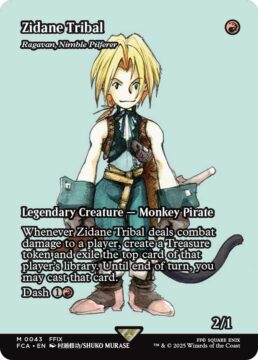
A lot of hard Cuts were made, and for me, that was painful. It’s like so hard to choose who makes it in. But we got a lot of good stuff in there. I’m proud of the job that we did. And kind of, I’ll let you inside the process is the first thing we did, is we, took all the games, and we wrote down all of the, characters the heroes, the villains, the side characters, the weapons, the locations, the story moments, and we bucketed them into three tiers. Tier one is like, you gotta have. It’s Cloud, Sephiroth, Lightning, Aerith dying like, you gotta have this stuff, right? Tier two is like in the middle somewhere. It’s, like, oh cool side character like a memorable moment, and then tier three are like the deep Cuts, like, wow, if they have that, it’s gonna be awesome. We bucketed all these things. And then, for each game, we’re like, okay, let’s grab one from each section to put in there. So, every game, more or less, has this here when it’s a villain, right? But also, every game has a deep cut in there somewhere to make sure. It’s like, hey, if we played the games, we care about these games. Here’s something weird. Like, I think about Final Fantasy II has Commune With Beavers, and you’re like you if you love Final Fantasy II, you know this moment, and it is right there for you, right? And it’s not just always the ears in the middle.
MonsterVine: What’s the thought process when it comes to assigning them to characters?
Verhey: The great thing about Final Fantasy is that the villains are often dynamic, and the heroes are too. They’re Dynamic, and they span a range of colors. Like many of the characters, some are locked in, like Ifrit, who is gonna be red, that makes sense. It’s all about fire, but often a good character in Final Fantasy could be any color at any given time.
So, what I kind of pioneered is a thing. I call the snapshot moment where you look at the characters like the whole story, and you’re like, we’re gonna look at them right here in this moment, and that’s the colors they’re gonna be. And that’s what’s going to be on the art of the card? I’ll give you a great example, which is Sephiroth. So, in the main set, Sephiroth is mono black. He’s the One Winged Angel, he is about to try, and he’ll crash a meteor into the planets. He’s a bad dude, mono black.
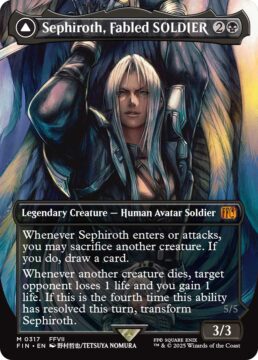
In the Commander Decks, Sephiroth is Red, White, and the part is from the moment where he is learning about his past. He’s angry, but he’s a soldier, you know. And so this is from over here, and this is from over here. It’s the same character and the same storyline with different colors, and that’s kind of how he represented it.
MonsterVine: Are there any characters that didn’t make it in that you’re feeling sad about?
Verhey: Tons, tons, I mean, think about this way, so this set has an absurd amount of legendary creatures. It’s got like, I think, 90-ish Legendary creature, give or take a few. Okay, it sounds like a lot. I was a heck of a lot of legendary creatures, but consider, there are 16 games. Okay, well, okay, you start diving into it. That doesn’t mean that everything hits 10 and you start narrowing it fast. So, for example, I love Final Fantasy IX. That’s my favorite game, and I had to cut the Eiko card, which killed me, right, because I love that character. I know there are some older characters, like you know, Lena, or Ferris, who wanted to get in, but we just couldn’t quite get in. So there were some on the cutting room floor. It was tough, but ultimately, we did a lot of work in iterations, and I’m really proud of the work we came up with.
MonsterVine: Is there anything that we didn’t ask about that you’d like to highlight?
Verhey: The biggest thing I just want to say is. We are all huge Final Fantasy fans, so we collaborated with Square Enix on this. We went over to Japan, I think, five times for trips with them. We played. We played the cards with them. They get a seat back on the cards because they are big Magic fans. We love Final Fantasy. They love Magic, which made it an authentic collaboration. Like I learned at one point, I got a document full of, like, hey, we thought about this on these cards. It was like an 80-page document of all these thoughts, and because they care so much, and we care about Final Fantasy. So it’s an amazing collaboration. We love it so much working on this thing for five years, and I hope all of you love it as much as we do.