




































When last we saw Drop Duchy, I was intrigued by the prospect of Tetris but it was also a light strategy game with building, production, military units, and combat. The full version is here not and it is definitely that, a combination of Tetris and a tile-based board game with roguelike elements like randomized paths, deckbuilding, and the usual “combat, stop and shop for upgrades, trade resources, and get new cards” gameplay.
Drop Duchy
Developer: Sleepy Mill Studio
Price: $14.99
Platform: PC (reviewed)
MonsterVine was supplied with a Steam code for review
Drop Duchy Features a Clever Combo of Systems
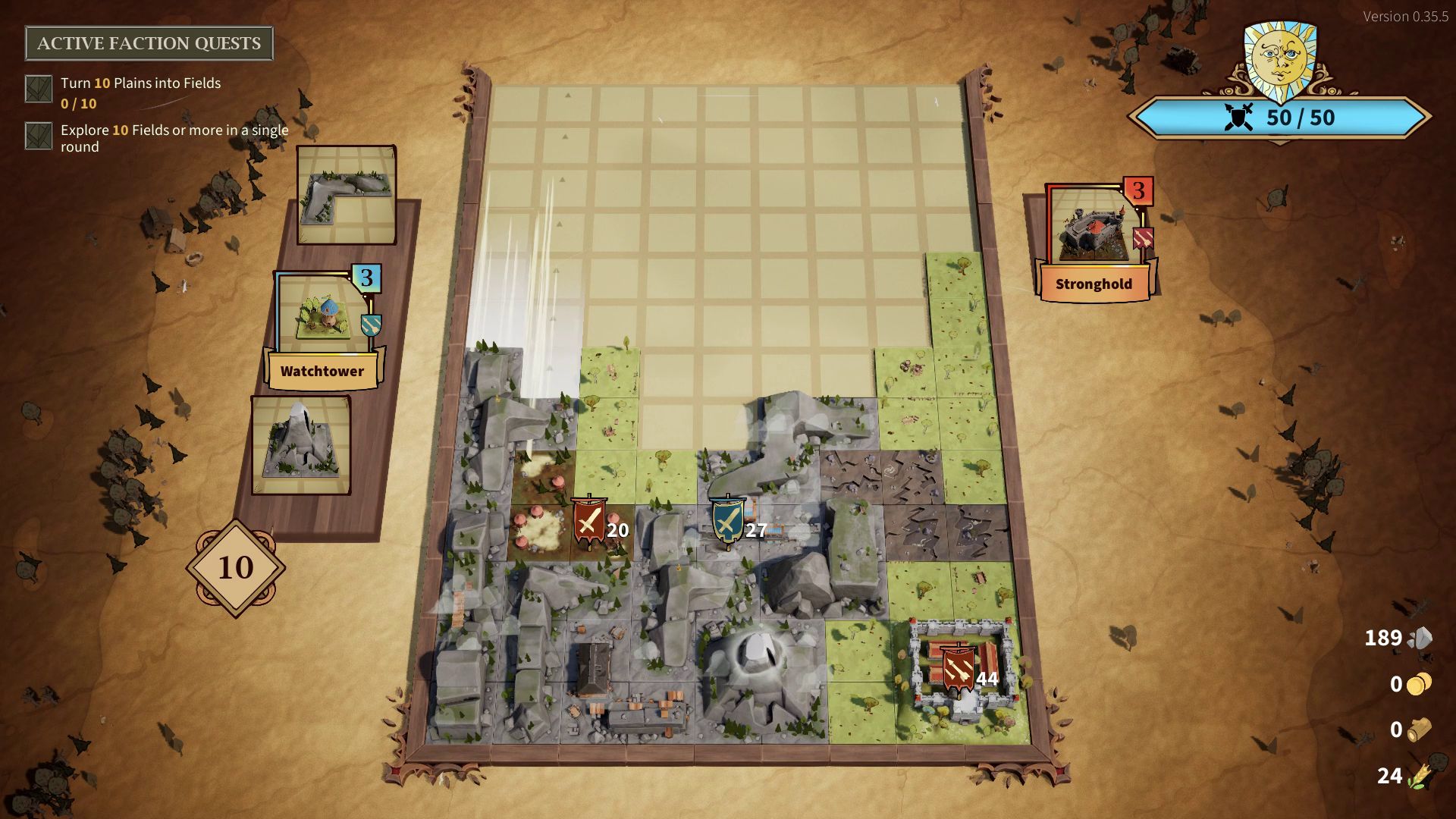
Think of Tetris, but the shapes are also tiles representing terrain–things like Forests, Rivers, Mountains, and Plains. These generate resources when you get a nice Tetris line, so Wood (for Forests) and Gold (for Rivers) and Stone, and so on. With me so far? Okay, great. Now, there are also tiles that are production buildings that do stuff with the terrain tiles and can modify those terrain tiles. So if you put together a bunch of Forest tiles and plop down a Wood Clearer, you get wood (ahhhuh huh huh huh huh), but that also converts the tiles to Plains…and if you have a Farm within range, they turn the Plains into Fields, which give Food. It’s like a sick wombo combo in a fighting game, but with building and resources! Who said strategy games weren’t exciting?!
Since life isn’t all gathering resources and upgrading cards, you gotta fight sometimes. There are three types of units (look, they have names, but they are Axes, Swords, and Arrows, and there’s a rock-paper-scissors thing for how they counter each other), all produced by different buildings that may also modify terrain tiles. The Ranger Base recruits archers based on connected Forest Tiles, while the Rally Point recruits axe guys based on connected Plains or Fields with a sick bonus if it’s connected to a LOT of them, and some production buildings are influenced by being close to other production buildings or by being on the same row or column or by being by enemy production buildings, so if you plan your build right and the tiles fall just right, it’s sick combos left and right, air horns screaming, and MOM GET THE CAMERA. You know, strategically.
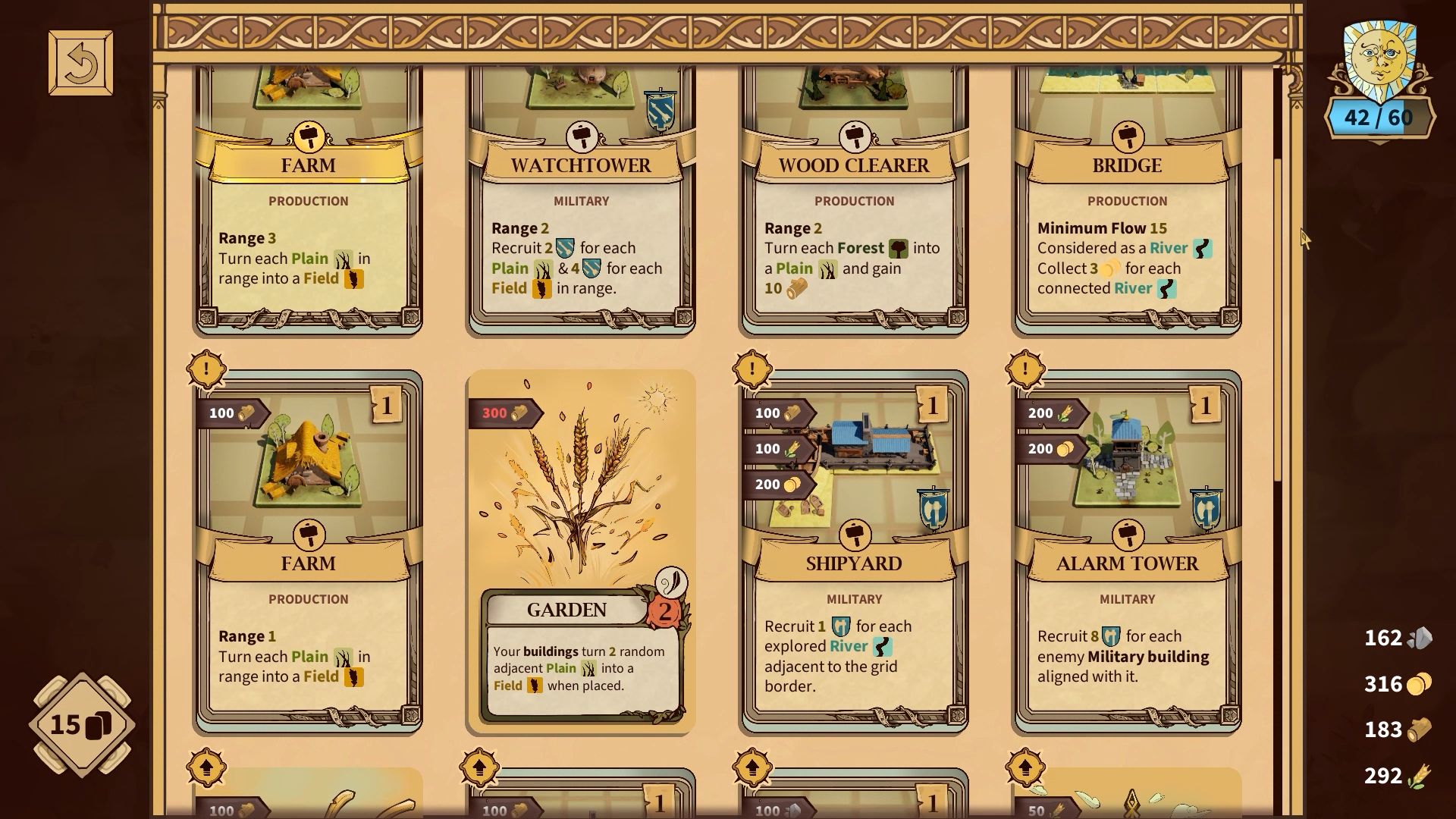
Your buildings are in your “deck”, which is the “deckbuilding” element. After each round, you get to pick a card, which may be upgraded production or military buildings, or even cards that are actually multiple types of terrain or other fun things. Cards can also consume resources to be upgraded, and if that’s not exciting enough, you can only bring so many cards into each battle, and each battle has its own terrain types, so if you build for a Plains-heavy deck and wind up with lots of Mountains and Forest, then WELP. (The combat is largely abstracted, in that the rock-paper-scissors system exists, but it’s mainly making sure you have numbers and attacking things in a set order.)
Terrain type, deck composition, and troop type, however, also work against you because enemy buildings also recruit units based on terrain and resources, so you can spend several turns setting up terrain tiles perfectly, then screw yourself when an enemy building with a huge garrison comes up next for the drop.
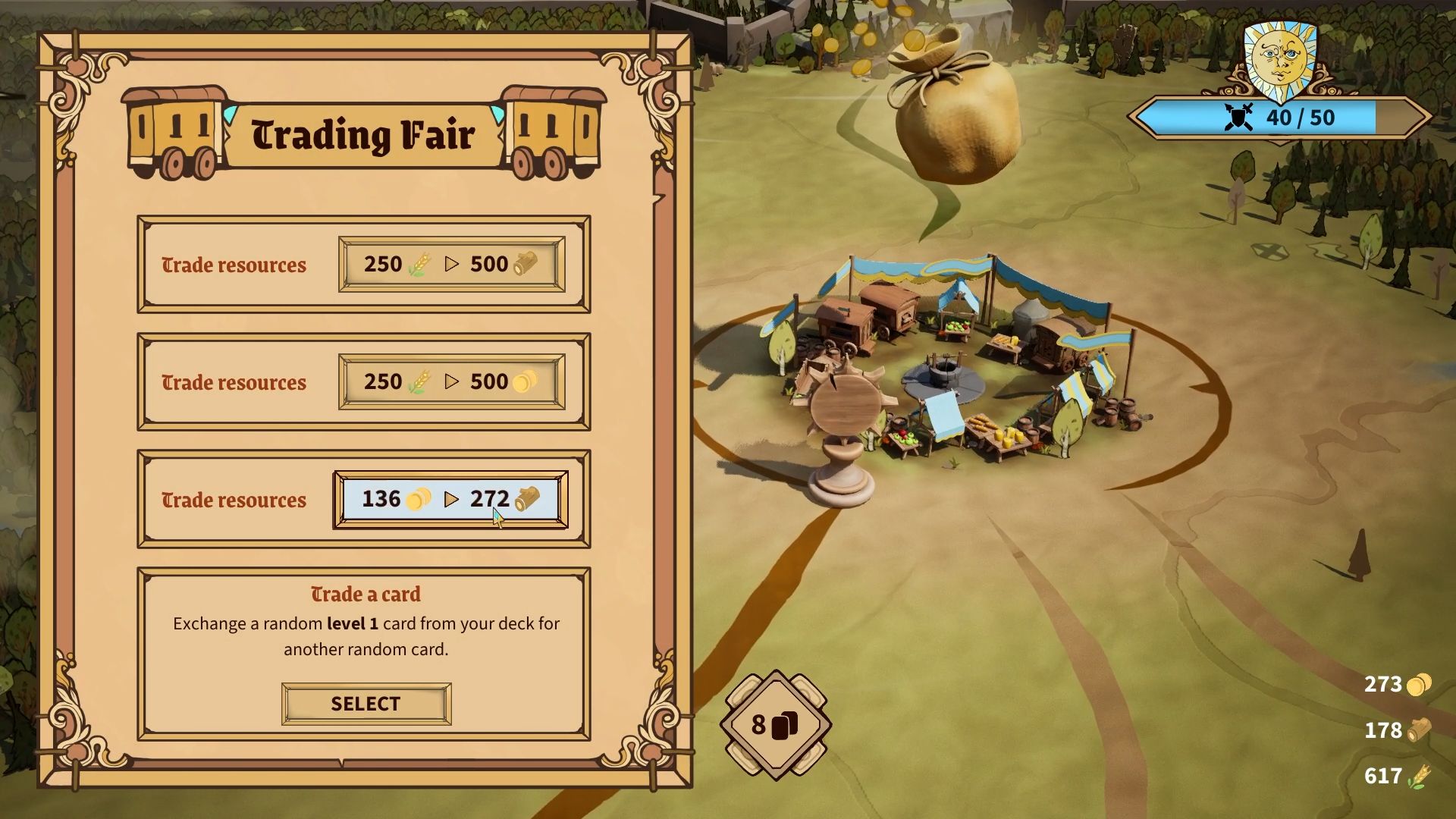
Gameplay is the usual roguelike formula: There are branching choices that come down to battles, peaceful rounds for gathering resources (but choosing these may buff the end boss), shopping stops to trade or buy resources, and buildings that give you new cards. You can also spend your resources to upgrade your cards.
There’s also a Progress Tree independent of individual runs, and as you play, you’ll be able to unlock new cards, new terrain types, and even new mechanics on that. There’s actually a lot of game here, with 5 difficulty levels in classic mode, a Trial mode that requires winning a run in Normal difficulty, 3 factions with unique starting decks (The Duchy, the Republic, and the Order) that play a little differently) and quests for each faction.
One of the big downsides with so many mechanics just flyin’ around is that there is a tutorial, but there are mainly a lot of screens you have to read and, like many board games, it’s not exactly great about explaining itself during gameplay.
There’s also a fair amount of grinding: Runs are in “Acts” with a boss fight at the end, and there’s a pretty steep difficulty wall from Act to Act, so you finish a big boss fight, feel pretty good, and smash your face into a brick wall. Since the mechanics aren’t always clear or apparent and since a lot is gated behind progression, sometimes the reason you’re not succeeding isn’t a lack of skill or even knowledge; it’s because there are cards or terrain types or mechanics you need to unlock.
The random nature of tile draws and board game style can also conflict with the skill-based and strategy elements. Inevitably, you’ll have a really good run and get a really bad draw of pieces that dooms you, and it’s really easy to tell that a few turns into the round. Defense is the overarching resource (gold restores it, but it’s expensive) you need to protect, so you can take a few knocks, but sometimes you can just do the math a few pieces in and see you’re screwed and it’s going to be the ballgame.
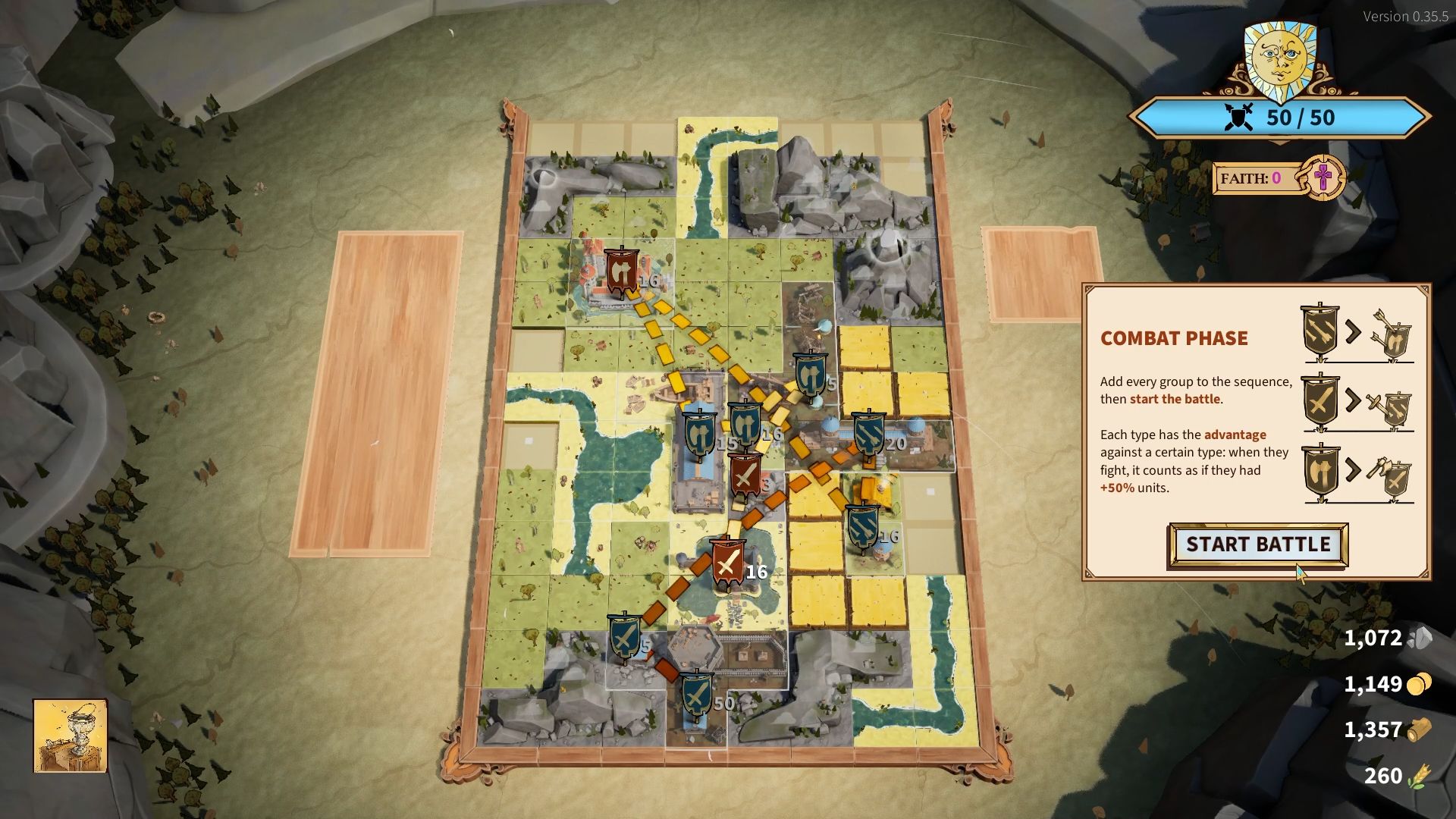
I do grant that roguelikes often have the element of “I got to the boss but got a bad random draw and my cool build and pro strat broke”, but it sucks when everything comes down to “the pieces came out in a weird order and I got screwed by the board.” I remember one boss fight where I couldn’t get my unit production online before I triggered the combat, so it was totally unrecoverable, just “Okay, great, I lose the run. This was fun. A good use of my time.”
At its best, Drop Duchy can be like playing one of those board games where you carefully plan your strategy and build your deck, and everything clicks perfectly, and even if you lose, it was still extremely satisfying to give it a try. At its worst, it can be like playing one of those complicated board games that take an hour to get going, you don’t really know what’s going on, the other guy somehow has 75 guys now and you have 12, and you don’t even care anymore, that “okay, now he’s just styling on me, can I just go?” feeling. Sometimes it’s a little too board game.
An interesting board game-style roguelike that can be a little too board game-style.
 The Final Word
Drop Duchy has a clever and engaging tile-based strategy concept blending Tetris and deckbuilding, with strong combo potential and rewarding planning. However, its steep learning curve, lack of in-game clarity, reliance on RNG, and grind-heavy progression hold it back from reaching greater heights. It’s a niche but appealing experience for players who love complex systems and board game-style strategy.
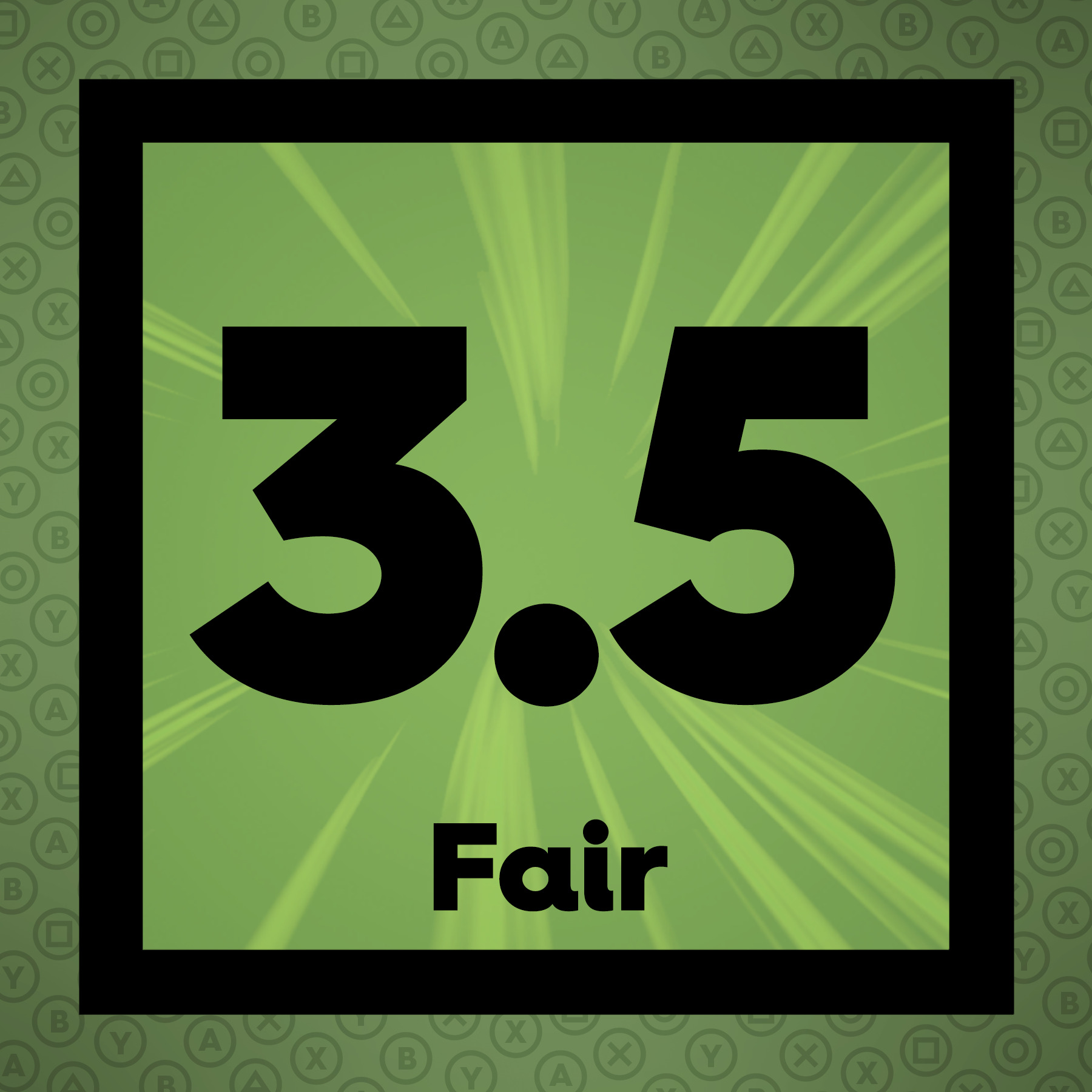
MonsterVine Rating: 3.5 out of 5 – Fair