

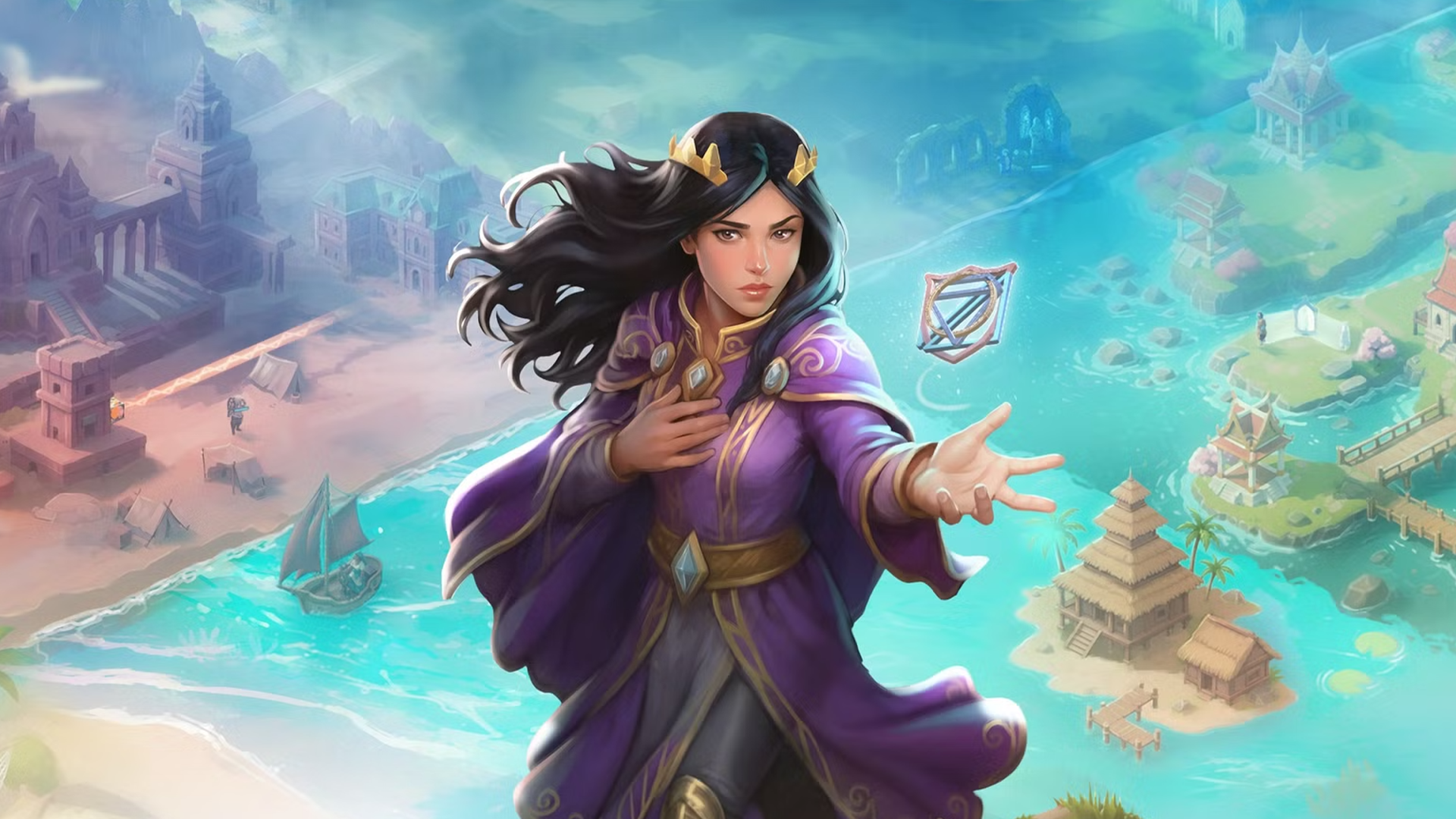

MonsterVine recently had the chance to interview legendary game designer Jonathan Blow, Founder of Thekla, Inc & Creator of The Witness and Braid, about his latest title — Order of the Sinking Star. In our chat, Blow spoke about the process of designing interesting puzzles, how many puzzles can get cut throughout a game’s development, crafting the game in the programming language he’s been developing, and more.
Order of the Sinking Star is set to release for the PC later this year.
After The Witness, you went all-in on fleshing out Jai. What was it like to develop an entire game using Jai? How did it affect the development cycle and the game itself?
Jonathan: It made programming a lot more fun. The simplest part of this is just the very fast iteration speed, but on top of that, having good language features really helps. In the other direction, no other programming language has ever had its design honed by being used on a commercial-quality video game, so this is great for the quality of the language as well.
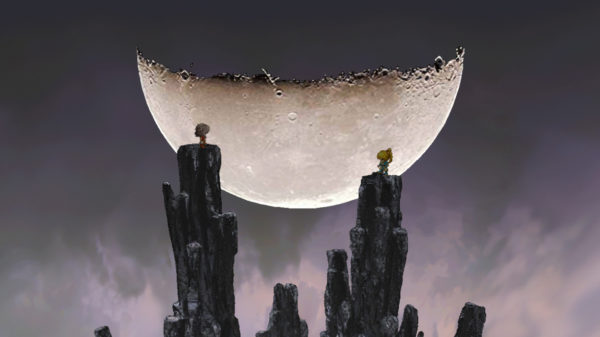
Order of the Sinking Star features four distinct puzzle types that eventually begin to fuse. How did you decide on the four puzzle types that you wanted to use as the basis for the game?
Jonathan: I knew from the beginning that the core idea of the game was combining these worlds. So, I was on the lookout for mechanics that I felt would come together and dovetail nicely to create new, interesting situations.
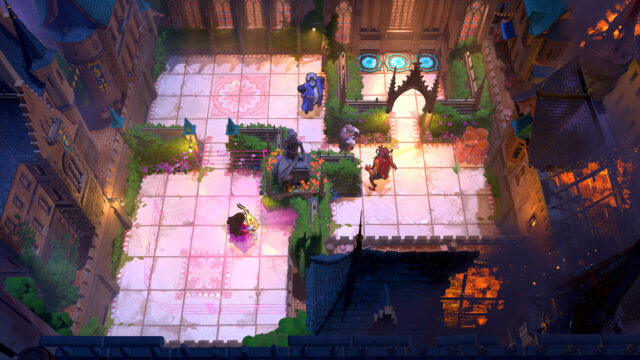
Credit: Thekla, Inc.
Having made so many for your previous games and now Order of the Sinking Star, what’s your process when it comes to creating an interesting puzzle?
Jonathan: It’s a little different for every game, because different kinds of puzzles are different. But here, we usually start with a high-level idea: what is the player supposed to observe about the mechanics in the course of playing the level, and how do we show what is really cool and interesting about that? This usually gives us enough of an idea to sketch out an initial level, but often there will be problems: maybe the level is too messy with too many objects, which makes it unclear and confusing to play; maybe the core idea just isn’t clear enough. So, from there we just keep hammering on the level until it’s good.
We have done much more design iteration than most puzzle games. Some levels have been revised more than 12 times, and a lot of levels just never make it into the game, because they aren’t quite good enough.
On a similar note, how do you approach balancing the difficulty and complexity of each puzzle? Do many puzzles end up being cut, or are they primarily reworked?
Jonathan: We have cut somewhere between half and 2/3 of the puzzles we designed for this game. But almost every puzzle is the product of reworking. When it comes to difficulty, as we worked on this game, we refined a distinct sense of “bad difficulty” vs “good difficulty”. If a level has a cool idea, when there is “good difficulty” you are thinking hard about things that are directly relevant to the idea. “Bad difficulty” is when we just made it too hard to see the idea in the first place, or else we make you do a bunch of tiring puzzle solving that is not special to this idea – say, scrambling around a bunch of objects, or doing an invisible maze in your head, the way you might do in any puzzle in any game. We do our best to cut the bad difficulty, but good difficulty is okay.
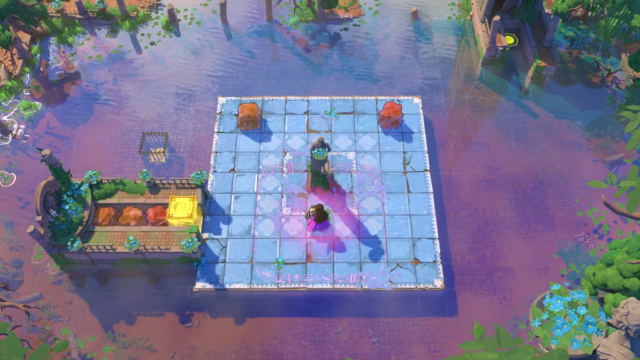
Credit: Thekal, Inc.
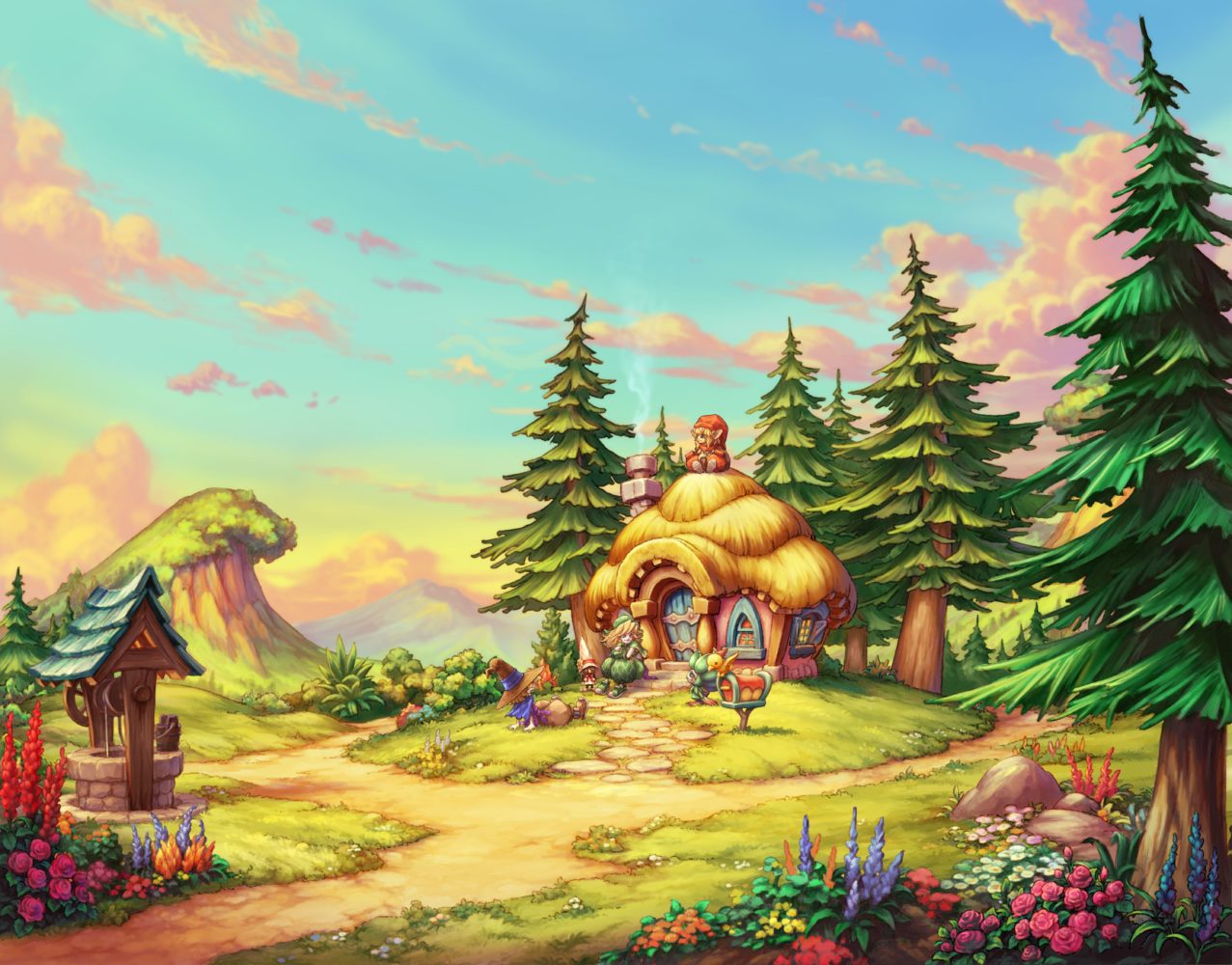
Order of the Sinking Star seems to encourage you to wander between the four areas as you think about the puzzles you’re tackling. What challenges come with combining nonlinearity with both narrative and increasingly difficult puzzles?
Jonathan: With the puzzles, we are careful about locking advanced ideas until you’ve done the earlier versions. So, whereas you have a lot of freedom to explore, you also won’t run into stuff you’re not prepared for. Story is different though, and there we just have to come up with storytelling methods that work well with nonlinearity. Some games cheat and just give you linear story stuff in order regardless of where you went, but I don’t like that, and I think players feel the way in which this spoils nonlinearity. Our approach here is just to embrace the nonlinearity and help make it interesting that you might see different ideas in an unpredictable order.