







































In the past few years, we have had more new Canadian teams and developers in the limelight. Though we have had more games debut and succeed, such as 1000xResist, Balatro, and Venba, we are in a sort of invigoration of Canadian-developed games and studios, especially with Canada being named one of the first countries said to receive tariff increases due to America’s end/announcements several months ago with 51st rhetoric terrifying Canadians. It is even more prime than ever before for developers in Canada to be known alongside set themselves apart, especially with rising tensions between Canada and America.
Summer Game Fest was an ideal showcase to exhibit that, though there were Canadian developers/teams showing off their games, this year was marginally smaller than last year for Canadian media and journalists attending. Last year, we had more than 30 media folks from Canada–this year were fewer than a dozen from Canadian media. A very stark contrast for a variety of valid reasons.
Ambrosia Sky was completely booked appointment-wise, but I knew I had to mosey over to check it out–one of the main reasons–it is an all-new studio. Soft Rains has many veterans from Canadian studios such as Ubisoft Toronto, Capybara Games, alongside developers from Bethesda and Riot Games, as well. It has always been exciting to me, since I was a kid, to know that an upcoming or previously released game is made in Canada or specifically in the Toronto area, where I reside. From attending local Toronto games events, I truly believe the next few years, we are going to get a huge wave of Canadian games, developers, and studios, which has never occurred so greatly or unapologetically all at once, and Ambrosia Sky is one of the games that represents this boon we are in for Canadian developed art.
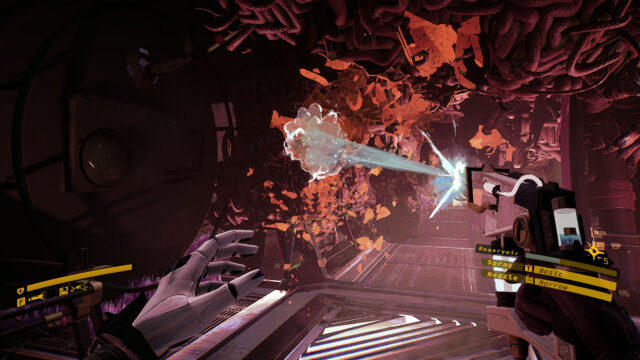
Ambrosia Sky’s Post-Extinction Premise
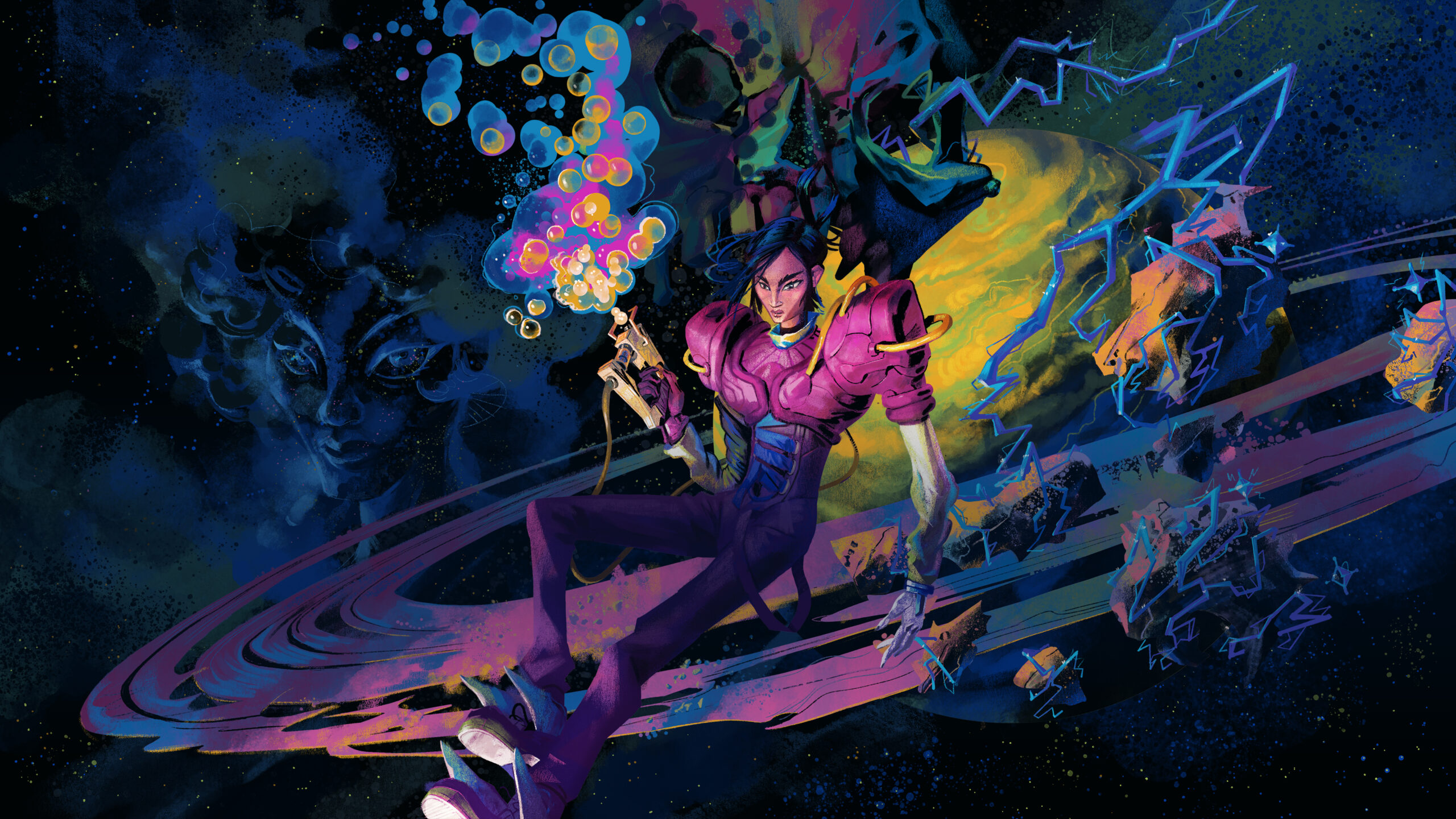
An alien fungus has contaminated a space colony, and a lone disaster specialist is dispatched to clean it up. Our main character, Dalia, will be using a variety of tools/equipment to stave off, quell, and clean up this fungus. There is this somber sense of desolation, since you are trying to figure out any details as to why any of this happened, as Dalia discovers remnants of these victims. Rather than actively fighting against an alien horde or oddity–the overgrown destruction has already taken place, and this chilling sense of morbidity remains. There is this emptiness after the devastation that has lingered in my mind. Is it even worth salvaging or figuring out what had happened when these victims are gone? But like in real life–there are specific roles and jobs for people to tackle after loss, extinction, and extermination that I follow first-hand with Dalia’s journey.
The mission I tackled was titled “A Death Ritual”, where Dalia/I would be visiting the town Dalia had grown up in, and Dalia is tasked to perform Gerald Parker’s last death rites. Pretty intense start–in all of the right ways–for a game that can essentially be broken down to a “clean up” game, but it had me engaged from solely talking with the developer at the game’s main menu for what unknowns were in store for me ahead. Levels would be unlocked linearly, but I was told there would be replayability to go back to repeat levels.
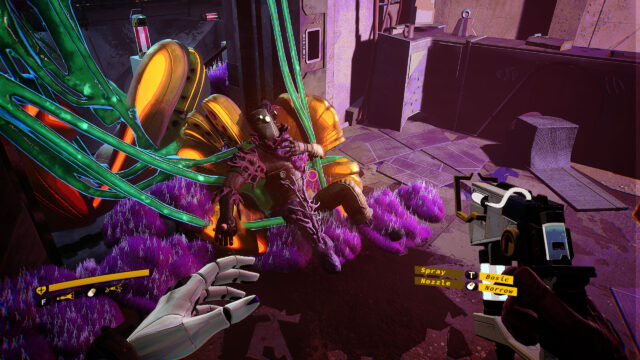
There were different types of fungi that were in my path, with the first being electric fungus that feeds off electricity. Aspects such as kiosks, doors, and other electric-powered surroundings were prohibited to me, but as soon as I used the spray tools to clean up the electric fungi, I could then pass through areas I was barred from. At the same time, I had another spray that conducts electricity, so I could use different electric sources in the environment by creating wires to connect doorways to open them. Cleaning off the overhead lights from the electric draining fungi allowed me to turn on the lights for my own use to create pathways. The gameplay system was all systemic that which the team themselves built. Solving these barriers with my wits made me feel fulfilled, exclaiming often how “very cool” it was each time I solved these tiny puzzles, and I began creating routes to areas that my character may not be able to physically get close to. With the electrical spray in hand, I created the means to progress deeper by essentially connecting the dots throughout my environment, while cleaning any fungi that would impede my progress.
There is another element to take into consideration, since your sprays have a reservoir, the sprays can run out, and it takes longer to accumulate these reserves. You do not want to spray wildly, but be mindful not to just use your resources so candidly. I was in wonder of the physics of the water/sprays, since Ambrosia Sky’s sprays were blobs and globs of water with their own physics engines reminiscent of spraying water through a real hose with different nozzles, that the stagnant spray-style of other simulator games I loved, such as Spray Paint Simulator and PowerWash Simulator, were not equivacal due to Ambrosia Sky’s buoyancy and fluidity of its spray tools.
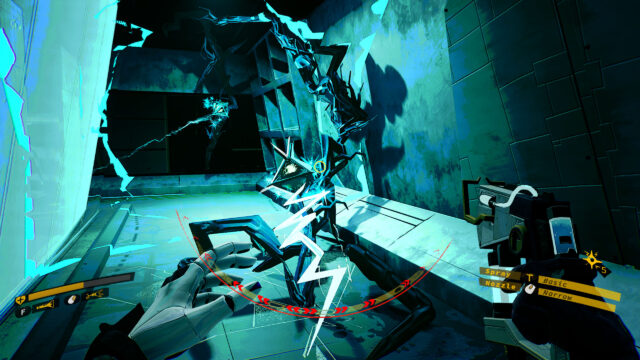
After dealing with the electric fungi, my next deterrent was exploder fungi. I can easily use a flame spray to deal with this next fungus, but then the fruits I can use for upgrading my different spray would be ruined. This was a lot harder, since I was tactfully trying to clean up the exploder fungus, but was more often than not destroying the fruit I was meant to harvest. I was able to harvest a few fruits by disconnecting them from the fungus without having them explode or catch on fire, though it quickly made me realize I would need a lot more practice and consideration of the bombastic chain reactions in my surroundings to obtain these fruits safely. Continually making sure I was spraying the base of the stems of the fruit rather than on them directly. It takes some time to navigate this mechanic I was just introduced to in real time, since it is very different than clearing the electric fungus wildly through the sprays just beforehand, but nabbing each fruit with care had me ecstatic, even though most of the fruits exploded by my own doing. This is definitely where the replayability aspect of the missions comes in to redo levels to nab all of the fruit with impunity.
After my fruit explosion escapades, I was able to turn on the zero gravity to use a wire that could latch onto surroundings, pull myself across rooms, go over railings, and clean fungus I could not physically reach prior.
At the end of the demo, there was this beautiful moment, where we found Gerald Parker–really what was left of Gerald, with his last will and testament that was then stylized in panels like a comic book. Dalia then disintegrates Gerald’s body to collect a sample, which left me speechless and in a state I had to shake myself out of with this endearing and soothing moment from how lovingly the game handles the events after a disaster, especially of victims that the protagonist Dalia has to interact with after the destruction, chaos, and havoc is quelled.
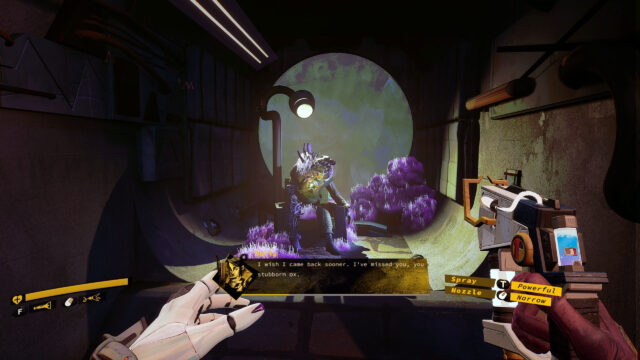
I came into Ambrosia Sky really only knowing that most of the team was Canadian developers/veterans, and I left with a sense of solace/quietness of an intimately crafted and harrowing demo working in tandem with the gameplay mechanics alongside the science fiction narrative to craft an early game mission to evoke of thoughts on what is left behind of people and who is tasked to “clean up” these disasters first-hand. The fungi is not just the sole barrier Dalia has to face.
Ambrosia Sky has yet to have a release date, but players can play the game’s demo on Steam.