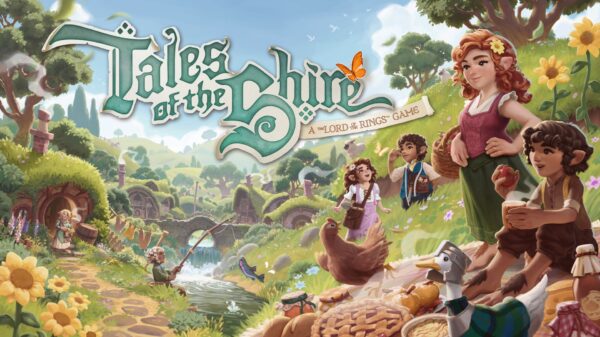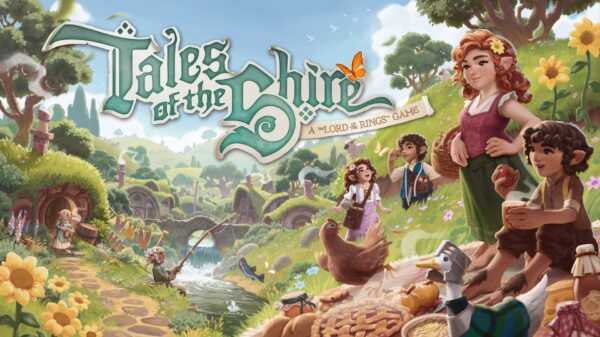
















































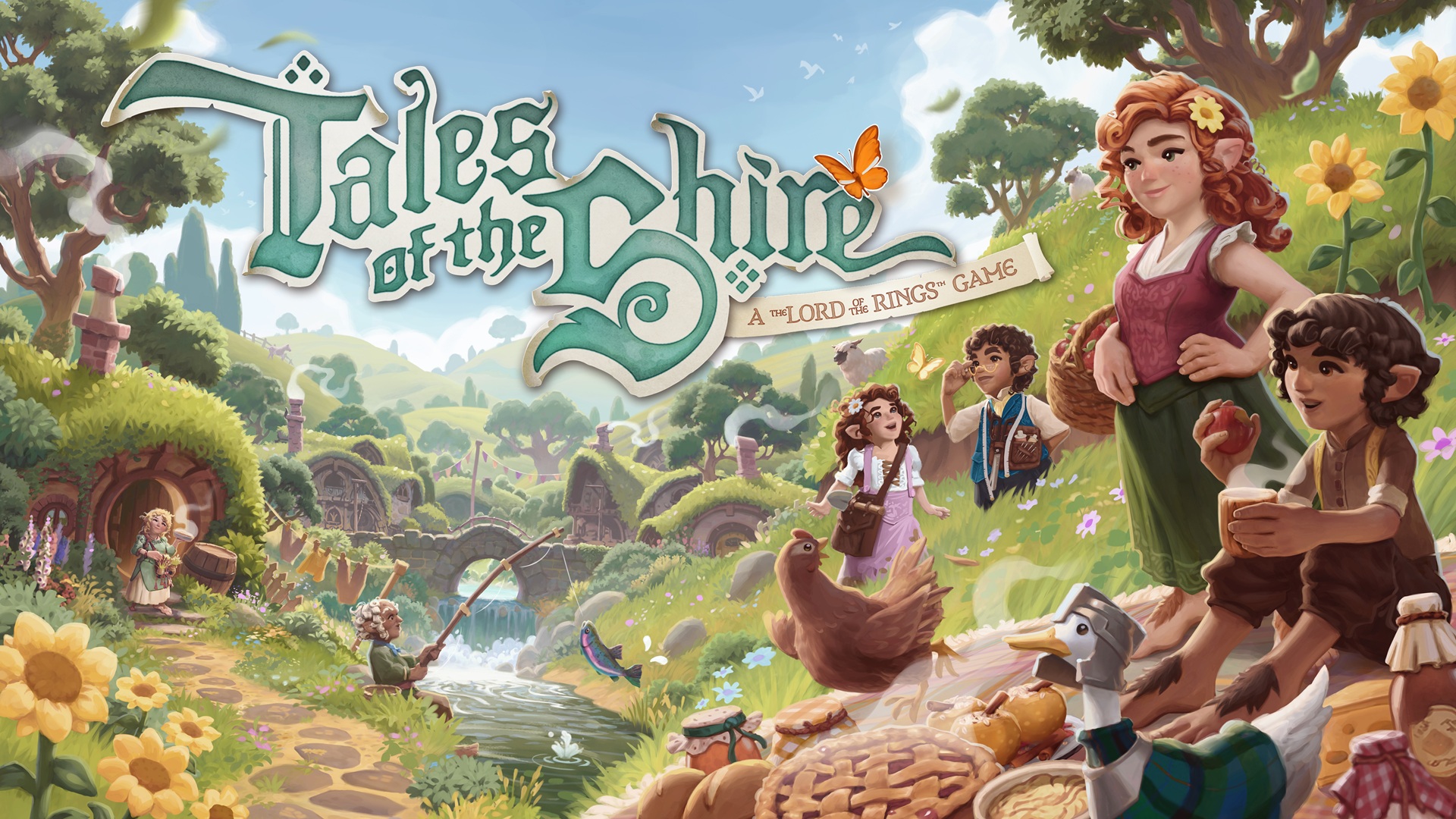

Maybe it’s a bit surprising we’ve taken so long to get to a The Lord of the Rings style life sim, but Tales of the Shire is finally here. Players take on the role of a hobbit in the burgeoning village of Bywater as it seeks to become an official village in the magistrate’s eyes. Along the way, you’ll be cooking, fishing, foraging, and gardening your way into the hearts of your fellow hobbits.
Tales of the Shire: A The Lord of The Rings Game
Developer: Wētā Workshop
Price: $35
Platform: PC, PlayStation 5 (reviewed), Xbox Series X|S, Nintendo Switch
MonsterVine was supplied with a PlayStation 5 code for review.
I was both impressed and disappointed with Tales of the Shire. Truly, the gameplay loop had me hooked pretty early on. Once the story groundwork is laid out and you start working with your neighbors to make a village, Tales of the Shire’s beauty comes into full view. The player hobbit is from Bree, a village east of the Shire, and the only place where hobbits and men live together.
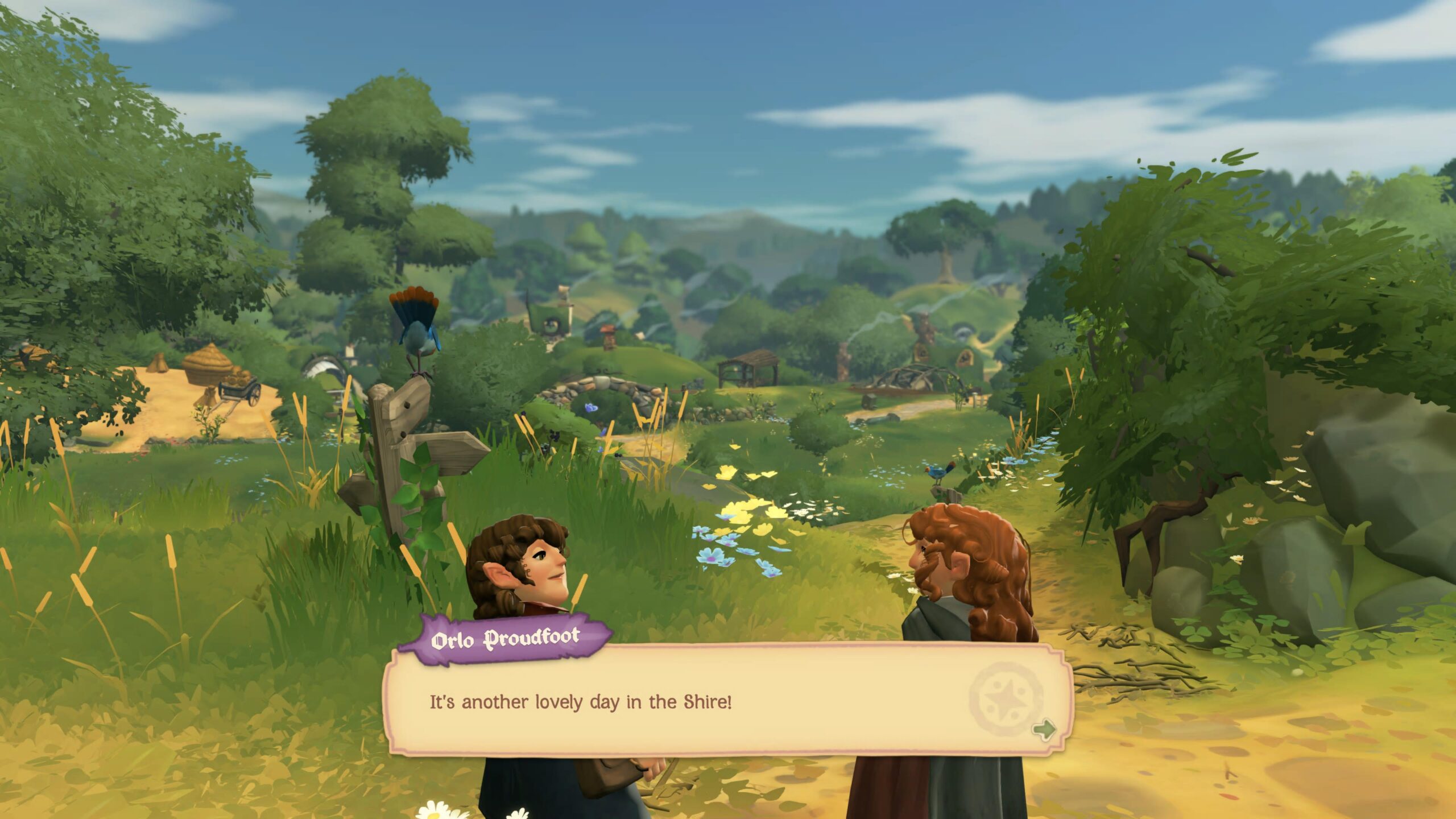
While moving into Bywater, you meet the other important Hobbits in the story, and they all have their own established relationships. Many of the hobbits will be recognized from other Lord of the Rings material. You’ll run into Rosie Cotton, the Tooks, Gandalf, and hobbits will even bring up the Baggins. It’s all fairly immaterial though, as Tales of the Shire is mostly about building a town and relationships within.
The story moves fairly quickly. I’m still a little shocked at how quickly I managed to make it through the story, considering I was so focused on foraging and fishing. I love fishing in games and I guess I love foraging. Thinking back on other games I’ve played, I really do enjoy going out of my way to grab stuff that I might need later. That’s essentially foraging.
Foraging amounts to collecting mushrooms and herbs that naturally grow around the world. Holding down R2 allows you to skip instead of walking quickly, and I’m not sure skipping actually speeds you up at all. As I wander the Shire picking up puffballs and morel, pepperwort and sage, I’m finding spots for Tales. Tales are a blue sparkly area where you’ll have a moment with another hobbit or a place for quiet contemplation. There are a limited number of Tales and Moments but they do a fair job of coloring in the world.
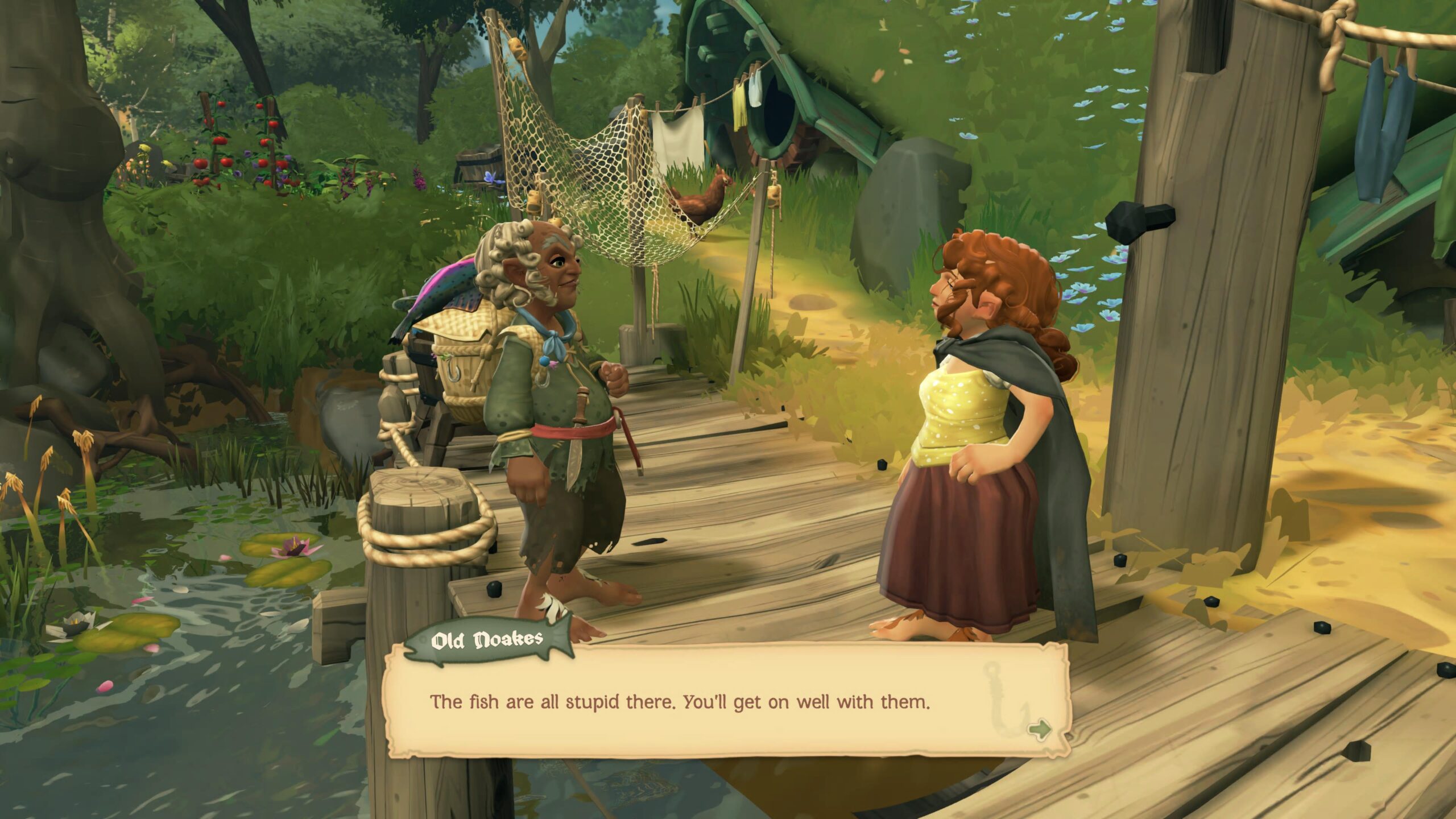
Fishing is a fairly simple and established game mechanic at this point. You toss your bobber into the lake at a specific point, a fish notices and grabs it, you pull in the opposite direction of the fish while reeling it in. There’s an indicator that tells you whether or not the line is about to break. Frustratingly, you cannot change the camera angle while fishing, and, considering height differences, it can make seeing the line indicator impossible at some angles.
Gardening is downright boring. Your hobbit hole is mostly blocked off when you move in, including the gardening areas outside. As your relationship with Willow Took grows, it’ll unlock more areas of your house. As you progress through the Gardening story, which I’ll get into more later, you unlock more gardening areas. Though you can’t just garden in your yard, you have to spend a LOT of money on beds to garden in.
I thought this was cute at first, and it helped bring order to something that can get out of hand easily. But the longer I played, the more I realized I hated it. I have all this land outside my hobbit hole, and I have to spend a lot of money buying beds to put in that land. The only hobbit who sells these beds is farmer Cotton, and he only has one bed each per day, which means it’ll take several days if I want things to look uniform.
I guess there’s little uniformity about the way hobbits live, and maybe that’s my own neurosis talking, but I demand order in my garden, damn it! There are a lot of vegetables and flowers in this game and each season is only fifteen days long, which means you have very limited time to grow your veggies.
We take those veggies, those mushrooms, those fish, and we put them all to use in cooking. Cooking is the meat of Tales of the Shire. Cooking is fairly simple, can be quite fun, but as time goes on becomes just another task. Cooking doesn’t exist in a vacuum; you don’t just simply cook to cook, though that’s a nice idea.
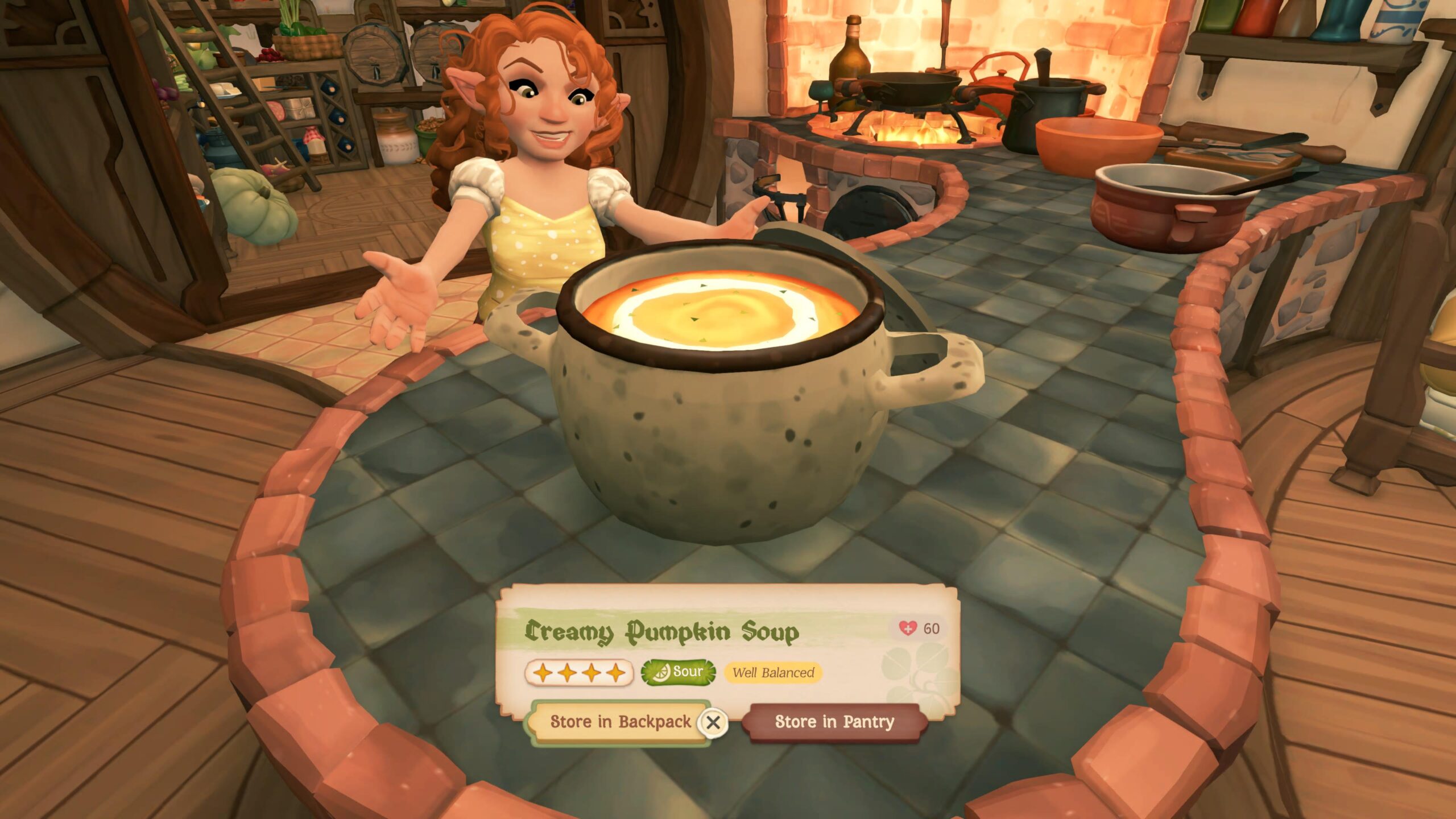
Cooking feeds into the relationship system. Hobbits really only grow their relationship through shared meals. This is where the game gets a little disappointing. There are quite a few locations to have a shared meal, and each hobbit has their own cravings and their own specialty meals depending on the season.
On its own, cooking is a simple task made fun by a simple grid that gives you a goal to shoot for. You pick a recipe, depending on the food you’ve collected, and most recipes have a mix of specific ingredients and general ingredients. You’ll have a dish that requires flour and cream, and maybe a specific fish, but then also requires just mushrooms and nuts. Simple enough.
Each ingredient has a specific flavor that can determine the overall flavor of the dish. Ingredients are either sweet, salty, spicy, sour, or bitter. When you invite hobbits to a shared meal, they offer up a specific craving based on flavor. Sometimes, the meal they’re craving doesn’t align with the flavor they’re craving. Progressing through the cooking storyline unlocks new cooking stations that allow you to mess with the flavors a bit.
The grid I referenced before in cooking determines the dish’s texture. Tales of the Shire ingredients are all about stars. Ingredients you find, garden, and fish all come between one and three stars. The more stars, the higher the quality. However, dishes can get up to five stars. Three stars for cooking with top-tier ingredients, a star for flavor combinations, and a star for the correct texture.
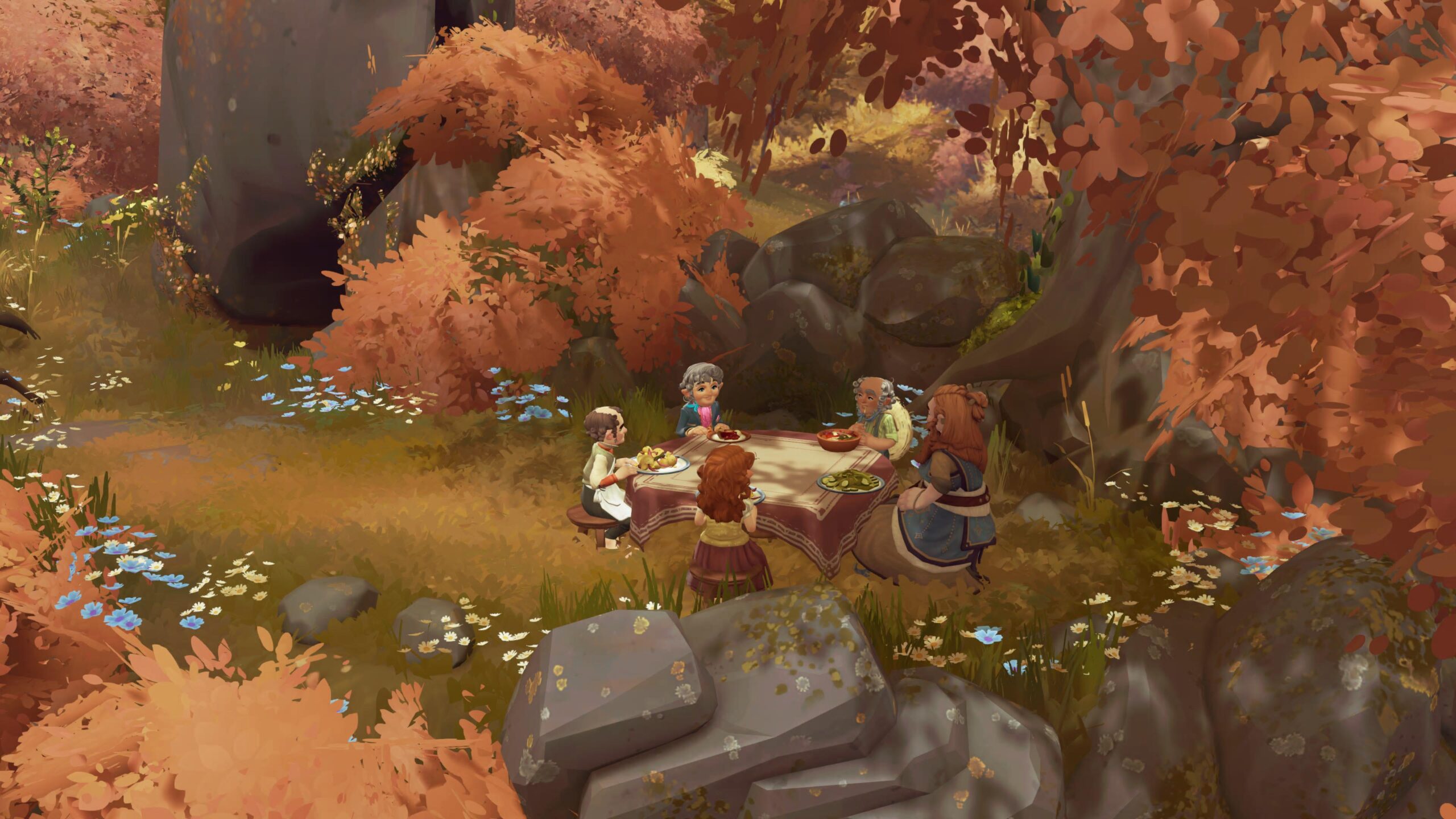
When cooking, you’ll be presented with a grid. Smooth or chunky, tender or crisp. There will be a box with a star on it, and you’re aiming to hit that box. All these ingredients, so to speak, of the cooking system make it actually enjoyable. I’ve cooked a lot of dishes in video games, and it’s nice to have a system that’s both cozy and challenging.
At a certain point in the story, clubs must be established for Bywater to become a village. The clubs grant experience for performing activities and act as the leveling systems for foraging, fishing, gardening, and cooking. Progressing through these takes a lot of work and time. Each club gets a bulletin board with simple tasks to complete that grand experience and rewards as well. However, even focusing on these simple tasks rewards little experience.
My primary issue with Tales of the Shire is the juxtaposition between the fast-moving Bywater becoming a village story and the slow-moving club stories. I hadn’t even hit my first winter when I finished the main story. Tales of the Shire starts out in Summer, so within two seasons, I had finished the main story. And the point of these games isn’t necessarily just the story; there’s a lot to do, and I found myself entranced by the primary gameplay loop.
However, without the main story to drop breadcrumbs, the gameplay loop has become a bit stale. I wake up, I check on my garden and feed my chickens, then I check the mailbox. I have mail from four hobbits with gifts from the shared meal from the day prior, and four letters from the hobbits for today’s shared meal with flavor requests. I cook a shared meal, forage and fish for a while, have the shared meal, and head back home to plan a new one.
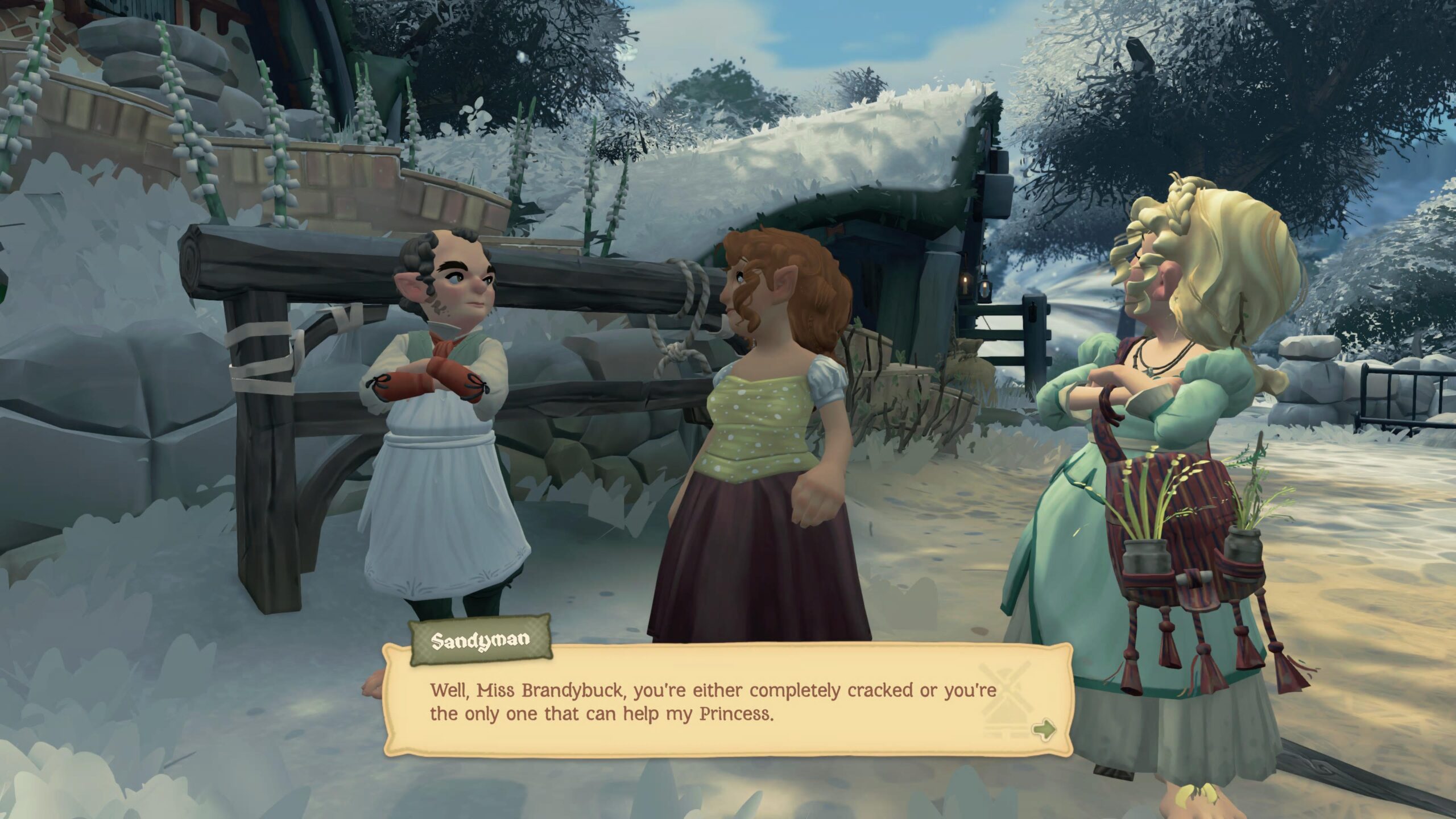
Once the main story is done, there’s very little variance in your day unless you happen to find a missing package, which can be a fun game of deduction, or you’ve progressed a Hobbit’s relationship to the point they’re willing to open a new area for you. The map is fairly large and becomes bigger as you progress through relationships. Again, these dry up quickly.
Unfortunately, Tales of the Shire also has some technical issues. The performance on my PlayStation 5 Pro was not great, struggling to hit a steady 30fps in most areas. Likewise, there are a few issues where any progress contributes to the ‘act progress’ for whatever act you’re currently in, causing the progress bar to go beyond 100%, almost hitting 200% at one point. Gameplay most assuredly suffers from the low frame rate.
I really enjoyed my first year in Tales of the Shire. I found the Hobbits’ conversation and gossip with each other humorous and heartwarming. Bywater is a very cool locale, and all the references to The Lord of the Rings in general are fun if a bit rote. But after that point, I felt little pull to go back.
 The Final Word
Tales of the Shire: A The Lord of the Rings Game offers a very fun gameplay loop and a great year living in Middle-earth, but fades out a bit too quickly and should offer more to keep the player going beyond the main story.
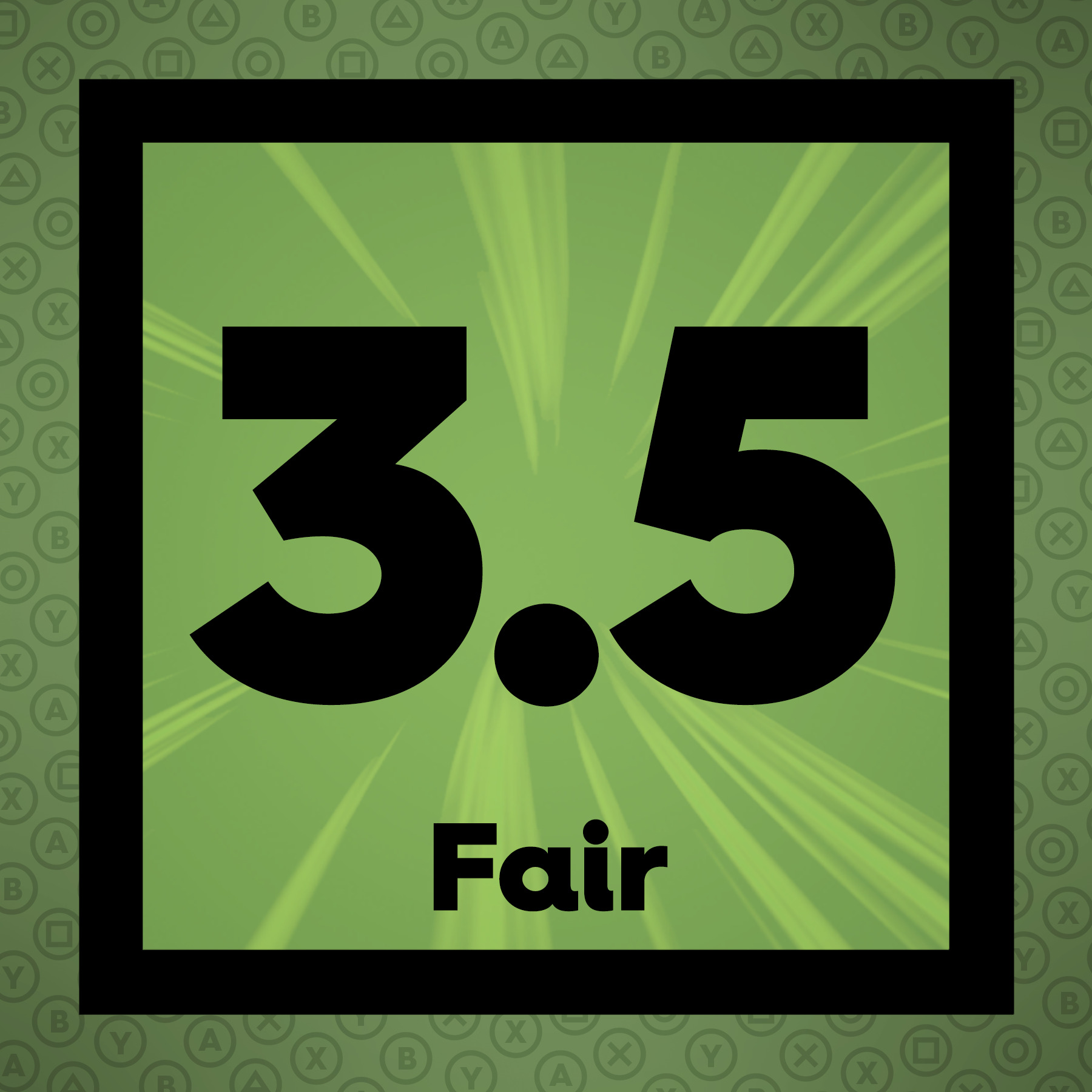
MonsterVine Rating: 3.5 out of 5 – Fair