












MonsterVine is at MagicCon Las Vegas, and we were lucky enough to get to sit down with Mike Turian, Senior Executive Producer, Aaron Forsythe, Senior VP of Game Design and Creative, and Blake Rasmussen, Director of Communications for Magic: The Gathering at Wizards of the Coast. In this chat, we went over everything Universes Beyond from its start, to the lessons they’ve learned along the way since it started in Magic.
_______________________________________________
Thank you again for meeting this morning with us. I really wanted to talk about Universes Beyond now that we’re deep into all of the sets with them. How do you guys go about deciding which Universes Beyond sets are not only a good thematic fit for Magic, but a mechanical fit as well?
Aaron Forsythe: We have a pretty robust vetting process where the game design team goes through the intellectual property that we’re looking to partner with. They figure out if there’s material that can span the five colors easily, if there’s a sufficient number of different concepts that can be created, whether there are enough things that fly, and enough of those problems Magic needs to be able to solve for. Are there different sizes of things? Is there enough conflict where if we show things fighting each other all the time, does that feel authentic?
Mike Turian: Color pie, did you say color pie?
Aaron Forsythe: Yeah, if we have stuff that branches all five colors. Meanwhile, the world-building team is doing a similar analysis to make sure we understand the look and feel, the landscapes, the settings, and the main characters. Is there a diverse enough cast, et cetera. Then the business team looks at audience overlap—do we expect our fans and the fans of that property to mix well? Then the three teams get together and talk about whether this hit all the marks, or are we short somewhere here or there? If not, is this a good fit? Is this something we should do in just a Secret Lair, or is this something we shouldn’t be doing at all? We put it through a bit of a wringer to end up with the stuff that we’re going to do.
Do you guys feel like you’ve hit a good balance between the two, since currently this year, half the sets are Universes Beyond and half are in-universe? Should we expect some years to be more or less?
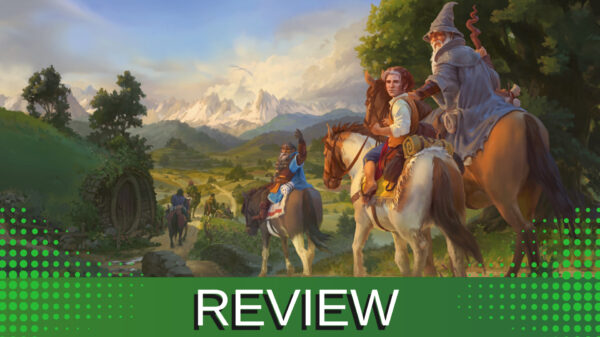
Mike Turian: It’s something we’re always evaluating. We are working years ahead of time. I started working on the Lord of the Rings set in 2019, and it was released in 2023. To me, that right balance comes from fan feedback, player feedback, and what we learn as we work on these different properties. Seeing the success of the Universes Beyond sets is amazing. And seeing the love for the Magic world when we’re doing Secrets of Strixhaven and Lorwyn Eclipsed is also amazing. It just means it’s a rich and constant conversation about wanting to do right by all of the elements, and that becomes a discussion, obviously.
Aaron Forsythe: This year was a bit of an anomaly where we had seven standard releases, and four of them were Universes Beyond. I personally think that’s too far in that direction. Next year, we’ll get to what I think is a sustainable three and three. I do think that the Magic IP should not be less than half of what we’re putting out there. That’s what we’re going to see in the short term. Long term is exactly what Mark said: evaluating every time we hear something, seeing how things go, and then we’ll pivot if we have to.
Gotcha. Are there any mechanics that you guys have been wanting to do in Magic for a while that finally made narrative sense because of a Universes Beyond set?
Mike Turian: It’s interesting because normally the process is that there’s a vision, and then the mechanics are plugged into the vision. But Adventures in The Hobbit is one that was an amazing fit, bringing it back. I love that Edge of Eternities got to introduce these giant spacecraft. Those are a couple, not to say what’s in the Star Trek set, but you can kind of imagine that on your own.
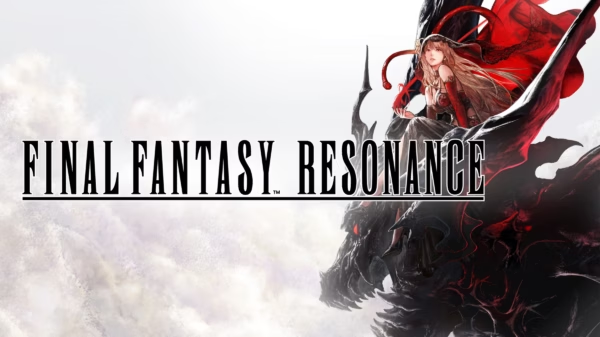
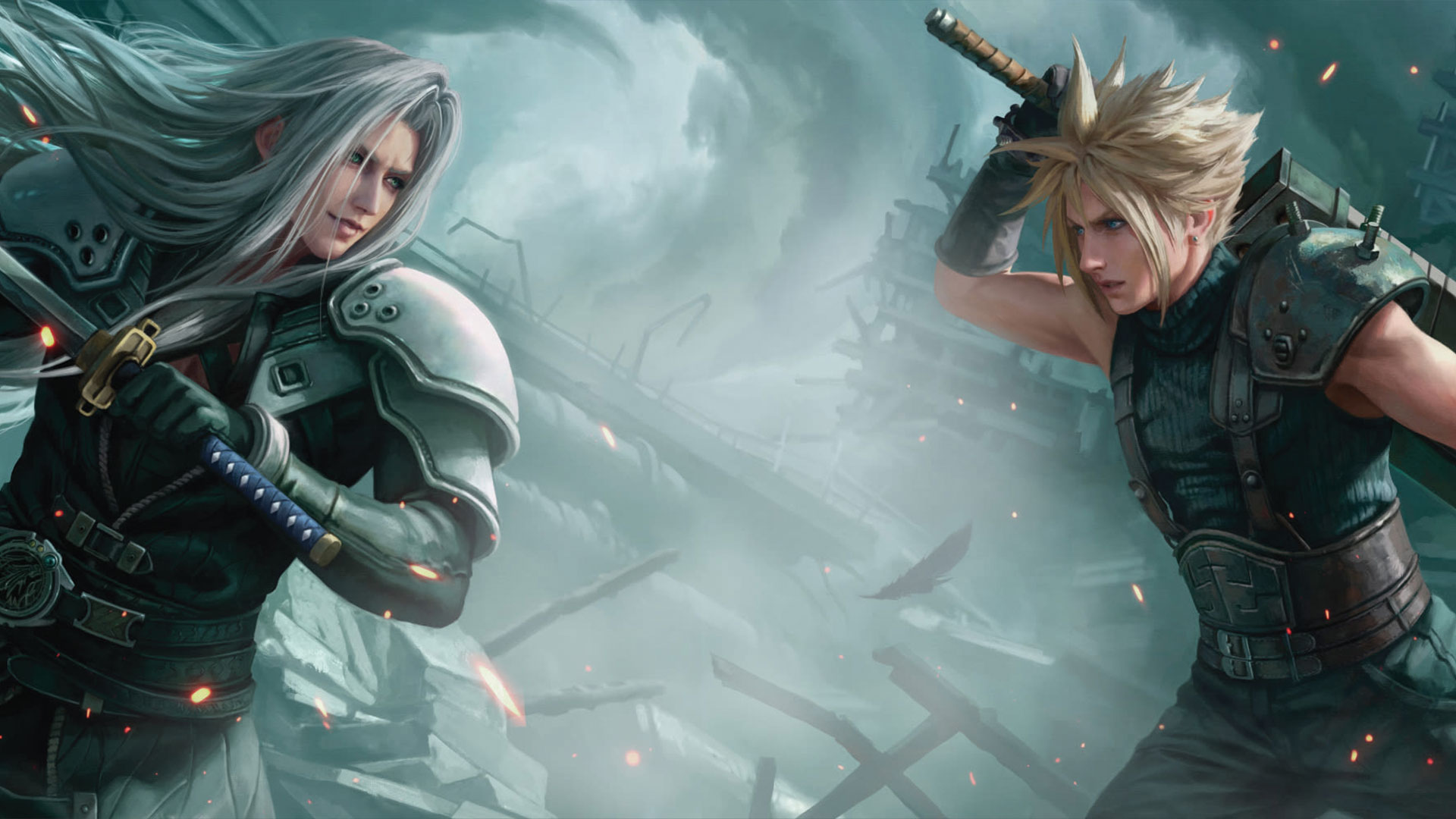
Aaron Forsythe: Because the Magic IP gives us infinite freedom to craft the type of world we want, if there was a mechanic we really wanted to do in a Magic set, we would reverse engineer a world that allowed us to do that. There are mechanics that Universes Beyond has led us to create, whether it was venturing into the dungeon for the Forgotten Realms set, or “The Ring tempts you.” These are not things we would have ever put into Magic without that IP. At the same time, it’s not something we hadn’t thought of and wanted to do; it just evolved naturally from dealing with that property. The Saga creatures in Final Fantasy is another one. If we had thought of that ourselves beforehand, apart from Final Fantasy, we would have figured out how to put it into a set. But Final Fantasy was the catalyst that allowed us to think of it. And that’s one where I bet we can figure out a way to use these in Magic again at some point.
Mike Turian: Yeah, cause they were so awesome.
Aaron Forsythe: Yeah.
I had taken a break from Magic for a bit just because all the card shops I was going to were too toxic, and the friends that I normally played with moved away. Then I moved with some new friends to Seattle, and the Final Fantasy set was coming out. We were all big Final Fantasy fans, so that set got us back into Magic, which was nice.
Mike Turian: It’s amazing. I love to hear that.
Aaron Forsythe: Your story is one we’re seeing over and over again. Whether people had stopped playing Magic or never quite got into it, some property like Final Fantasy gets them in. Because we have the best game in the world, you’re going to rekindle or develop an affinity for the game, and start checking out all the other cool stuff we’re making.
Mike Turian: It’s interesting you talk about whether there’s a mechanic they want to do. Design-space-wise, I started playing during The Dark, and Fallen Empires had the Hymn to Tourach variants, which I always thought was fun. When we did the Nazgûl, Emily on the creative team said we should do nine Nazgûl with different art. To me, bringing something back from Magic’s past—not a gameplay mechanic, but a creative mechanic—was great to see. The fans responded with, “Yeah, of course, there shouldn’t just be a single Nazgûl art, we need to have nine.”
Out of all the Universes Beyond sets that you guys have done, was there one that was particularly challenging with translating it to Magic?
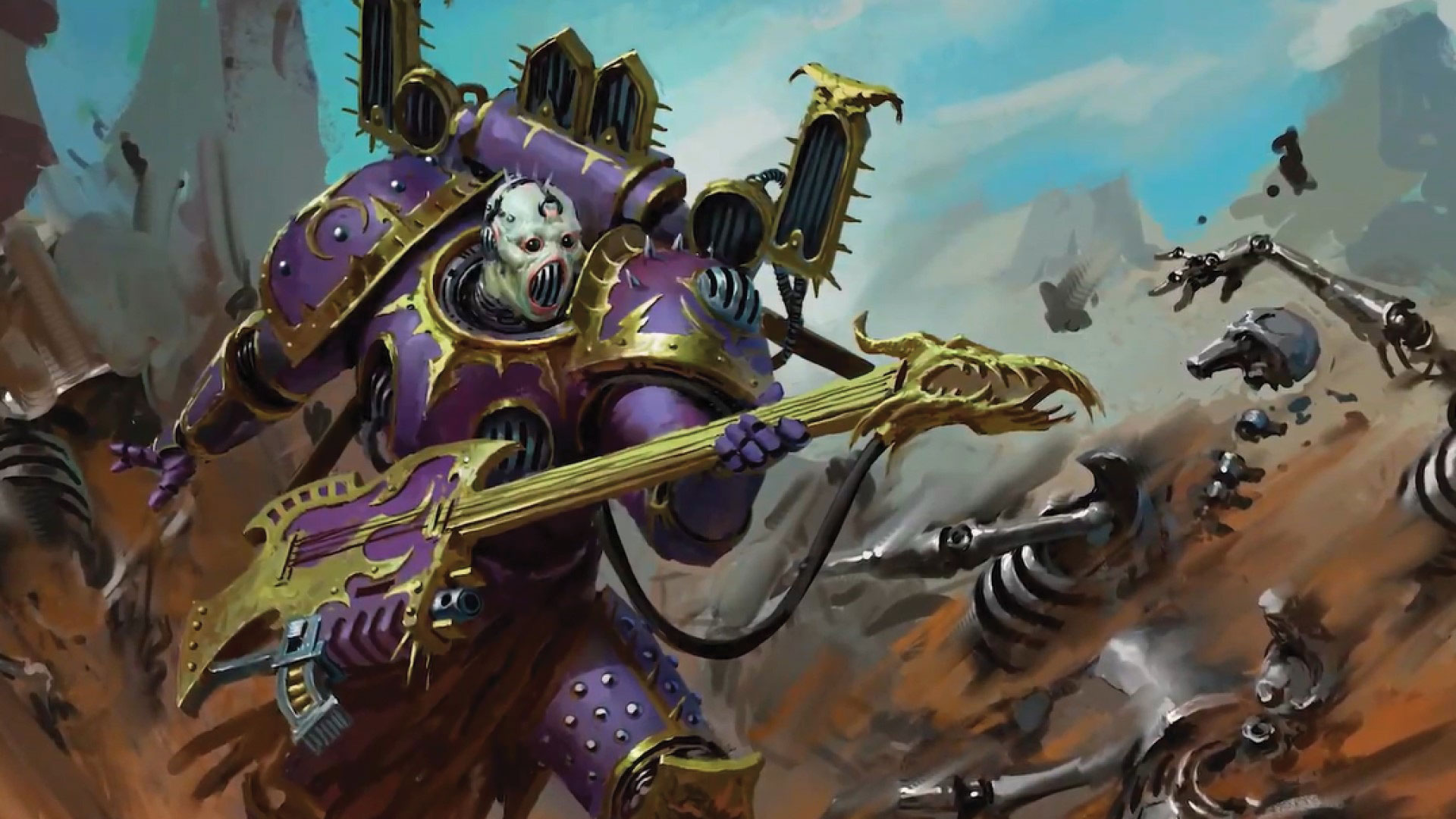
Mike Turian: So, one I remember from early on, Warhammer, just because if you look at the history of the Magic IP, there wasn’t a gun in Magic. Warhammer, if you’ve played it, has a lot of guns. I remember the team being really challenged by like, representing something that’s going to be on a Magic card that does something that Magic just does not do. And that was fairly early on in our Universes Beyond journey, and we can use that as we explore these other properties that do feature guns.
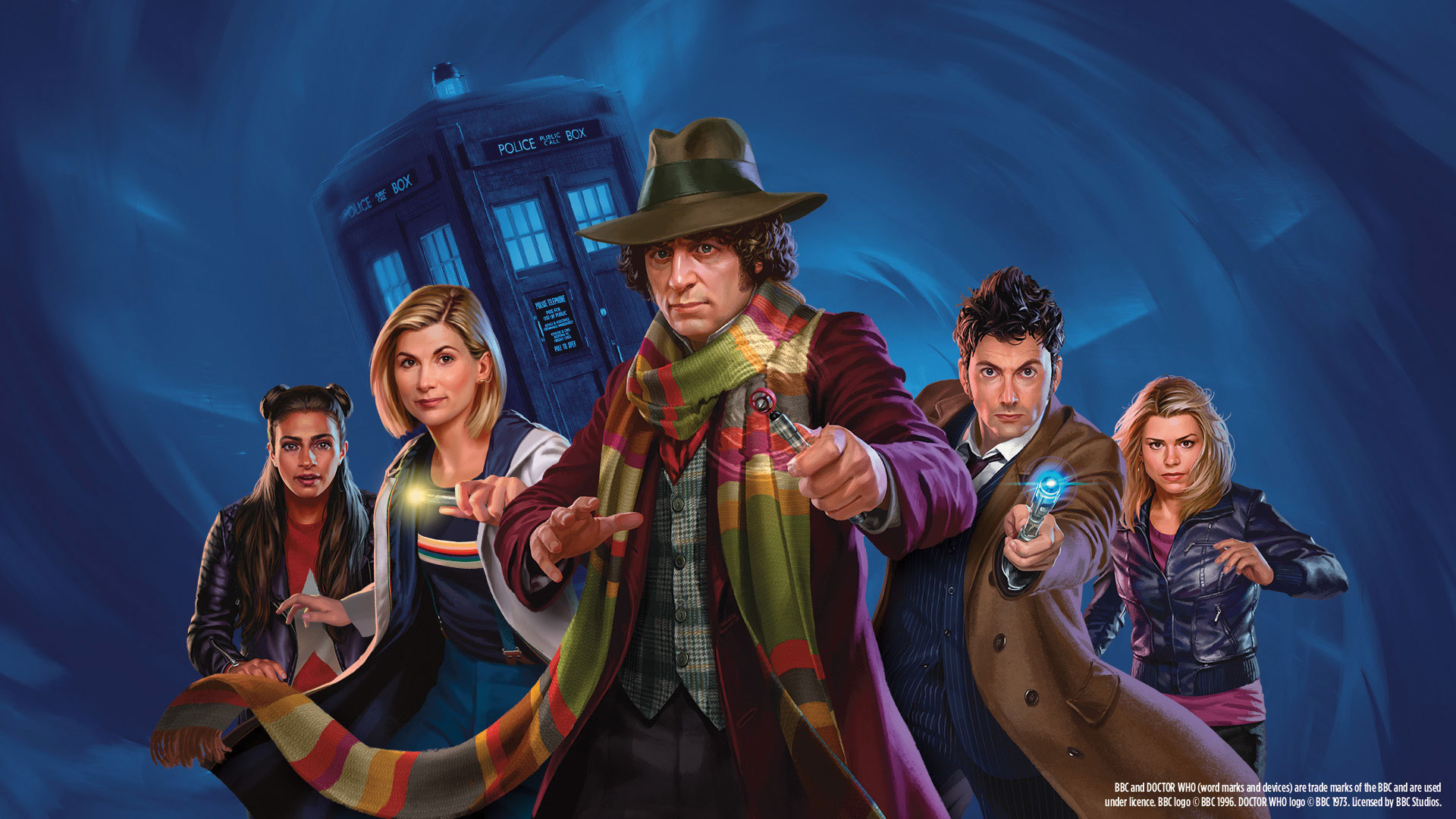
Aaron Forsythe: For me. I’d say it was probably Doctor Who. Like, Doctor Who’s storytelling is pretty cerebral and weird, and it’s not really about, you know, parties of orcs fighting each other. So, in order to capture that vibe, the cards got cerebral and weird in ways that I don’t think we typically do for Magic. I think we captured it, but it’s a little outside our wheelhouse of the type of gameplay and complexity that we normally do. But I’ve certainly heard stories of plenty of fans that started to get back in because Doctor Who, and they loved it.
How do you balance the right amount of tribute to a Universes Beyond property to stop it from feeling like a revolving door of easter eggs that might alienate someone new to the IP?
Aaron Forsythe: We have a lot of people that work on the sets that are not fans of the properties or don’t know them well. We intentionally protect against exactly that, where everyone who’s watched every episode gets every deep cut and they’re all laughing, and other people don’t understand any of it. We maintain that balance through those two groups interacting. The lead art director, narrative writer, or game designer sit down and say, “Okay, these are the four deep cuts that are really important, we’re going to nail those. The rest of these, maybe we can move into flavor text, or we don’t need to actually show this here.” We need people to understand who the protagonist is and why he’s cool, not the one joke he made at one point. Playtesting it and exposing it to a wide variety of people helps match the audience. Magic players are going to want to play these cards even if they don’t know the property, so we need to make sure you’re not left feeling like you’re not in on it.
Mike Turian: I agree with all that. One exercise I’ve seen the game design team do is create a pyramid. The base of the pyramid represents foundational elements—the One Ring, Bilbo, Gandalf, or locations—things that everybody knows, even if they only interacted with it sideways. As they build out the set, it creates a structure. For people highly invested in the property, there’s Tom Bombadil or Bill the Pony. For the highly invested, they see those details. On the other hand, characters at the bottom of that pyramid, like Bilbo, you’re going to see a lot of, versus a one-off reference like Shadowfax having a single card.
Aaron Forsythe: Final Fantasy was one where I was not deeply entrenched; I played one game years ago. We have dozens of people that are fans, but there were points when I would play that set and think, “Okay, black mages, this all sounds really cool.” Then there was this thing called Marlboro, and I didn’t know what I was looking at. That stuff has to be deployed in the right percentages. It helps when this could just be a Magic card. When you go to a new Magic setting, you don’t know what every character’s name is, but you learn. The more it feels like Magic, the easier it is for that stuff to appease everybody.
Have you guys seen a major difference between how veteran Magic players interact with Universes Beyond sets versus how newcomers interact with them?
Mike Turian: For sure. On the newcomer front, you get a lot of individual Universes Beyond set love. “Did you hear they did a Final Fantasy set? Let’s check this out.” The Warhammer audience was similar because their motivations are really similar to Magic players—they love collecting, aesthetics, and intense gameplay. Tapping into that excitement is huge. From the enfranchised player piece, it’s often more mixed. They have been Magic players, and some interact with every single release. In that journey, maybe Murders at Karlov Manor wasn’t for them, but Bloomburrow is amazing. Similarly with Universes Beyond, maybe you haven’t gotten into a property, but you love Magic and show up at the prerelease. We spend so much time and effort making sure the art and gameplay are amazing because we’ve definitely heard people say, “I wasn’t a fan of Final Fantasy until that set came out, and now I’m playing those games.”
Aaron Forsythe: I want to hear Blake’s answer to this question.
Mike Turian: Oh yeah, he answers it really well, go ahead.
Blake Rasmussen: At the core of how I see this, every player has their own different motivation and what they’re looking for. These guys do an amazing job of making sure sets have something for everyone. Mark Rosewater is fond of saying you’re not going to love everything in a set, but you’re going to find something to love. Newer players find that something, whether it’s already being a fan of the IP or just seeing a cute bunny on a Bloomburrow card and liking how it makes them feel. My answer is it varies on the person and what they love, but there are a bunch of things to grab onto in any given set.
Mike Turian: Magic has been so meaningful to us in our lives, and we want to share that with people who haven’t embraced it yet. Universes Beyond represents that bridge. You can say, “Teenage Mutant Ninja Turtles is here. I remember watching that together as kids. Let’s go.” That gives an on-ramp. Magic is a challenging game to play and learn, but having something resonant connects with you. I remember working on the starter kit for The Lord of the Rings, and there’s a Gollum card. If Gollum was a 2-mana 2/2 vanilla creature, that is such a miss. Of course, he has to be offering a riddle. Because you’re excited about Gollum, you’re willing to figure the game out.
Blake Rasmussen: The sweet spot for veteran players is really when we nail the gameplay. When it’s a great marriage of the IP and really good Magic gameplay. I was talking to a longtime Magic player this weekend who wasn’t a fan of Universes Beyond and didn’t watch Avatar: The Last Airbender. Yet, Avatar is one of their favorite sets of all time just because it plays so well. I never watched it either, but I built Aang decks just because the gameplay is so good. If it does a thing that I enjoy doing in-game, then it just becomes another Magic set that does cool stuff.
Mike Turian: The mechanics of the Avatar set are so fun. I don’t think we necessarily would have done firebending in Magic as a mechanic otherwise. Every time I play with a firebending card, it’s like, “How can I use this mana? I’m about to get three mana. I only have it right now. It means it’s time for more instants in my deck.” In Magic, you normally cast instants at the end of your opponent’s turn, but here you’re using it in the attack phase.
Blake Rasmussen: Airbending is also one of my favorite mechanics we’ve done in a really long time.
I had a similar story with the Ninja Turtles set. I got a booster box and told my friends, “Let’s do a draft.” They were all rolling their eyes, but as we opened the packs, you could see the switch. They were like, “These mechanics are really interesting. I should actually put some of these turtles in my Commander decks.” Is it fair to say there’s been a vocal group of Magic players poo-pooing Universes Beyond? Do you guys want to let the sets speak for themselves, or do you think about those detractors when designing the sets?
Blake Rasmussen: I can talk about the sets speaking for themselves because my whole job is not to let the sets speak for themselves. Marketing is trying to get that out there. From a marketing point of view, I wish we had done more with how good the limited gameplay was for Turtles, because honestly, that is one of my favorite limited sets of all time. We didn’t really get that message out, but as people discovered it, they loved it. When sets speak for themselves loudly, it makes our job easier, but we want to show people all the nooks and crannies so they don’t discover it later and feel like they missed out.
Aaron Forsyth: As far as do we think about detractors, mostly no. When designing the set, the vast majority of the energy goes towards people who we think are going to love it, or are predisposed to love it. The next batch of energy goes to people that could love it if they just give it a try. We can’t spend a lot of time and energy on people who are never going to like it because they hate it on principle. We’ll design for those first two groups, and hopefully the third group discovers something. It doesn’t make people happy if we try to force it. We want people to love it, and hopefully that vibe carries through to everybody else.
Blake Rasmussen: We see that story a lot. Magic is a community built on gathering and friends. When you design for people who can find something to love, they’ll show off and evangelize because they love it.
Mike Turian: One thing built into the structure that really helps is there’s a new release about every two months. Even if you weren’t a fan of Outlaws of Thunder Junction, two months later, here’s Modern Horizons or Bloomburrow. For a person who’s not into one thing, we offer so much to love. Aesthetically, we cross over too. The Hildebrandt brothers were longtime Magic artists. When we did Lord of the Rings, it was awesome to bring their pieces into Magic. If you weren’t a Lord of the Rings fan, you might just love Hildebrandt art. It’s a structural connection that helps address when someone’s not a fan of a given IP.
One thing I wanted to ask with Turtles Team-Up—did you guys look at Archenemy and see what worked, what didn’t work, and take that into designing it?
Mike Turian: From a product design side, we’re always looking for products that capture the property. Turtles Team-Up is about teaming up, hopefully for siblings or parent-child play. We brought Archenemy into the Duskmourn Commander decks so you can have an Archenemy experience there. We definitely look to innovate on that, like with Clue and Ravnica, or The Hobbit’s Battle of Five Armies kit.
Aaron Forsyth: Gameplay-wise, we wanted to capture the feel of Archenemy without having a player sitting there and being the Archenemy. The shape of it was teaming up against one enemy. Archenemy allows a player to make the correct decisions and be mean in the optimal way. To solve for an automated enemy, we had to go back to Face the Hydra and Face a Horde of Minotaurs, where a single person could play against a deck that didn’t make decisions. That was the technological piece of game design we leaned the heaviest on. It’s easy to design when a player is the bad guy, but it’s really hard to design an automated enemy.
Mike Turian: Especially because you don’t know the players’ skill levels. Getting that in the right space is challenging.
Speaking of player skill levels, something I’ve loved with Turtles Team-Up is introducing new people to Magic. To someone brand new to card games, 30 years of history is daunting. Turtles Team-Up is a great way to show them how to play because you can say, “Here’s what’s in your hand. That combos with this.” I see the gears turn in my friends’ brains. Was making it a way to introduce new people to Magic part of the intention?
Aaron Forsyth: Absolutely. Especially thinking about parent-child team-ups, that’s exactly the vibe we wanted. Trying to teach somebody one-on-one, where you’re fighting against them, is weird. Taking that away and saying, “We are together, I am your mentor, and the bad guys are over there,” is perfect.
Mike Turian: Then you can take them to a one-on-one or Commander experience, and they already have this foundation. When you ask to see their hand, they say, “No, I’ve played lands before. I’ve cast creatures. I’ve attacked.”
My roommate finally got into Magic through Turtles Team-Up. He’s a huge Marvel encyclopedia geek, so now he wants the Commander decks and the Marvel set.
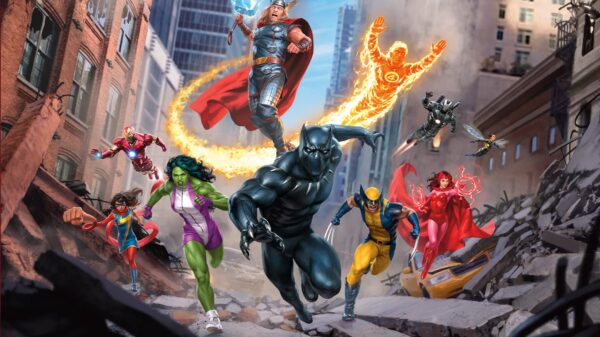
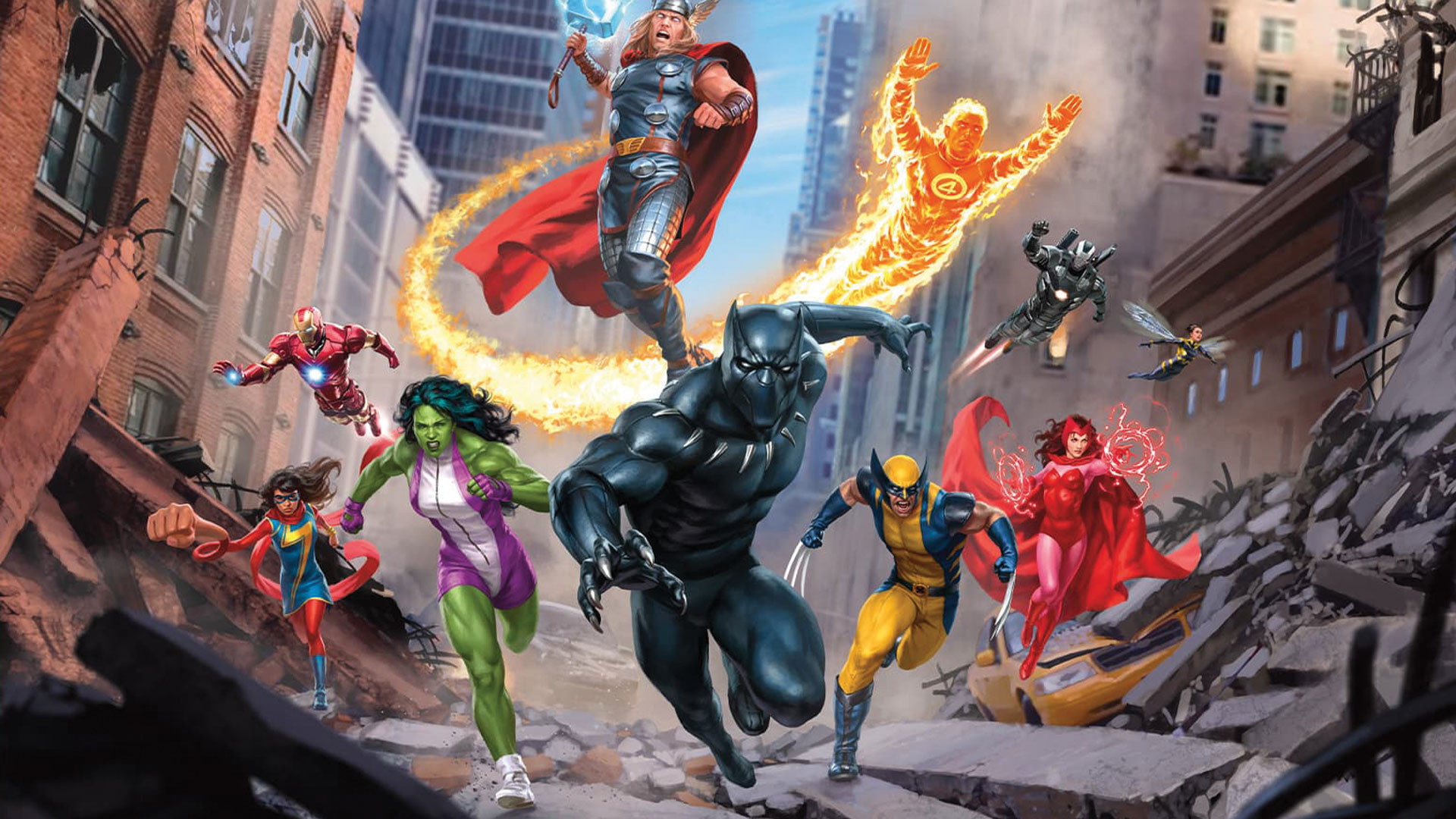
Blake Rasmussen: That reminds me of another point Universes Beyond does really well. Learning Magic becomes easier when the cards just make sense for the property. We showed off Vision the other day, and Vision phases. Phasing is a complicated Magic word, but you just sort of get, “He goes away for a sec, you can’t touch him.” If you’re a Marvel fan, you get that faster. You may not get the exact rules right, but you get the gameplay because it does what it feels like it’s supposed to do. It makes it easier to learn.
Mike Turian: I’ll just share one more thing I love that we’ve done with Universes Beyond. When we take old Magic cards and bring them into Universes Beyond commander decks, you get a hundred cards of entirely Marvel superheroes, and it lets us bring the deep, rich worlds we partner with into the game. Commander decks have a lot of lands, and illustrating those places the Marvel Universe has makes for an immersive experience. You are playing with your favorite Marvel characters and locations.
Aaron Forsyth: You’ve cast Cultivate a hundred times, but when you get a Cultivate that has Marvel characters on it, it’s really cool from a Magic standpoint and a Marvel fan standpoint.
Blake Rasmussen: My favorites are when we’ve got an old Magic card, and the name perfectly fits.
Mike Turian: Like Wood Elves.
Blake Rasmussen: Yes, Wood Elves is a great example. Tolkien literally wrote wood elves in The Hobbit.