





























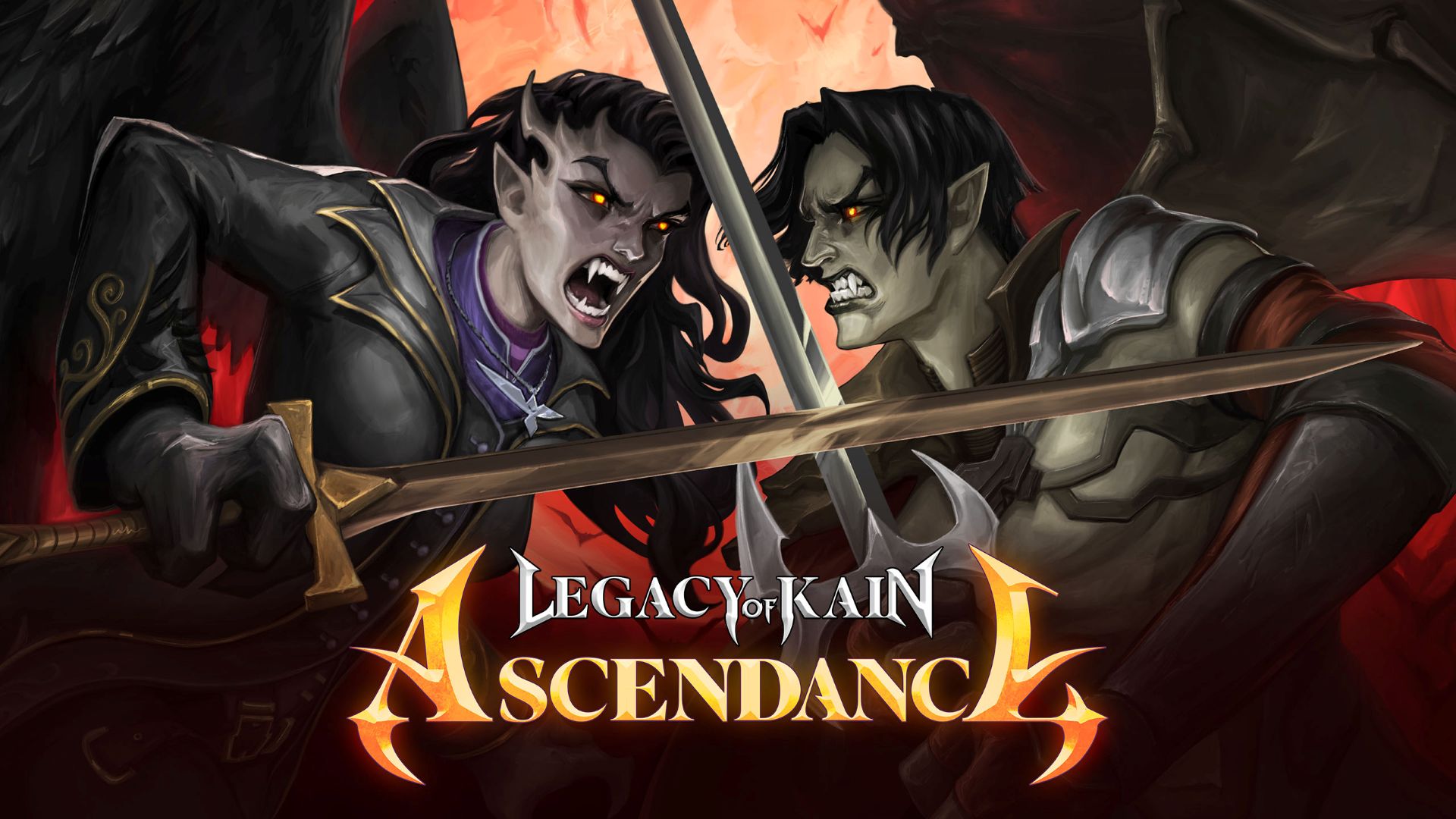

The Legacy of Kain series has had somewhat of a resurgence lately, with three big HD remakes and a series of rereleases on multiple platforms, a kickstarted TTRPG and encyclopedia, and even a new comic. So it’s disappointing to see the first new game in the series, like Ascendance, feel so lackluster, short, and boring.
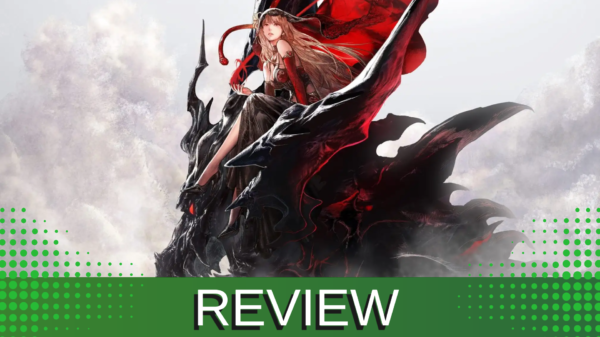
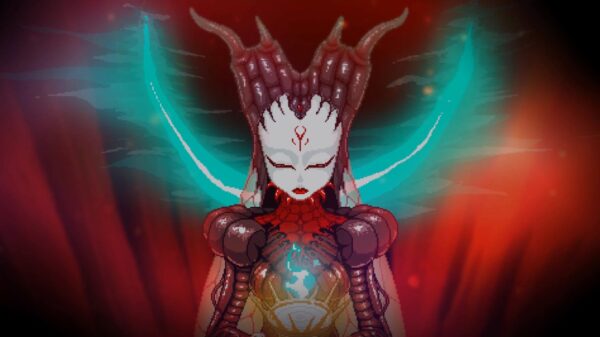
Legacy of Kain: Ascendance starts off with Elaleth, Raziel’s sister, already turned to vampirism. She has made a pact with Ky’set’syk, and both of them now exist as half-Hylden and half-vampire with purpose. Elaleth’s goal is to bring her lover, Mathias, back to life. Ky has a task he’d like her to complete first, though, and it takes her through some important events in previous Legacy of Kain games.
Throughout Ascendance, players will get to see the death of Janos Audron from Raziel’s perspective, his turn to vampirism, and Kain’s reign of terror over Nosgoth. Elaleth’s journey takes us through these events to the end, where she has a stand-off with the titular Kain. It’s a very quick journey, an abridged version of the events of all five games, and it feels that way.
Ascendance is not rushed. The characters in Ascendance instead spend much of their time on screen waxing about the past, their current predicaments, and what they plan on doing to other characters. To the point, it’s rather boring. Much of the dialogue does little to advance or clarify the plot and instead seems intended to extend the playtime of this already short game.
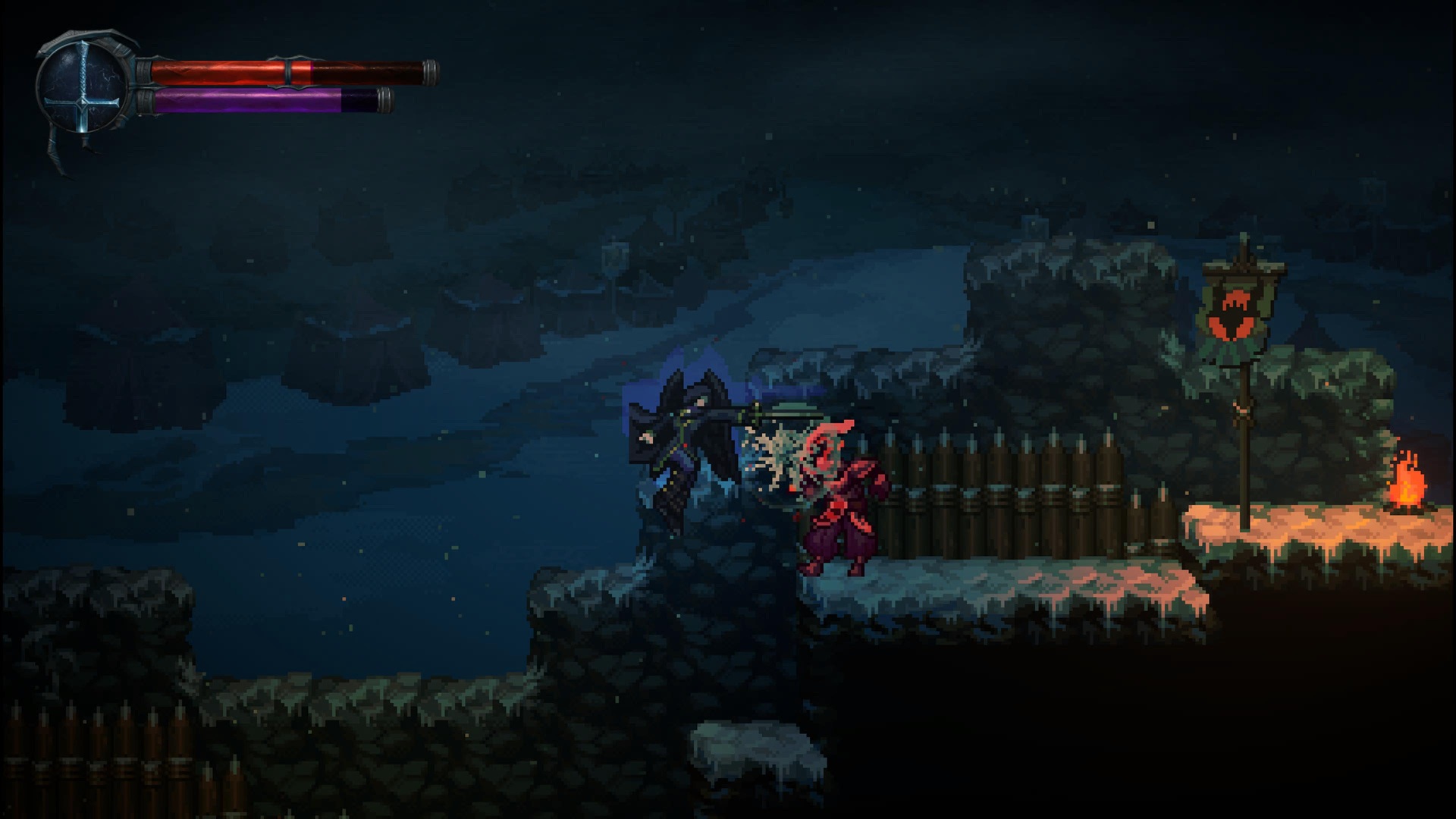
It may seem like a lot of the time is spent talking between characters, but there’s just as much platforming and fighting. Combat is very simple, with only minor differences between characters. Everyone has the ability to attack, dodge, jump, and parry. The intent behind the parry system is to riposte, but most of the enemy’s movements are so erratic that it’s difficult to set up a proper parry. Most of the non-boss fights will be players attacking wildly and dodging on occasion, or struggling to make parrying work.
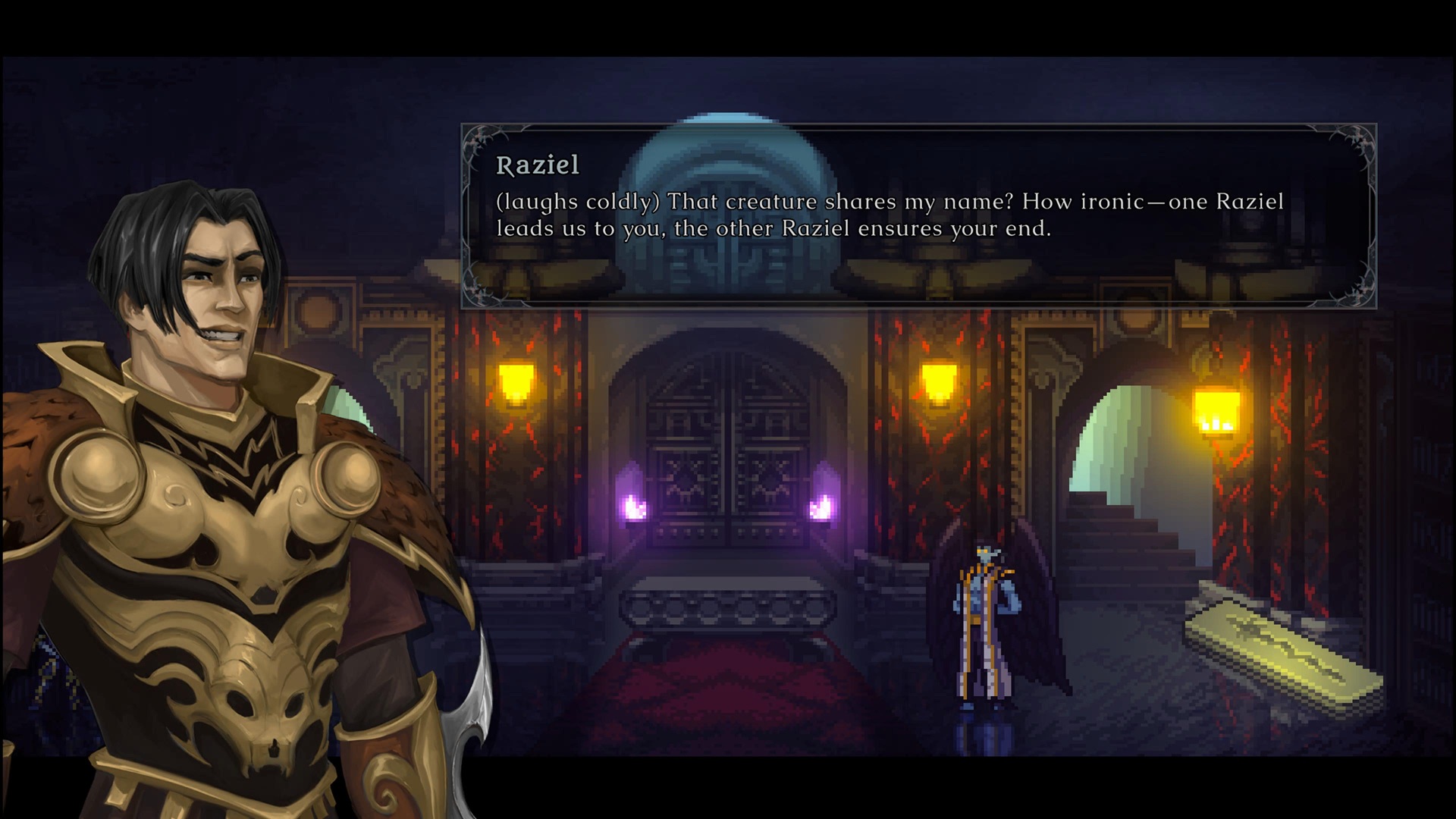
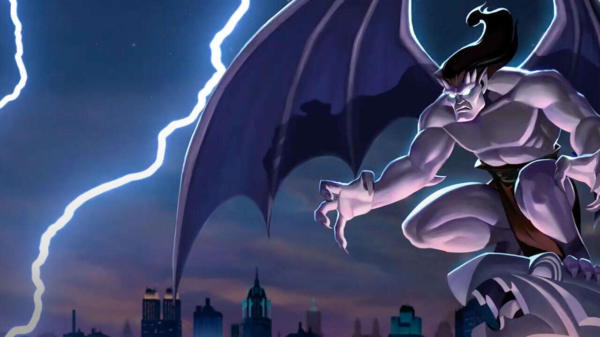
Elaleth has wings so she can eventually hover and fly, allowing her to attack enemies from above. A reticle will appear around an enemy, allowing the player to perform a targeted attack from above, dealing a little damage without the need for positioning. Kain and, eventually, Raziel will also be given these powers, making them less unique over time. All three will eventually be able to feed on those they’ve slain, recovering some of their missing health.
Collectibles are scattered throughout each of the levels, taking a note from the book of Castlevania and keeping many of them hidden behind walls. Though the comparisons to Castlevania end there, as Ascendance is extremely linear and level-based. The collectibles themselves give snippets of lore and information about Nosgoth, prepping the player for a mid-game quiz administered by Ariel.
Yes, there’s a mid-game quiz by Ariel, testing the player on their knowledge of the pillars of Nosgoth. As Ariel floats above each pillar, she tells a story about the founding of the symbol on the pillar, requesting the player tell her which pillar she’s hovering above. During this moment, however, we come across one of the more striking aspects of Ascendance.
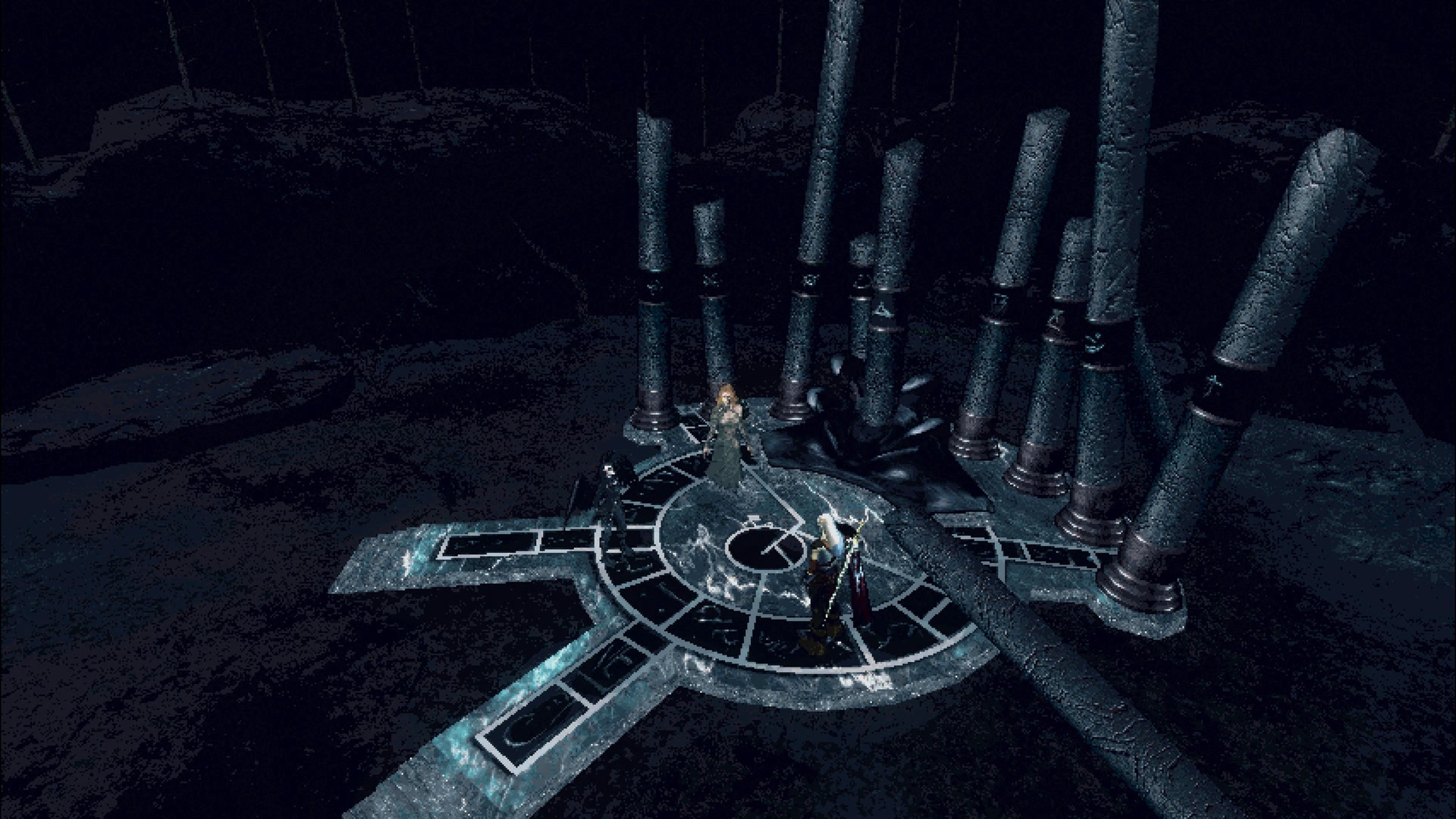
Legacy of Kain: Ascendance isn’t all bad. While taking your Pillars of Nosgoth quiz, the game shifts into a style of low-poly PlayStation 1 style graphics. The text and portraits remain the same, but the character and environmental models shift to a low-res art style that’s particularly cool looking. This happens for a few cutscenes, creating an interesting aesthetic that harkens back to Legacy of Kain’s origins on the original PlayStation.
Along with the low-poly shift, there are several fully animated cutscenes. I was excited to see the fully animated cutscenes right up until I did. The fully animated cutscenes would look nice on individual frames, but the animation style relies on fast action and quick cuts, making them feel rushed. It’s clear the budget wasn’t there, as there’s no lingering or attempts at building anticipation with the animations, despite Legacy of Kain being a fairly ruminative series.
The entire voice cast has come back, including Michael Bell as Raziel and Simon Templeman as Kain. Even Anna Gunn is reprising her role as Ariel, and Tony Jay’s voice even makes a posthumous appearance at one point. The voice work is as expected, and though the words are boring and tedious, the acting itself is quite good. It’s a shame the script relies so heavily on the past and their future intentions, unable to bring out the powerful performances we know these actors can achieve.
Celdweller/Klayton scored the game, which makes sense as Klayton is also the CEO of Bit Bot, developer of Ascendance. The score itself is pretty good, providing a consistently heavy musical style throughout the game, with tracks both fast and slow. Though the music is good, it feels better suited to a game that controls the pace of the player’s progression. With Ascendance, the tracks began and ended during some fight sequences, falling flat on the action they were trying to evoke.
Poor
The Final Word
Legacy of Kain: Ascendance allows players to experience the events of previous games through a different lens in an entirely different genre than they’re accustomed to. Unfortunately, the combat is boring, and the story is winding and doesn’t pay off. As the game ends, we’re shown Raziel being thrown into the void, leading into the Soul Reaver games, left wondering why this game was even necessary.