































































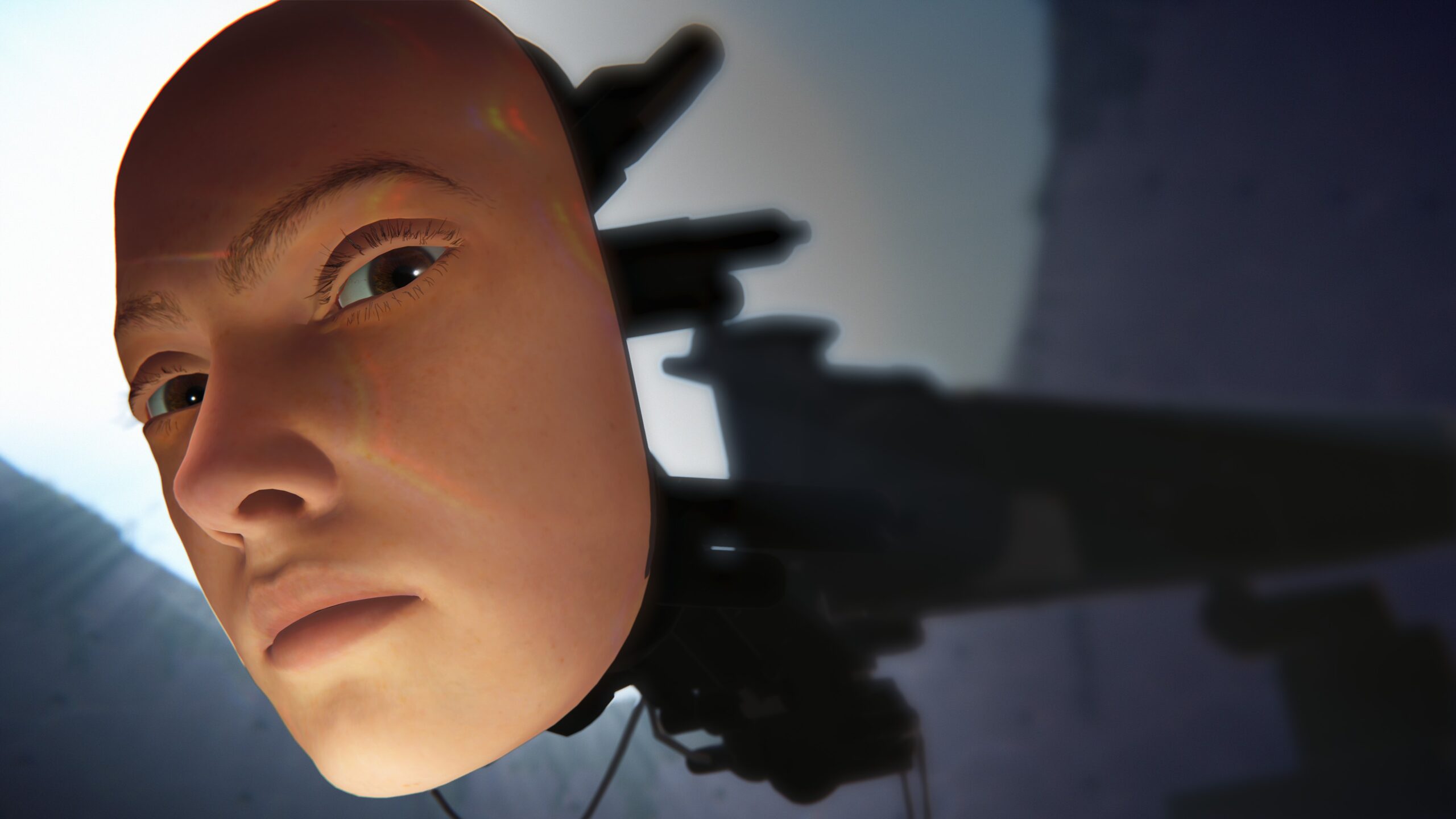

As part of Southeast Asian Games Showcase, MonsterVine had the opportunity to speak with Remy Siu — the founder of Sunset Visitor and Creative Director of Prove You’re Human — about the upcoming psychological horror game. We spoke about the theme of humanity that permeates Sunset Visitor’s games, the implementation of CAPTCHAs into the newest title, and designing the perfectly uncanny protagonist. Prove You’re Human doesn’t currently have a release date, but can be wishlisted on Steam.
“An AI dares to dream she is human,” reads the game’s official synopsis. “You’ve been hired to put her in her place.”
Spencer Legacy: 1000x Resist and Prove You’re Human both seem to include themes of humanity and individuality. What makes these ideas so appealing to explore for you?
They’re a part of being alive! Since we focus almost entirely on narrative-first experiences, our shared humanity is definitely something that always surfaces in our writer room discussions. We’re always interested in the tension between societies and individuals, and also how forces in the world act on people to form their thoughts and feelings.
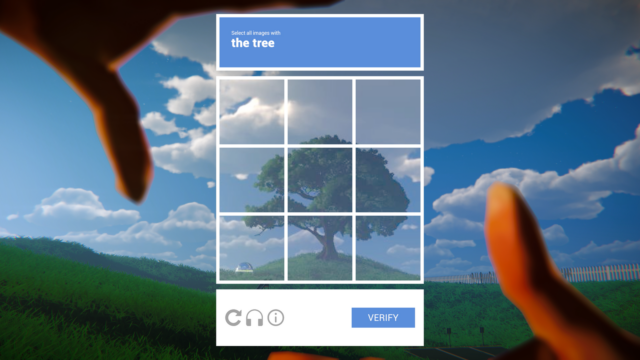
I don’t think I’ve ever seen CAPTCHAs being used as a game mechanic before. What led to that becoming a core part of Prove You’re Human?
Using CAPTCHAs was the first idea that formed the concept of the game. We did some “market research” after committing to the idea – and there have been a few indie CAPTCHA games! – but for us, we want to treat it as a mode of conversation and interacting with the world around you.
There is a kind of violence that occurs when you do a CAPTCHA, declaring something is something (and that it is not something else). We are interested in that act, and also the existential dread that comes with it!
Additionally, it worked thematically, as we know that CAPTCHAs have been used as a method to train artificial intelligence or deep learning models.
Credit: Sunset Visitor
Playing as both a person and their digital copy in Prove You’re Human feels like fertile ground for psychological horror. What inspired you to explore this eerie duality?
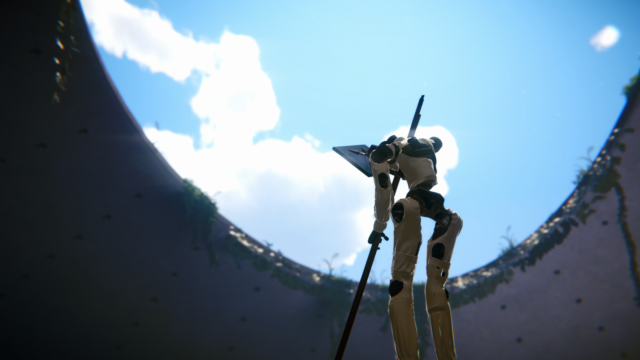
A lot of our thinking comes from a “formal” place. In this case, having a character be represented in-engine and also in filmed live footage (FMV) seemed like nice fertile ground we had yet to explore. To couple the digital copy with in-engine depiction and the “real” copy as filmed depiction made it extra juicy to us.
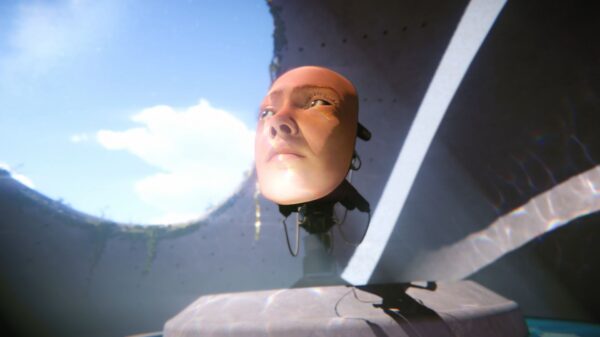
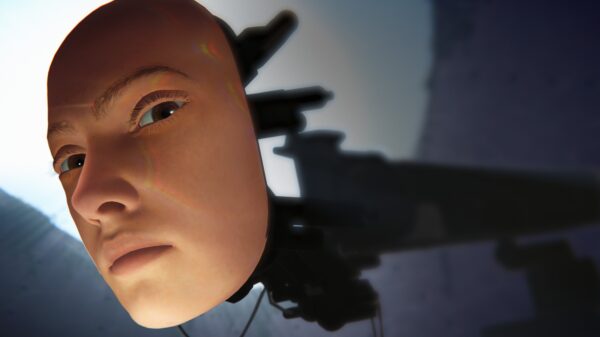
Mesa has an uncanny look to her that really complements her identity as a digital copy. How did you land on her appearance and design? Did she go through a lot of revisions?
She didn’t really go through that many revisions! I think we honed in on this “big face” early on and quickly cycled through a concept-to-model process. But we definitely aimed for Mesa to look as uncanny as possible. To make her feel expressive, but so obviously mechanical as well.
Credit: Sunset Visitor
What lessons did you take from developing 1000x Resist that you were able to apply to the development of Prove You’re Human?
So many lessons. So many lessons that it’s hard to even think about, in that they’ve just absorbed into our brains.
I think the biggest thing, however, is having more confidence with our approach. When we made 1000xRESIST, we really didn’t have any understanding if there was an audience for the type of work we make. We were working in the dark, trying to be true to ourselves. This time, we get to be true to ourselves without the same kind of stress, hahaha.
We’re not looking to recreate 1000xRESIST – I think what we’re looking to follow is our innate curiosity about processes and discovery, making sure we make the right decisions for this work, especially when the decisions may stray from how we would have approached it in our first game.
I also think it’s important to retain a kind of “beginner’s spirit” as well. Each work is a new kind of discovery. If we feel like we’re just following a set of motions to make something, that’s when I get worried!