









































While the term doesn’t really exist in Hollywood, in Bollywood, there’s a concept called a masala film. You see, masala is, quite simply, a term for a spice mix, and, as such, a masala film is a movie that blends a variety of disparate genres. The best ones typically have a little action, some comedy, a dash of melodrama, and enough songs to be classified as a musical.
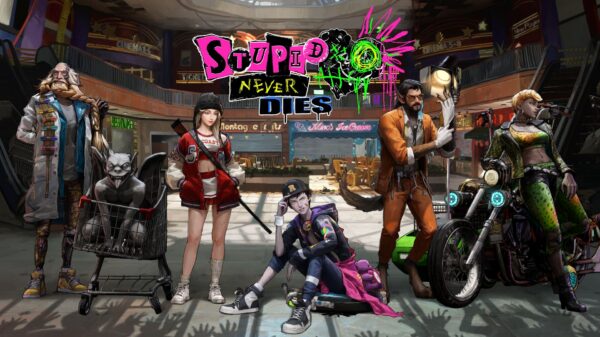
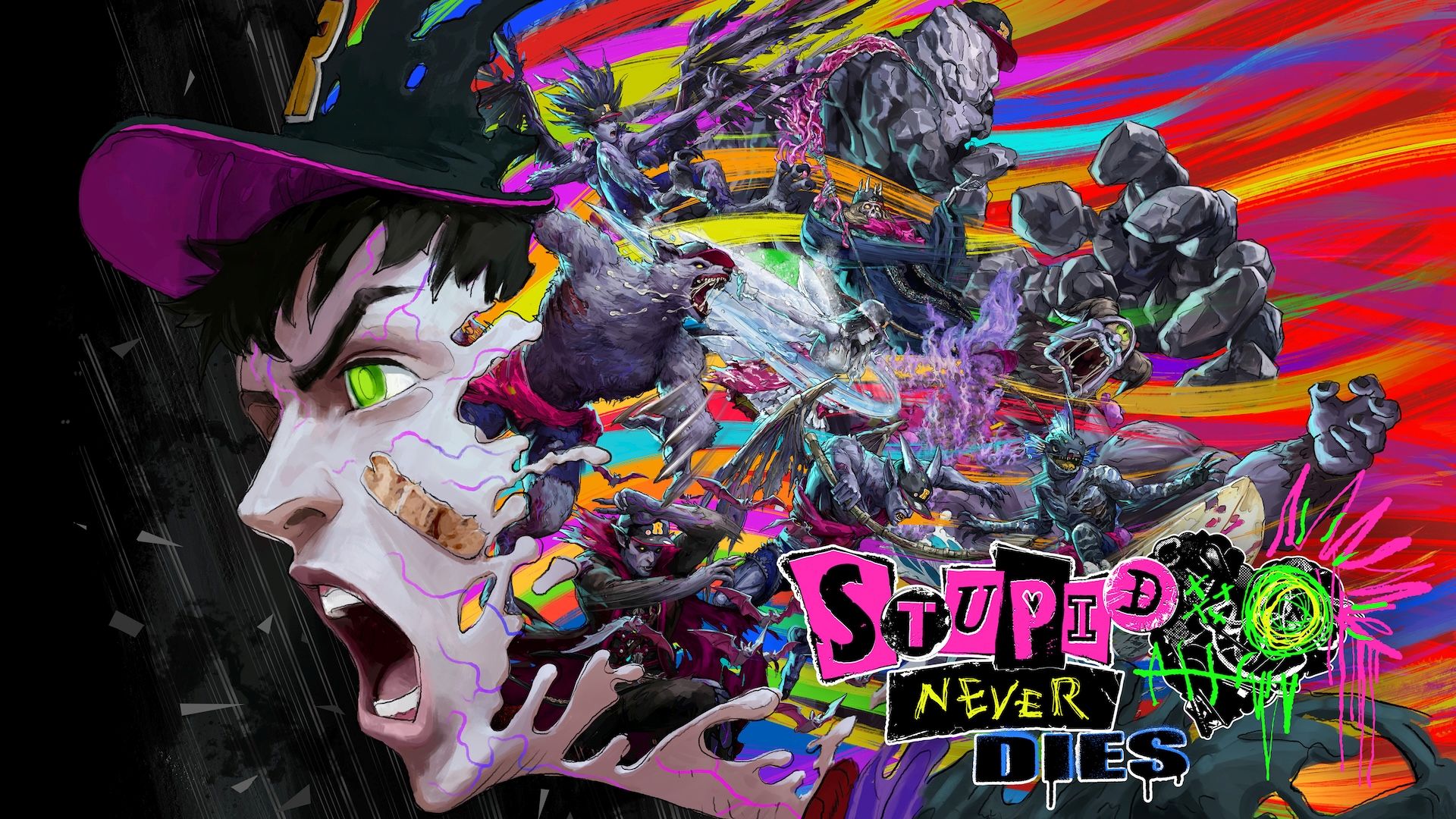
In many ways, Stupid Never Dies feels like the video game equivalent of a masala film. Sure, at its core, it’s a hack-and-slash with roguelike elements, but it has so much else going for it. A bright pop-punk aesthetic; an over-the-top post-apocalyptic setting; a love story between a zombie and a corpse – Stupid Never Dies takes the kitchen sink approach, but after going hands-on with it, we think it has just the right ratios to stand out from the crowd.
As the debut title from Gptrack50 (which itself is comprised of roughly 30 developers, many of whom used to work at Capcom and Ubisoft), I was curious as to how the initial concept took form, seeing as how, at first glance, Stupid Never Dies looks to build off of a half-dozen different inspirations.

“I really love zombies,” explained the game’s director, Eiichiro Sasaki. “I always have, and so I wanted to do something new with the zombies, and that’s where the punk rock idea came from. And then another fun aspect was to have this kind of love interest that was like a corpse-to-corpse kind of love relationship.”
One of the zombies Sasaki is referring to is Davy, the undead hero who’s willing to do whatever it takes to revive the frozen remains of Julia, the corpse who has stolen his heart (seeing as how Davy is a zombie, I use that phrase very loosely). Of course, things won’t be that easy. In this post-apocalyptic wasteland, humanity has nearly gone extinct, with otherworldly monsters having taken control of the planet. Leading it all is the aptly-named King of Monsters (or KOM, for short), who Davy will have to defeat to resurrect Julia.
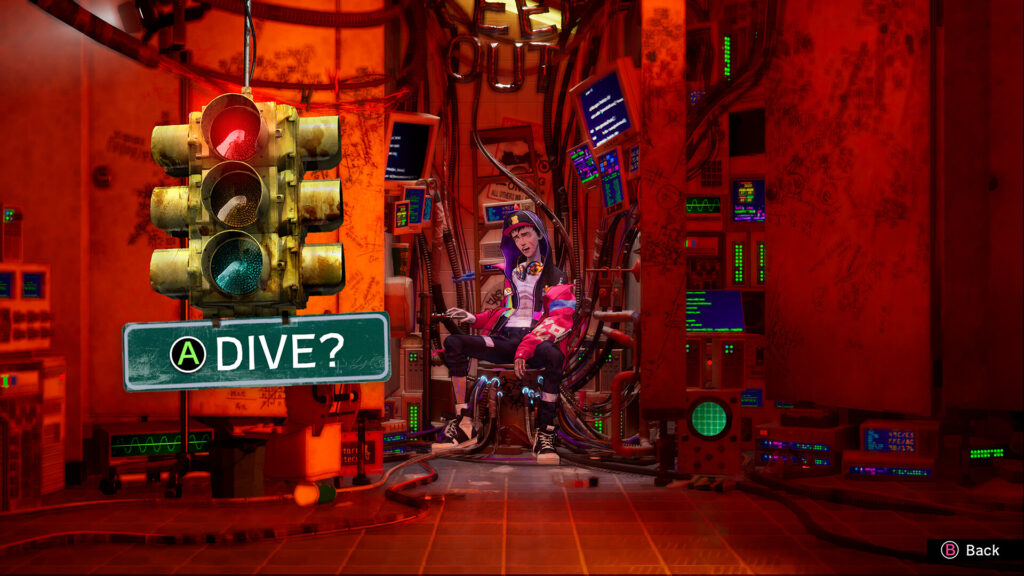
When you start on your journey, Davy will have the deck stacked against him. As a sort of human-monster hybrid, he’s able to navigate the world’s monster-filled subterranean dungeons, but he’s restricted by a time limit that’ll prevent him from making it all the way to the lowest layers. This is where the game’s roguelike structure comes into play. Every time you finish a run, Davy’s “growth factor” will increase, which means he will grow stronger and rank up faster on subsequent attempts. As expected, dungeon order and layouts differ from run to run, but with each one, you’ll get more accustomed to Stupid Never Dies’ unique combat, and your chances of making it further will increase.
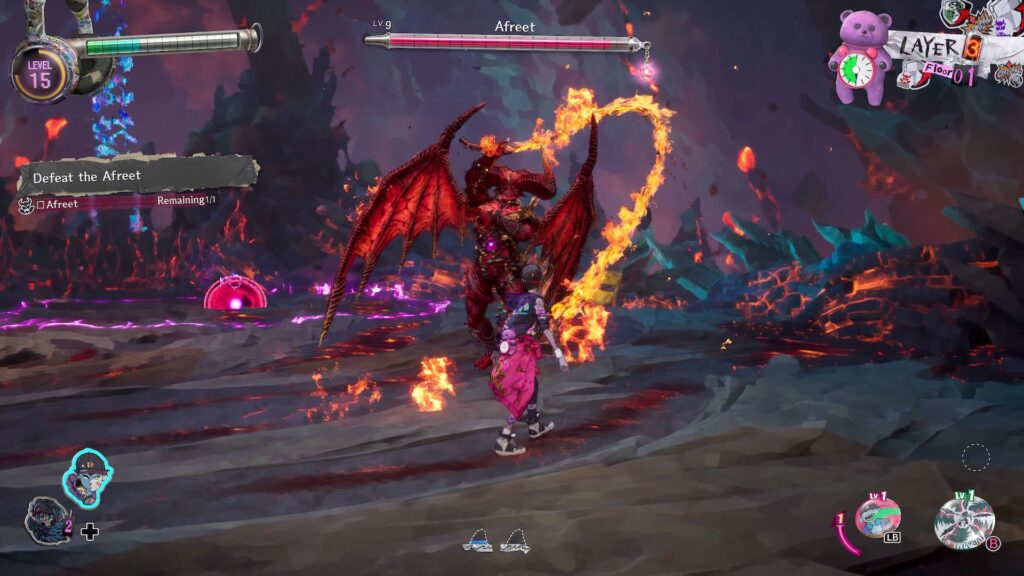
Speaking of combat, Stupid Never Dies ditches a few of the genre’s most overused mechanics in favor of something more unique. There’s nothing in the way of a dodge, and Davy won’t be able to guard against oncoming attacks either. He can make use of a parry to negate damage and follow up with his own counter, and a dedicated light and heavy attack paves the way for attack combos.
Arguably, the game’s signature mechanic is Davy’s “Bite” ability. By landing hits and building up your attack combo, our undead hero’s Bite meter will slowly fill up. Once it’s filled, you can bite enemies to absorb their ‘cores’, as well as regain some of your health. These cores are actually key to unlocking more playstyles, as they allow Davy to switch between different monstrous forms, each with their own strengths and weaknesses. The Harpy, for instance, can fly and avoid more ground-focused enemies, while the Werewolf is much speedier.
That doesn’t mean you should discount Davy’s default zombie form. While it might seem like the most “plain Jane” of the cores on offer, you can boost your abilities with the game’s Body Hack system. In between runs, you’ll have the chance to purchase upgrades and weapons (like Missile Pods) that can be tacked onto Davy’s limbs. In fact, there’s no clear hierarchy to the game’s different forms, and the developers intend for players to experiment, mixing and matching to see what combinations work best.
“There’s no hierarchy, but depending on the player, there’ll be different combinations that you prefer and different ways that you’ll be able to strategize,” Sasaki explained. “Of course, you can’t really choose the styles yourself, because it’s really based on which monsters you encounter, so it’s going to partly come down to chance how you combine them as well.”
There’s still a lot we don’t know about Stupid Never Dies – our hands-on time with an in-development build focused more so on gameplay, with less emphasis on the game’s story or progression mechanics – but from what we’ve seen so far, it’s certainly a departure from a lot of the other action RPGs on the market. If the core loop of embarking on runs and upgrading Davy can offer up enough variety and a steady drip of new goodies to try out, there’s a solid chance it’ll stick the landing when it drops later this year.