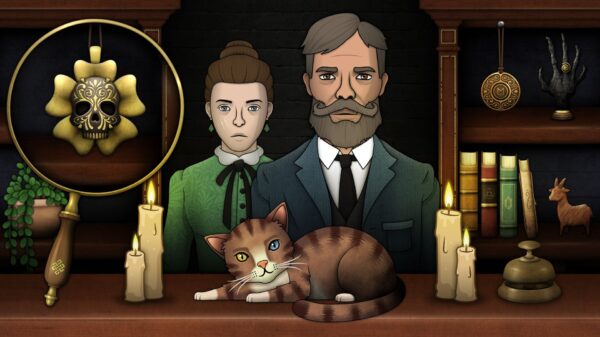


























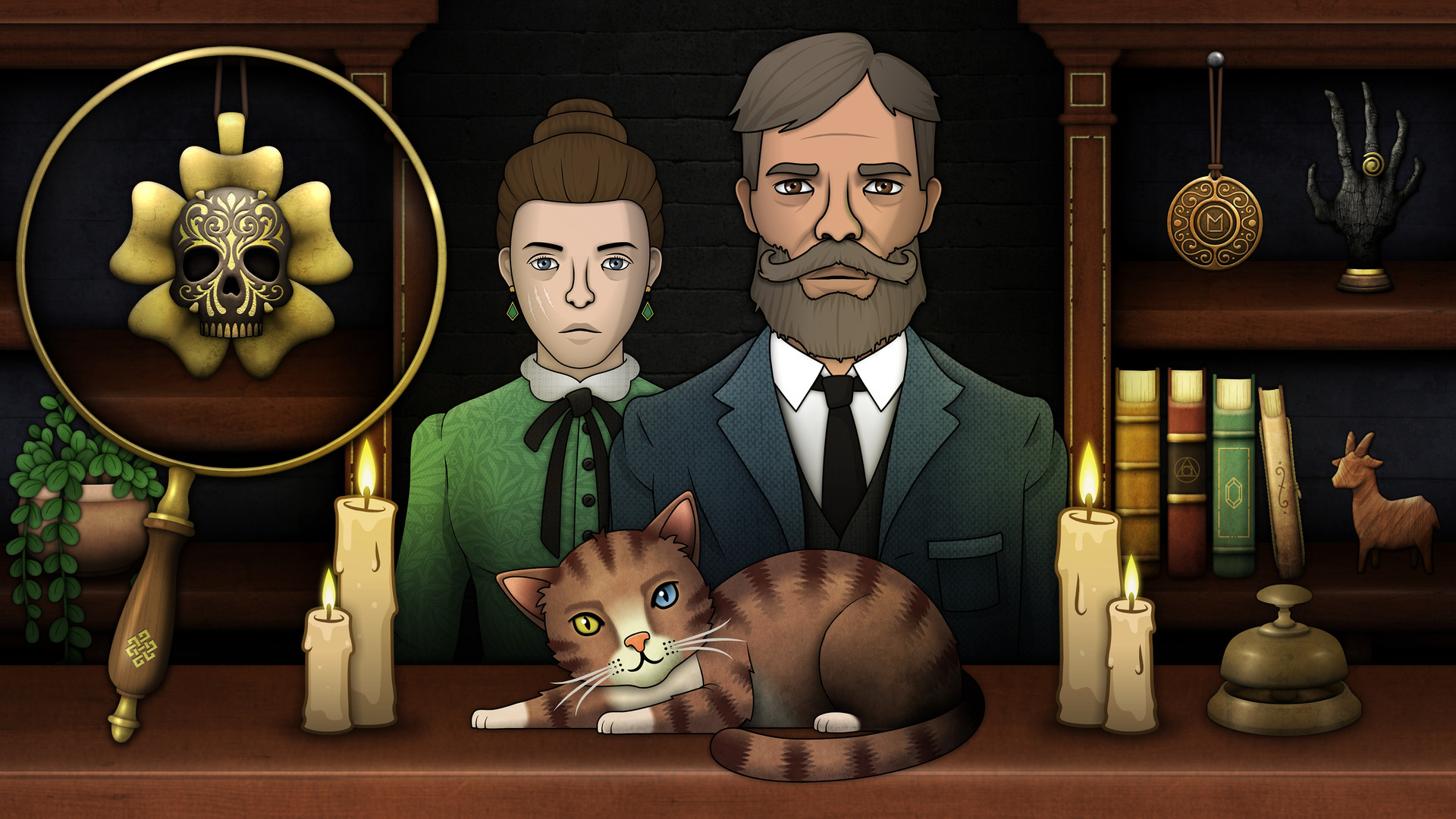

Three years after the release of Strange Horticulture, Rob and John Donkin — the brothers behind the studio Bad Viking — have invited us to return to the eerie town of Undermere with the sequel Strange Antiquities, which was released on PC and Nintendo Switch in September, followed by macOS in October. This time, instead of managing a store selling a variety of plants with mystical properties, you take over an establishment populated by myriad artifacts. As with the prior game, there are mysteries to uncover alongside the management of its titular shop: you’ll find yourself investigating the secrets of the objects in your care, exploring the streets of Undermere, and solving an assortment of puzzles along the way.
MonsterVine connected with the Donkin brothers to discuss how Strange Horticulture’s success influenced the development of its sequel, refocusing Strange Antiquities’ map to center on Undermere, and, of course, the artifacts at the center of it all. This interview has been lightly edited for clarity.
MonsterVine: Strange Horticulture’s success not only provided the opportunity to develop a sequel, but also meant that you had access to more resources to expand upon the original. Could you speak to the development process and how you balanced preserving the tone and atmosphere of Strange Horticulture while transitioning to a new premise and adding more depth for Strange Antiquities?
John Donkin: After Strange Horticulture, we initially considered making a DLC, but it quickly became clear that our ideas would work better as a new game. We’d explored most of the puzzle ideas around plants, so the question became how to build on that foundation while keeping the world and tone we loved. Strange Antiquities rose naturally from that process. It allowed us to keep the dark, cozy atmosphere and themes of occultism, witchcraft, and folklore, while deepening the puzzle design and broadening the scope.
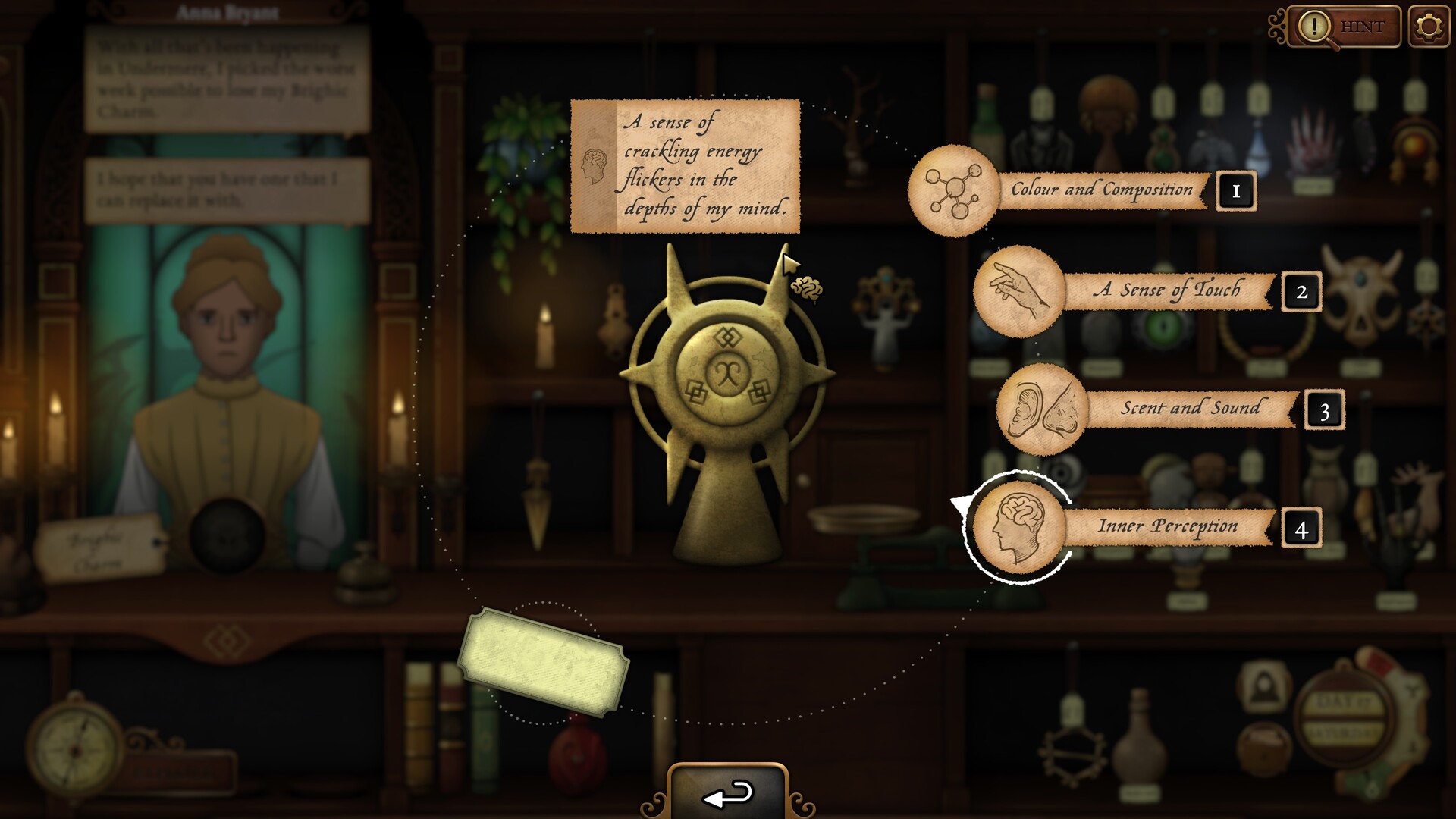
Shifting the focus from plants to artifacts opened up a whole new set of possibilities for puzzles. Plants share common traits, which makes comparing them intuitive; artifacts, on the other hand, are much more varied — different materials, purposes, symbols, gemstones. It pushed us to think differently about puzzle design, expanding on the detective side of the game: more reference materials, a new closer inspect system, cross-referencing through an index, and creative ways to interact with objects in the shop. The result is a game that demands more observation and deduction, with subtle layers of misdirection woven throughout.
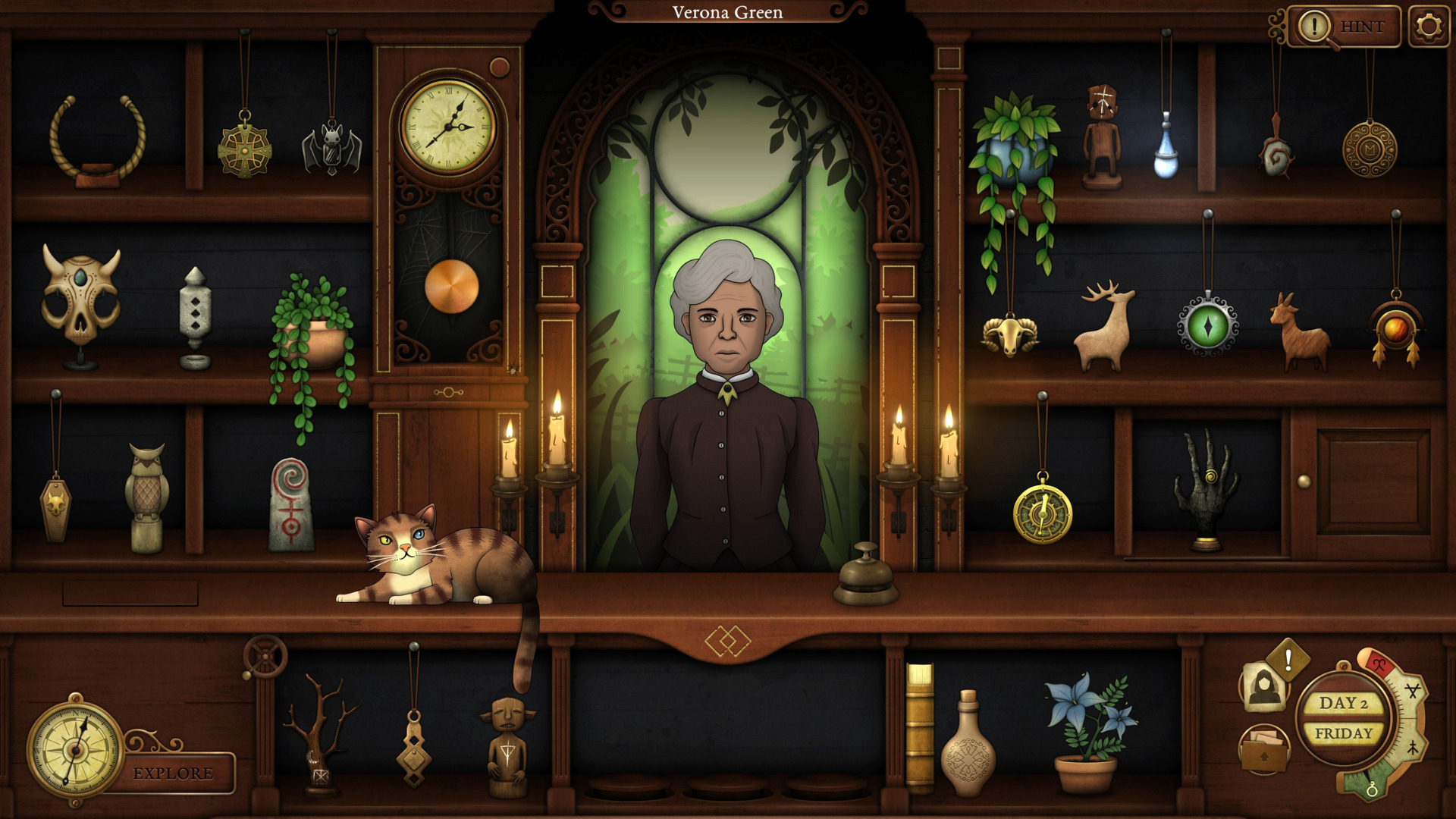
The goal wasn’t to make a bigger game, but a more refined one. Keeping the setting confined to the shop, albeit slightly expanded from the single-screen layout of Horticulture, allowed us to maintain that intimacy and atmosphere: the rain-streaked windows, the flickering candles, and the cat on the counter all counterbalancing the darker events unfolding outside. And while we had more resources this time, the process didn’t really change — just the two of us, working as we always have. The only real difference is that we finally brought in a composer.
MonsterVine: Are there any lessons you learned while making Strange Horticulture that you applied to the development of the sequel?
Rob Donkin: Absolutely! The main thing we learned was that the core gameplay loop seemed to work really well and people wanted more of it so we didn’t want to move too far away from that with Strange Antiquities. Instead we tried to expand and improve on what worked — adding more reference materials, more maps, and deepening the detective work required to identify items. And we also learned that our players really enjoyed this dark-but-cozy atmosphere that we created, so we made sure to lean into that again and polished up the visuals of the shop screen as much as we could.
We also learned about one or two things that players didn’t like as well, which allowed us to streamline the experience. We removed the cooldown timer on exploring, for example, and improved the overall experience of navigating the shop and items.
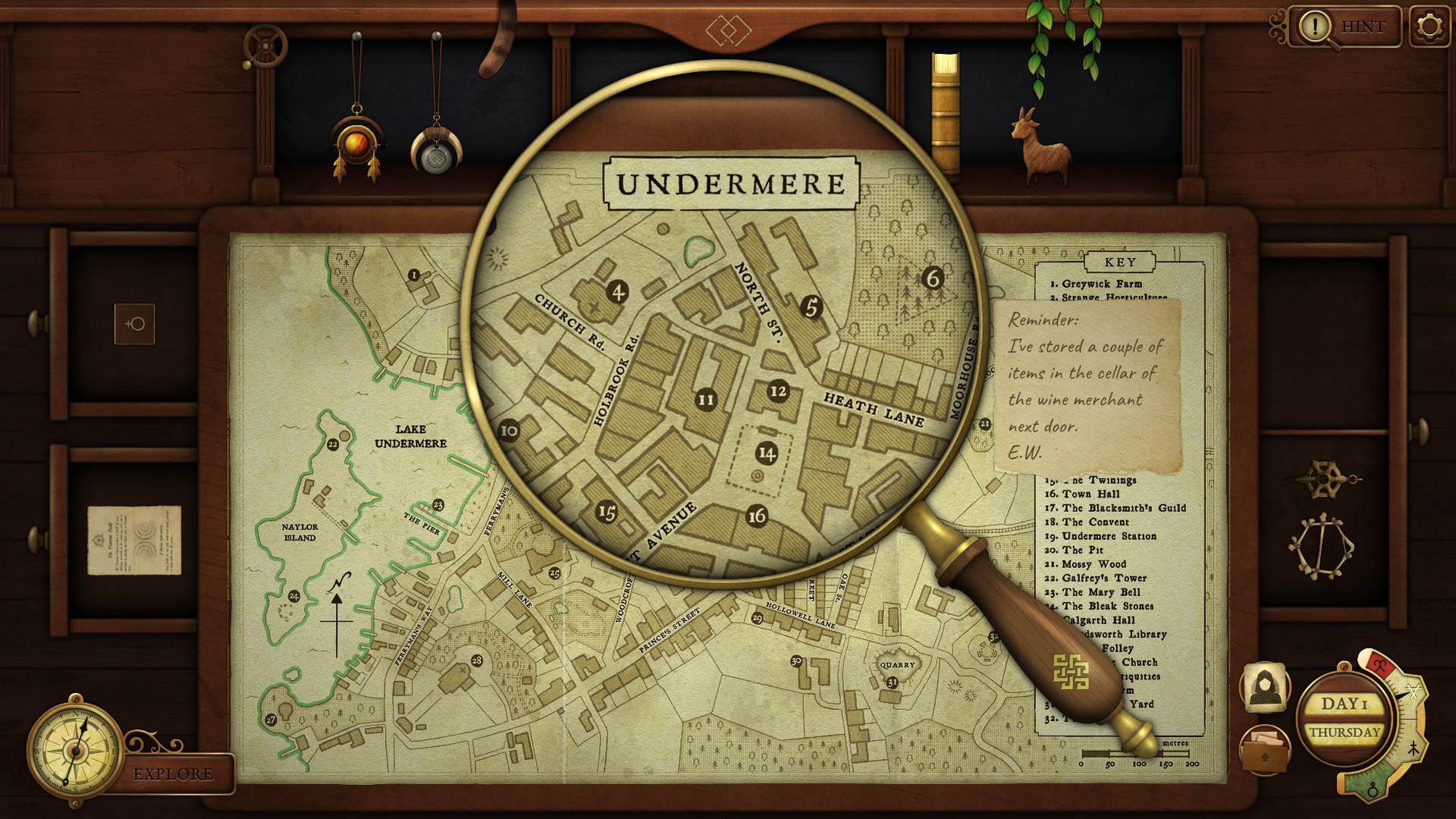
MonsterVine: Both games take place in England’s Lake District — the shops are located in Undermere, a fictionalized version of Windermere. Strange Horticulture’s plant theme extends to its map, which the player uses to explore locations across the Lake District in search of new specimens. However, while the game is bigger, Strange Antiquities’ focus is in some ways smaller, with a map centered on only Undermere. What led you to decide to zoom in on Undermere itself, and how did that choice affect the approach to the overall story in Strange Antiquities?
Rob: It was mostly a case of “been there, done that” with the map of the wider area, but we liked Undermere as a setting and we wanted to keep Strange Antiquities in the same place. Zooming in on the town itself made a lot of sense, especially because it allowed us to do a map in a different style which presented new opportunities for puzzles. And then we thought, “why stop there?”, so we added two more maps for good measure!
It was definitely a case of gameplay first, then narrative, so when it came to the story we initially found ourselves frustrated because we were trying to connect it to a specific piece of lore from Strange Horticulture that involved a key location outside of the town. We held onto that idea a bit longer than we probably should have before realizing that the map of the town meant that we needed to focus the narrative around the town as well. Once we did that everything became much easier and the story started to fall into place. I like this approach to world-building and story-writing because having a map helps to anchor everything and is also great for sparking ideas. A building marked as a convent suddenly clicks into place as the headquarters of a minor faction, a stone circle cries out to be used for something important, and a Museum of History could house any number of dark secrets…
MonsterVine: Undermere is a place that feels a little bit outside of time — Strange Horticulture appears to sit somewhere within the 19th to early 20th century. However, by dint of its focus on manmade objects and their provenance, Strange Antiquities deals with a topic for which items and their histories are very important. When researching and brainstorming for the game, what aspects of real-world history and antiquities dealing (or even archaeology) came into play, if any?
John: Undermere is our fictional town set in an alternate history Victorian-era Lake District — a place grounded in real-world charm and sensibility, but where strange things quietly exist as part of everyday life.
For Strange Horticulture, we were inspired by a time before modern science when plants were believed to hold both medicinal and mysterious properties. We imagined a world where witchcraft and folklore weren’t just superstition, where powerful plants could have a myriad of supernatural uses. With Strange Antiquities, we extended that idea to magical artifacts, drawing on the Victorian fascination with the occult and the notion of items imbued with curses and hidden power.
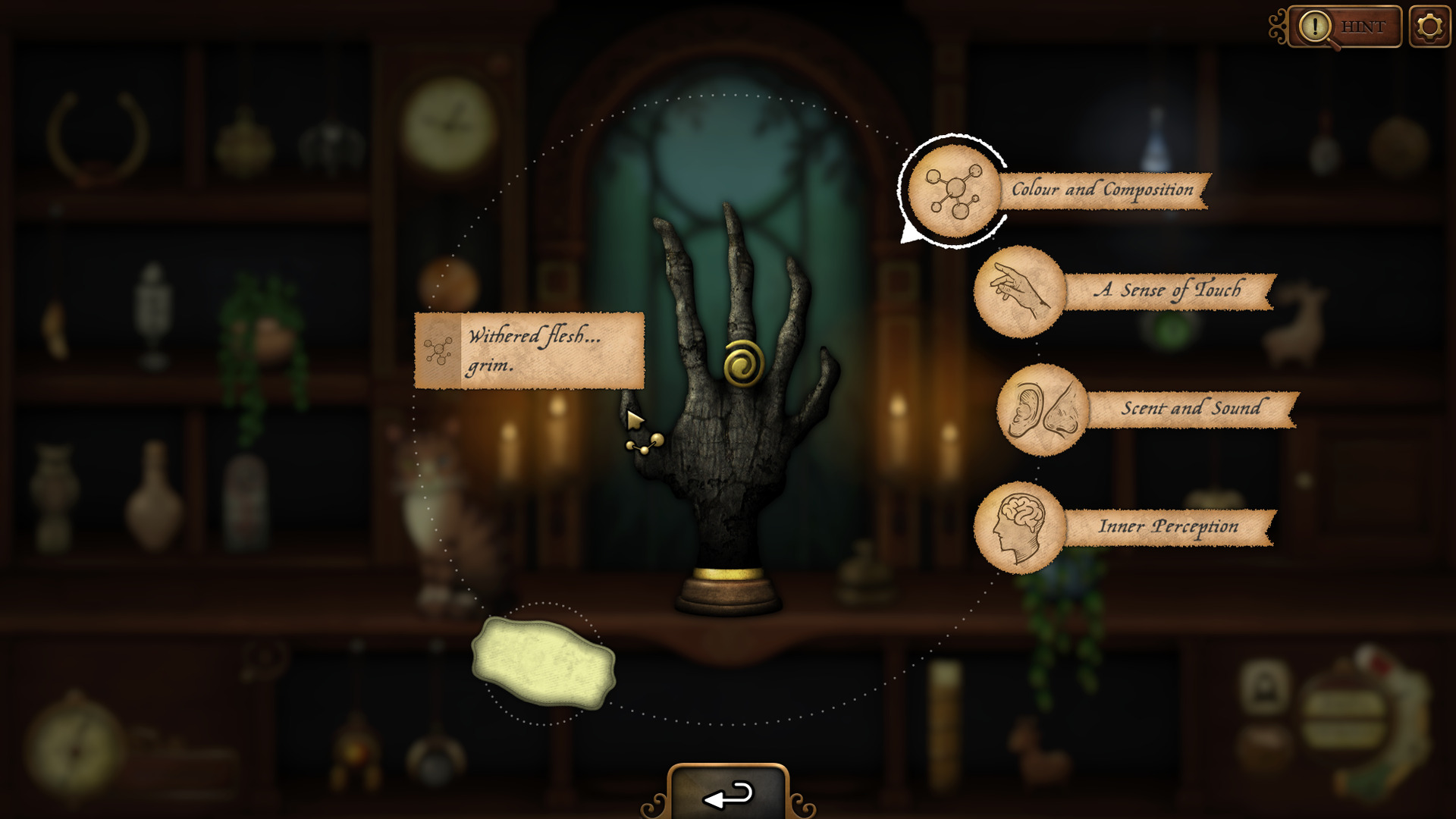
Researching folklore, archaeology, museum collections, and even books on occult symbology were all influential. The Pitt Rivers Museum in Oxford, with its loosely curated glass cabinets, full of curiosities and original handwritten labels was especially inspiring! Its collection of witchcraft-related artefacts, including one labelled “witch in a bottle,” felt like stepping directly into the world we were building. These real items already carry their own aura of mystery and superstition. We weren’t aiming for historical accuracy but we wanted our ideas to feel grounded and believable. It wasn’t much of a stretch to craft our own occult objects, each with its own quiet sense of wonder and unease, as well as their own small story, or fragment of lore, that not only serves the puzzles but deepens the world and gives life and meaning to each one.
MonsterVine: Strange Horticulture’s soundtrack is notably sparse, primarily characterized by moody chords played on a solo piano. Composer Benjamin Young’s music for Strange Antiquities maintains this mood, but from the get-go has a lot more movement — the opening track, in contrast to Strange Horticulture, features a piano melody with more rhythmic momentum. What was your approach to the music for the sequel, as well as the process of collaborating with Young?
John: The tracks for Strange Horticulture — all three (!) of them — were all licensed from a library. Most of the game plays to a single looping track, so yes, it was notably sparse. At the time, we had no idea how successful it would be, so keeping costs down was a priority. But the main piano track had a beautiful minimalism to it that managed to be both moody and mysterious, and quietly introspective.
Hiring a composer for Strange Antiquities was something we’d planned from the start. And when Ben came onboard he immediately understood the brief: keep the same emotional thread but take it further. We wanted to retain the piano as the anchor for its organic, intimate quality, and to keep the continuity between games but we gave Ben the freedom to expand on it. There’s a wider range of moods this time, from quiet tension to creeping unease, creating an atmosphere that is contemplative yet unsettling, perfectly suited to the rain-soaked melancholy of Undermere.
Our collaboration process was very conversational. We talked in terms of atmosphere and feeling more than musical terminology, and fortunately, Ben just got it. It was a real pleasure working with him.
MonsterVine: Without fail, once a game is released, players immediately begin asking for more. While you’ve confirmed a continued interest in the world of Undermere, is there anything else you can speak to, either regarding the series or other projects Bad Viking is working on right now?
Rob: Nothing that we’re prepared to comment on just yet, I’m afraid! Our focus is still post-release support for Strange Antiquities and porting it to other platforms. Strange Antiquities took us longer than we had planned so we must admit something a bit shorter does appeal at the moment. We’ve got some ideas, but we’ll have to wait and see!