

















Battlestar Galactica feels like an odd choice for a licensed tie-in game when the original series ended in 1980 and the rebooted series ended in 2010, but it also kinda…hangs around. The web series ran on SciFi’s website and then reappeared on Machinima (remember Machinima?) in 2012. There was a feature film kicking around in development/early production until 2016 or so. Peacock was planning some kind of reboot or revival that puttered along until 2024, when it was canceled. It’s always got some interest, even if it never manages to get off the ground.
So why not a survival fleet management roguelike and, hey, why not a weird French publisher that loves pop culture licenses (DotEmu, who also do Starship Troopers: Ultimate Bug War and Marvel Cosmic Invasion) and why not Alt Shift, a weirdo French developer that made the criminally underappreciated Crying Suns which is, let me just pull this up…a tactical rogue-lite where you command a space fleet…
And if you really think about it, Battlestar Galactica is a banger of a premise for this sort of thing, isn’t it? “You are being relentlessly pursued by a murderous and powerful enemy while constantly short of resources, always having to make tough decisions, and constantly on the verge of defeat”? Okay, yeah, this is a hell of a setup, made by French weirdos, and I trust French weirdos to make artsy stuff with my life.
Scattered Hopes hits the mood beats from the beginning: Beautiful and downbeat music, weird violins, dark electronica. The pixel graphics and animations all make everything feel retro and worn, just like the technology you’re relying on to survive the Cylons.
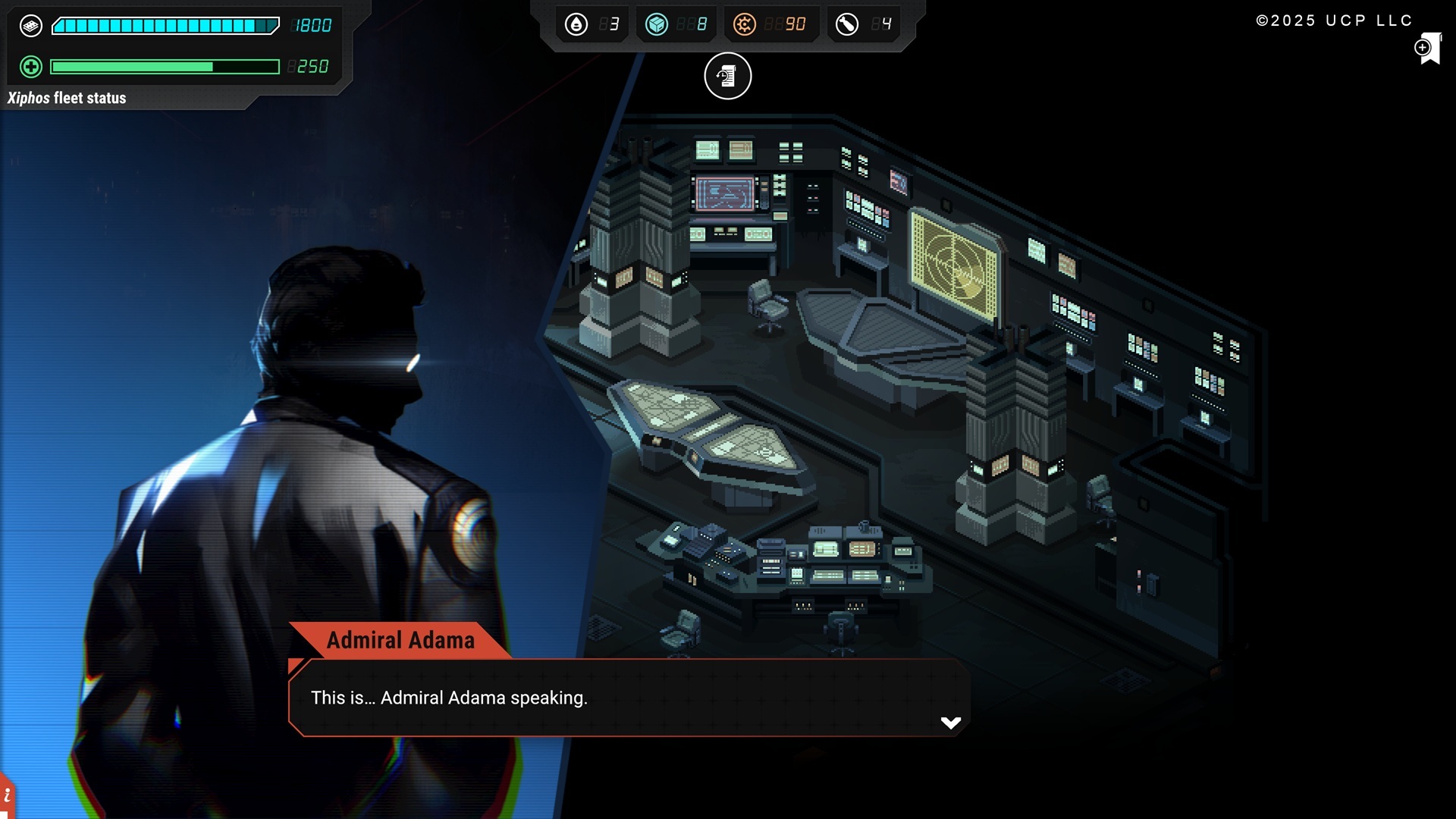
In the tutorial, you witness the destruction of Caprica and your little fleet of ships: a Gunstar and then a couple of civilian ships make a break for it, FTL jumping furiously towards the beacon of hope that is Adama and the Galactica itself.
The FTL jumping sets up the roguelike structure and also provides the story mechanic: Roguelikes usually use “rooms” that branch, and then a turn-based structure. In this case, your FTL drives take time to power up for their next jump, so you have some choices to make. These are frequently gathering resources from points of interest like fuel for the shuttles and ships, scrap for ship repairs and upgrades, research, and supplies to keep everyone fed and healthy, but may also include finding stranded fighter squadrons, lost officers, shops, and other goodies.
But…Things Happen.
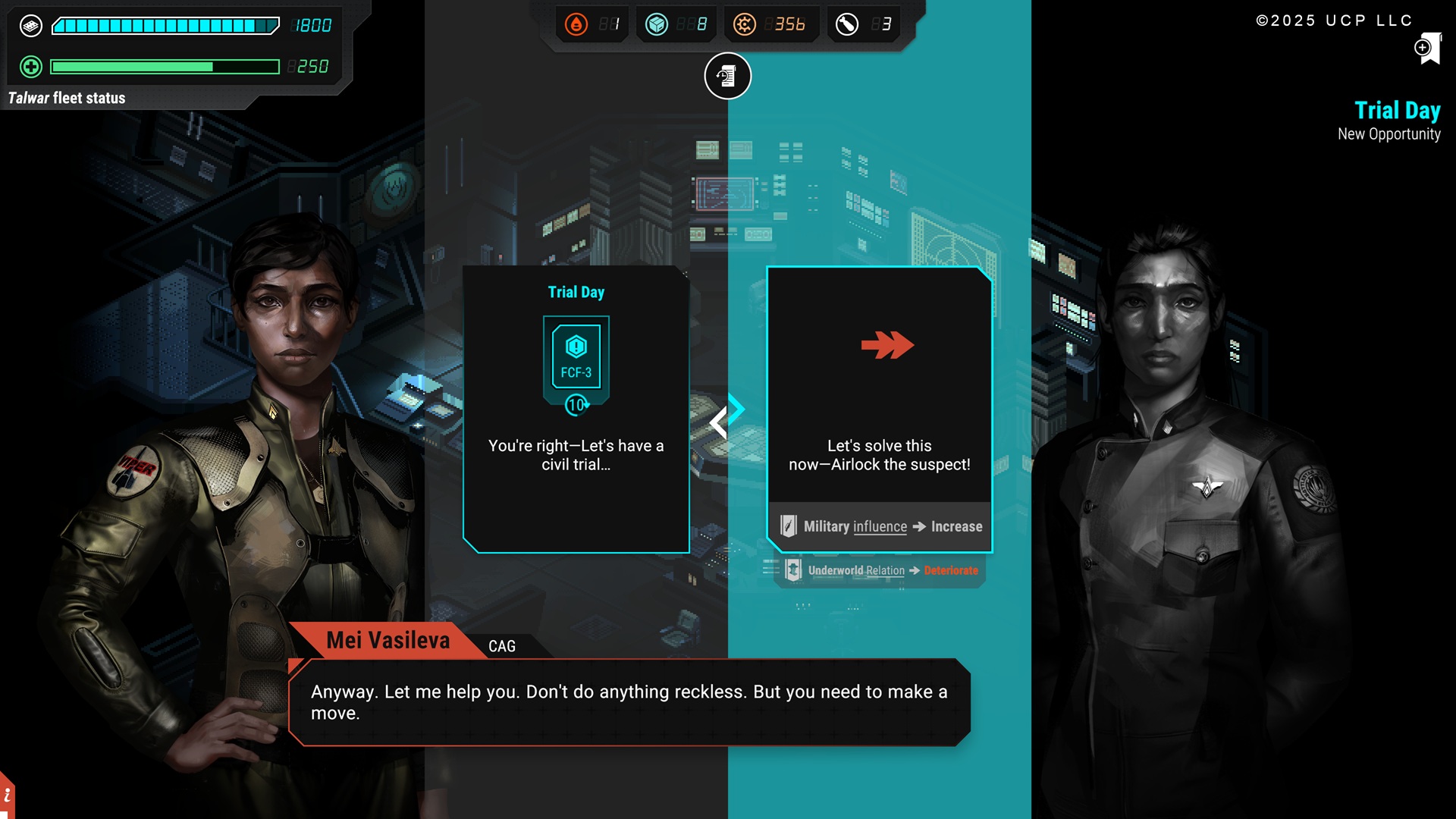
Crises occur on a regular basis and most of the time they cost resources to resolve, be that time as the clock ticks down to the next Cylon encounter, be that hoarded resources, be that the goodwill of the various factions in the fleet (ranging from workers and the military to the underworld, all of whom have bonuses and consequences) or be that your XO going into a sulk because you let the puppy she found die to preserve resources for the actual humans. In general, the big things you’re managing are the overall fleet health (The strength of the collective hulls) and the overall health of the people onboard, and any of those going to 0 means everyone is dead, but in reality, you’re managing several dozen things at once without actually having the resources to keep everyone happy and then there are murderous robots trying to kill you.
Speaking of, eventually the timer runs out, and it’s time to go into battle.
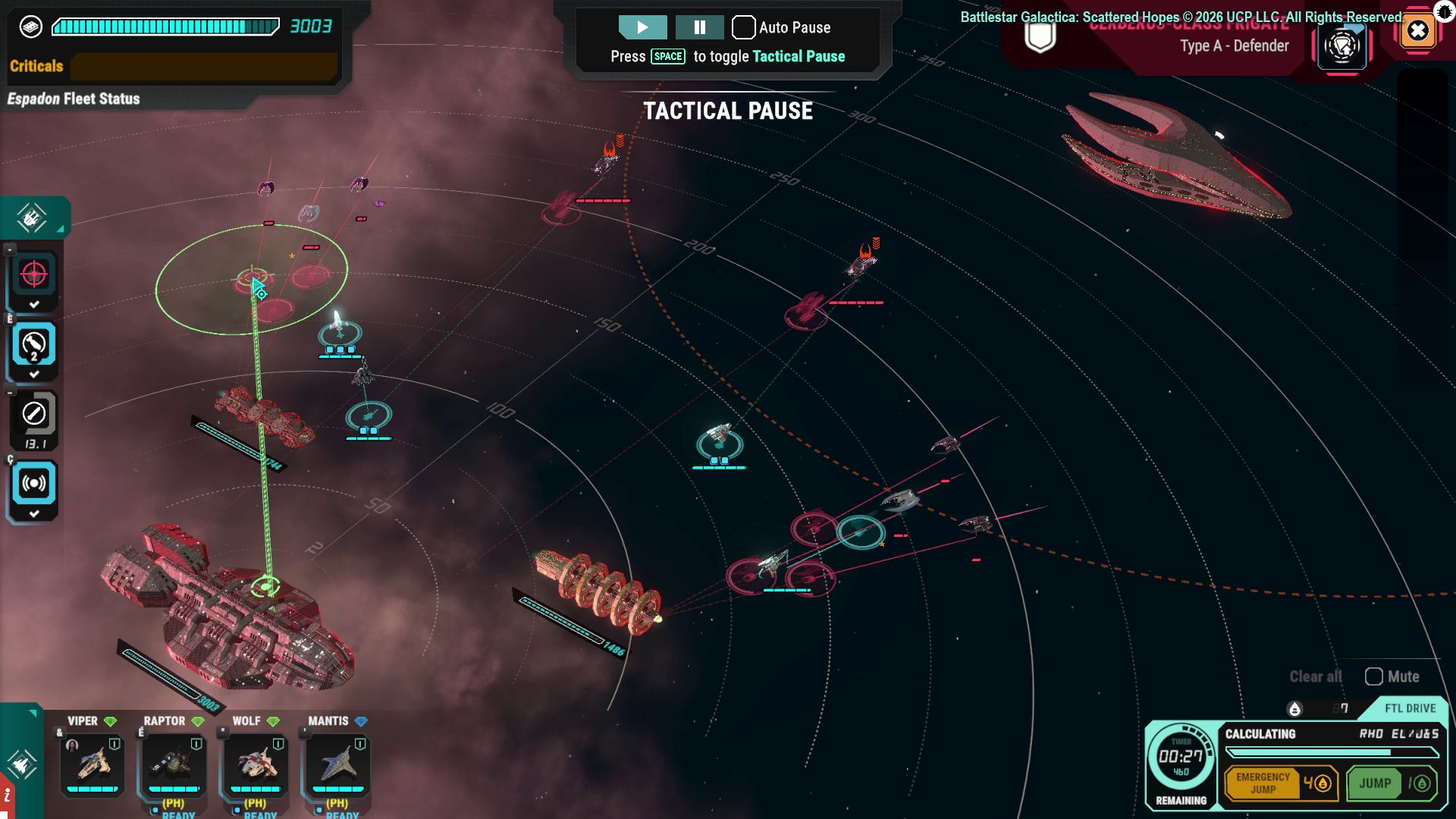
The actual combat is interesting because it is unavoidable and frequently unwinnable: Your fleet of a single gunstar and a few civilian ships that can basically soak damage and serve as a distraction is up against a powerful Cylon warship and a variety of fighters. Instead of trying to win, you’re just trying to survive long enough for the jump drive to warm up so everyone can jump to the next sector.
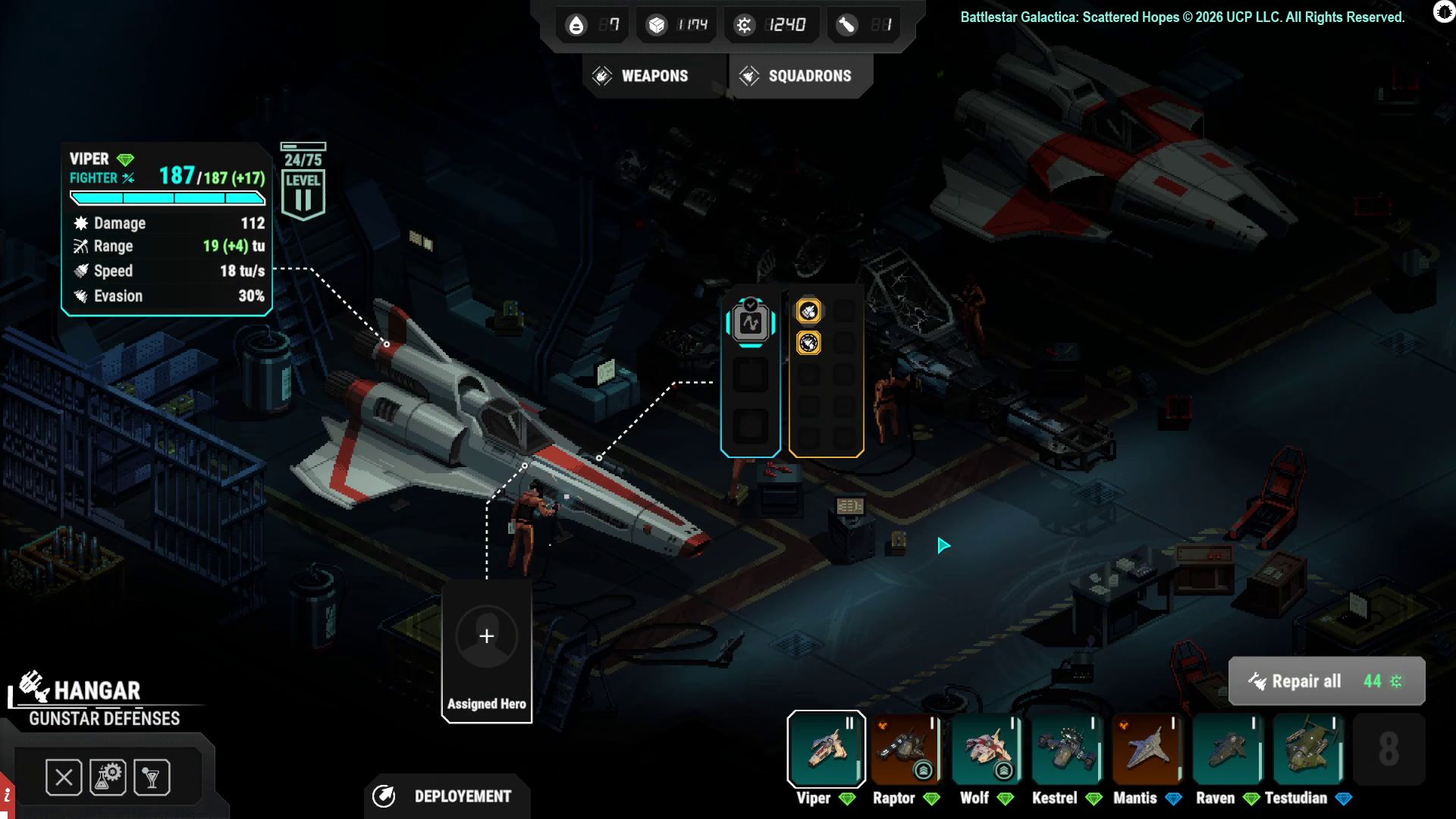
To do that, you have 2 major types of defense: you have small starfighter-type units that do various things. Some are small zoomy short-range ships that zip around the screen and blaze away, some are more artillery or sniper-style units that do high single-target damage, and some are more support-type units that provide buffs and debuffs. You can only deploy a few at a time based on your gunstar’s starfighter bays, and it is expensive to upgrade those. The fighter squadrons can also earn experience and be upgraded, though they are relatively fragile and require some RTS-style micromanagement to keep them alive.
Your other major tool is the ship’s guns: gun turrets, big missiles, and generally powerful, but slow-firing weapons like nukes. These can be very formidable and wipe out entire swarms of oncoming Cylons, but they also take time to fire while enemy fighters and missiles are pounding your fleet. Again, you have a limited number of active turret slots that can be raised, but at a high cost.
The drama of these battles plays out on a mostly 2d command surface that generally reminded me of playing the Star Wars miniatures battle game and really fit the vibe of using antiquated technology to try to survive oncoming hordes while frantically waiting for the jump drive to warm up. It’s real-time combat with a tactical pause to catch your breath, but the screen can get a little crowded with units swooping around, especially towards the end of a battle when you may only have a handful of fighters, and there are Cylons everywhere.
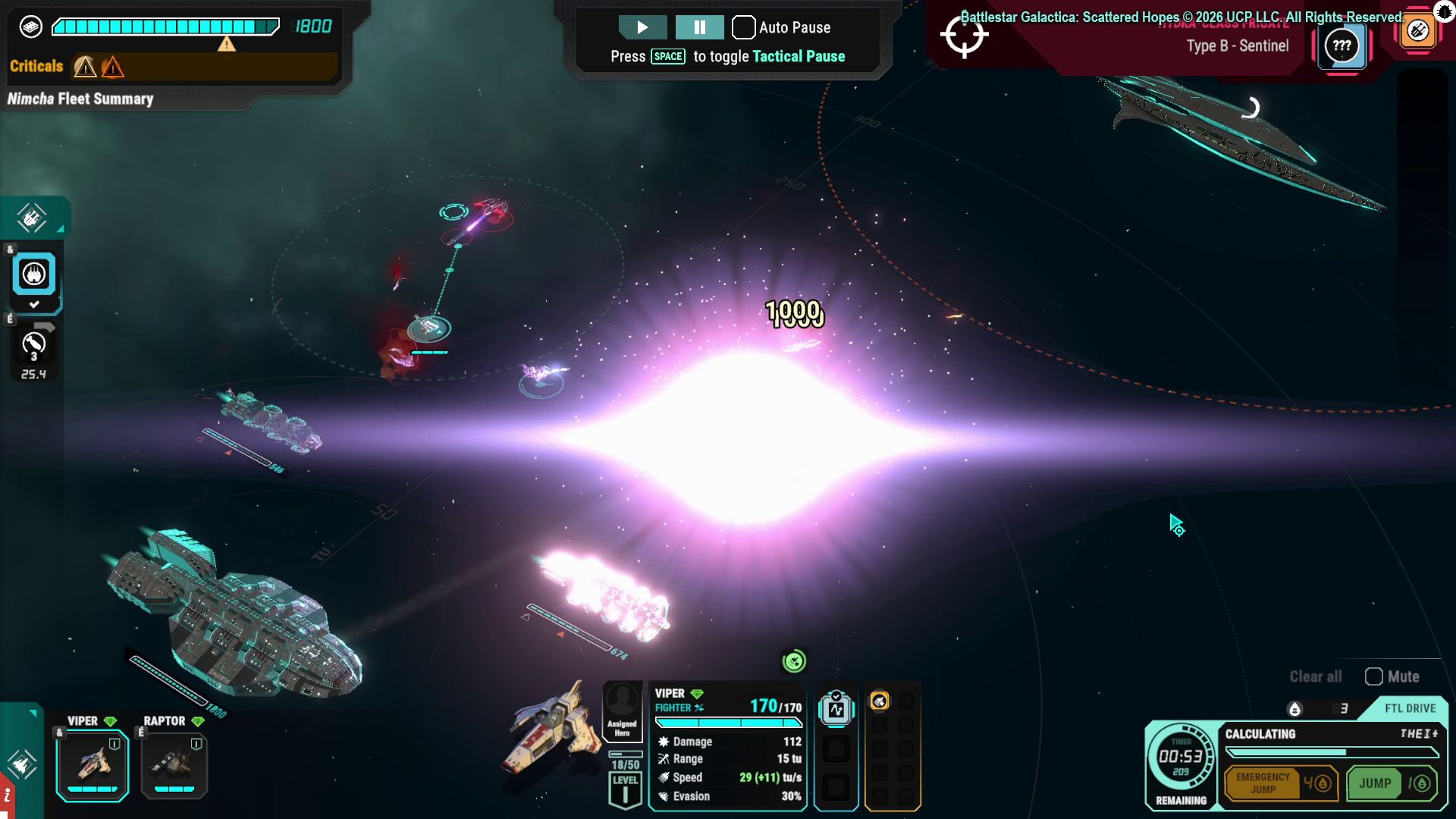
Once you mash jump, it’s off to the next sector to repair, refit, deal with the constant ongoing crises, try to unlock upgrades, pick the next sector you jump to, train the civilian ships (since they do provide bonuses), and, hopefully, eventually rendezvous with Adama. Oh, and of course, there may be Cylons among the crew, and you also need to investigate that, and cram all that in before the next battle.
The downside is, of course, you are doomed and going to lose several times before you manage that, this being a roguelike and Battlestar Galactica. When you do, you’ll find there are things to unlock like new starting fleets with new starting gunstars that provide different playstyles–for example, one that is built more for ranged combat and heavy gun turrets rather than fighters–and increased starting resource bonuses rather than scrapping and scrounging and constantly running out of things or, at least, running out of things less quickly.
Which leads into the major complaint: “Losing is fun” is the mantra of roguelikes and similar games, but damned if this one doesn’t rub your face in it. The problem with having most of your gameplay be the resolution of crises and people complaining and causing problems is, well, it’s like constantly having to deal with a school bus full of screaming, ungrateful children. “It is always something,” is the unofficial motto of your fleet, and if it isn’t the workers or underworld or military mad about something, it’s someone setting off a bomb or one of the ships breaking or one of your officers demanding resources for a personal project, and damn do you jabronis realize we are all going to die out here?
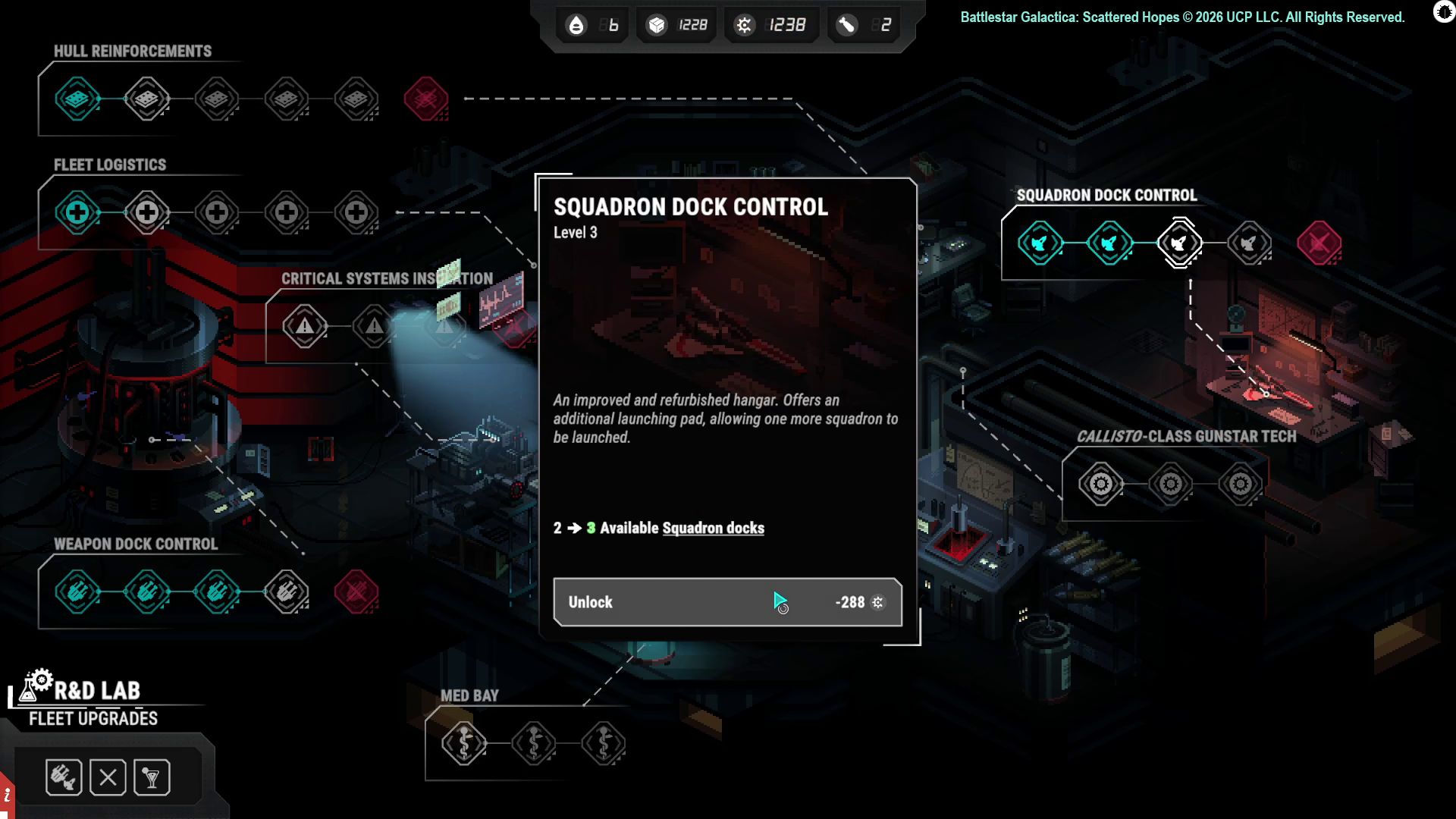
When my ships inevitably got blown up, sometimes it was like “Oh, thank god, I don’t have to deal with those idiots anymore” rather than feeling bad about it. Good things or encouraging things happen so seldom, and bad things happen so often that there’s not really that hook of “Okay, but I’ll figure it out next time” or “I almost made it” or “I feel bad about humanity getting wiped out.” Instead, it’s like “Well, maybe the Cylons are right because lord we are a bunch of whiny and ungrateful children.” As a related minor mechanical nitpick, the civilian ships did provide bonuses, but they were so abstracted and not immediately noticeable that losing one in combat felt less like losing a hard-earned investment or source of buffs and more like losing a source of problems and resource drain.
The gameplay is tough, and always losing is part of the genre, and you do start getting some nice bonuses as you lose over and over again, but lord is it tough to motivate yourself for another run of the survivors of humanity screaming “MCDONALD’S! MCDONALD’S! MCDONALD’S!” as the Cylons are trying to kill you at every opportunity. It tempts one to pull into the drive-thru, order a single black coffee, and leave.
Good
The Final Word
There’s solid gameplay, but it’s a grind to find anything encouraging when everything is going wrong all the time, which does fit the IP and experience. And life in general, I suppose. So say we all.