






















































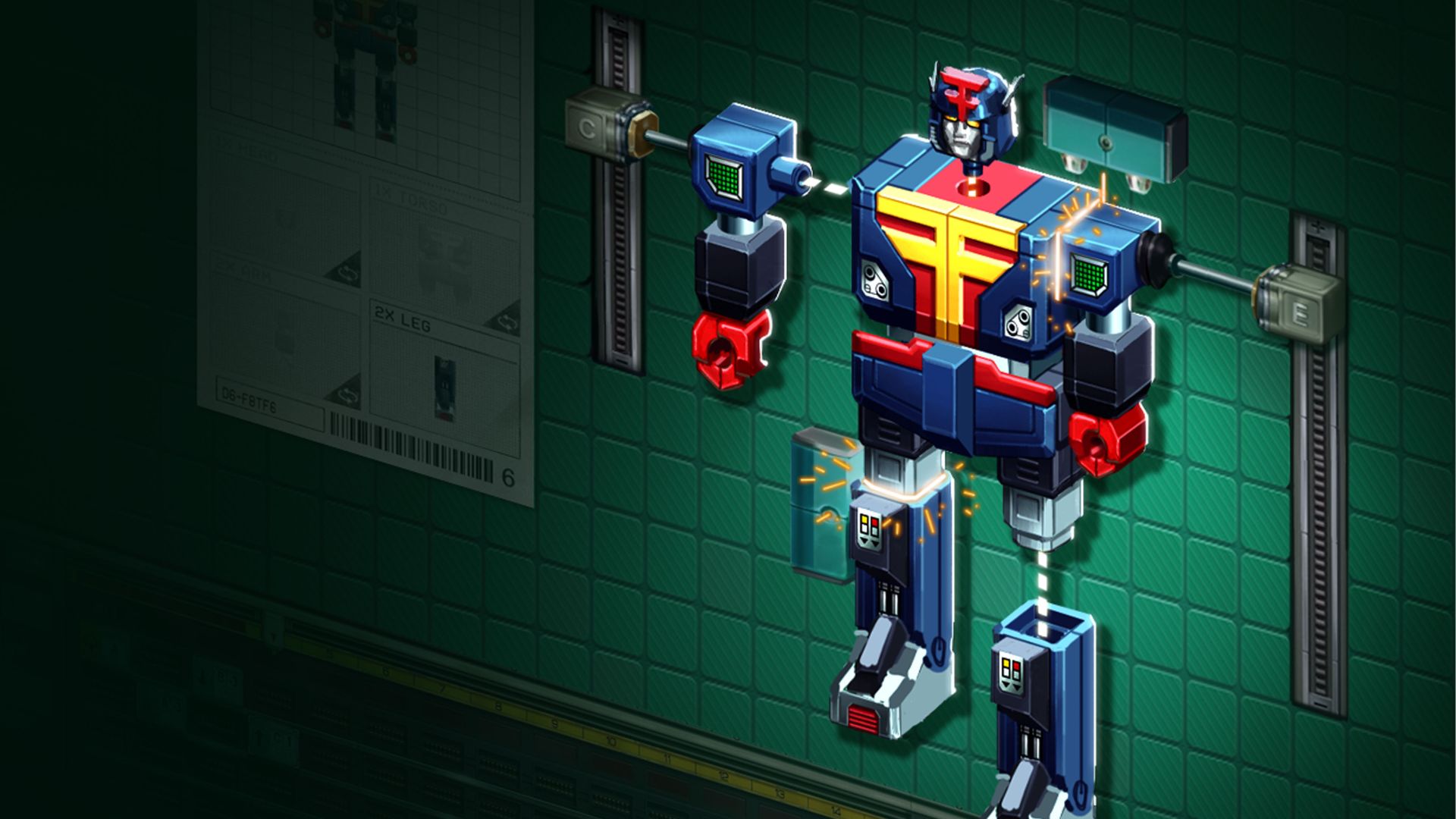

Kaizen: A Factory Story is a surprisingly intimate narrative about design, labor, and cultural memory, all wrapped in the familiar logic of a Zachtronics-style puzzler.
In this conversation, we spoke with Zachary Barth—creator of Kaizen: A Factory Story and the mind behind Opus Magnum and TIS-100—about recreating 1980s Japan with accuracy, the philosophy behind factory automation, and why he doesn’t really make puzzle games, but “Zach-likes.”
Barth offers insight into the game’s historical research process, its story-driven approach to problem-solving, and the weird joy of manufacturing toilet seats in a digital world.
Veerender Singh Jubbal: Since [Kaizen: A Factory Story] is set more than 40 years ago, can you let me know why you chose this setting, time, what sort of research did you go into encapsulating and go into the details of the toy-making factory? Did you visit any toy factories?
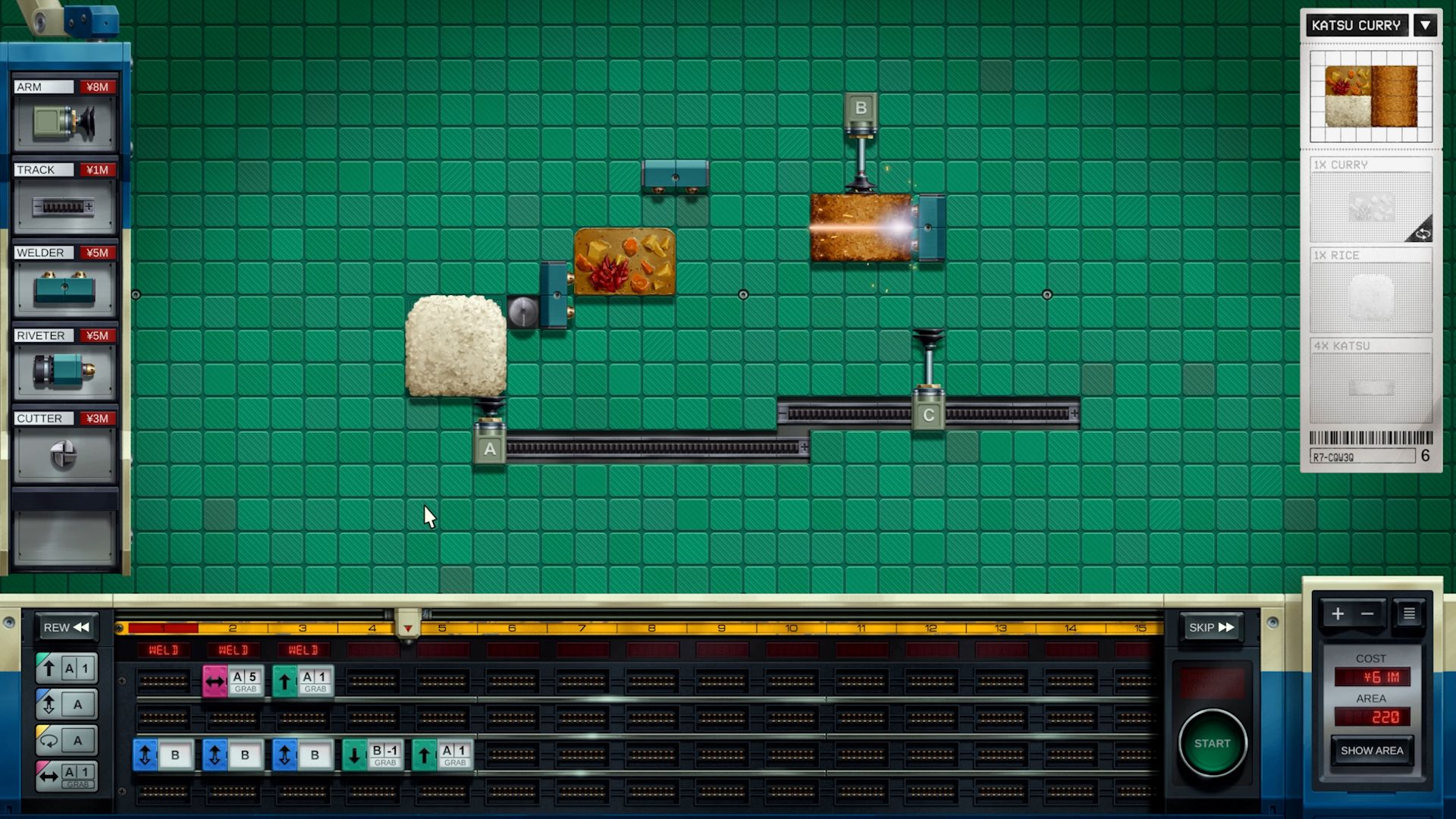
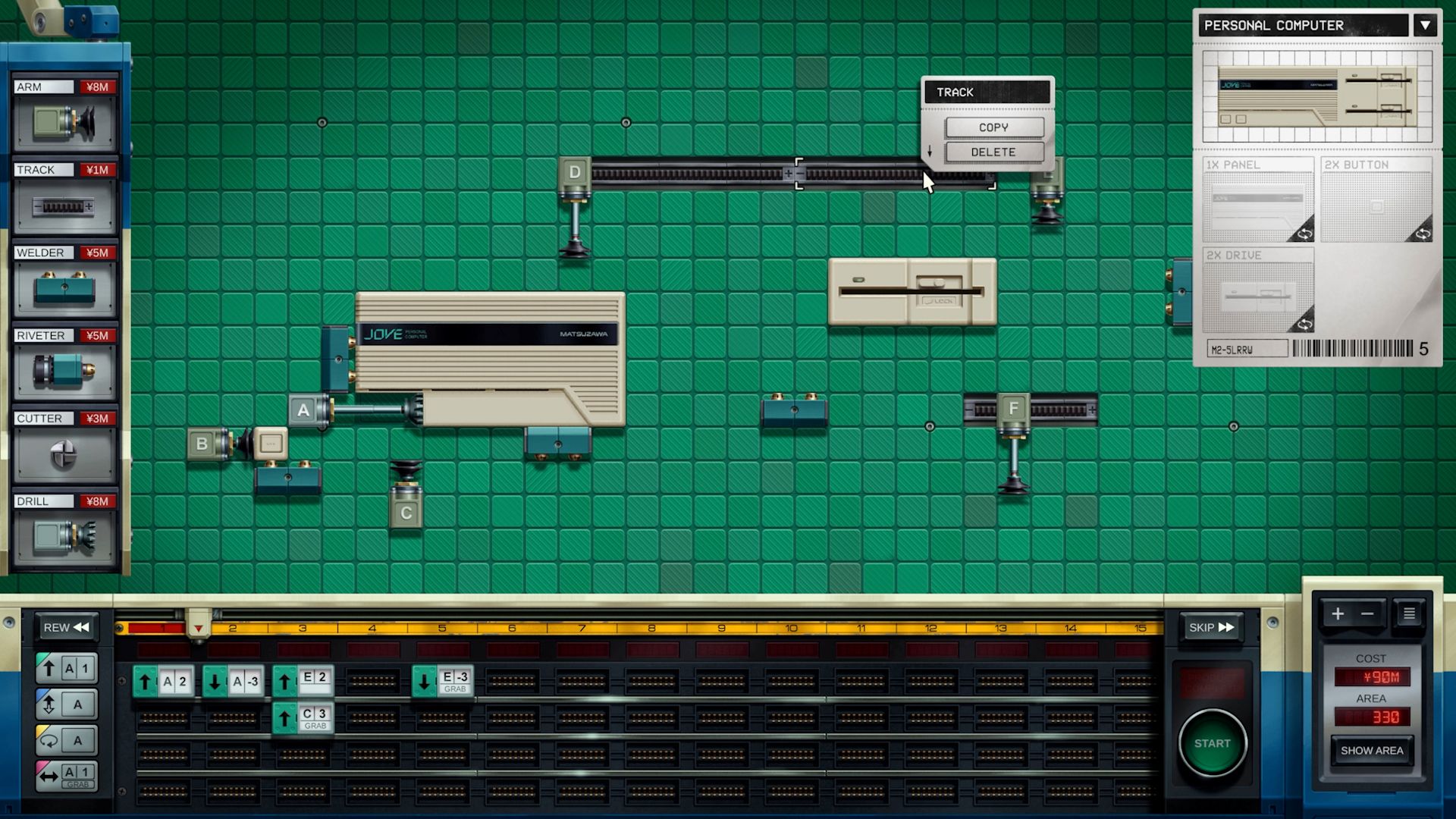
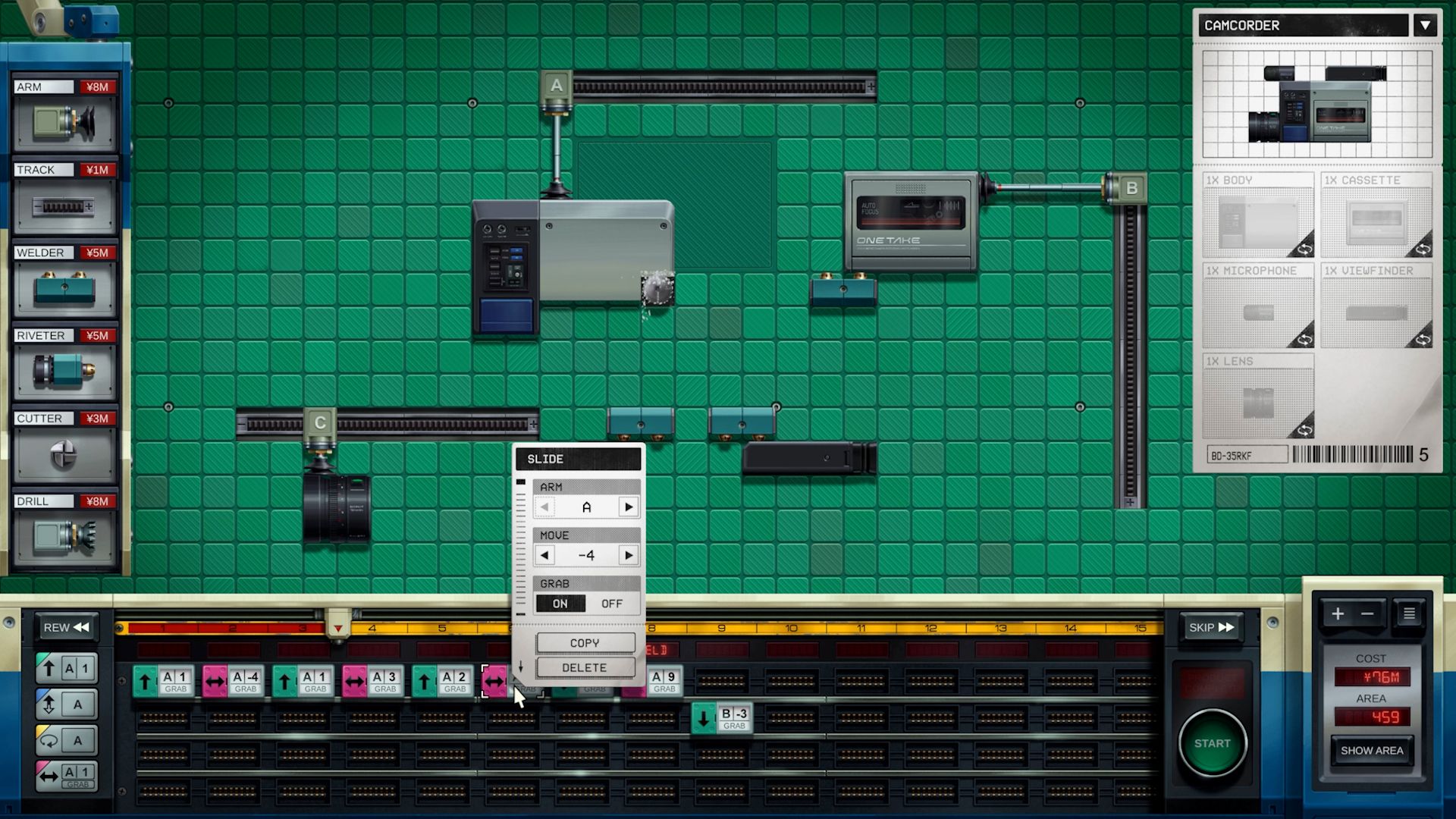
Creator, Design, and Program Lead Zachary Barth: The game is not just about making toys. We do use that robot in our key art, and so that has led a lot of people to think that it’s just about making robots; that is, in fact, one puzzle in the whole game. You make toilet seats, clothes, fake plastic food, and all kinds of things. It’s more than just toys. There are a lot of factories.
It does take place in the late 80s. Obviously, there’s a bit of nostalgia for it. I think one of the things that’s interesting about this time, I was born in the 80s, but I wasn’t in Japan in the 80s. But growing up in the 80s and 90s, there were lots of very cool products that were of the time, the Sony Walkman or video game consoles, and video games. For someone like me who is into games, video games were the big thing. There was a big push to export a bunch of cultural products out of Japan in the 80s. It really put [Japan] on the map in a big way. Even cars. I’m really into design, and when you think about all these iconic products from the 80s, they’re really thoroughly designed. There’s a lot of design that went into ’em, and it made an impact on a lot of people.
This is something that we all at Coincidence–it’s the kind of thing we’re into, and so this gave us a chance to read books from the era you were asking about research. We read a lot of old books. I think is a good way to do it. ‘Cause, if you just read stuff where people are talking about the past, but in a contemporary way, if people have already read stuff in the past, distilled it down, they’ve eliminated a lot of the details, and kinda get reduced to tropes.
Then everybody knows that Japanese salarymen worked themselves to death. But that’s a trope. It’s kinda been scrunched down to a much smaller version of reality. So if you go back and read books from the 80s or the 90s, when it was much more recent, you get a different view than the consolidated trope version that is floating around on the Internet.
It’s actually really hard to research some of this stuff now because when you do, if you go on Google image search and you search for. It’s almost entirely just contemporary stuff that is claiming to be like what it was like in the 80s. This is not a real Pac-Man arcade cabinet. This is a modern Pac-Man arcade cabinet that claims to be like the ones from the 80s, but is actually quite different because it’s being done by a crass company that’s trying to capitalize on Pac-Man the brand. Even when you search for stuff from a particular time period, it’s modern stuff displacing it.
I don’t speak Japanese; one of the guys in our office does. We would have him help us construct Google queries in Japanese so that we could search through them. If you search for Japanese stuff in English, you’re just gonna get English stuff. You actually have to search in Japanese. We would use Japanese dictionaries online and then construct search queries, then put in the magic keywords that he gave us in Japanese to construct a proper query. Then you can actually dig up photos from the 80s, if you search for them, but you have to go out of your way to pull that stuff up. Kind of deep Googling and reading books from the era, we were able to kind of construct an impression of the time.
We also found this guy through a localization company. Fact checked the whole story for us as somebody who was born in the late 60s, so he remembers all this stuff, and the details that he gave us was amazing. I was arguing with [our writer] Matthew [S. Burns], on one of the puzzles, was a gacha capsule machine. Matthew wrote the story for it as being about some of them that are rare and some of them that aren’t rare. I’m like, ‘I don’t know if they actually invented rarity systems in the 80s.’ We were kinda arguing about that, and the guy fact-checked it on his own. Rarity systems didn’t really come about until the early 90s; it was maybe more about collecting the whole set.
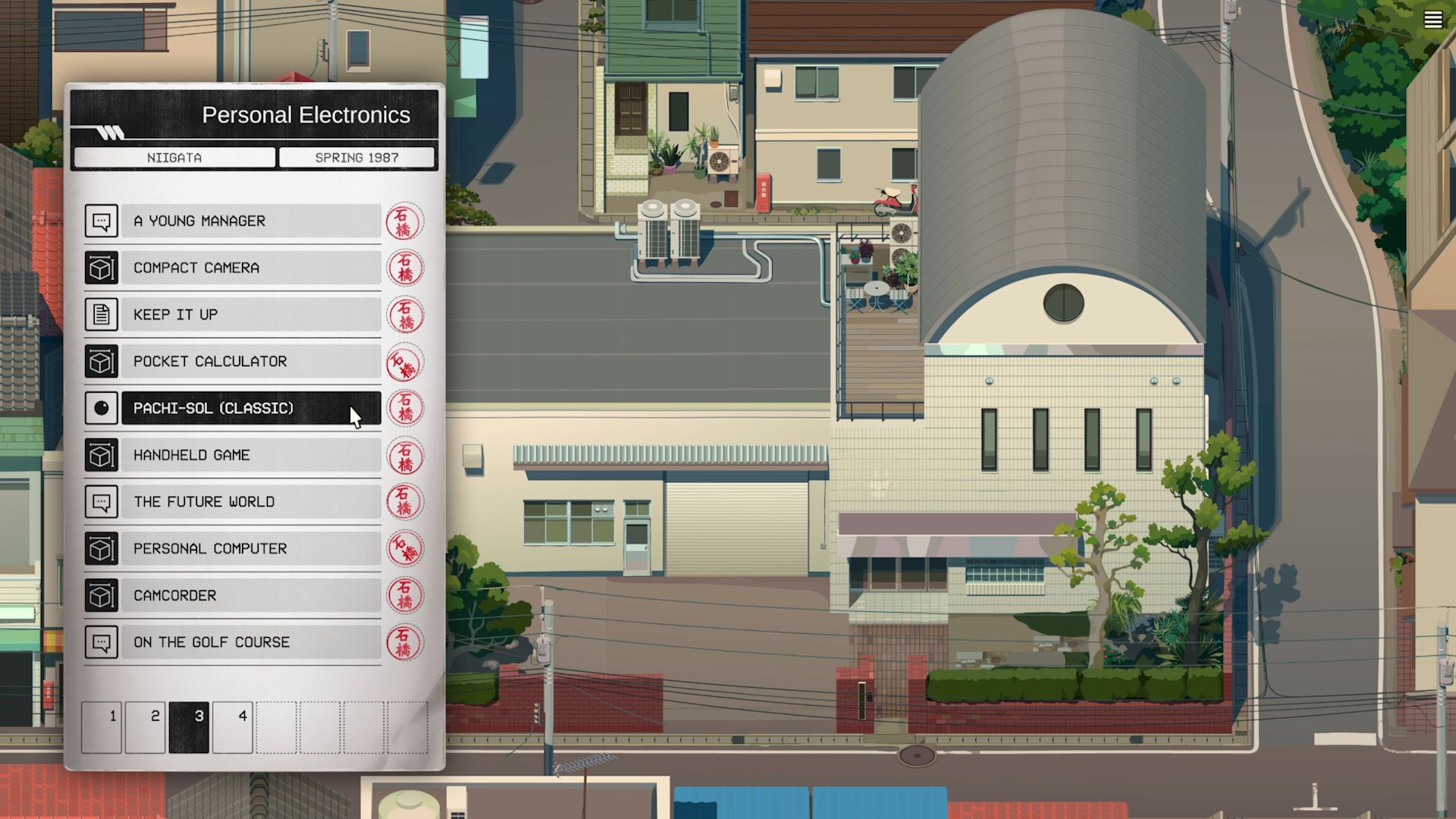
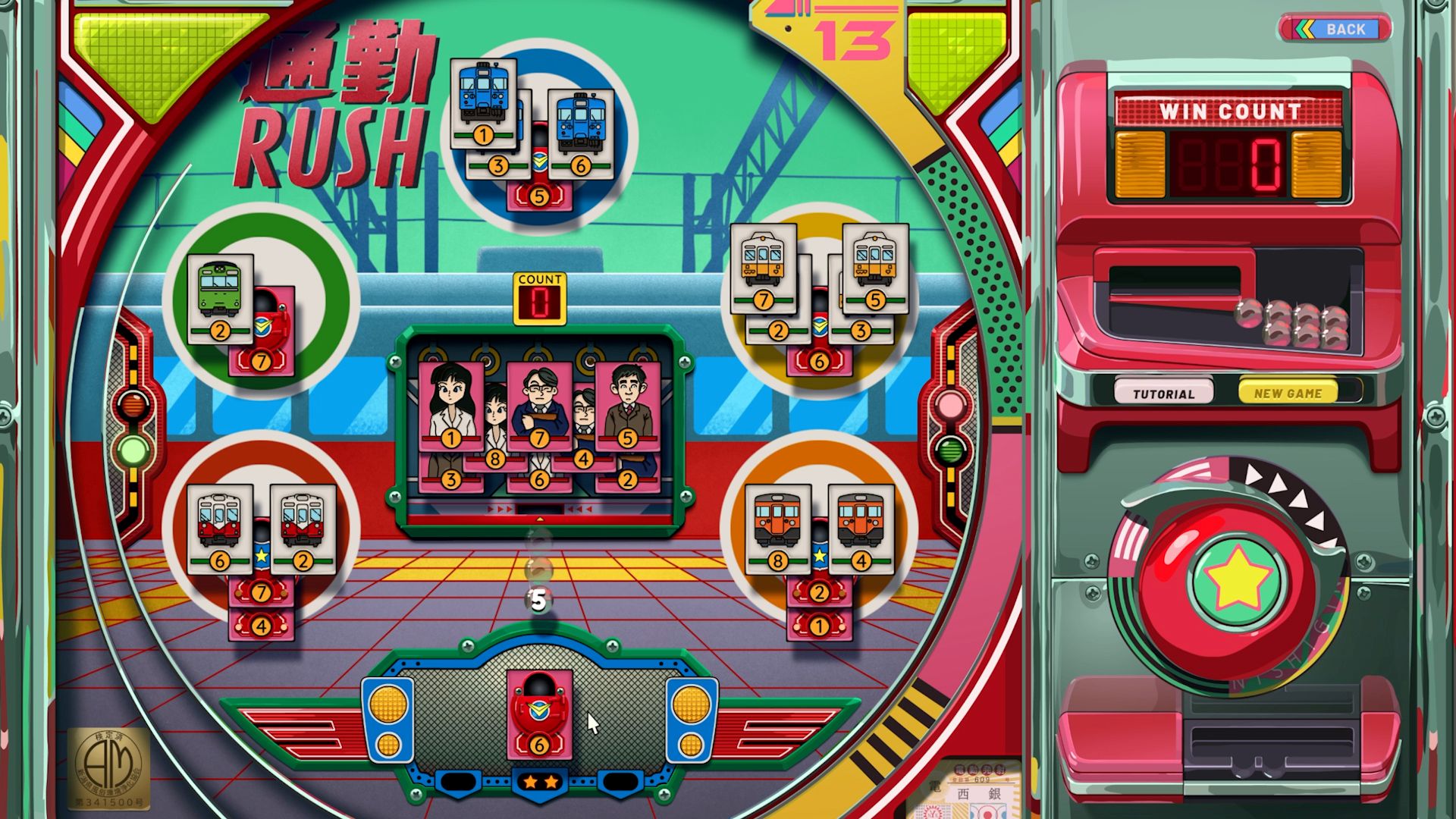
Matthew had to go and rewrite the little story for it to be actually accurate. The other thing that we had gotten wrong, Pachinko parlors in the 80s would almost always play like this, terrible, almost kinda like marching music, military marching music. There’d be an announcer who’s just constantly patterning over it. You would never know that unless somebody told you this. So the guy went through the whole story and found just like tons of insane little things like this. That was a huge help.
Veerender: That’s very cool. Yeah–that’s very impressive to have somebody who has a very different background and can fact-check that sort of stuff. What made you folks want to do a pretty well thought-out story rather than just having puzzle one, puzzle two, puzzle three?
Zachary: I don’t think I’ve ever made a game that’s just puzzles laid out in order.
Veerender: We always have these huge, I guess, I mean, in the genre itself, the overarching genre of puzzles is mostly just without stories. But yours do have stories.
Zachary: I don’t really make puzzle games. I make Zach-likes. An essential part of a game that I’ve made is that they usually have these huge, overwrought stories that people will say, ‘Oh, I don’t need this story.’ Well, it’s not for you, buddy. Some people like the stories. We actually collected metrics on the Kaizen demo to see what percentage of people were reading through the story. And it was 75% of people were engaging with the story properly, which, for a demo, I think is pretty good. It gives us something to hang all the puzzles off of.
If you’re just making a list of puzzles, what are the puzzles about? I find it’s very helpful to have some sort of narrative to hang all of the game off of, and make it situated to mean something, right? Some you can just make puzzles, but then they don’t mean anything.
When I make games, I think I like them to mean something or try to.
Veerender: Right. I think that’s very impressive. Automation in factories or the workplace has been significantly discussed, more so in the past two decades. What do you think about factory automation in general, especially creating, crafting a game around that for creating products, especially under late-stage capitalism?
Zach: The story of the game actually talks about this stuff a lot. What does it mean to make stuff, right? What does it mean to make stuff and automate things?
I kinda think it’s just inevitable. Manufacturing technology is so clearly successful as a thing that has happened, right? Car manufacturing in the eighties, right? Time manufacturing is sort of orthogonal to automated manufacturing. It’s clearly a superior business decision to automate rather than not automate. It’s just kind of obvious. I mean, there’s, it means something different now too, because when people are talking about automation now, right?
I went to Sheboygan, Wisconsin, sitting on the water. I toured the Kohler Toilet Factory, which was mind-blowing. It’s huge. They built it a hundred years ago.
So it’s kind of like–do you watch Severance?
Veerender: No.
Zach: Oh, okay. It’s got a little bit of Severance vibes. ‘Cause it’s like a whole town that was built based on a charismatic founder who started a business, and all of his workers lived there, and he wanted to take care of them. Slightly utopian kind of commercial from the early 20th century. They built this massive factory, and they would make toilets and stuff. And in the years since, it’s become highly automated. One of the big things is that cast iron tubs are made out of metal. They had a whole, fully automated process for casting iron toilets or for tubs, and it was just massive, and it was all automated. One of the things that was really crazy about it was how few humans were there. We walked past some. It’s really funny too, with it being such a big building, because they only use like a small percentage of it now and make about the same amount of stuff ’cause it’s all automated. There was a place where they had kilns, and they had like a whole row of 20 kilns. Most of them don’t use them anymore. They just kept one of them for like historical reasons. But there was like a guy. Sitting next to a CNC machine was just doing work. He was on his phone f**king around. That’s the future of automation, right? Is a guy f**king around on his phone while a machine does the work, and he’s just kinda like supervising it.
There’s still people in the loop, but it’s just fewer people. But I don’t know if we need tons of people making toilets, you know? There’s greater things that humans can aspire to than making toilets, maybe. I think especially with Kaizen, the way we approach the automation stuff is–it’s just kinda a fact of life, right?
You have to play the game and listen to the story to learn more about the philosophy of making toilet seats.
Kaizen: A Factory Story is out now on Steam, and you can also download the game’s demo on its Steam page.