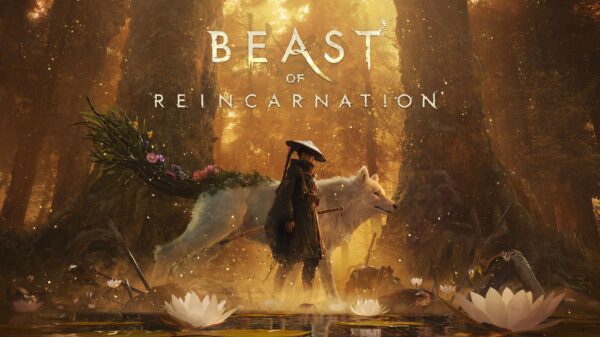
































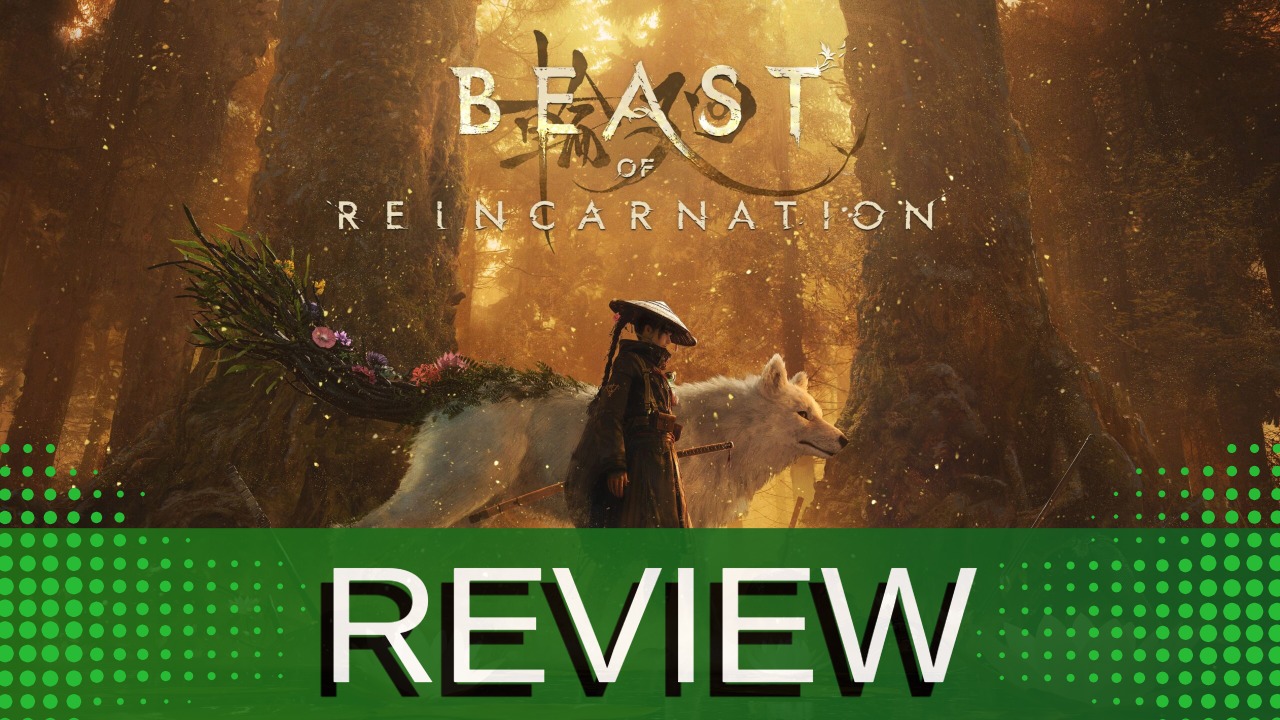

Beast of Reincarnation is a solid action RPG dragged down by a monotonous plot and a cast of identically flat characters. The expansion skill tree combined with the flexibility in both Emma and her dog companion Koo’s skills provides a ton of depth to how you approach fights, creating an exciting combat flow. The art direction blends plant overgrowth and a rebuilding post-apocalyptic society well, even if it isn’t original in its ideas.
Emma is a purifier, a blighted person tasked with taking out Malefacts, animals corrupted by the blight, who mutated into giant beasts. Her companion, Koo, is a Malefact she rescued and bonded with. She is tasked with taking down the Beast of Reincarnation, a calamitous force that returns every hundred years and could plunge the world into blight. That setup leads us on a journey to the Capital, stopping in various areas along the way to take out Nushi, particularly powerful Malefacts, to gain their power for the fight ahead. Emma’s arc on this journey is learning to feel human emotions and live for herself, something that Blighted typically don’t do.
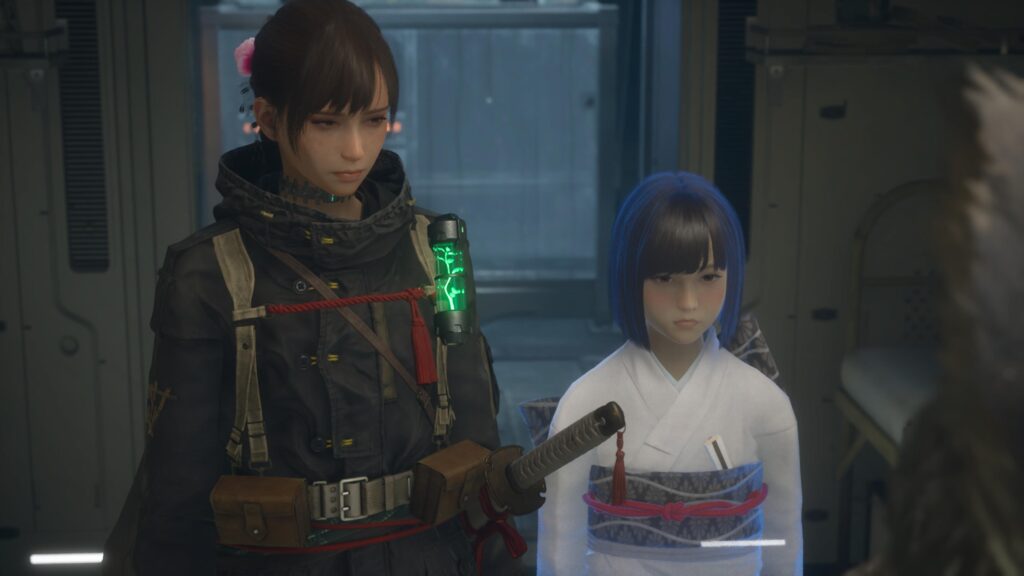
Much of what Beast of Reincarnation has to say about human will, choice, and love all feel pretty trite for this type of apocalyptic story. To say it’s influenced by Nier Automata would be an understatement. It’s not poorly executed, and some of the reveals and choices made are quite interesting. The character Violet, who appears as a blue Star Wars Force ghost, is visible only to Emma and present from the start. While the final reveal of her plotline is wildly cliché, her encouragement of Emma creates a solid relationship between them that helps carry Beast of Reincarnation through some of its blander moments.
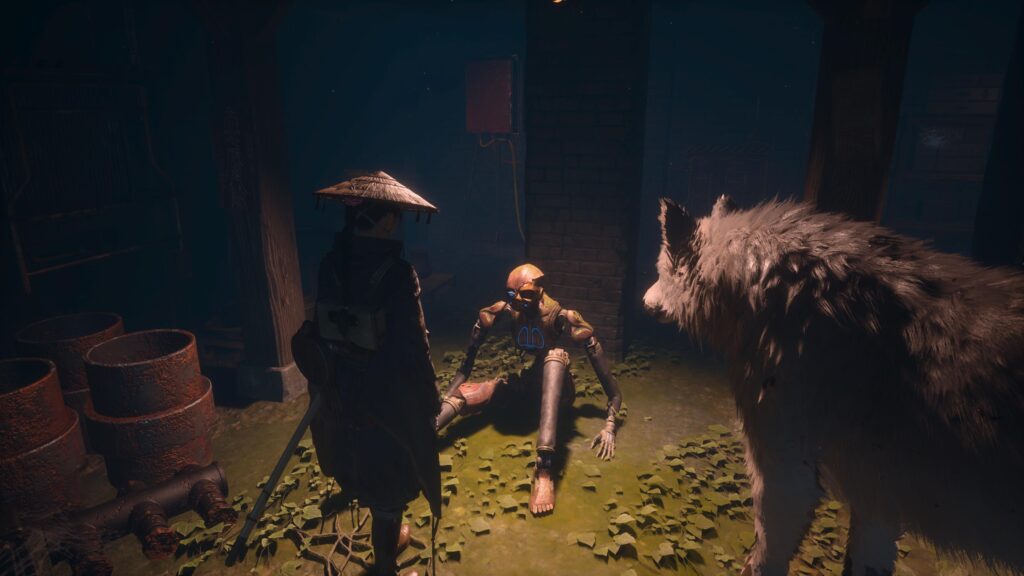
From a story perspective, the biggest letdown here comes from the character dialogue and performances. Across both Japanese and English, every character speaks in a soft, almost weepy tone at all times. I think this sort of approach is meant to give the story a more ethereal feel but having this as the tone for every single conversation, in a fairly dialogue-heavy experience, makes every moment drag on. It’s hard to let the effect of a moment you’re forced to sit in take hold of you if it feels like you’re always forced to sit and wait.
The gameplay of Beast of Reincarnation is also bogged down by the slower moments, shining whenever you get to wield your sword against enemies. Each chapter gives you a small open area to explore, with a number of collectibles and side items to find on your way to the main objective. The exploration is unfortunately at odds with itself due to a combination of mechanics and influences. These all feel like large, dilapidated areas that you would be rewarded for exploring–if Koo wasn’t marking every item you get within a fairly large range. Constantly having notifications for treasures or shrines pop up while walking along the main path diminished the reward of finding these items and created a checklist feeling.
There’s also your mobility. You can jump quite high with Emma’s hair boost, and you can create a long path to walk along with her hair. This can be used to drop down for stealth takedowns, so in combat moments these tools let you get creative with your approach. In exploration, it makes it very easy to reach certain areas, further diminishing any sense of discovery.
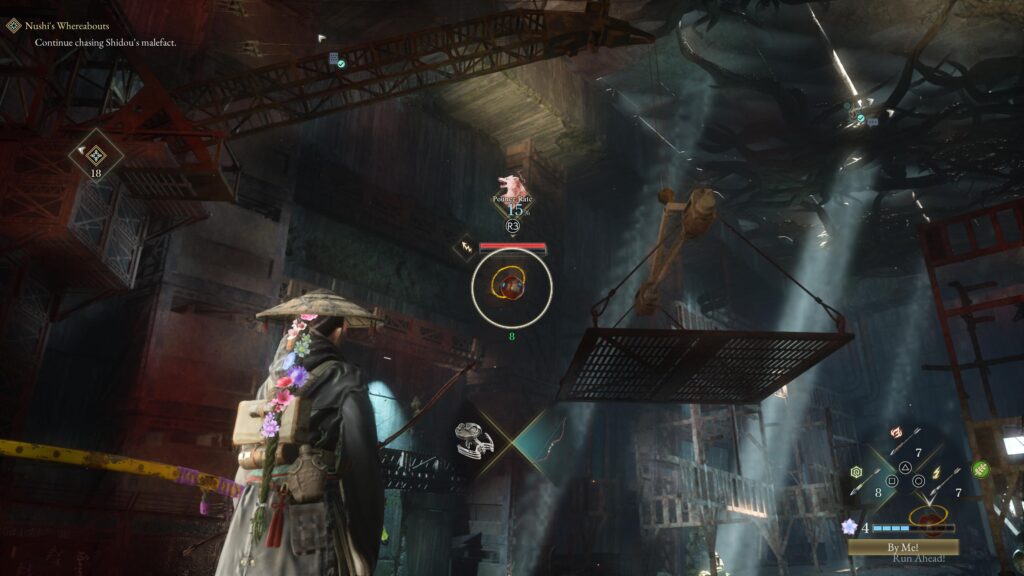
In these levels, you’ll battle Malefacts; bears, deer, boars, and more make up the vicious plant animals. You’ll also have to deal with corrupted Golems, robots imbued with human souls. These serve as more traditional enemies, often engaging you in sword battles. Beast of Reincarnation is at its best in combat.
While this is a parry-heavy experience, as you need to perform them to fill both your own and Koo’s ability meters, the most interesting parts come from the moves you learn from defeating Nushi. These serve as finishers, allowing you to use them after performing an initial attack combo, before unleashing plant abilities. Getting to hit a stun followed by a large combo really lets you burn through enemies in a satisfying way.
This also plays into the massive skill trees for both Emma and Koo. Instead of being forced to equip a selection of these new combo abilities, you have access to all of them. You instead are given the choice of which ones to upgrade, so you can hone your power into your own playstyle. The skill trees are huge, and it did at times feel a bit annoying to constantly have points to spend, but the flexibility it adds to how you approach combat was worth any headaches.
Parrying is further encouraged through blade effects. You find a ton of swords with different abilities through the game, with some increasing damage while others activate elemental effects like fire or poison. These abilities only activate after a successful parry, and only for a brief window of time, creating a tension where you need to let enemies come to you before picking the right spot to go on the offensive.
Most levels culminate with a Nushi boss fight, which is where Beast of Reincarnation feels the most like Dark Souls. These massive bosses have predictable combos you need to parry through, but there is a slight disconnect here. Because the large bosses don’t get interrupted by your attacks, it can be hard to find a moment to use one of your learned combo abilities. Bosses will often reposition or knock you over, making it feel discouraged to use these, which removes the most engaging part of combat.
Even as the story payoffs started happening towards the end of the game, they never felt like they landed with much excitement. I don’t think being able to predict how a storyline plays out is a fair criticism or even a knock against the game; the issue lives with these cliché choices being executed in a serviceable way. It’s tough to feel enthused by a narrative playing it straight down the middle if it isn’t being delivered in a way that lets me feel invested in what’s happening. The flatness of every story beat and character line creates a flat experience.
Average
The Final Word
Beast of Reincarnation is a serviceable action RPG, with a ton of depth in its abilities and skill trees. Its post-apocalyptic narrative plays a few too many familiar notes, and it’s all delivered in a tone that would make it perfect for falling asleep to. I wasn’t completely uninterested in Emma and Koo’s adventures and relationships, but the sleepy tone and predictable story beats all make for a fine, if forgettable experience.