










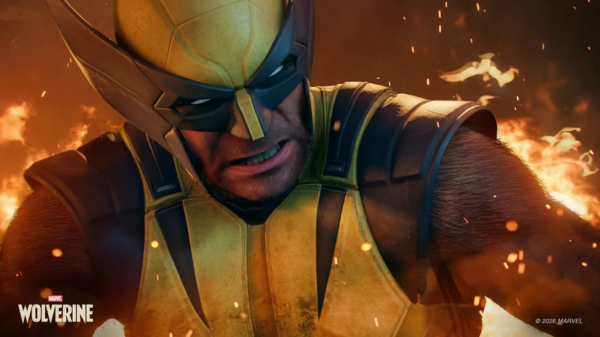
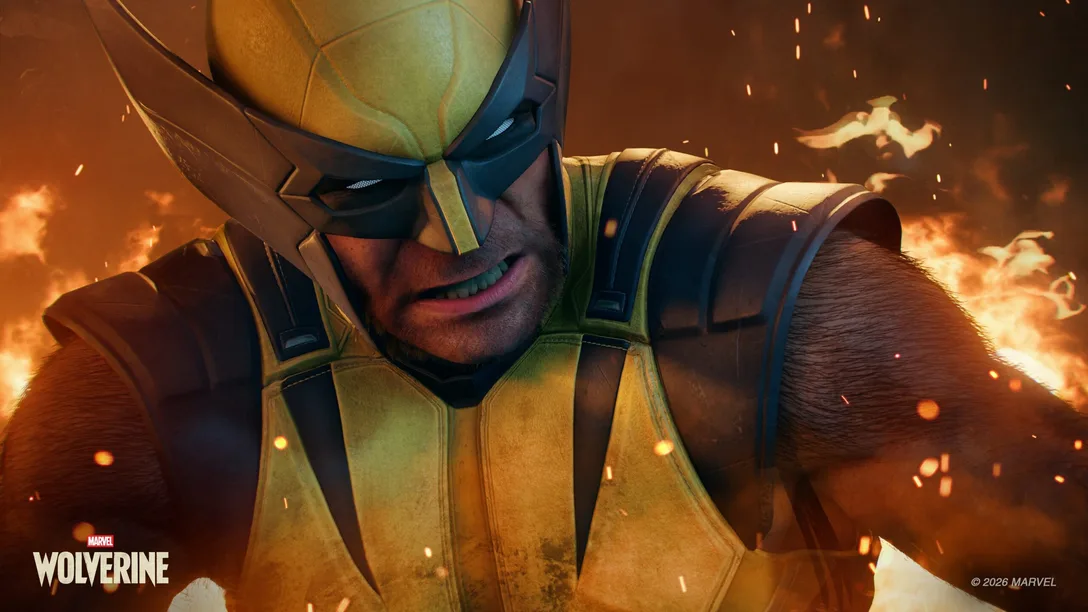

Near the end of August, MonsterVine had the chance to play Marvel’s Wolverine as part of a hands-on event in Toronto. At said event, we also got to talk to the Art Director on Marvel’s Wolverine, Gavin Goulden about the upcoming Marvel game, where he discussed Wolverine’s Canadian heritage, the comics he took the most inspiration from, and what Logan’s Tim Hortons order might be. Marvel’s Wolverine is set to release for the PlayStation 5 on September 15.
“Logan thought he was finished being Wolverine, but the past wasn’t finished with him yet,” reads the game‘s official synopsis. “Three years after walking out on his team, Wolverine rejoins the mutant task force, Team X, in their darkest hour. Driven by his fanatical belief in human superiority, Bolivar Trask is kidnapping mutants. Only Wolverine has what it takes to save them. In his fight for the future, Wolverine must team up with fellow mutants across the globe through locations like Canada, Japan, and the Marvel island nation of Madripoor. With the fate of humans and mutants hanging in the balance, Logan knows the world needs a hero; however, they’ll have to settle for Wolverine. ”
Spencer Legacy: To start on a very Canadian note, what do you think Logan’s Tim Hortons order is?
Gavin Goulden: I think he’s just a double-double guy, you know? That’s it, man. [Laughs].
As a Canadian yourself, what did it mean to get to serve as the Art Director on a game about the most famous Canadian superhero?
I mean, I’ve been a fan of Wolverine since I was a kid, and been a fan of the comics for as long as I can remember. Everyone knows Wolverine is Canadian — probably the most famous Canadian hero, right? So getting to not only help put our version of Wolverine into the universe and add to that Marvel lore that everyone knows and loves, but I also got the opportunity to work with a team to put him in a Canadian location. And that’s so critical for me.
One, it’s so true to the character, but also Vancouver very rarely gets to play Vancouver in media. So, while it’s an artistic rendition of Vancouver and we take liberties to fit our gameplay and our narrative beats, being able to show a place that is near and dear to my heart, personally, for a character that’s close to my heart, is a dream come true. That’s an opportunity that a lot of people don’t get to have, and it’s super important to me, for sure.
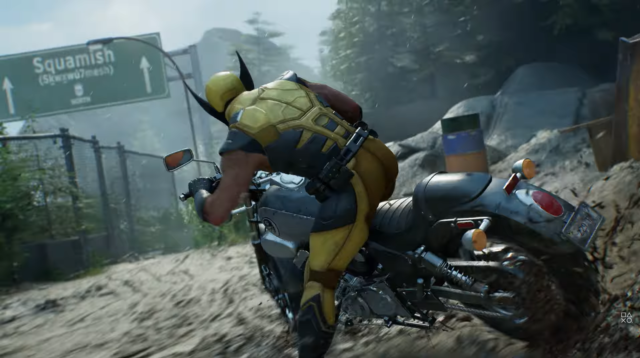
How did you research Vancouver’s in-game areas like Squamish to authentically represent that part of Canada?
I currently live in Vancouver, so these locations that we have in the game are literally walking distance, for me. You can go and see the Sulphur Pile. You can take the drive up to see the Sky Highway, from North Vancouver up to Squamish, Whistler. You get to take in all the beauty that beautiful British Columbia has to offer. So you get to, in some ways, experience what a typical Vancouverite could do when you’re driving from the ocean up to snowy mountains and getting to see everything in between.
How does Logan’s personal history and where he’s called home inform or influence the designs and direction for the art in this game?
Wolverine is much more of a nomadic character, right? So he doesn’t have a base of operations. He’s not the “friendly neighborhood Wolverine.” He doesn’t have a city that he hangs out in and protects. It’s a call to action for him. He’s all over the world. There’s no place to call home. But he goes to where the bullies are, pretty much, right? So that gave us the opportunity to craft all of these locations that are unique for Wolverine.
Some of them are Madripoor — it’s a Marvel location that you don’t really see in games that often. [Then] we have Japan, Canada, and Telambang. Getting to give an authentic take on them, but also our own spin [on] all these different locations for Wolverine to go through, [was] a great opportunity.
Credit: PlayStation
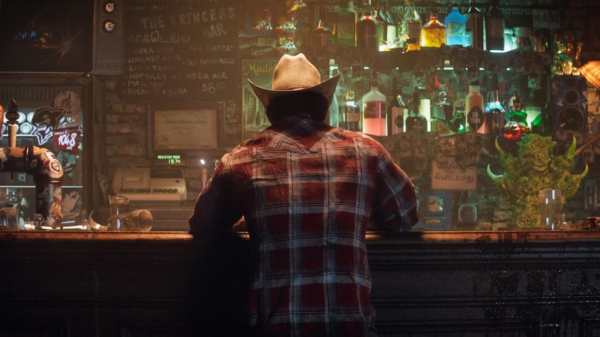
Though comic fans know he’s Canadian, there’s something of a sense that less hardcore fans might not know that Logan comes from Canada. Did you try to communicate his nationality with any of your design choices? To me, the cowboy hat and plaid are pretty Canadian.
I think that shirt is actually from my closet, if I remember right. [Laughs]. Well, there isn’t a direct stereotypical look. I mean, he’s not like a Canadian tuxedo or something like that. I think it’s more the attitude and the story we’re trying to tell and how we convey the character. So while it’s not beating you over the head with it, it should be pretty obvious when you’re playing.
Another thing a lot of people might not know is that Wolverine started as a Hulk villain. I saw the first appearance costume in the game, and that’s such a cool inclusion. Did that first appearance and the stuff before Giant-Size X-Men influence the visual language of Wolverine at all? Or was it mainly the X-Men stories onward that you took visual inspiration from?
I think since we’re all such huge fans and have so many years to pull from, all these different generations that end up playing a part for inspiration on how we design our Wolverine. So you always have commonalities.
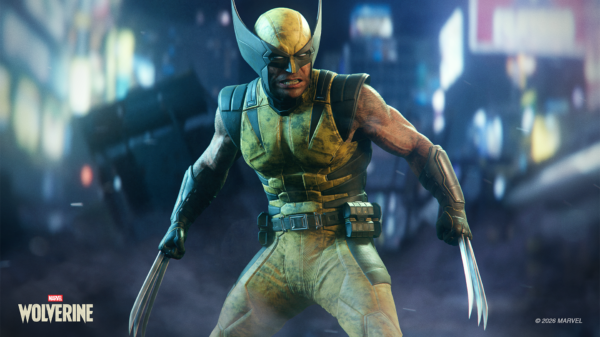
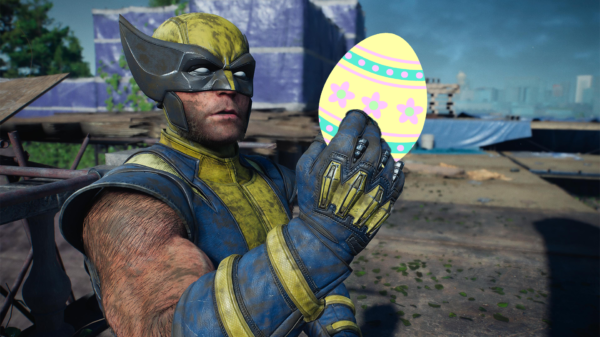
You’ll have color blocking. You’ll have different elements — like the ears, the claws, and the stripes are always an iconic Wolverine [feature], no matter what the design is, from the debut to your classic blue and gold outfits. So when we’re designing our own version of Wolverine, we’re taking all that into account. Then we’re also considering, “How do we take those designs, make them our own, and then make them fit within this world?”
So while those things will still be in common with those other designs for the suit and it feels familiar, there are things like material usage and construction details that make it feel more realistic and part of our world that we’re creating.
There’s really no shortage of Wolverine and X-Men comics to draw from. Is there a particular era of his appearances that you really take a lot of inspiration from, personally?
Well, I’m a child of the ’80s. So I think the ’80s-’90s era … and one thing that stands out to me, while there isn’t a specific run or design that is influencing our choices — I remember reading Wolverine #88 when I was younger. So I think that would have been ’94, [or] something like that. And the cover artist is Adam Kubert, and we got to collaborate with him to create the “Savage Suit.”
It’s kind of this great “full circle moment” for me, personally, because I remember distinctly reading this comic when I was a kid and seeing the cover art. I’m thinking, “Where could Wolverine go in years? Man, if I could draw comics, what would I do?” Stuff like that. And then many, many years later … I don’t know, 30 years later, something like that? I feel like I’m showing my age a little too much. [Laughs].
But many years later, getting to literally work with that artist personally and design a new outfit that enters our universe and brings his inspiration in is this huge opportunity. Again, dream come true. How many people get to have that chance in their career?
Speaking of the different costumes and putting them in your world, what was the process like of adapting these very iconic, very colorful costumes, while ensuring they visually make sense in the world of Marvel’s Wolverine?
I think it’s the same rules as when we’re designing our own suit, just that it leans more towards the comic inspiration, specifically. So for Weapon X, obviously we’re looking at the Weapon X run from the 80s. When we’re looking at that — what landmarks, what major elements make it recognizable —then we translate that using, again, construction details, material usage, stuff like that.
So it doesn’t just become computer packs. It’s like, “How would a computer pack be made in our world?” And then we’re applying it to that design. So it’s just keeping that history intact. But then, how do we bring it into the future?
Wolverine’s default costume in general is inherently a little absurd with the bright yellow and the pointed mask and whatnot, but the character himself really isn’t. He’s a very serious, very dramatic character. What was the line between embracing that comic book colorfulness and exaggeration while also making him a believable character in the world that you made?
I think a lot of it comes down to our rendering treatment. While he’s a bright yellow character running around, Wolverine also doesn’t have to necessarily hide from people, so our stealth is really more an advantageous thing for Wolverine. He’s not hiding from you; he’s waiting to attack you.
So it’s really more of an opportunistic thing. There isn’t really that much of a disconnect for why he’d be this bright character. But then, when it comes to rendering, we have definition on the suit, whether that’s a ballistic nylon or leathers — it feels more realistic and grounded. It makes it more believable that it would be outfitted this way. We also have a connection between the Team X uniform that you started in, which is, thematically, a yellow and black [outfit].
This game takes place in the same universe as Marvel’s Spider-Man and its sequels. Did you design for some stylistic overlap between the two to make a consistent visual language? Or were you really focused on making Wolverine its own separate thing visually?
Generally, we wanted to feel as if it could be in the same universe, which it is — Earth-1048. But Wolverine is a much more mature, gritty, [and] violent character and world that we’re building. So we want it to feel familiar and accessible, but also stand out on its own and better fit the character in the story that we’re trying to tell.
Credit: PlayStation
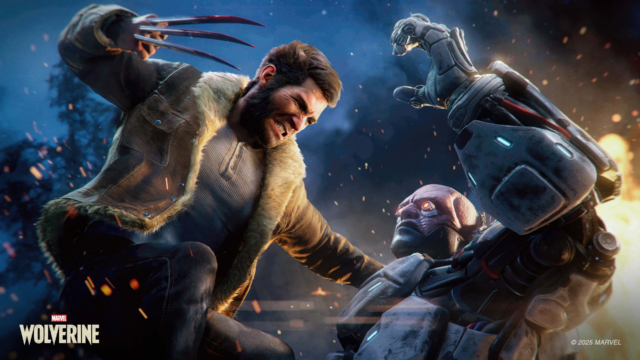
To me, Wolverine’s facial hair screams “Alberta.” Is there anything about him that you specifically, as a Canadian, found yourself very protective of while designing him?
As a Canadian, not so much. But for his height, we had to do that. So as a fellow short, stocky Canadian, I felt it was important to portray those aspects of him. We’ve got to have our short king.
What’s something players will probably never notice that consumed an absurd amount of the art team’s time?
I wouldn’t say an absurd amount of time, but all of our rendering quality takes a lot of effort from our core teams — artists, animators, it’s a huge team effort. So something that you may feel is simple, like body hair, takes new technology for us to make it look right. And really giving feedback on whiskers on the lips, like, “it’s overlapping a little too much.” While we’re perfectionists, it’s all worth it to do justice for the character.
When I was playing the demo, there was a close-up on his face and I could see his beard. I was like, “Oh, there’s hair in this one spot. When I shave, I see that.” It’s crazy to see that sort of detail done so done.
Yeah, there are a lot of imperfections in eyebrow hairs and stuff too. You can see Wolverine’s pores, and you can see them get ripped apart and then come back.
What is it like to design the visuals behind the game’s violence and gore? Is it stressful?
No. I mean, again, [I’m a] child of the 80s, so I feel like I’m kind of used to t his by now. [Laughs]. But I mean, it takes a lot of reference, you know? Like a lot of choosing when to show things,. But for the healing factor, we knew that it would be super important to get the character right. It’s such a critical aspect of the character’s abilities and stuff like that.
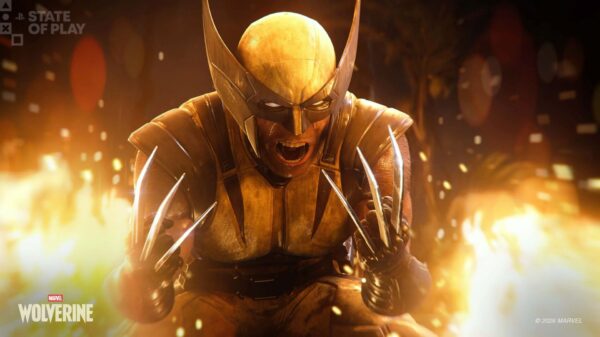
So we were getting into that, and how can you make it feel satisfying? How can you show it off the best way? So for Last Stand (editor’s note: this is an in-game mechanic where Wolverine rapidly heals upon losing all of his health) … for the Last Stand introduction when you’re playing in Telambang, you really want to showcase that no one else could get up from this. Only Wolverine can do that, right? In order to do that, you’ve got to be unflinching when you show it.
I loved that in first five seconds after he lands, Logan takes a bullet to the skull. That’s a perfect way to immediately be like, “Anyone else would be dead.”
They’d be toast, yeah!
Is there a favorite Wolverine or X-Men artist that you specifically love?
There are so many to choose from, you know? And I feel bad selecting one thing, but just from personal experience, Adam Kubert stays in my mind. There are so many to name. Barry Windsor Smith is also a huge inspiration. But with Adam, since he has such a personal connection to me and my time as a fan and reading as a kid and then getting to work with him, that’s the one that comes to mind, for sure.
Finally, do you have a specific favorite Wolverine costume — whether from the comics, films, or anything?
This one right here. [Points to the game’s cover art]. [Laughs].
Thanks to Gavin for taking the time to talk to us, as well as PlayStation Canada for the invite to the Marvel’s Wolverine preview event.