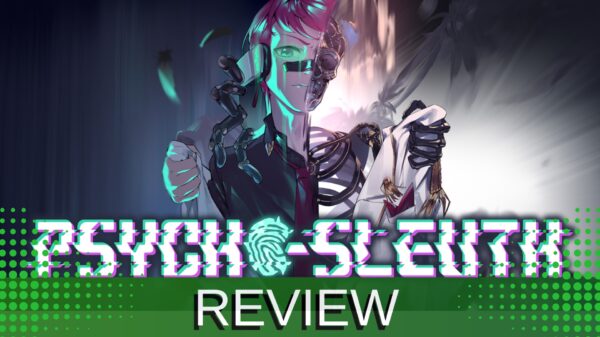



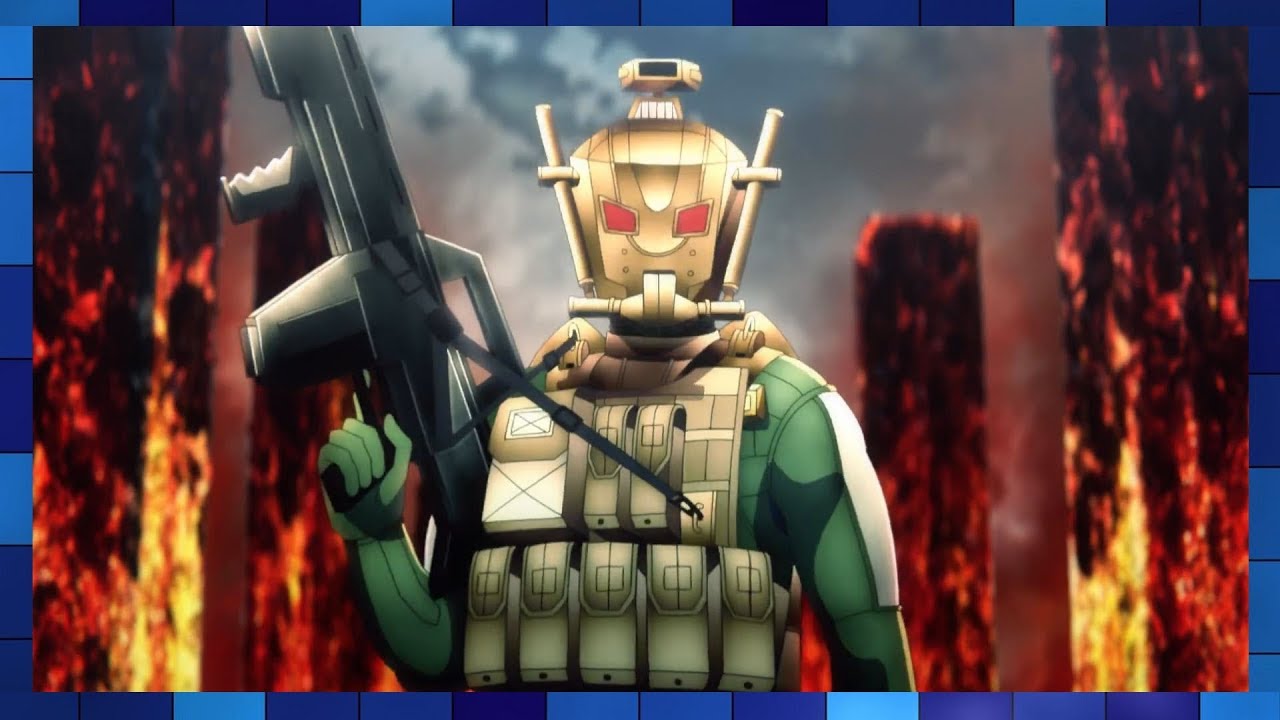

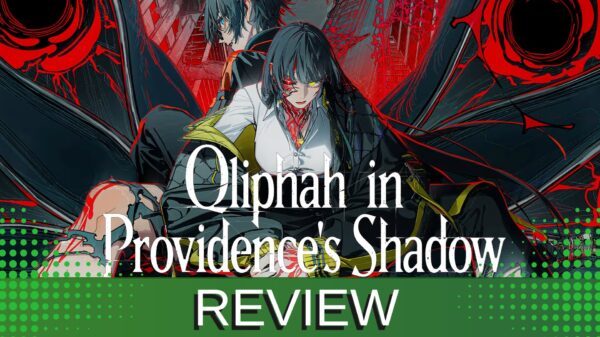



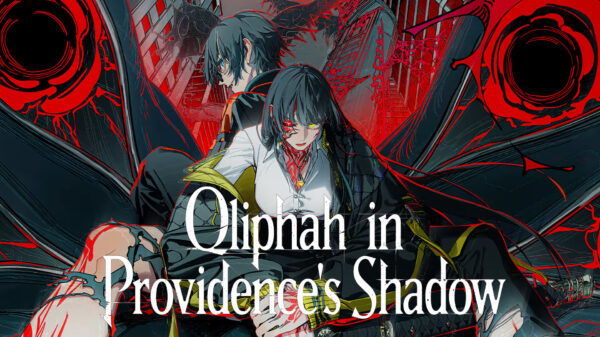


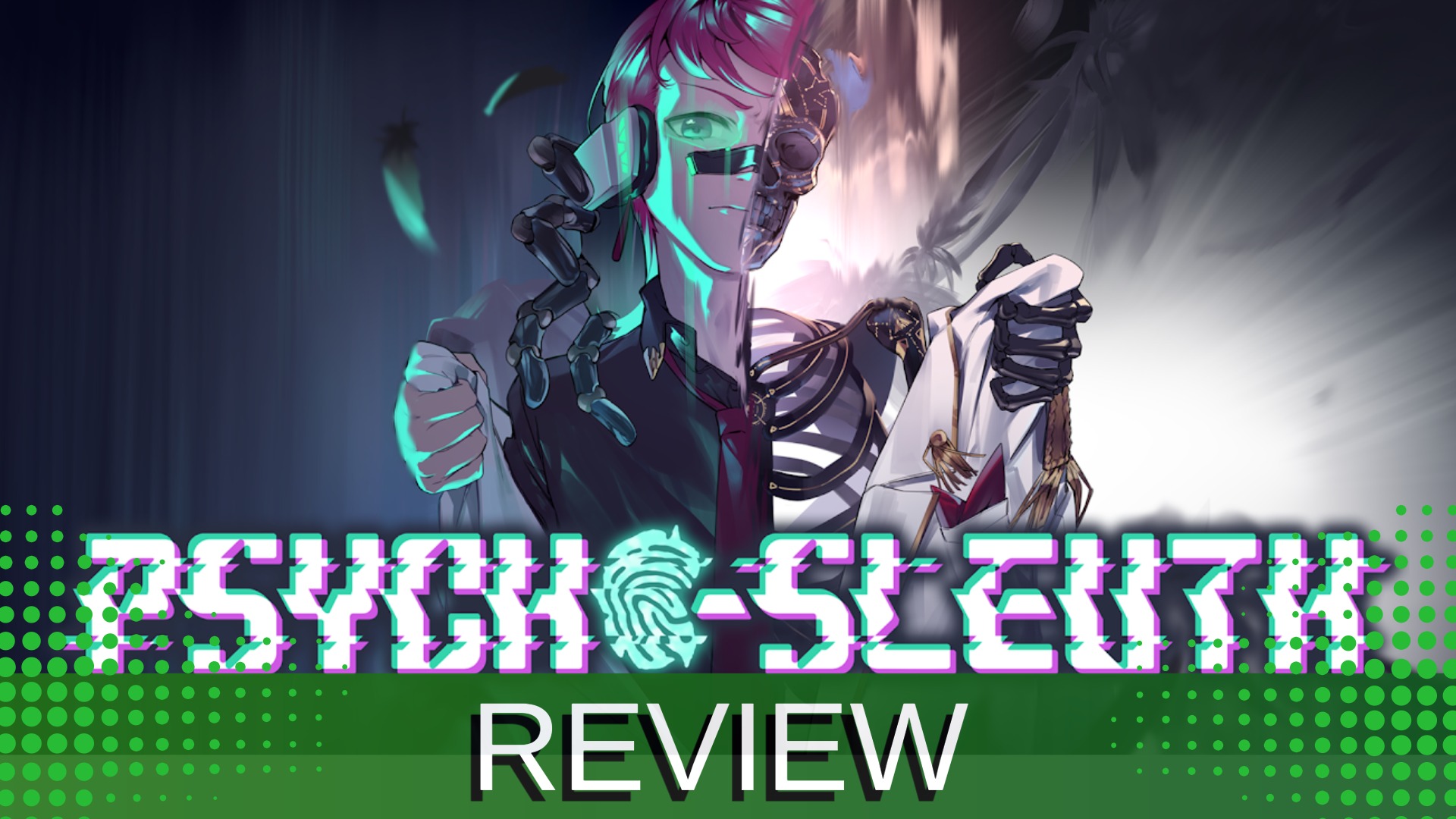

In a world where cognitive disorders can be spread to other people to distort their understanding of the facts, thirteen people are forced to participate in a killing game hosted by an influential religion known as the Logic Church. According to the rules of the game, the winner will become a god and remake the world according to their wish.
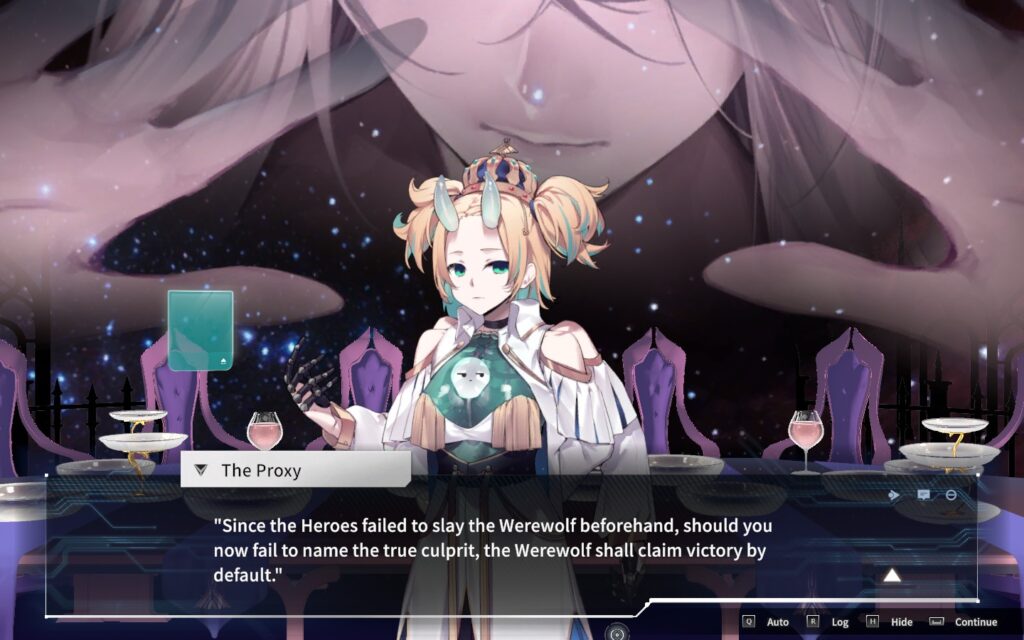
The premise of Psycho-Sleuth caught my attention right away. It’s a Danganronpa-style death game where someone attempts to get away with murder and a trial is held to determine the culprit. This one is patterned after the social deduction game “Werewolf,” where one person in each round is designated the Werewolf, the murderer, and must kill someone without being caught. The Werewolf will become a god if they succeed and be executed if they fail. Additional special roles are assigned later on, which keeps the formula fresh in each chapter. What really makes the death game in Psycho-Sleuth unique, however, is a concept known as “Pathosync.”
Pathosync users are characters who not only suffer from cognitive distortions, but can also inflict those distortions on the people around them. A character whose obsessive-compulsive disorder prevents her from lying can force everyone else to tell the truth. A character with prosopagnosia can prevent others from seeing faces. It’s a unique twist that makes these murder mysteries unlike others, because what the characters perceive can be manipulated in many different ways. Now, while the story delves into some of the challenges these characters deal with, you shouldn’t expect a deep exploration of psychology here. Instead, these conditions are presented more like special powers that can be used to influence each case. Understanding the rules of the Pathosync powers is a key part of solving each case, which is quite a fun twist on the usual murder mystery format.
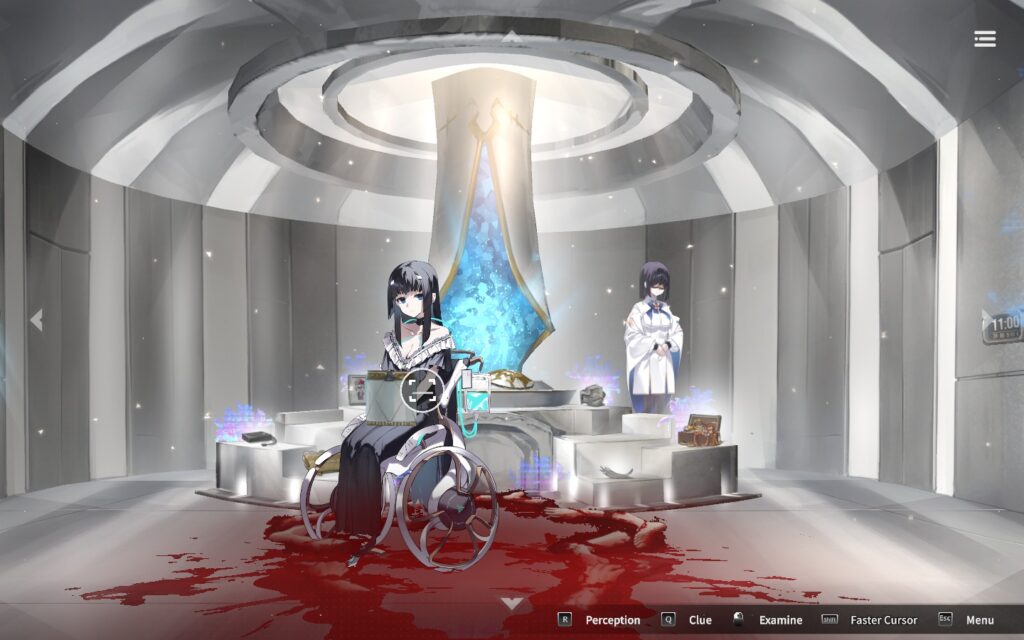
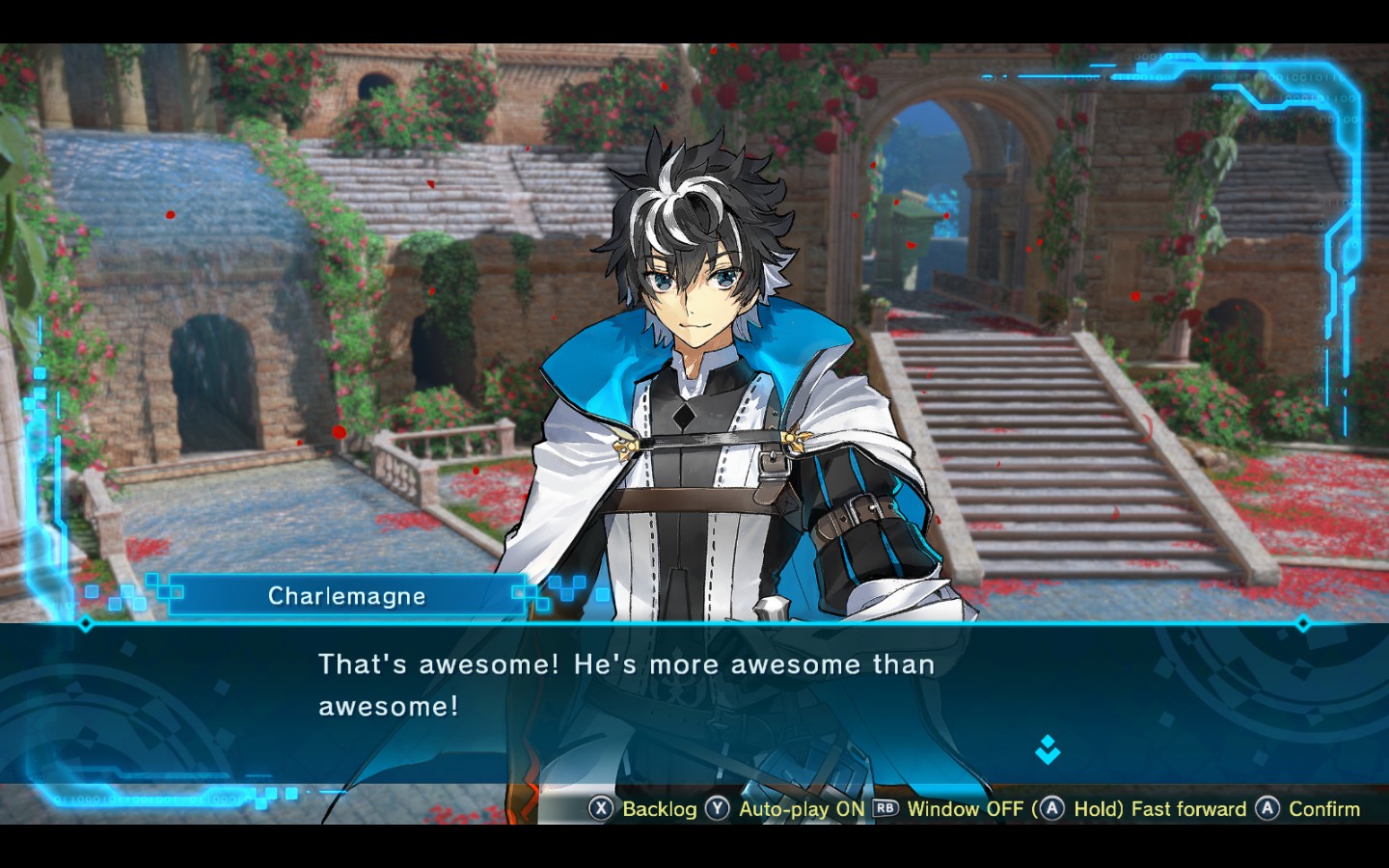
The majority of the game is presented in a visual novel format, with lengthy story scenes in between trials. Character sprites are animated through Live2D to liven up the scenes, but I found their movement to be a little uncanny. The murder scenes can also be quite bloody, showing things like chopped-off limbs, although there’s an option to censor the gorier aspects if you prefer. When a murder occurs, you’ll need to gather clues using point-and-click adventure controls to examine things in the environment. This same style is also used ahead of murders to gather additional information and talk to characters.
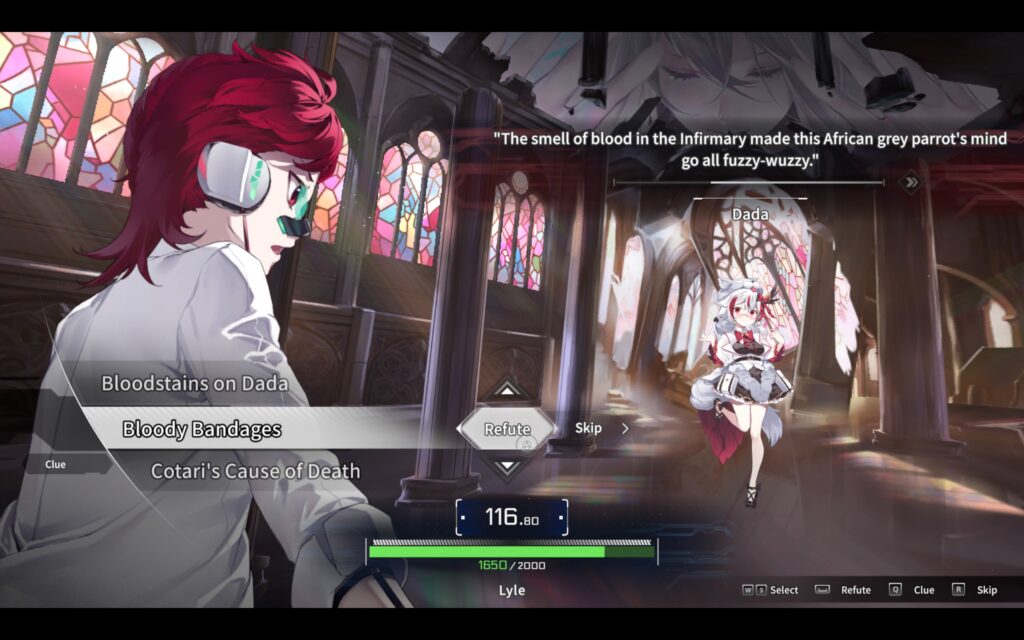
Once you’ve finished gathering clues, the trial begins. Sometimes you’ll answer questions directly, while other times you’ll listen to characters’ statements and choose evidence that contradicts their claims. While the cases can be quite convoluted, especially because of the Pathosync distortions, this approach lets you reveal trick after trick through logical deduction until you finally reach a conclusion. An added twist is that once the culprit is discovered, the characters who were given the Hero roles for the round must vote on whether the culprit should be executed or allowed to become a god. Choices like this allow for a few short bad endings throughout the game, which is a nice touch. Finally, each chapter ends with a grade based on how many answers you got wrong, and even though the game is lenient, the grading is strict. I never took enough damage to get a game over, but I got an awful grade each time.
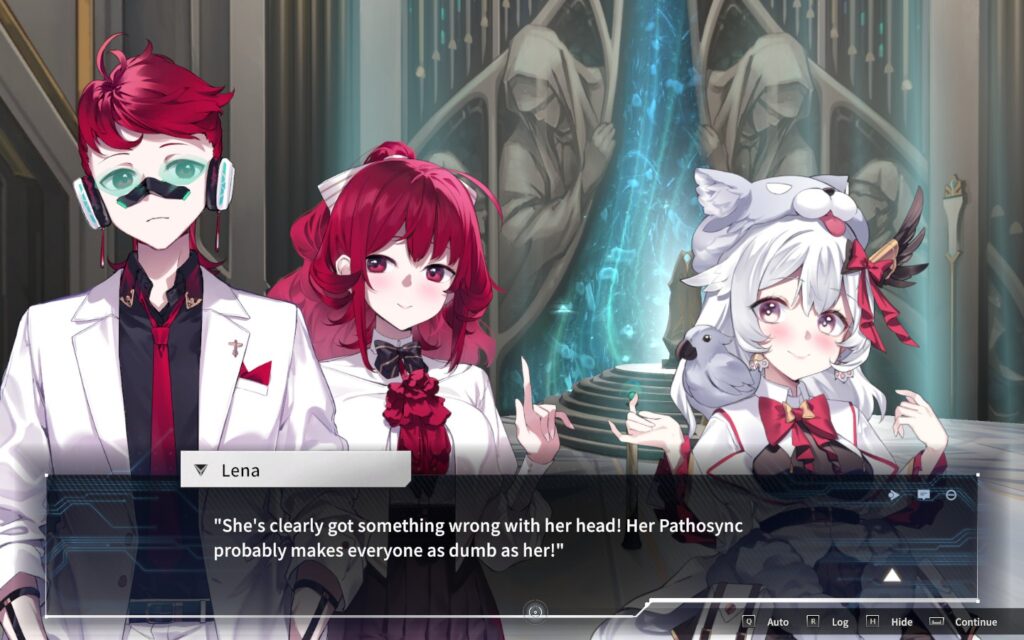
Solving the mysteries in the trials is fun, but the story and characters are the main draw. On the surface, the cast seems like a group of eccentric weirdos, but they have emotional stories waiting to be told, and I really grew attached to them. Even the main character, Lyle, hides a lot more than you might expect from the protagonist. Far from being a generic hero, he is a liar and manipulator who would do anything to protect his sister, and learning the secrets he’s hiding about his own backstory is a big part of the game. There are plenty of comedic moments–including numerous siscon jokes about Lyle–but the story can also get pretty dark. The role of the Logic Church and the god they’re trying to make also plays a huge part in the story, as well. By the end, I was thoroughly invested in seeing what would happen next.
Great
The Final Word
Psycho-Sleuth is an exciting and entertaining death game visual novel, with plenty of twists and turns along the way. Cognitive distortions mean even your own perception can hide the truth, which deepens the mystery of each case. Meanwhile, the characters are the heart and soul of the game as you get to know them through lengthy visual novel scenes. Altogether, Psycho-Sleuth is an easy recommendation if you enjoy death game stories and murder mysteries.