
























































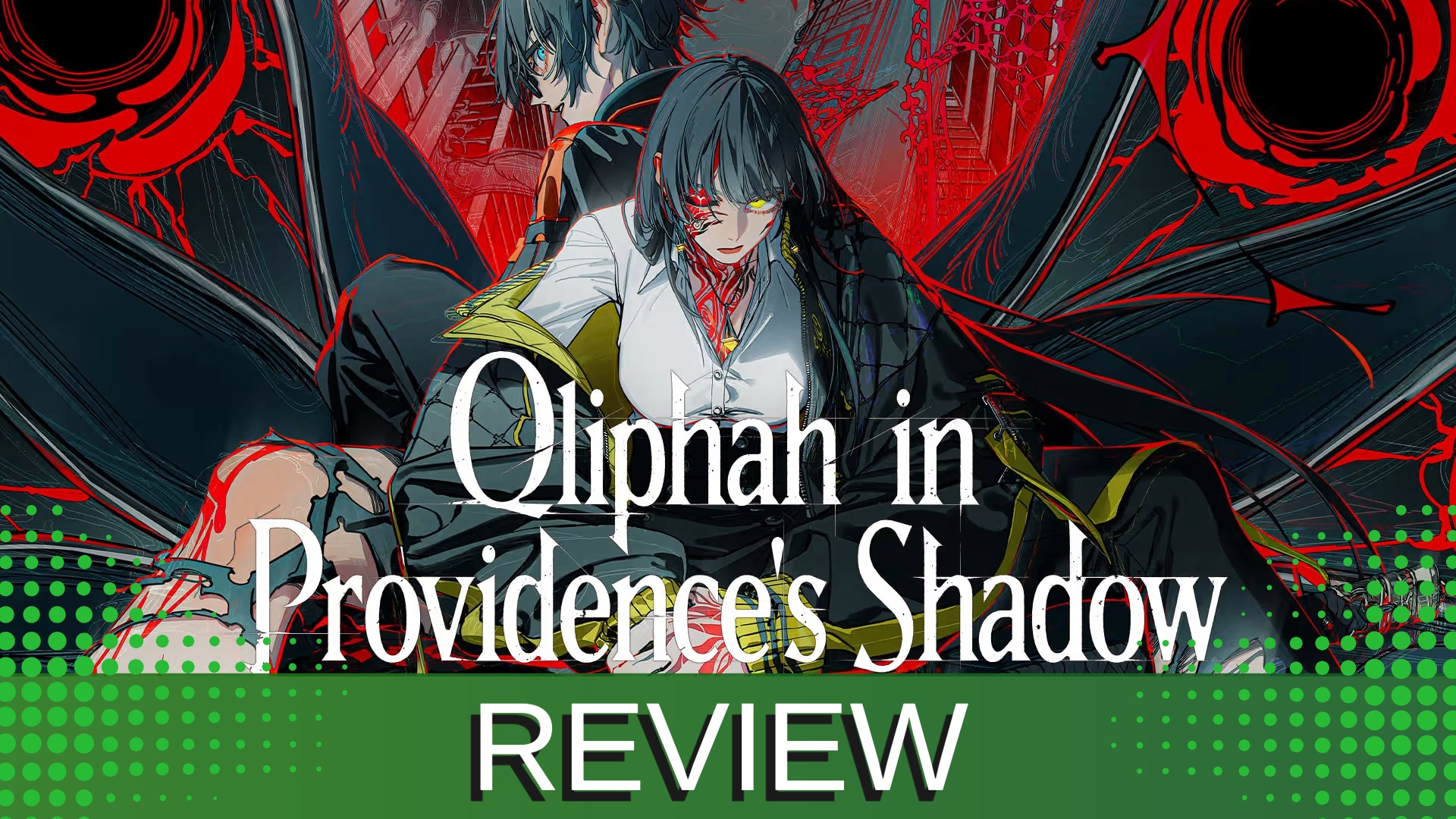

Reality is collapsing. Monsters roam the streets of Tokyo. Step into the shoes of two characters searching for a way to end the ongoing nightmare in a timeline-based RPG that employs unique game mechanics, for better or worse.
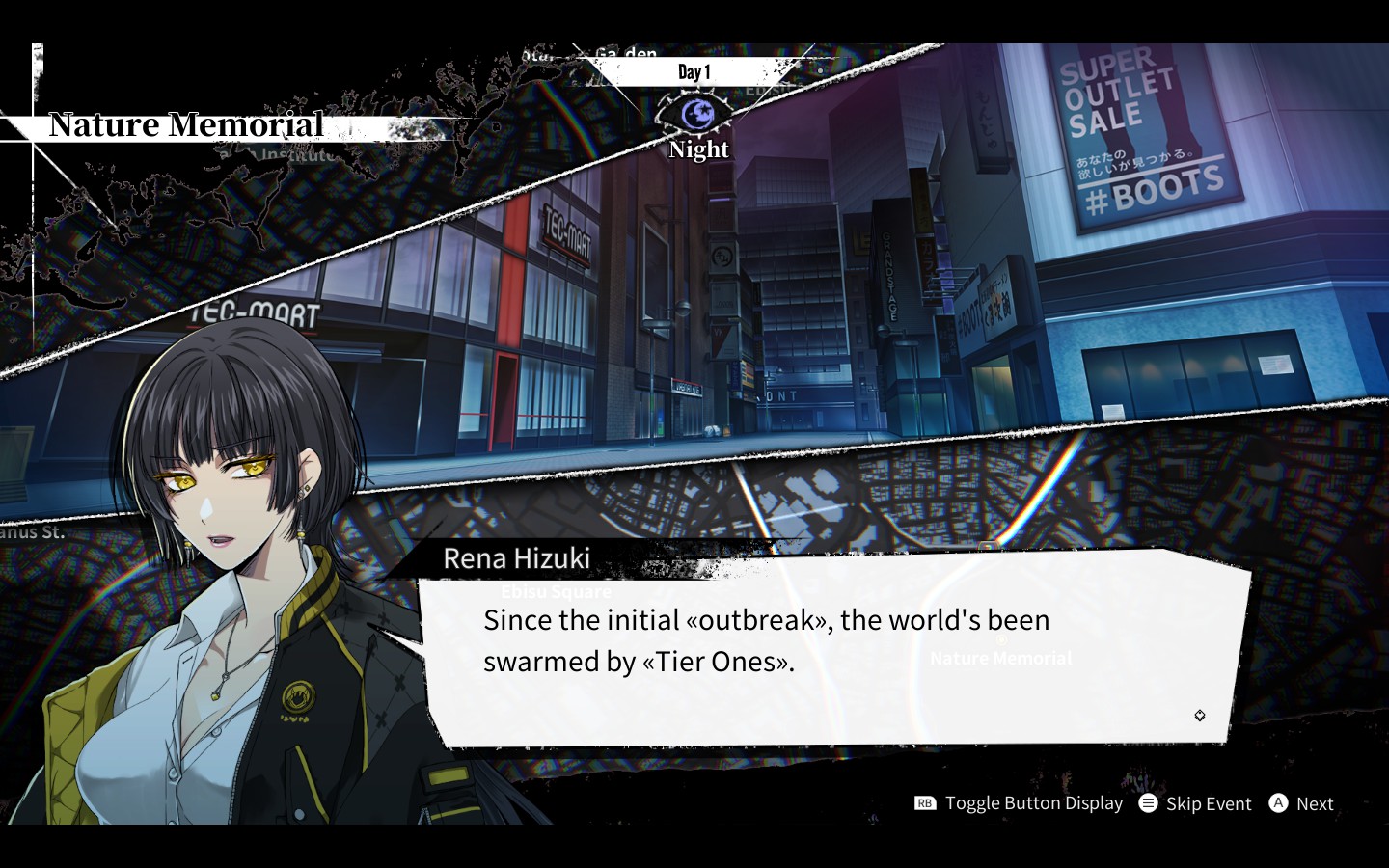
When Qliphah in Providence’s Shadow was announced, I was immediately interested. I love JRPGs, and this one has a unique combat system and an interesting story premise. With reality ripping apart and monsters attacking people, a young man named Soma finds himself in the troubling position of being partly transformed into a monster. Since this gives him the power to fight monsters, he’s placed in the custody of Rena, who possesses similar powers. As partners, they’re assigned to investigate anomalies throughout Tokyo and find the source of the reality-breaking disasters. On top of that, the game’s visuals are bold and striking, and that style persists throughout. Unfortunately, despite my initial excitement, I quickly found myself mired in frustration.
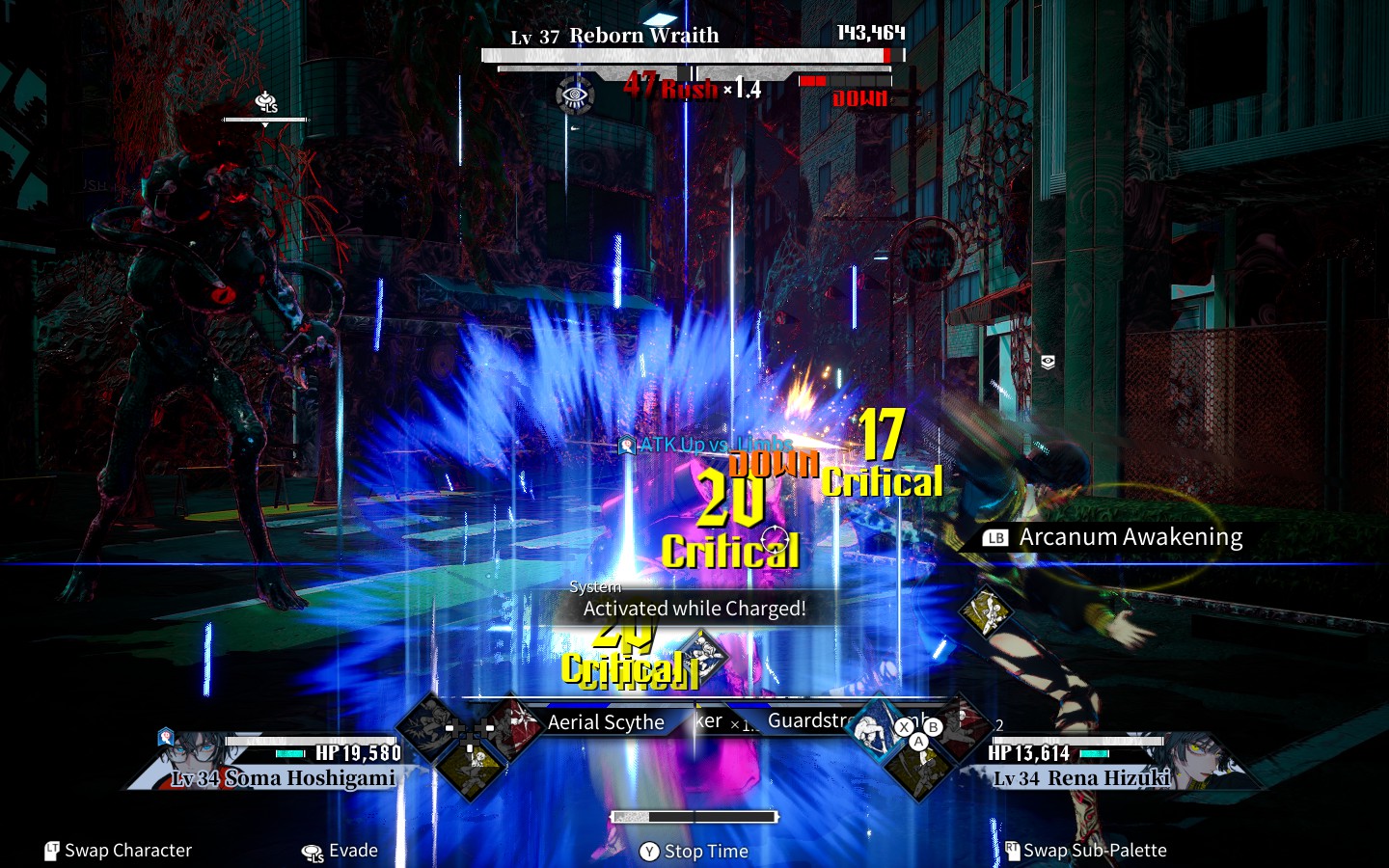
At first glance, Qliphah in Providence’s Shadow might appear to have a turn-based combat system, but it’s actually a unique form of action combat. Everything centers on timing and countering enemy attacks using a color-based system. You control both Rena and Soma at once, and when an enemy prepares a red, yellow, or blue attack, matching its timing with the same color skill triggers a counter. The timing is represented both by a visual cue on the enemy and by a timeline of upcoming attacks. For example, if the enemy prepares a red attack, you want to trigger your own red skill so that its bar on the timeline overlaps with the enemy’s bar. To this end, you can pause time to set up your skills for the right timing. Once you counter enough times, an enemy enters a knockdown state, which is when your attacks really start to do damage. It can be quite fun to counter an enemy attack (with dramatic visuals, of course) and deal as much damage as possible before triggering a special move that can only be used against downed enemies. However, the system has complexities and mechanics that aren’t always clear, especially at the start.
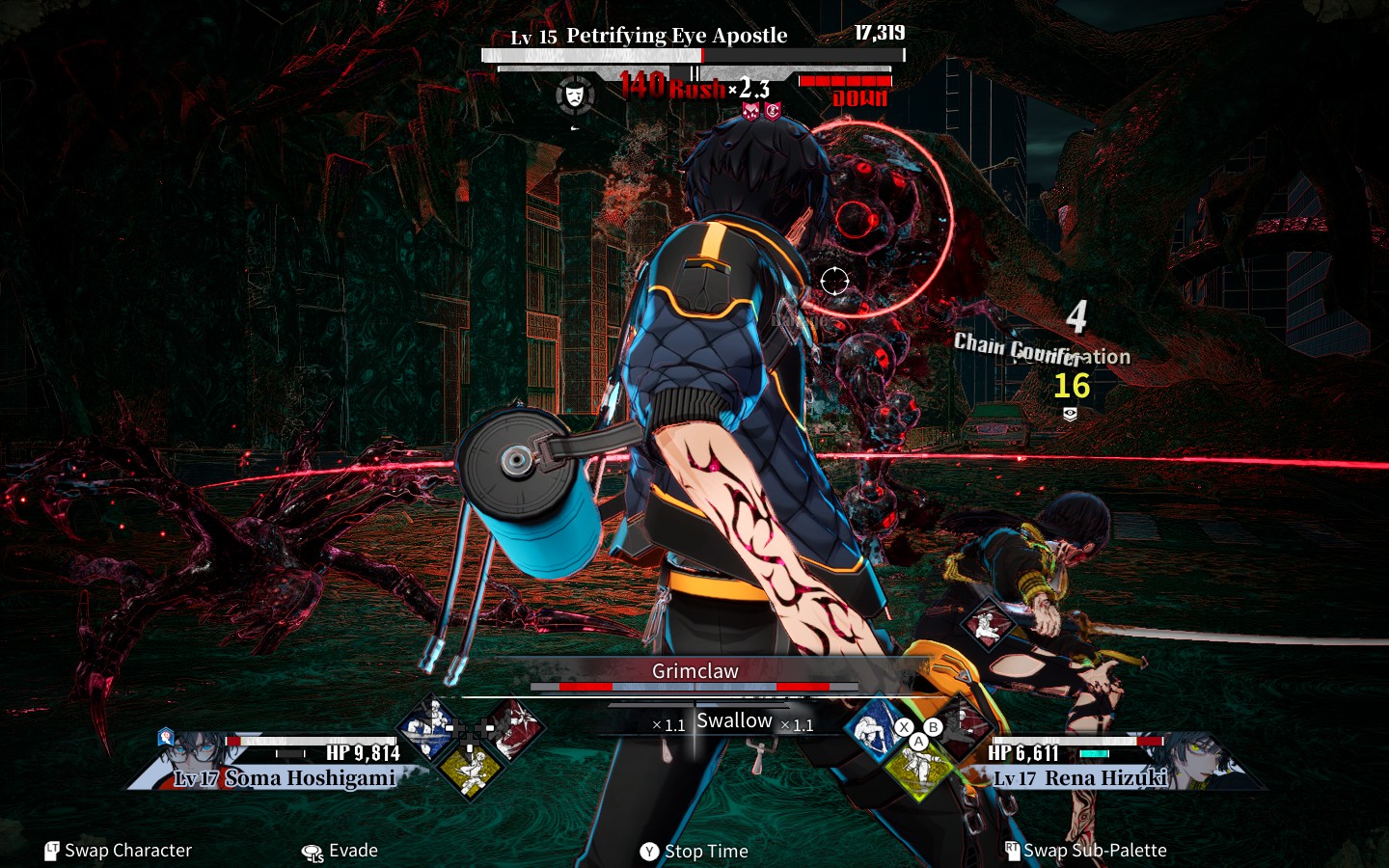
Because of the emphasis on timing, you might assume the game expects you to wait for an attack and then counter. This is not true. In fact, combat rewards you for attacking as often as possible. If you go too long without queuing up a skill, it even slows down time to prompt you. Skills have a cooldown, but you can still use your primary attacks even during that. The cooldown instead determines whether they are “charged,” since a charged skill deals more damage and has a wider window for countering attacks. Since the game lets you pause time, see predicted enemy attacks, and queue up skills, you might assume the intended playstyle is to anticipate the enemy’s attack pattern and line up skills accordingly. This also is not true. The unpredictability, along with timeline disruptions like needing to dodge attacks, meant I never found a way to strategically line up skills in advance.
This system is chaotic, especially once you’re up against multiple enemies at once. I spent early battles not quite sure what I was doing, until the first end-of-chapter boss forced me to buckle down and actually learn how to use these systems. Even then, some elements remained unclear. Qliphah in Providence’s Shadow is filled with tutorials, even for one-off mechanics I never saw again after they were introduced, yet it leaves a puzzling number of things unexplained. For example, when I leveled up and saw my “skill capacity” had increased, I spent quite a while on the skill screen looking for a way to equip additional skills and didn’t realize until much later that it referred to the number of skills I could queue up at once. At least the skill screen lets you practice, which is a nice touch in a game like this.
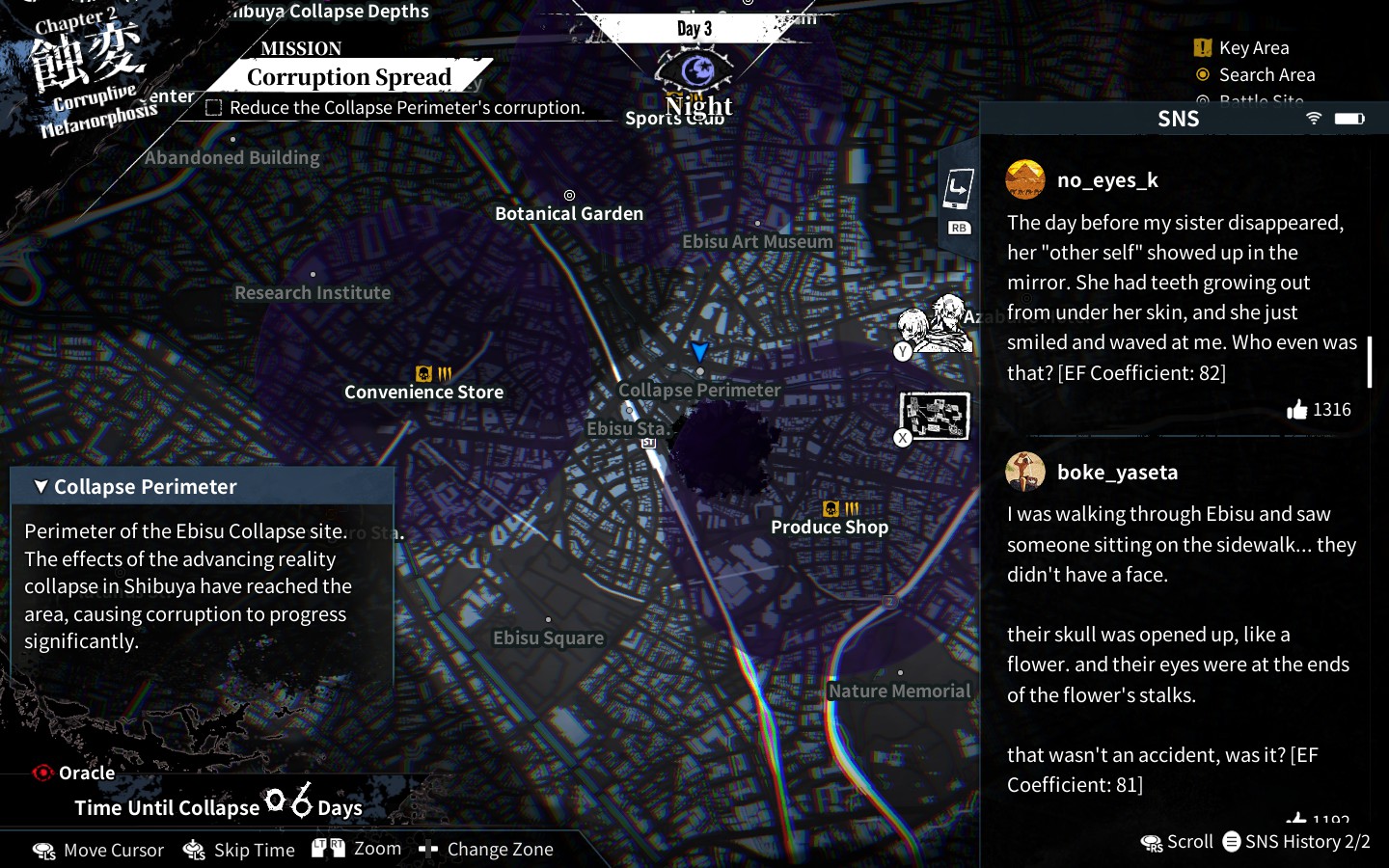
Outside of combat, the game has three main components: story scenes, the investigation map, and the evidence board. Although the characters have 3D models for combat, story scenes are presented in a visual novel format. However, there are rarely long stretches of dialogue. Instead, the story progresses through quick scenes whenever you choose a location from the map. The map offers numerous areas to investigate, but you shouldn’t click at random. Each action takes up a day or night, and you’re on a time limit. Hitting the time limit doesn’t end the game, but enemy levels increase by one for each day you go over. Therefore, it’s important to pay attention and investigate the areas most likely to advance the case. Sometimes a location gets locked out because of a corrupted area, and you’ll need to defeat the enemies there before you can access it. Strangely, these fights are often at a much higher level than the current story missions, which can make the difficulty feel unbalanced.
Meanwhile, the evidence board fills up as you investigate each point. Each addition to the board gives you a piece of lore to read, so there is plenty here if you’re interested in the world. On top of that, you can spend research points earned through combat to unlock a new skill that corresponds to each piece of evidence. Some also require you to enter passcodes, which you obtain by reading the in-game SNS or earning achievements. It’s tedious to slowly scroll through the SNS posts and go back and forth to the evidence board, so I actually wrote down the codes and their contexts to compare against the passcode clues. Although some of the clues felt unintuitive, I ironically had the most fun with this minor aspect of the game.
The biggest flaw of Qliphah in Providence’s Shadow is how repetitive it feels. You choose a location, see a short visual novel scene, and fight a battle. Another short scene might follow, and then you return to the map to repeat the process. Non-combat gameplay or even longer visual novel scenes would have helped break up this format, but unfortunately reading lore is the only other option. As for the story itself, it’s passable. It has a few good moments, but none of the characters or plot points ever stood out to me. The background lore on the evidence board and in SNS is more interesting than the actual plot. As a result, it’s hard to recommend this game for its story, and its gameplay will definitely be divisive.
Mediocre
The Final Word
Qliphah in Providence’s Shadow will likely attract a small group of enthusiasts who enjoy digging into its unique combat system and mastering its timeline-based mechanics. However, its chaotic presentation, frustrating design, and repetitive structure make it a hard sell for most, and its lackluster story isn’t enough to carry it.