


































































The Forever Ago demo follows Alfred as he returns to a highway diner tied to his past with Audrey. What begins as a simple stop becomes a quiet reflection on grief, aging, and how familiar places change with time.
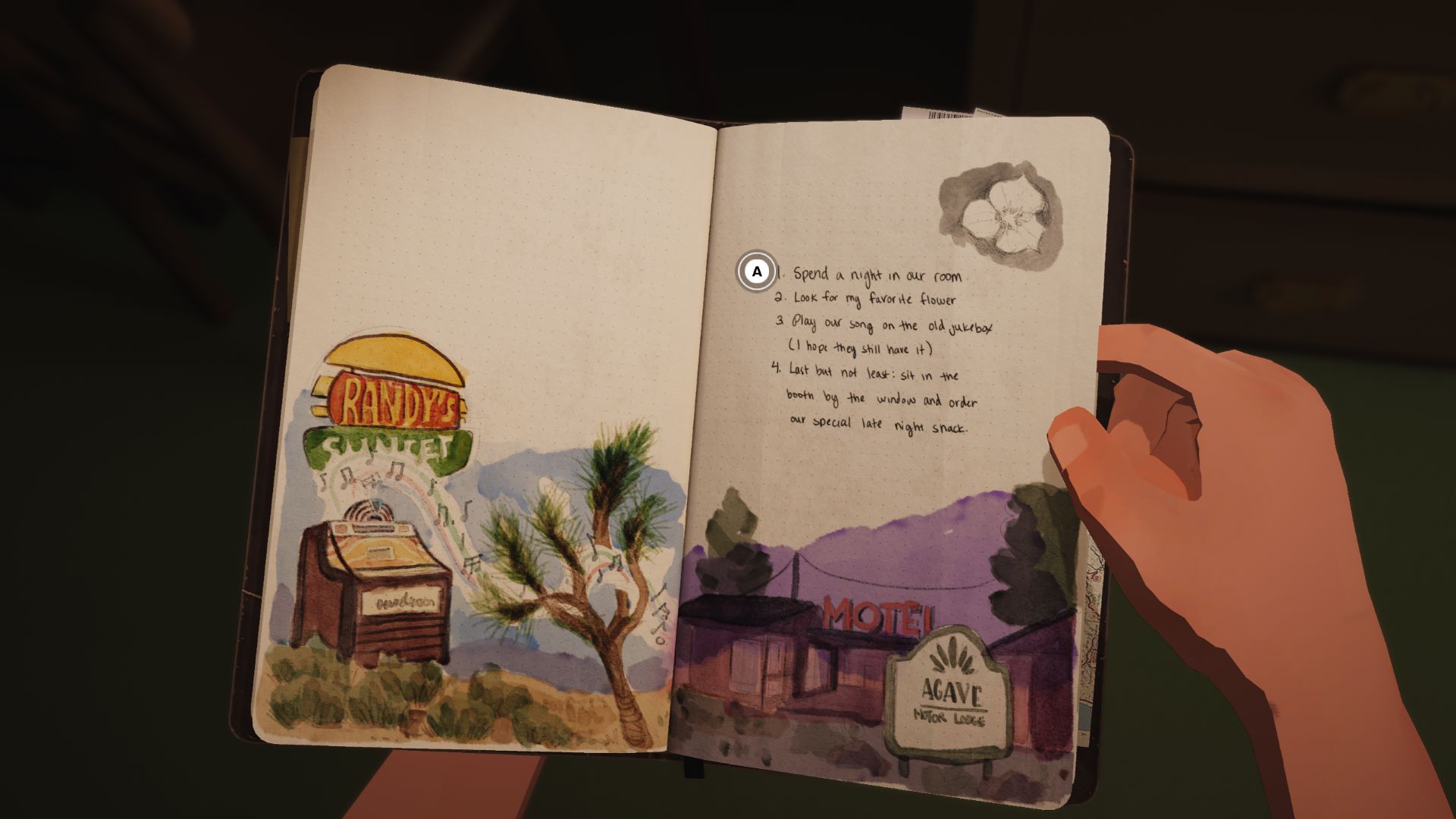
Returning to an Important Place
The demo begins with Alfred waking up at the motel where he and Audrey stayed years earlier. He has returned to honor her memory by completing three tasks: find a flower, play a song on the diner’s jukebox, and sit in the booth they once shared.
These modest objectives carry personal weight. Alfred isn’t running errands for a reward or trying to solve a larger mystery. He wants to revisit a meaningful moment from his life and remember the person who shared it with him.
As Alfred explores, he comments on posters and other details around the motel and diner. His observations show how much time has passed. He talks about new developments and the AI revolution, often sounding like a man trying to understand a society that moved forward without him.
Following Flowers Into the Past
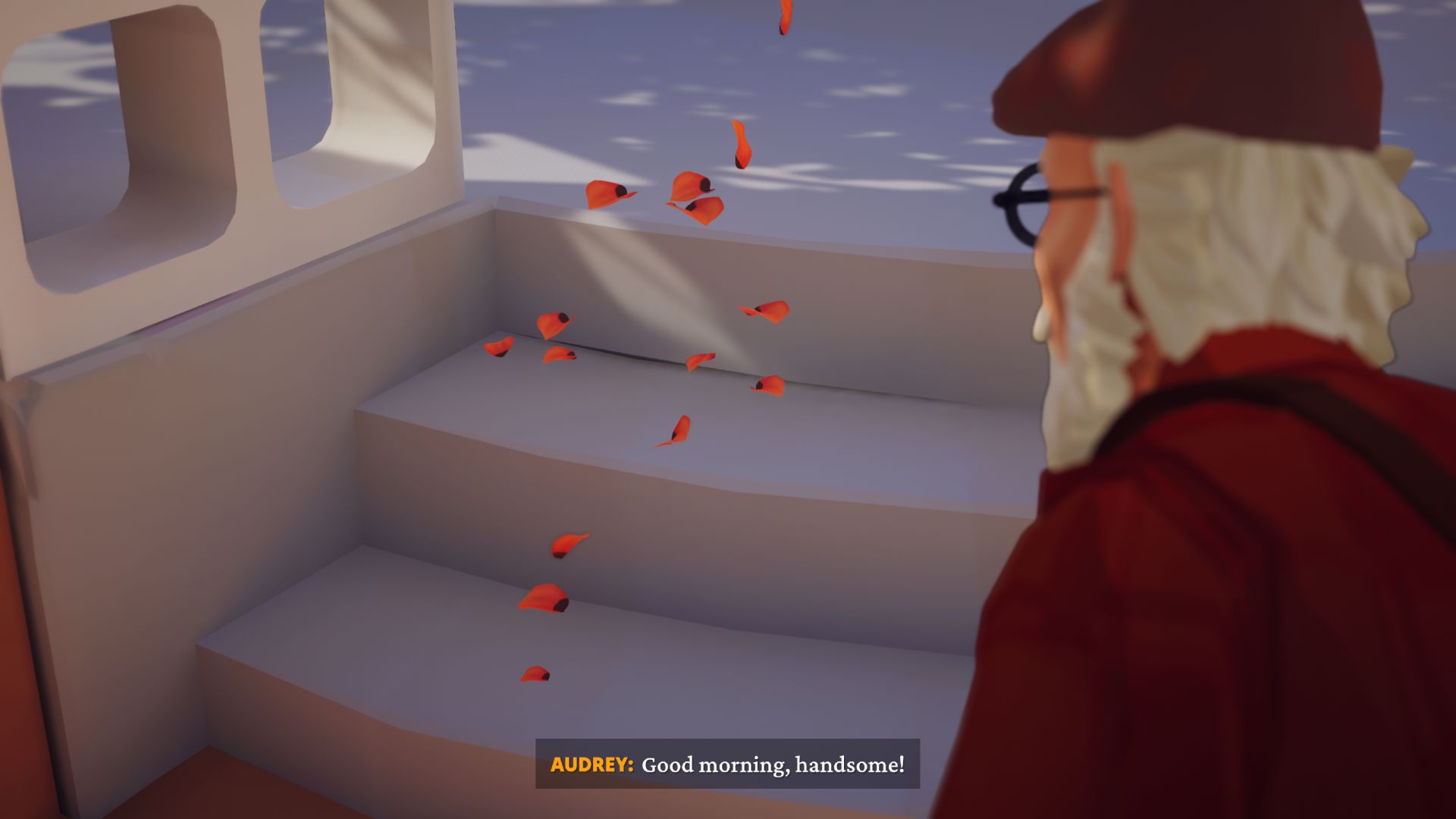
Alfred soon finds a flower that resembles one he once gave Audrey. Following a trail of petals triggers memories from their relationship, told through voiceover.
These sequences give context to Alfred’s visit without spelling out every detail. The flower connects the past and present, with each petal leading him further into memories he has carried for years.
The setup suggests that Forever Ago will tell much of its story through objects, locations, and Alfred’s reactions. Rather than relying on long conversations, the demo lets personal details reveal what Audrey meant to him.
The Diner Has Changed
The highway diner remains familiar to Alfred, but its interior and technology have changed. He comments on the differences as he walks around, comparing the place in front of him with the version he remembers.
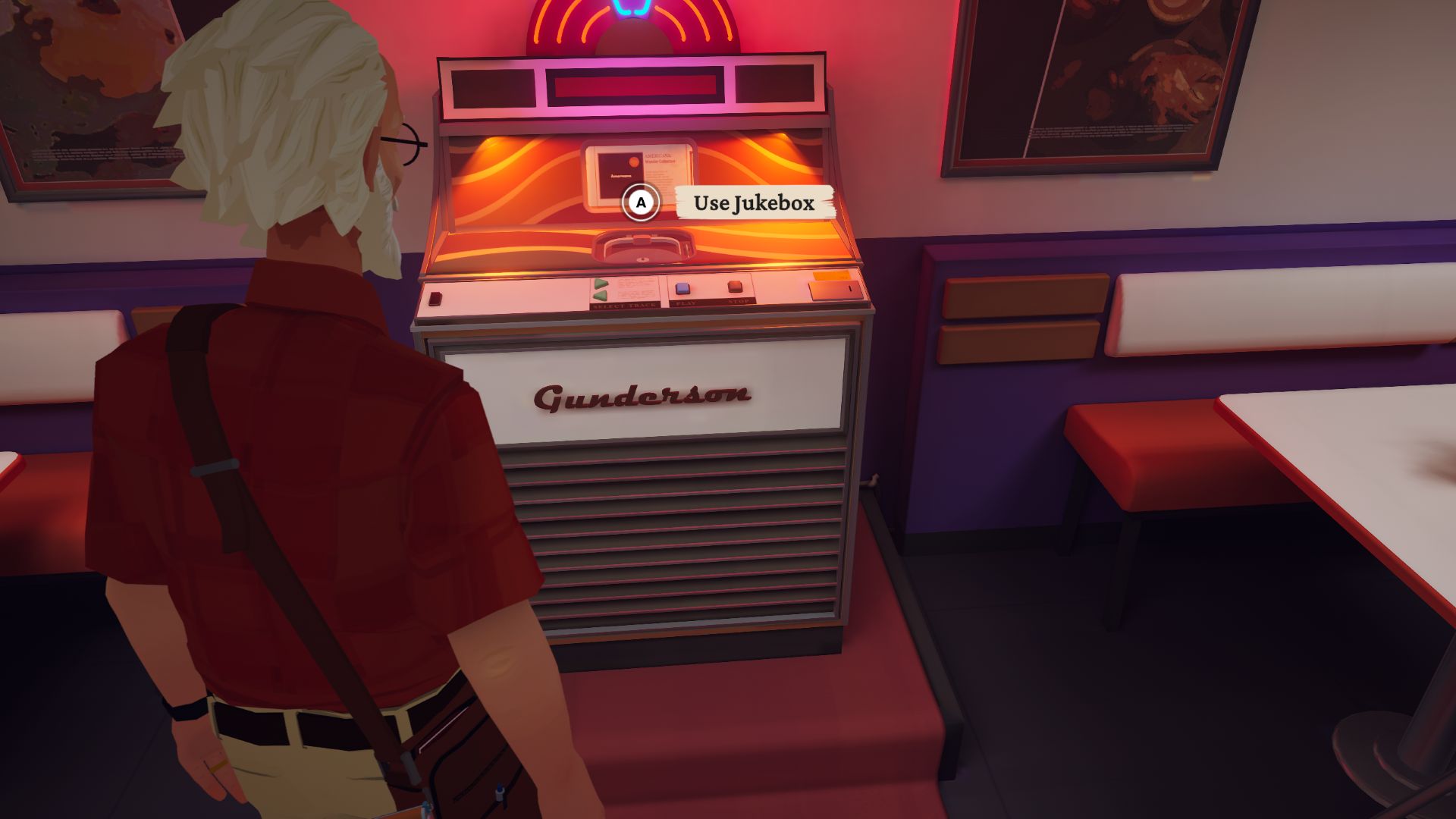
Alfred eventually finds the old jukebox associated with a singer named Pattie. Unfortunately, it no longer works. Like the diner itself, it is a reminder that returning to an important place does not mean finding it exactly as you left it.
A Reservation for an Empty Booth
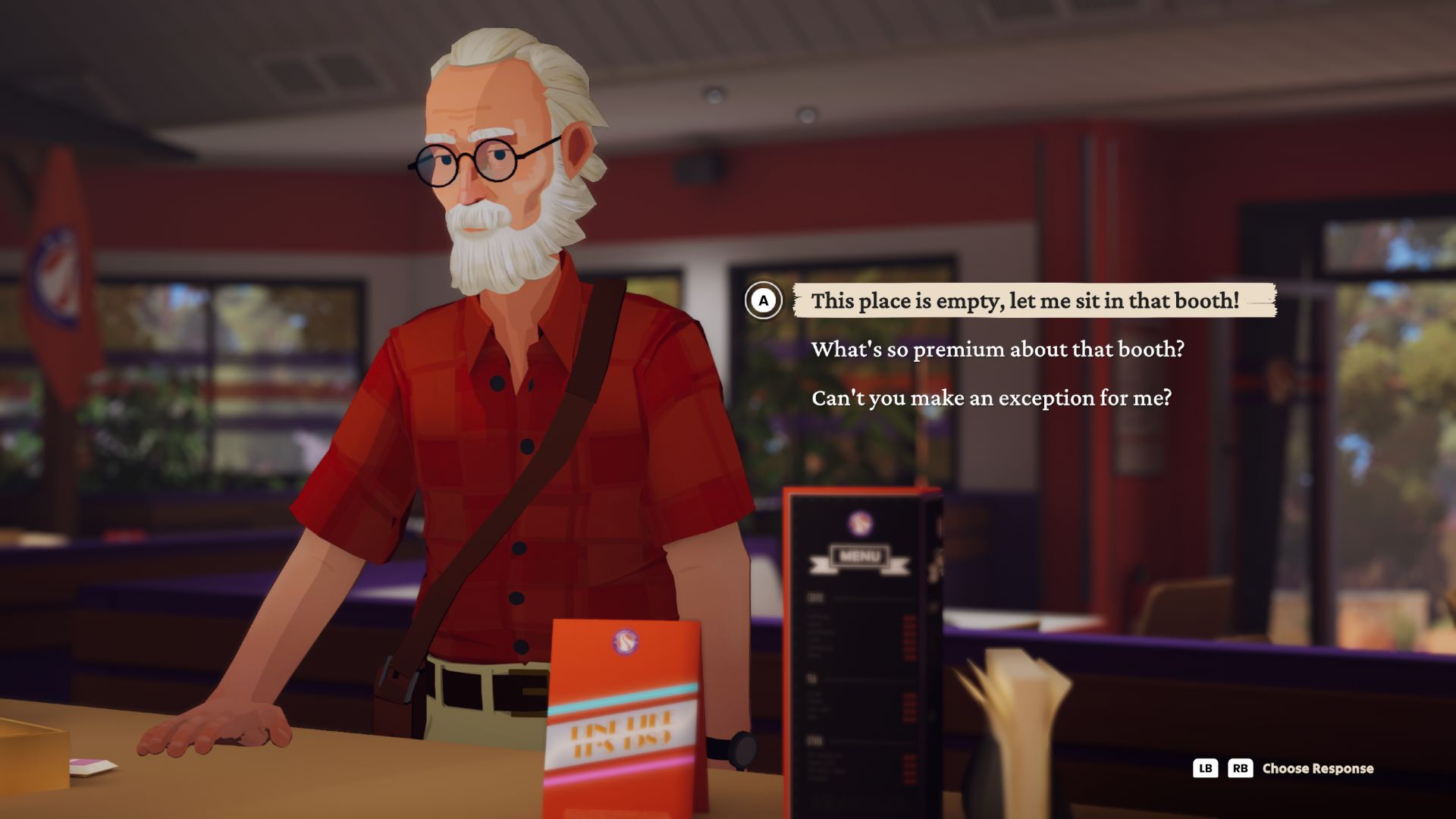
The final task should be the simplest: sit in the booth Alfred once shared with Audrey. Maddie, the diner employee, refuses to let him use it because he isn’t a loyalty member and doesn’t have a reservation.
The rule feels absurd since the restaurant is empty. It also gives the scene a dry sense of humor, placing an impersonal modern policy between Alfred and an intimate memory.
Maddie offers him a workaround. Something has been eating the diner’s trash, so she asks Alfred to investigate. Outside, he finds a dog responsible for the mess.
Alfred takes a photo of the animal and reports back. Satisfied, Maddie allows him to sit in the booth.
One Last Photo
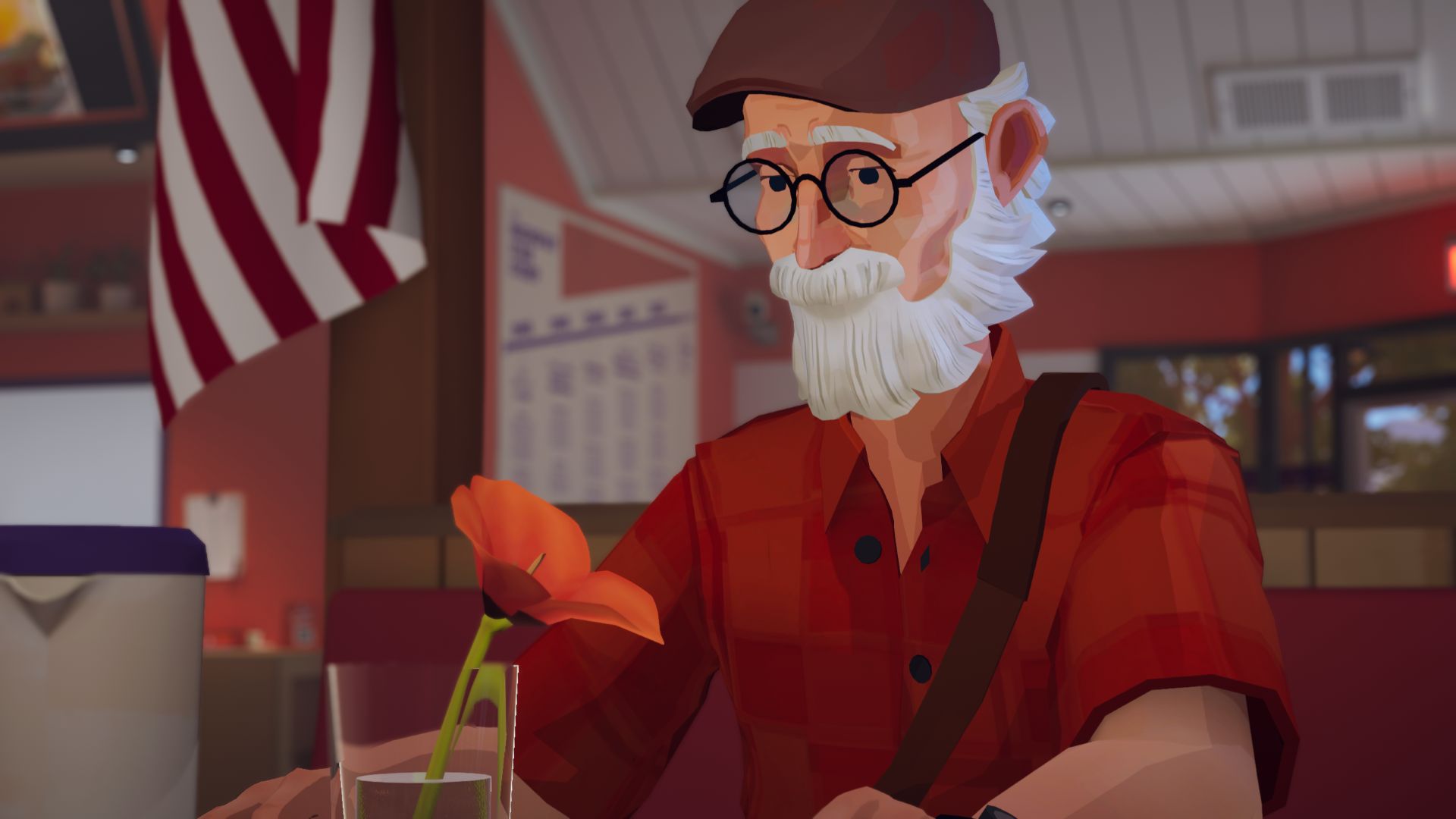
Sitting down brings Alfred’s three tasks together. He remembers his past with Audrey and returns to the flower he found earlier. Before the demo ends, he takes a photo.
Photography appears to play an important role in Forever Ago. Alfred uses his camera to document what he sees, but the act also reflects the story’s focus on preserving moments before they disappear. A photograph cannot restore what Alfred lost, though it can help him hold onto the people and places that shaped his life.
The Forever Ago demo presents a personal story about memory through small interactions. Finding a flower, reconnecting with an old song, and earning permission to sit in a booth may sound ordinary, but each task means something to Alfred.
Its quiet pacing will not appeal to everyone, but the demo showed confidence in letting its emotional moments breathe. By the time Alfred took his final photo, I wanted to learn more about Audrey, their shared past, and what waits for him beyond the diner.