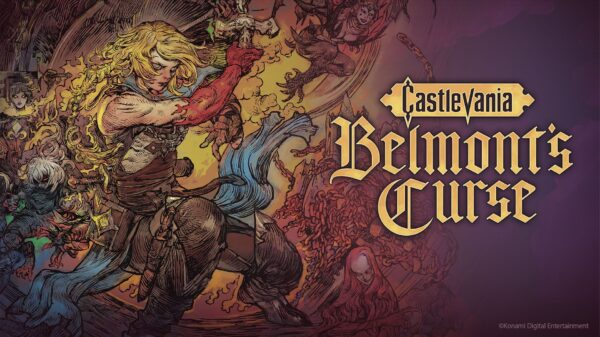














































After nearly two decades without a major new entry, Konami has a lot to prove with Castlevania: Belmont’s Curse. Thankfully, the wait has been worth it. Belmont’s Curse brings the series back to its 2D action roots, delivering a strong new entry that reminds us why Castlevania has stood the test of time.

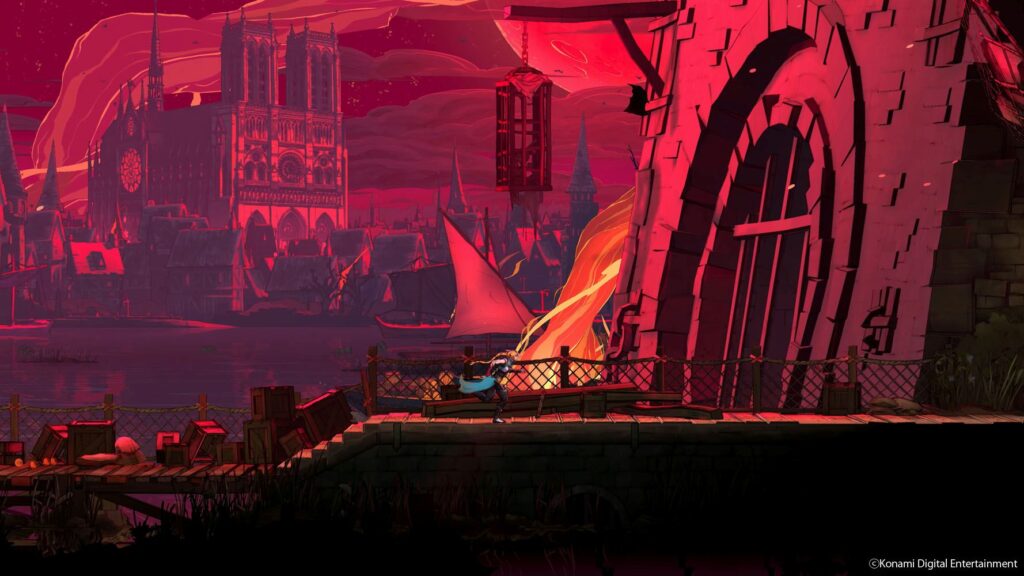
Set in 1499 Paris, the game puts you in the role of Rose Belmont, who must fight through a city overrun by monsters and uncover the dark conspiracy lurking beneath its streets. It’s not the most original tale, but I found Rose’s character journey sufficiently compelling. Medieval Paris is gorgeously rendered, with incredible art design and backdrops. Several cutscenes use stills with voice acting over them, and they are just as impressive to look at as the rendered scenes. Overall, the presentation captures the dark vibe I would expect from a Castlevania game. The voice acting is also excellent and features a well-rounded cast of big-name voice actors like Ray Chase as The Fallen and Abby Trott as Rose.
Castlevania’s greatest strengths, however, are in its traversal and combat. The majority of your playtime will be spent traversing Paris, so I’m glad that movement feels incredibly fluid, responsive, and fun. You’ll dash and slide through the world, wall jump, and use your whip to grapple and swing around the environment. The numerous trap-laden obstacle courses are often harder than most combat encounters, but they feel satisfying when you nail them. The hardest obstacles open a shortcut so you don’t need to repeat them, but sadly that’s not true for all of them, which adds more friction to backtracking than I would have liked. Speaking of backtracking, you’ll do a lot of it, and frustratingly, the ultimate form of fast travel only unlocks a few steps before the true ending. Air dash and double jump, which let you access additional areas, unlock a bit too late in the experience for my liking.
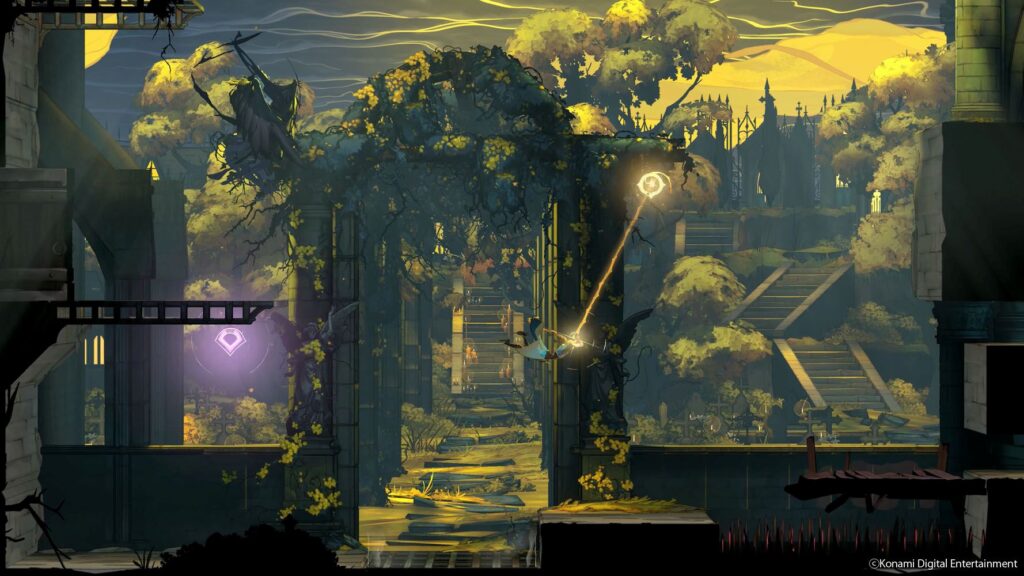
There are numerous secrets to uncover in hidden corners, such as health and mana upgrades, relics, and weapons. You can equip three relics at once, each granting specific effects that enhance how you play. For example, one relic reduced trap damage by 75 percent, while another restored your mana when drinking a health potion. With only three slots, I liked having to decide what mattered most in the moment. I do wish the relic that restores full health from potions was a permanent upgrade, though.
There are seven weapon types, each appealing to different playstyles and encounters. In close-up fights, I enjoyed landing swift blows with my fists, each hit dealing higher damage than the last. The lance, on the other hand, provided an excellent ranged option for hitting enemies at a distance. The classic whip, meanwhile, rewards thoughtful positioning, with the end of the whip dealing more damage. Every weapon is satisfying to use, and every blow feels impactful thanks to Rose’s and the enemies’ incredibly stylized animations. Encounters are challenging and sometimes chaotic, especially when you have to fight a mob while dodging traps. I never felt that any of these challenges were unfair, though, and practice made perfect. Enemy variety was also good, with different strategies needed to clear encounters. Boss fights in particular are challenging, flashy, and engaging. They took me multiple attempts, but I enjoyed learning how to deal with them. Rose gains EXP by killing enemies, which then increases her strength and defense. Dying sends you back to a Mirror Room, which serves as a save point, but you keep all of your EXP, so thankfully, even an unsuccessful attempt makes future progression easier.
Apart from weapons, Rose gains access to many spells throughout her journey, such as throwing a cross like a boomerang and spawning fire around her. Rose’s deceased mother gifted her tarot cards that capture defeated bosses. These cards supplement your standard weapon attacks with a powerful spell obtained from each boss. I enjoyed nearly all of the spells and found myself switching between different ones to best suit each encounter. You can also upgrade the spells by completing Works of Mercy, specific tasks that range from killing a certain number of enemies in a specific way to completing an entire zone map. Potential upgrades differ from spell to spell; for example, The Fallen’s upgraded spell lets you throw two crosses and regain some MP when you catch the cross on the way back. The tasks gave me a reason to spend more time with individual spells, rather than stick to one. As a nice touch, you also get to choose which upgrade to unlock first, and unlocking all the spell upgrades triggers a nice scene between Rose and the captured boss.
Those captured bosses also chime in throughout the story, which I thought was a really good use of them in a game where you are constantly traveling alone. They bring life to an otherwise isolating experience, and their conversations build Rose’s character. I appreciate that they are not overly chatty and only have things to say during specific story events. Unfortunately, many mid- and late-game bosses have little to say near the end of the story, and their absence is noticeable. It ends up being the first three bosses talking to Rose most of the time.
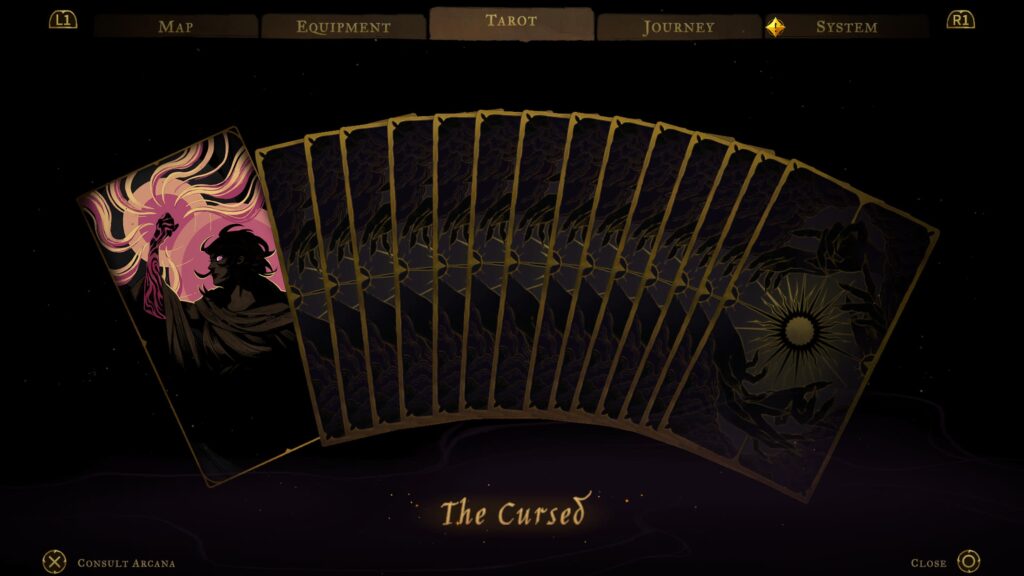
In an age when many games hold players’ hands, Castlevania: Belmont’s Curse boldly trusts the player to piece together where to go next. There are no waymarks pointing to the next story objective, so I had to constantly explore the world, looking out for clues assigned to each Tarot card in the menu. These increasingly cryptic clues hinted at the boss locations. It always felt satisfying to have a lightbulb moment and be rewarded for deciphering what the clues meant. Some clues, however, felt more like lore than something useful, so I think there should have been a separate lore category. There was also usually just one specific clue that was more helpful than the rest.
The map is also very traditional, showing only the pathways you’ve been down, plus outlines of ones you haven’t. You are given 50 markers per region to place down as you like to indicate chests, upgrades, and the like. It’s a very old-school design, but it works extremely well here and prevents the map from being cluttered with markers and objectives.
I love the customization in the gameplay settings, which lets players craft the exact experience they want. These settings let you tweak incoming and outgoing damage, trap damage, prevent death, increase the number of potions, and more. The ability to increase or reduce friction as needed is a great feature. When backtracking through obstacles I’d already overcome, I would turn off trap damage, but otherwise left all settings at their default for this review.
Performance on PS5 Pro is buttery smooth, except for slight stuttering during quick loading screens and when entering a new area. It’s noticeable, but ultimately negligible. The game’s worst element is undoubtedly its music. While I liked the first track in Paris Streets quite a bit at first, it and every other track quickly became grating because of their uninspired, repetitive tones. After hearing all the music each region had to offer, I muted it during my cleanup toward the platinum trophy to retain my sanity.
Great
The Final Word
Castlevania: Belmont’s Curse is a strong return to the franchise’s roots. The combat is excellent, the traversal feels fantastic, and player-driven exploration is a big part of why it works. The music is easily the weakest part, but it does not drastically diminish what is otherwise a near-perfect revival.