













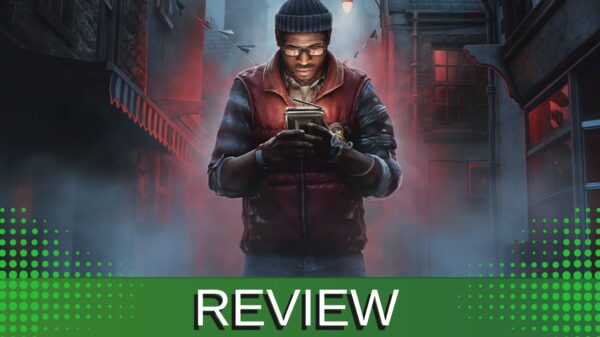










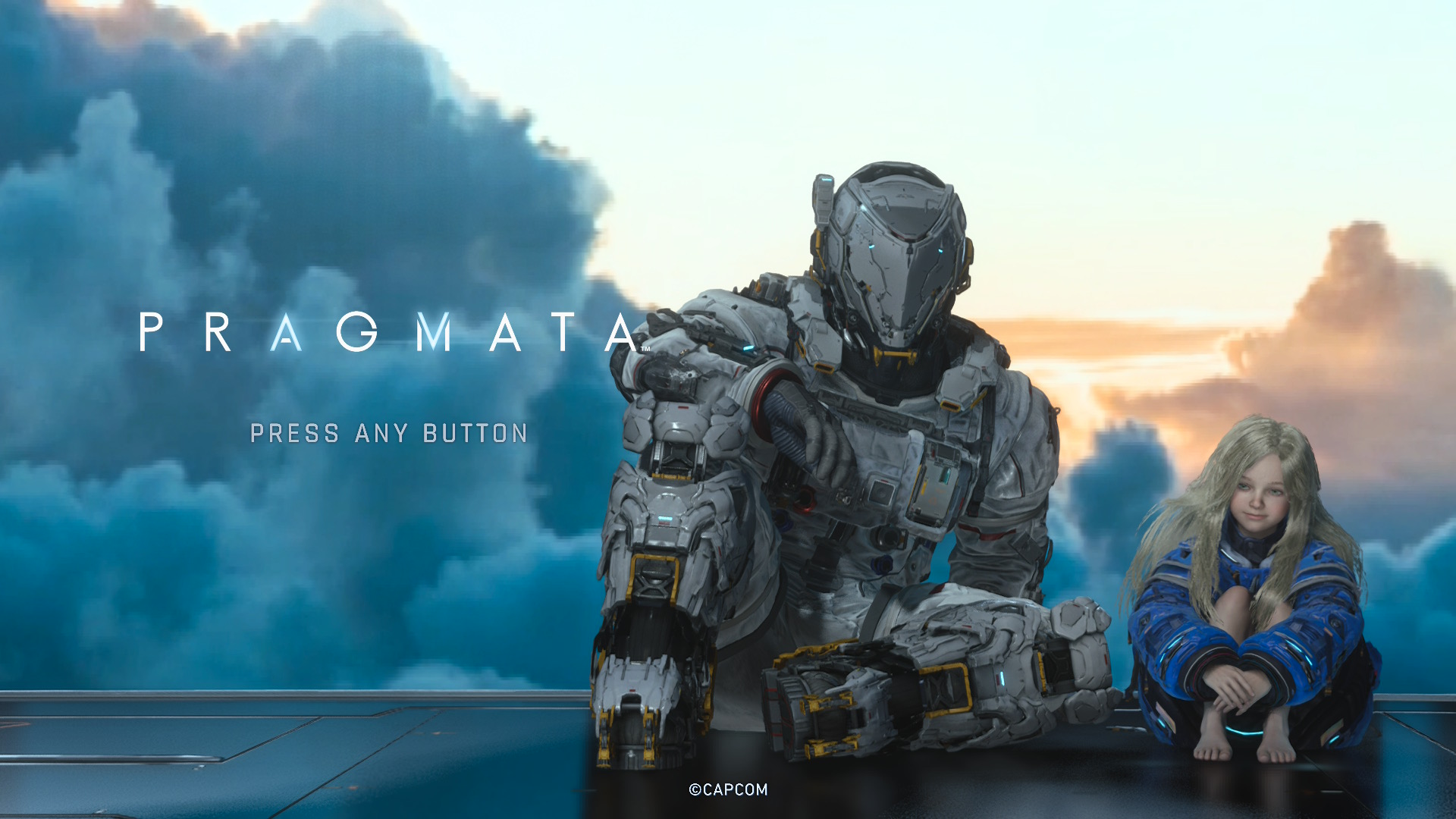

Pragmata is an emotional story, driven by earnest and human depictions of its main characters, Hugh and Diana. The narrative pairs perfectly with the frenetic, tense, and rewarding combat loop of fast-paced puzzle mazes and heavy third-person shooting. A constant evolution of enemies and tools keeps the combat exciting throughout, and the journey is surprisingly touching in between bouts with giant killer robots.
Standing on 3D-printed sand, staring at a digital projection of water and the horizon, Hugh tells Diana about the many places and experiences on Earth. Diana seems overwhelmed briefly, but Hugh asks her what she wants to do. Diana says she wants to go to Earth and experience the world, with Hugh at her side. Hugh promises to teach her about the world, something he’s been doing since the moment they met in Pragmata, and this brief moment of peace feels far more important than a space station full of killer robots.
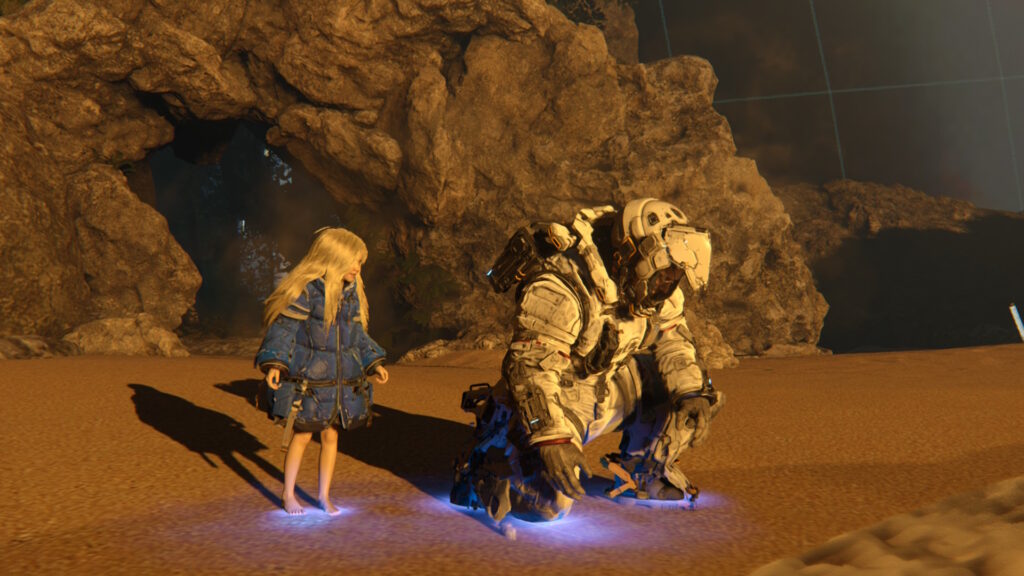
There’s a world where this moment between adoptive father and android girl doesn’t work, feels unearned, or is held back by heavy baggage. After all, there are more than a few adoptive-father-and-child games, with The Last of Us and God of War (2018) earning widespread critical acclaim for their portrayals. But Hugh isn’t on the same journey as those fathers, because Hugh knows it isn’t really about him, it’s about Diana.
As Hugh and his doomed crew enter the Cradle on the Moon, Hugh really only makes two significant comments. He scoffs at another crew member having kids, saying that being a parent is too much for him and that he has a disdain for robots and androids. Hugh is set up as the reluctant surrogate father, but that’s not how it shakes out.
After a break in the space station, violent robots attack Hugh and his crew, and Diana saves Hugh by repairing his space suit. Hugh quickly realizes he needs Diana to defeat the robots and get back to Earth, and Diana wants to go with Hugh, as she has no one else. But it’s quickly shown that Hugh isn’t unhappy with this, and is instead quickly playing the role of a parent, teaching Diana about life and protecting her when he can.
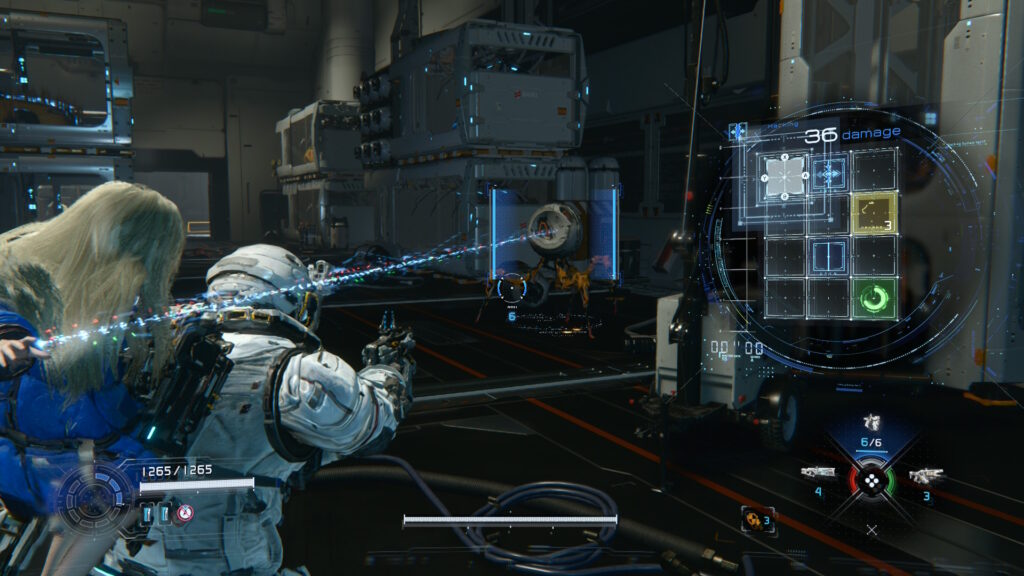
The importance of this partnership is beautifully displayed through the combat, which pairs quick maze puzzles with third-person shooting in a stressful, highly engaging loop. All enemies have protected exteriors, rendering bullets ineffective. Diana can hack the robots in a maze puzzle game that must be completed in real time during a fight, exposing their weak points. This balancing act, using hacking to temporarily give yourself an opening, makes fights against even three robots incredibly tense, as you need to manage your position on the field.
Mixing in tougher enemies, some with hacking disruption or invisibility, heightens the tension but also opens the way for more creative solutions. You have your default gun that refills ammo over time, along with slots for a heavy weapon and two support slots. Heavy weapons do more damage, but the support weapons let you manage the battlefield more efficiently. You can throw down a decoy to draw the robots’ fire, hit them with a stasis field to lock them down, then hack and dispose of them.
An additional wrinkle is hacking modules, limited resource tiles that appear in the puzzle maze. Early on, it’s simple stuff like enemies taking more damage or being shocked and unable to move. Working in the more advanced tiles, like one that makes robots attack their friends or increases heat build-up so you can perform a critical attack, adds even more layers to the strategy you can deploy.
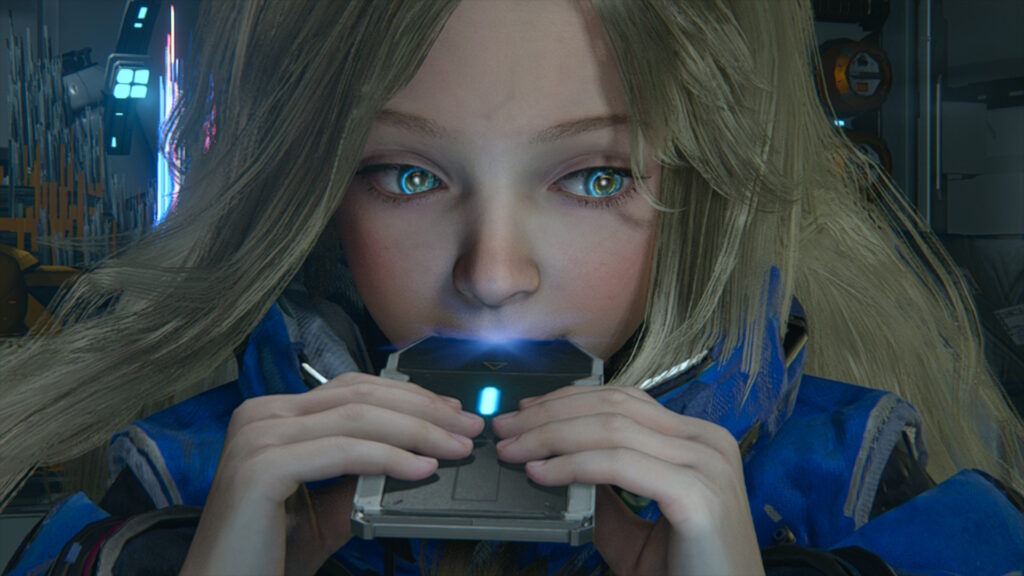
Fights are sweaty, as you constantly dodge around with thrusters, trying to keep your aim on an enemy while flying through the maze using the face buttons on the controller. It’s also deeply satisfying to perform this balancing act while dodging through enemy attacks and hacking missiles to return them to the robot firing on you. The speed at which you hack and fight kept me from overthinking situations, keeping this balancing act fluid as I fought without a chance to breathe.
The combat is satisfying throughout, thanks to the rapid swapping between the two main components. As more weapons and tools are introduced, the intensity heightens, keeping everything fresh and satisfying even as your power increases. The variety of robots, from spinning blades to giant babies, means each combat encounter requires small adjustments in strategy, keeping me engaged.
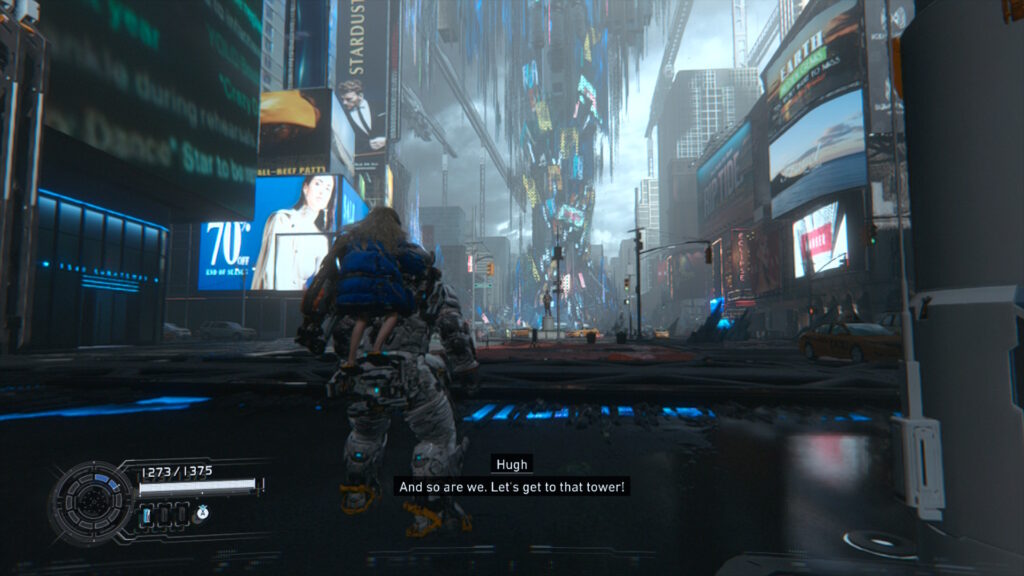
Combat makes up most of the gameplay, aside from some light puzzle-solving and exploration, but the quiet moments, like the one on the beach, are still deeply impactful. In an early section, I explored a replica of New York City, or at least a recreation. In between fights, there’s a brief moment in an apartment where Diana asks about humans needing to eat three times a day. Diana says it’s inefficient, but Hugh clarifies that part of sharing a meal with someone is spending time together and sharing a moment. It’s quick, but Hugh’s brief explanation is simple enough for a child to understand, while still getting at the core emotion, which let me buy into the father-daughter relationship forming.
For as many questions as Diana asks, Hugh never breaks. Hugh never has a moment where he lashes out, claims he isn’t her father, or even raises his voice at Diana for asking. Perhaps Pragmata’s biggest subversion is its take on parenting and fatherhood. Hugh protects Diana, putting his life on the line constantly for her. Hugh never talks about how he’s willing to kill to protect her; he doesn’t show his love through anger and violence. He shows it through kindness and encouragement. Instead of centering on a relationship breaking down, it focuses on giving both characters an experience they thought they would never have, making it more emotionally resonant for me.
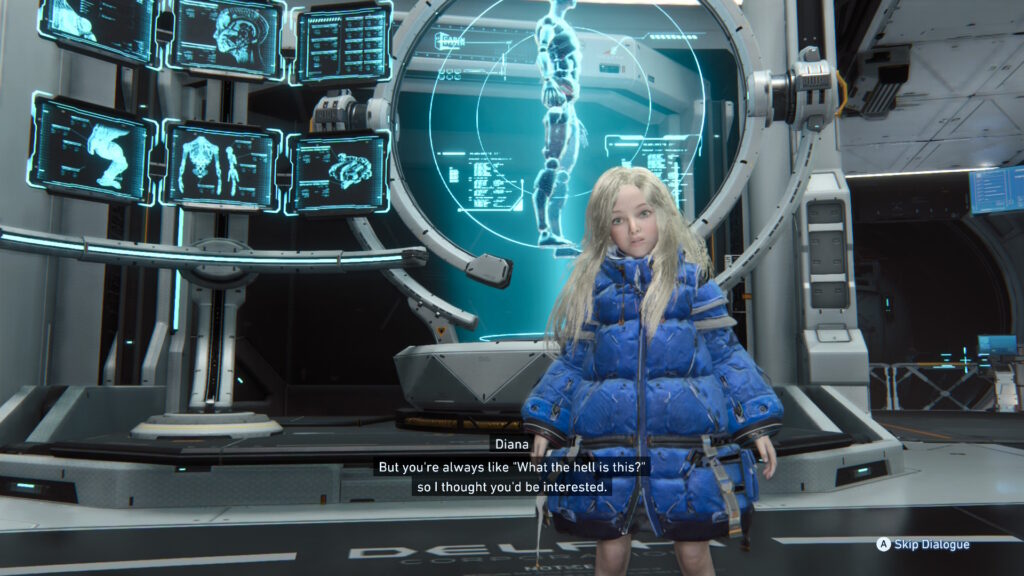
This extends to moments back at the Shelter, your hub for going to the different sections of the Moon base, which serve as long levels. In-between levels or by using emergency exit checkpoints, you can come back to upgrade your gear, refill on healing supplies and weapons, before heading back out. But this is also where you can continue your discussions with Diana and show off some of your finds.
There are plenty of secrets and currencies hidden throughout Pragmata, used for various upgrades and unlocks, but one in particular creates great moments in the shelter. You can find various Earth memories, which will 3D print an object back at base. Early on, I got a slide, which Diana quickly ran over to and slid down, asking Hugh about it. You can extend these moments by talking to Diana. A few of these conversations, and Diana will bring you a drawing she made, which she proudly shows to Hugh while explaining what it is.
This dynamic between Hugh and Diana is key to Pragmata’s success, and even in its cheesiest moments, there is an earnestness in both characters that keeps them feeling tender. There are often moments that feel understated, too. Hugh reveals to Diana that he was adopted and that it’s important to have someone looking out for you in life. The conversation is left there, with the implication of Hugh’s new role made clear enough.
As Hugh and Diana move through the base, attempting to contact Earth and hopefully escape the station’s rampant A.I., they keep sending bots and cutting them off. The reveal with IDUS and the villain of Pragmata feels a little too telegraphed, but where that narrative leads and how it functions as an opposite to Hugh and Diana’s dynamic create a juxtaposition that drives home the care Hugh takes with Diana. Diana also gets to have moments of triumph, saving Hugh as often as he saves her, forcing Hugh to trust her instincts more and more as the narrative continues.
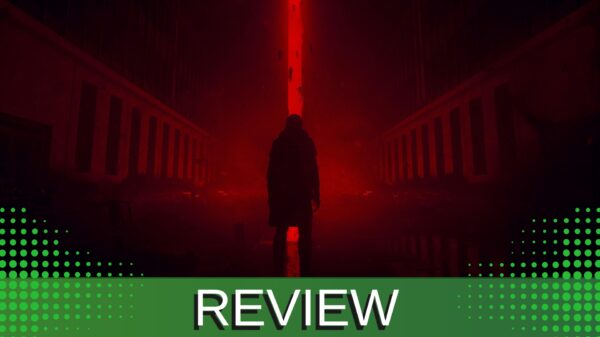
Exploring the Moon base often reveals the mistakes the scientists there made and the intense loneliness that can come from being isolated so far from the rest of humanity. Every message and video log has a base layer of sadness and frustration, making it clear that everything was going to go wrong sooner or later. Despite this, the moments of beauty often come untainted. The moment on the beach isn’t ruined by the surrounding death and destruction, even if that all still lingers.
The structure of each level, offering a fairly linear design with tons of branching paths and short detours to find hidden secrets, allows for the more tender moments to come hidden away from the destruction and goop coating the destroyed station. Finding secrets is incredibly satisfying, especially in the Red Gate combat sections, where you can gain big rewards for taking on hard fights. There are often single-room battles, with an overwhelming number of bots to hack through. These extra challenges, along with training challenges you can do at the Shelter, offered even more Pragmata combat that I was ecstatic to dive into.
Getting even more upgrade materials didn’t feel necessary, but all of the side content is perfectly bite-sized without feeling frivolous or boring. I never felt like I was repeating a combat sequence or challenge, making it so smooth to just keep doing them whenever they came up.
Excellent
The Final Word
I think Pragmata has the most engaging third-person shooting I’ve experienced in the last twenty years. The balancing act of hacking, dodging, and shooting, all while managing finite resources, creates a satisfying loop that builds in complexity throughout. Hugh and Diana have a tender and well-rendered relationship, one that isn’t undercut by Hugh’s insecurities or unnecessary conflict, but instead is elevated by its focus on what it means to show the world to someone experiencing the beauty of life for the first time.