























Imagine: it’s PAX West 2025, and you’re me, wandering the expo hall with hundreds if not thousands of others. It’s a sea of people, but amongst them, you start to notice an incredibly peculiar pattern: dotting the crowd are bright red French berets. You cross direct paths with someone and notice their red beret is not only accompanied by a black-and-white striped shirt, but a red checked sash, strapping a fake plastic baguette to their back. You’re immediately both intrigued and perplexed, and raise the obvious question to your partner, who explains it’s from that game he started playing “with Charlie Cox in it”.
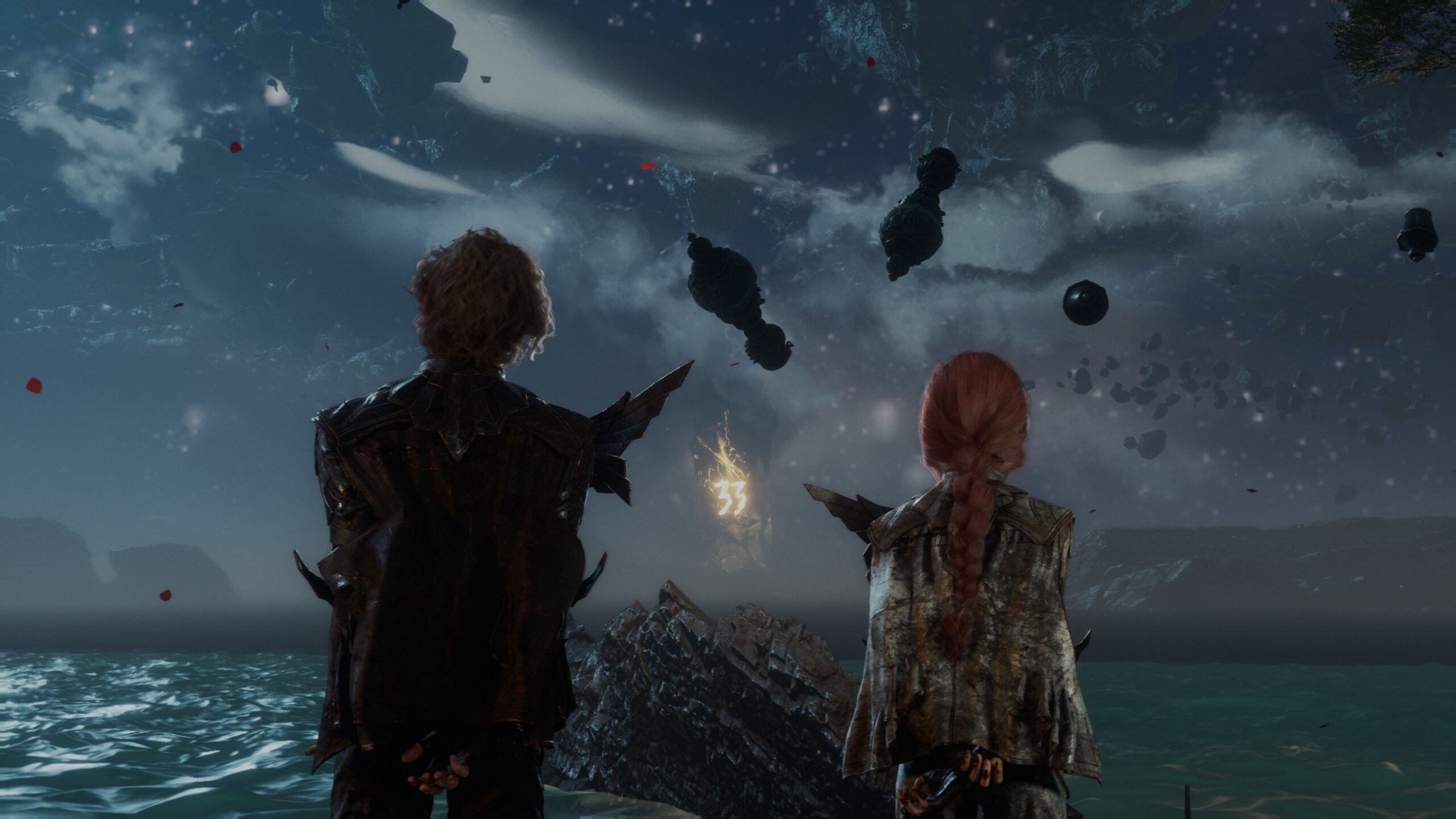
In this scenario, you are very much a fan of Charlie Cox and his starring in Daredevil, so you’re immediately reminded of what he’s talking about in that explanation – Clair Obscur: Expedition 33. You vaguely remember seeing the first casting announcement trailer for it during a random State of Play one early morning and getting excited because Daredevil(!), but ultimately you ended up going back to your endless, hellish cycle of Marvel Rivals lobbies when the game actually released. The red berets are a kind reminder of your previous excitement about the game, though, and it isn’t long after that you find yourself glued to your television while being serenaded by a beautiful French accent as you are formally introduced to the citizens of Lumiere. Your four years of French classes throughout school surely prepared you for this moment.
What you aren’t prepared for is just how much of an effect this game has on you by the end.
Now, at the risk of being honest, it’s a complete understatement to say I love this game. If you have interacted with me within the last year, I have talked to you about this game, or I have told you to finish it after you told me you didn’t even get through Act I, or I have endlessly gushed over Lorien Testard’s soundtrack what was probably an annoying amount. It’s rare to find yourself so committed to a piece of media, if only because you see yourself reflected in it so wholly, whether it’s in Maelle’s escapism or Verso’s self-sacrificial tendencies. After all, you don’t win 37 awards because people just feel pretty okay emotions about your game. As is with any piece of media, though, comes what others have to say about it.
(Obligatory note: What’s discussed going forward is riding off of the notion that the person reading this has played the game. If you haven’t, maybe go open Steam or the PlayStation store, grab some tissues, strap in for a bit, and hopefully you will thank me later. Or feel free to keep reading – I’m certainly not stopping you).
One of the gaming community’s most divisive conversations regarding Expedition 33 is regarding the two distinct endings the game has to offer, notwithstanding how both are unique in how they highlight the game’s central theme around the idea of grief. There hasn’t been a day that’s gone by in recent memory where I haven’t been faced with someone explaining how “[insert your preferred character’s name] ending is the right one”, or “if you chose [insert your not-preferred character’s name] ending, you’re clearly heartless”.
In the first ending, the audience is brought back to Lumiere after Maelle and Verso’s battle, and we see that Maelle has not erased the canvas, which was her motivation by the end of Act III. We’re rejoined by the ensemble we’ve grown to love, the Expeditioners as well as Esquie and Monoco, and we even see that Gustave and Sophie have both been repainted after their previous deaths. We’re also faced with Maelle and a considerably older Verso. We see Verso struggle for an uncomfortable moment, his hands stretching out and freezing over keys of a grand piano in Lumiere’s opera house, until it can be discerned Maelle uses her Paintress abilities in order to force the painted version of her late brother to play.
The colors are washed. The lighting is dimmed. It doesn’t yield much comfort aside from the embrace of familiar faces, but that just might be enough.
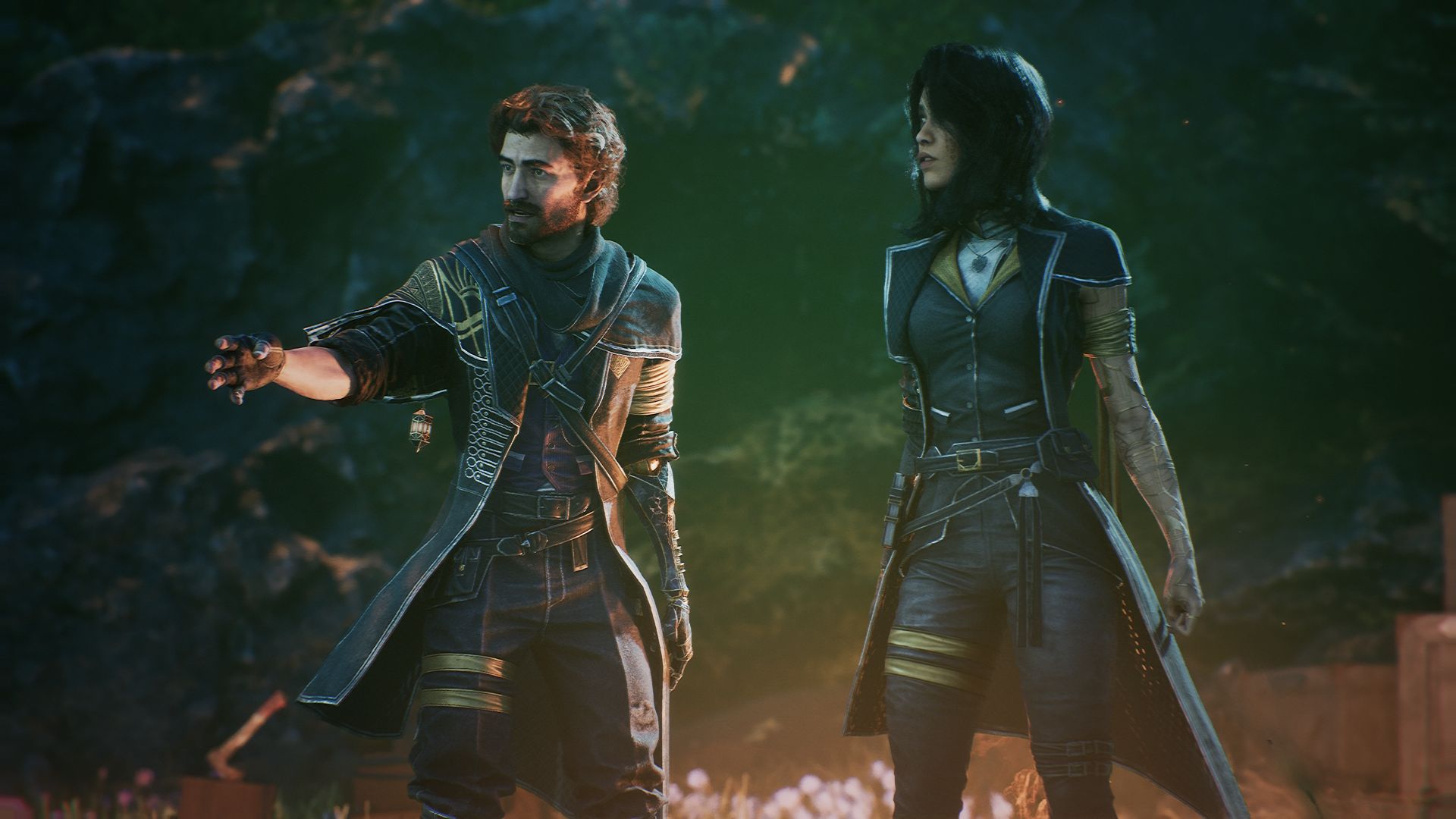
The second ending is an intentionally stark contrast. For the first time in the game, we’re officially brought outside of the canvas now that it’s presumably been destroyed, as that was Verso’s desire by the end game, and we’re shown the Dessendre’s. In front of them sits a grave donning the name “Verso Dessendre”. Renoir and Aline share a tender embrace in front of their son’s grave, Clea leaves behind a bouquet of achingly familiar red and white flowers before excusing herself, and we see a scarred Alicia– or Maelle– standing by as she watches the scene unfold, holding a sewn Esquie doll. The camera turns and we see the images of the very same Expeditioners, including Gustave and Verso’s painted self, framed by the Eiffel Tower as they wave goodbye before dissipating.
The colors are bright. It’s backlit by a sunny day. The comfort is uncertain and bittersweet, but it’s ultimately not an unwelcome feeling, either.
Undeniably, the discussion around these endings is, of course, typically viewed as black-and-white as possible. More often than not, when faced with multiple endings by the end of a game, audiences are used to getting a “good” ending and a “bad” ending, leaving little room for discussion. And, in these cases, that is the game’s intent. In these cases, the games do have a black-and-white, a good-and-bad. It’s not unheard of for a game to punish a player for making poor choices throughout a play through. When looking at Expedition 33’s endings, though, this mindset is frankly doing a disservice to the game’s theming as a whole.
Grief as a theme is interwoven throughout the entire game, and when is the process of grieving ever black-and-white? Grief by all accounts is an incredibly non-linear process. We have all grieved over someone, over something, and we all understand what that means. Both of the endings evoke very different emotions, but it really is up to the player and what they choose to prioritize within their own grief. Yes, in Maelle’s ending, we see the way she chooses to use her Paintress abilities against her brother and father’s wishes, but more importantly, she’s also surrounded by those she has come to love, in a fully-functioning body. She’s given grace to those who have only ever lived inside of the canvas, reasserting the idea that they are sentient individuals with their own lives and autonomy, despite the circumstances they were painted into. Within Verso’s ending, the Dessendre’s are now able to work on moving past their shared grief regarding the loss of their real-life brother and son after years of stagnation, but at the cost of Alicia having a healthy physical body, and at the loss of everyone we have come to love inside of the canvas.
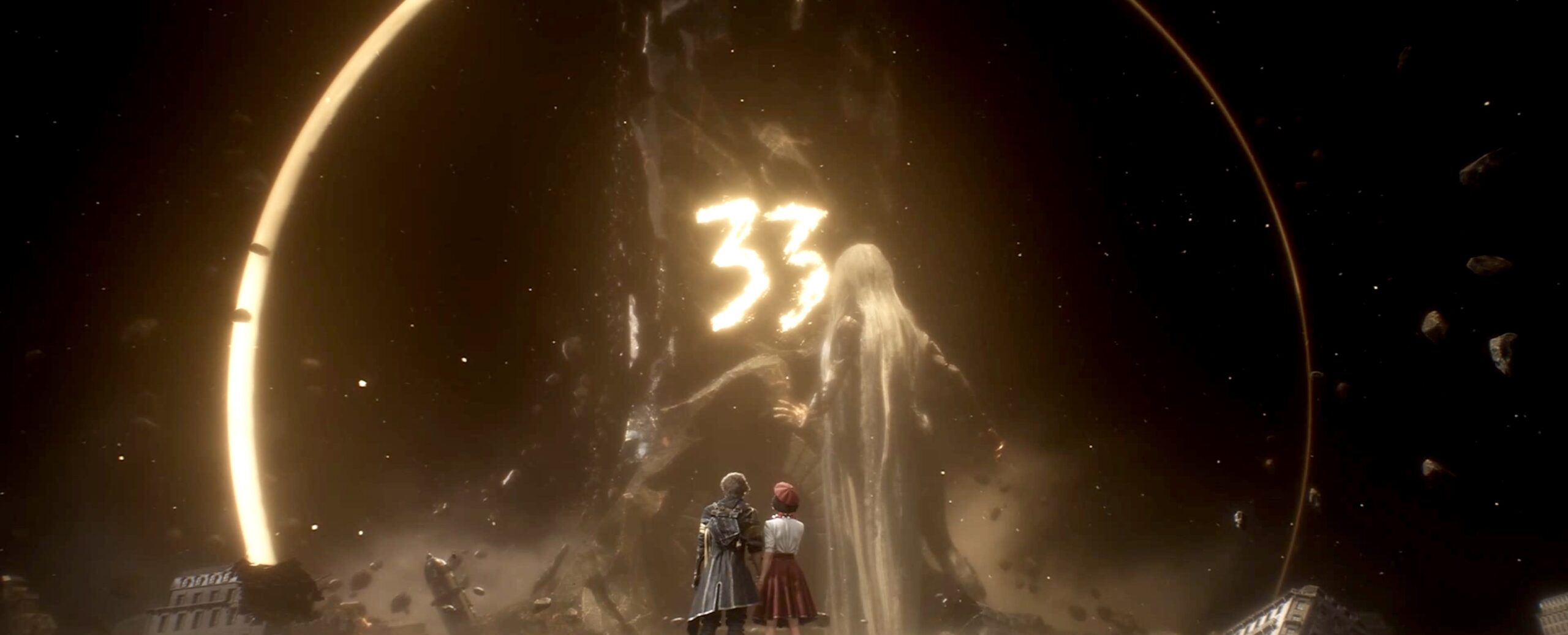
Both of these endings offer a resolution and catharsis in their own ways, and the outcome of one doesn’t make the other more or less right. When discussing these endings, we can’t assume why someone chose one ending over the other, because their grief surrounding the game is ultimately their own, and it’s not up to us to dictate how that feels to them. It can’t be stressed enough how sacrificing nuance in these discussions doesn’t only do a disservice to the game, but also the players and their own emotions about it.
I have a confession to make: I wholeheartedly chose Maelle’s ending the first time I played, and at that moment, it wasn’t a difficult choice for me. It made sense. I had grown so incredibly fond of Lumiere and the canvas and those inside of it, just like Maelle, but I saw myself in so many facets of her. I was a sixteen-year-old girl once, finding escape in worlds I created and in the media I was in love with, be it novels or games or movies, in order to remove myself from the very real grief I was experiencing. It’s something I still find myself doing even in adulthood, and ironically, probably the reason why I found myself so absorbed in Expedition 33 in the first place. The hours I put into the game were the direct result of me needing a distraction from life, and to watch the game slowly begin to unveil what it truly was felt like looking into a mirror. Of course I chose to save Lumiere. Of course I sided with Maelle. It’s what I do all the time. More often than not, I run from my grief rather than let myself feel it, and instead I look for reassurance and acceptance and comfort in worlds where my real feelings can’t hurt me. It’s far easier to feel for the characters on my screen than it is to feel for myself. After all, their emotions aren’t tangible, unlike my own. Expedition 33 was the first time I had ever personally experienced a piece of media that conveyed that feeling in a way that felt so specific, and so undeniably real.
Did I end up playing through Verso’s ending? Of course I did. Maelle’s grief and uncertainty is no more or less deserving than painted Verso’s desire to finally be rid of his own endless inner turmoil, or the Dessendre’s family need to finally process their grief and the loss they experienced. Their release of grief is something every single one of them deserves, Maelle included. It’s something we all deserve, as difficult as it may seem, and despite how easy it is to try to escape from it instead. You can run for an indefinite amount of time and stay hidden in your canvas, but the grief will always show itself. It will always need confronting until that choice is made. All endings can co-exist. Two things can be true and valid at the same time.
It was striking to see Expedition 33 play out the way that it did, and I will always be moved by it. I will always be grateful for it introducing me to Gustave and Maelle, as well as Lune, Sciel, and Monoco, and Verso with the ever-faithful Esquie. Even if the developers of the game themselves have stated there is no single “true” ending, and there likely won’t ever be, each ending will hold weight for the individual. Our grief will only ever be our own.