





























A classic returns with this remaster of Onimusha 2: Samurai’s Destiny, giving the demon-fighting action-adventure game new life and proving it’s a classic for a reason.
Onimusha 2: Samurai’s Destiny
Developer: Capcom
Price: $30
Platform: Nintendo Switch (reviewed), PS4, Xbox One, PC
MonsterVine was provided with a Switch code for review.
Onimusha 2: Samurai’s Destiny originally came out in 2002 for the PlayStation 2 as the sequel to Onimusha: Warlords. Like its predecessor, it’s now been remastered and brought to modern platforms. When I previewed the remaster last month, I found it to be an exciting look at this action-adventure game that left me eager to see how the game would progress, so let’s see how the full game holds up.
You play as Jubei, a young samurai who has vowed to get revenge on Nobunaga Oda and his demon army. To do so, he uses his ability to wield Oni weapons and absorb demon souls from fallen enemies. Combat is action-oriented and rewards careful timing, as you’ll get a critical hit if you attack right before an enemy does. Multiple attacks can lead to combos, and every weapon has a special move you can perform as well. Weapons also have elemental properties, and you can expend magic for a powerful elemental attack. You unlock multiple melee and ranged weapons as you play, and the remaster allows you to quickly switch between them without needing to open the menu first.
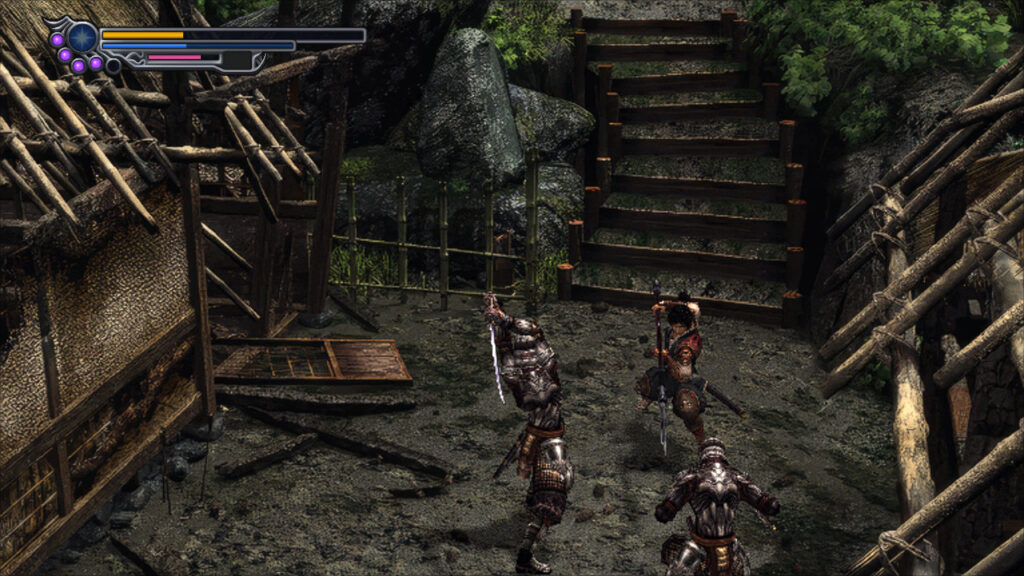
Defeated enemies release souls, which you can absorb, although since this takes a little time, you’ll want to be sure you aren’t leaving yourself open for attack. Yellow souls heal you, blue souls refill your magic, red souls are used to upgrade your weapons and armor, and purple souls let you temporarily transform into an invincible Onimusha once you’ve gathered five of them. As I mentioned in my preview, another quality-of-life change for the remaster is that the Onimusha transformation is now triggered manually instead of happening automatically. But even though you can heal through absorbing yellow souls and can even grind to upgrade your gear if you want to, you shouldn’t let yourself get complacent. Combat can be challenging, especially on higher difficulties, and while the addition of auto-save for the remaster makes it less likely that you’ll lose progress by dying, there’s still an element of resource management when it comes to healing items that you shouldn’t ignore.
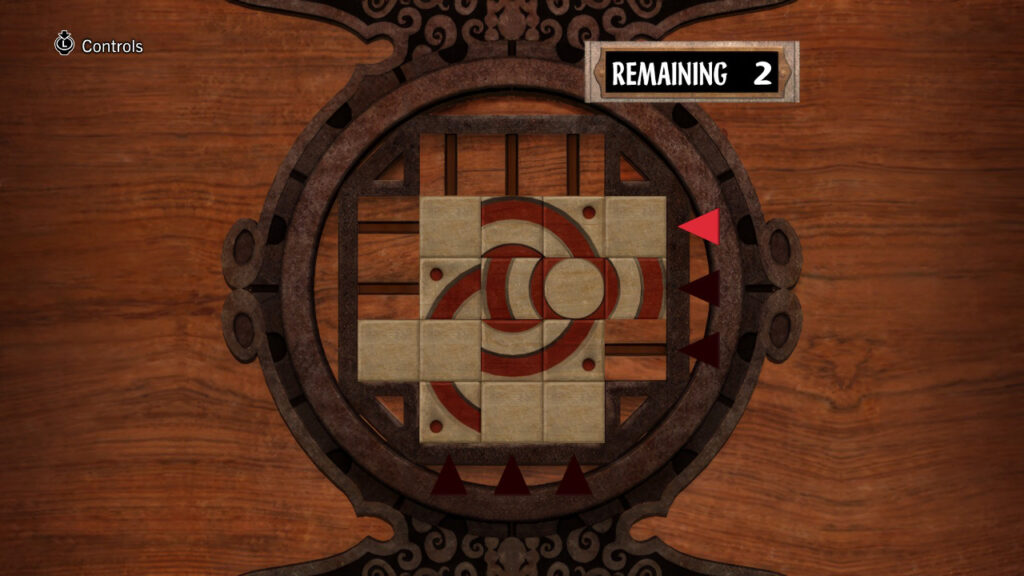
Now, while the first game’s structure resembled that of a survival horror game due to its Resident Evil roots, Onimusha 2 lessens that somewhat. Occasionally, you’ll need to solve puzzles to progress, and sometimes, you’ll find a locked door you’ll need to backtrack to later once you’ve found the key. However, these moments aren’t as frequent as in the first game, which gives it more of a straightforward structure. More commonly, you’ll find treasure chests locked with sliding tile puzzles. These puzzles start out simple but get more complex later in the game. The rewards are usually worthwhile, such as special items that permanently increase your health or magic.
In my preview, I mentioned my delight with the friend system, in which certain characters become your allies and you can give them gifts in exchange for rewards. You get something good if you give them something they like; if you give a character a gift they dislike strongly enough, they actually give it back, which I found very entertaining. Giving them gifts they like affects how they feel about you, and an ally who likes you enough will show up to help out if a boss fight is giving you trouble. Not only that, but a high enough friendship with these characters unlocks optional scenes and special sections where you play as them. Once you’ve cleared the game for the first time, you can view a scenario map that shows which scenarios you’ve seen or missed. Onimusha 2 has a surprising number of branching paths, so there’s a fair amount of replay value if you want to see everything.
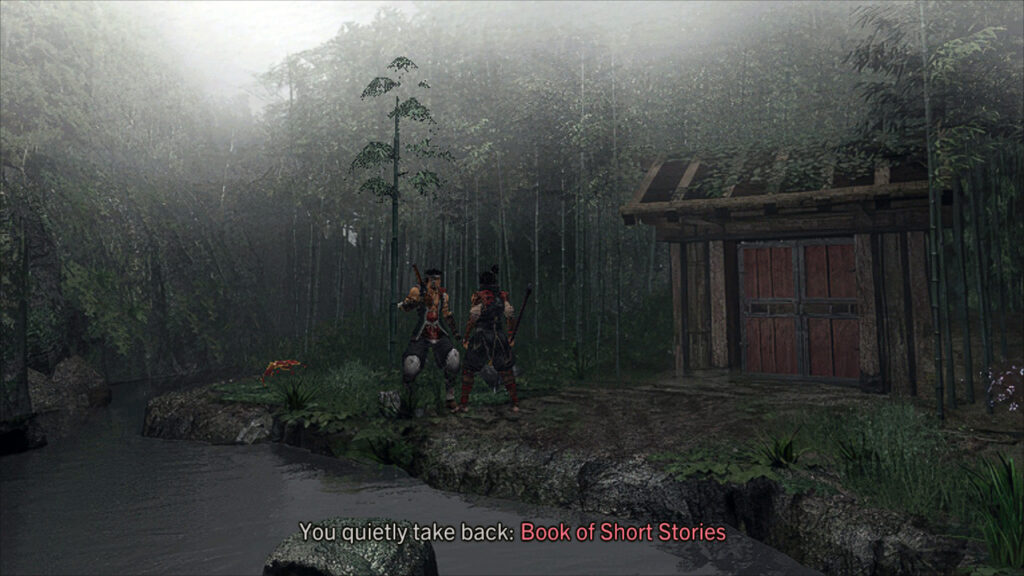
To my disappointment, the town where you can buy items and give items to your allies doesn’t function as a home base after all. In fact, after the part of the game I played for my preview, I never had a chance to go back there again. This gives the game somewhat odd pacing, as the early parts make it feel like an important part of the game’s structure, but you won’t be there for the majority of the game. Regardless, I still appreciated the occasional scenes with allies and the surprising edge of humor Onimusha 2 has. The story is serious overall, but it has more funny moments than I expected.
Outside of the main game, there are also three mini-games available from the start. “The Man in Black” requires you to reach the end of an area within a time limit, without being able to defeat enemies. “Team Oni” is a combat-focused challenge in which you clear out rooms full of enemies while playing as Jubei and any allies whose stories you did in the main game. Finally, “Puzzle Phantom Realm” gives you rooms full of those sliding tile puzzles, which you must complete to move on to the next room. While these mini-games aren’t as extensive as the full game, they’re a nice change of pace.

In addition to the HD graphics and quality-of-life improvements, the remaster features a gallery that includes both art and music. A new difficulty setting was also added for the remaster, in which you die in a single hit. Overall, the remaster brings the original Onimusha 2 to modern platforms with plenty of content to satisfy old fans and newcomers alike.
 The Final Word
Onimusha 2 might have some odd pacing and distances itself from its predecessor’s survival horror trappings, but it’s a great game with a lot to offer, and the remaster further improves it with some nice bonus features and quality-of-life improvements. I couldn’t be more excited for the future of Onimusha, and Onimusha 2: Samurai’s Destiny further proves this series deserves its revival.
MonsterVine Rating: 4.5 out of 5 – Great