
















If you don’t know what Game of Thrones is at this point–between the bestselling series of books, the shows that were everywhere, the spinoff shows that were and are airing, and so forth–I’m going to assume you can do an internet search or somehow stumbled out of a time machine and probably have a lot of things to catch up on, but then again, I was reading the books in the early 2000s, so you’ve been gone a while. Check in once you’re caught up.
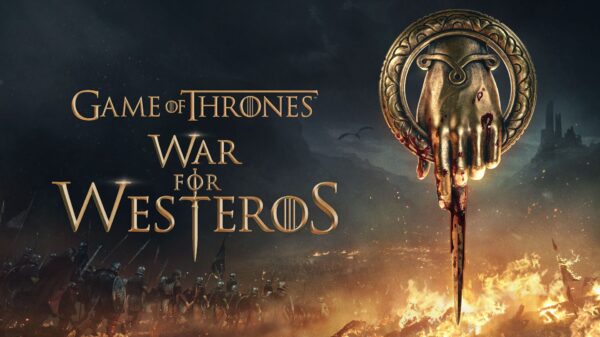
Game of Thrones: War for Westeros covers, as you can guess, the War for Westeros, the battle for the Iron Throne, with factions and personalities and names you’ll recognize and an RTS formula that’s familiar enough that I fell into classic Age of Empires habits right away, but there are some very interesting gameplay elements. I just got a taster with two factions: House Stark and House Lannister, two maps, and Skirmish mode.
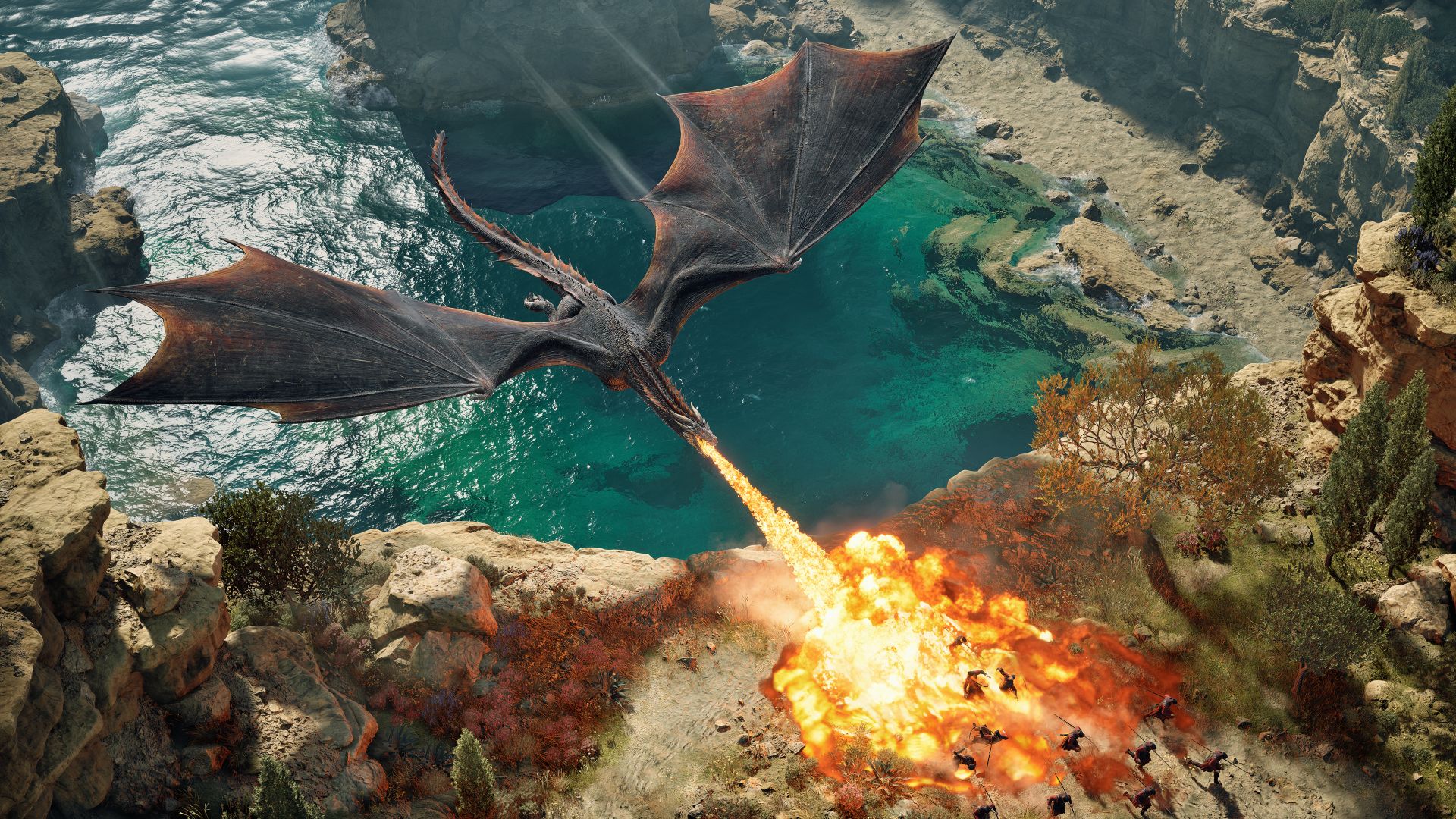
The big difference from your classic RTS is the territory control metagame: Rather than furiously building as many buildings as your resource gathering or nodes can support, at a certain point, your resource-generating buildings get Oversaturated and start generating less. Likewise, your territory can only support so many workers at a time to build stuff, and there are only so many nodes that can generate Influence, which you need to build high-end units and other good things. Obviously, this pushes you out into the map to capture more territories that can support more buildings rather than turtling up or playing defense, which means: violence.
I only had access to the Starks and the Lannisters, but the differences were pretty apparent. The Starks were sturdy and military-focused, with windmills that generated a steady stream of gold, but not a lot overall. The Lannisters use Mineshafts to generate gold, and these deplete over time, but also lean heavily on Influence, the other major resource. Influence is used for teching up and buying hero units and that sort of thing.
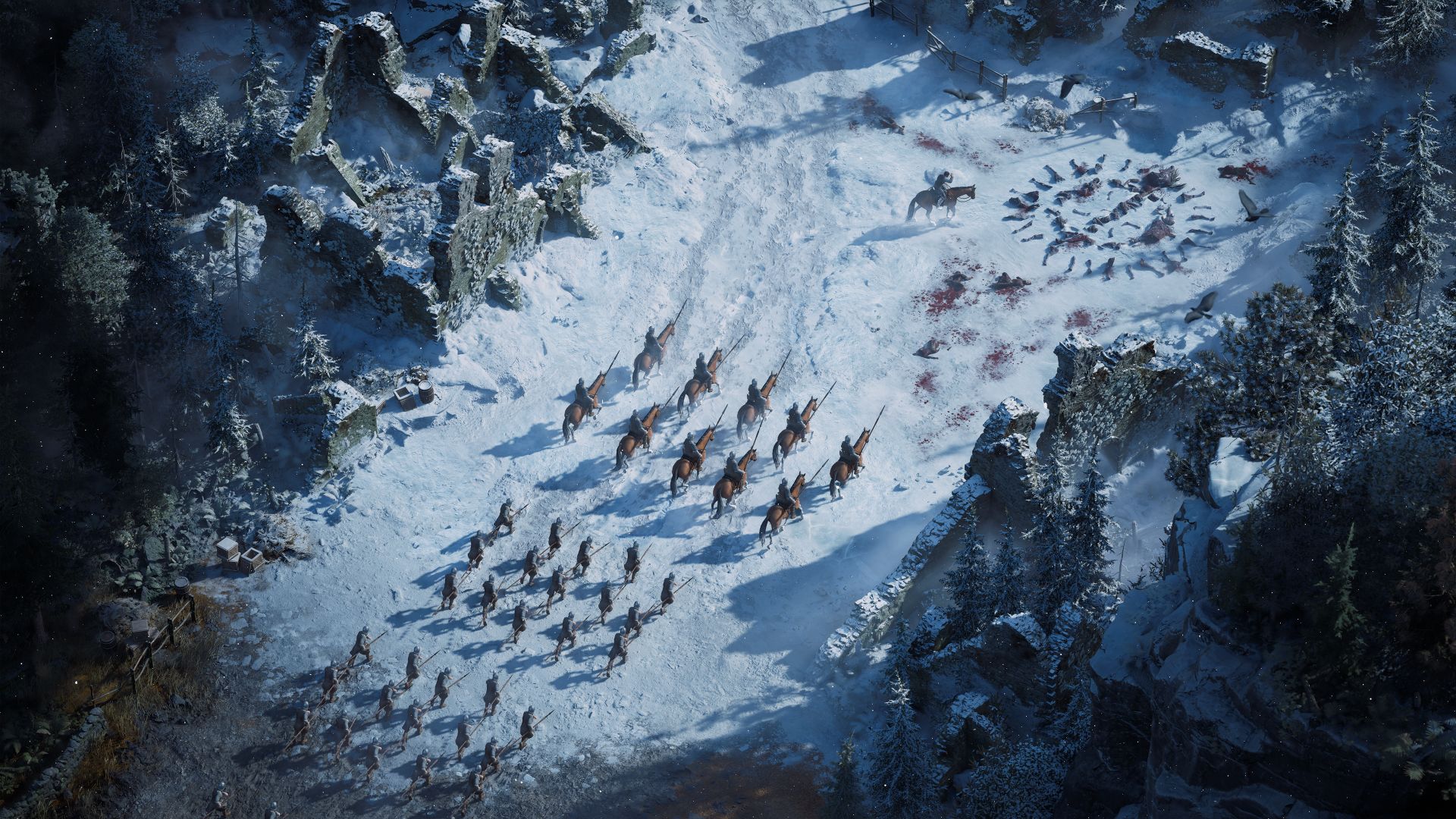
Essentially, and I’m sure this will come as a surprise, the Starks don’t always have a lot of money and wind up carefully stewarding their resources and planning but are sturdy militarily, while the Lannisters wind up throwing their wealth around and pushing aggressively because they need to expand to stay active and while their individual units might not be as good, they have a lot of advantages from their influence.
My preview build was fairly limited to just the two sides and two maps: Greywater Watch and Ashemark. Greywater Watch had a bit more room to maneuver and more resources, while Ashmark was fairly constrained, with wider paths around the outside and some nice choke points in the middle. Victory conditions were Annihilation, which is pretty obvious, and Domination, which means holding the key points for 180 seconds. I was also limited to 1v1, though 2v2 and 4-player Free For All are planned for launch.
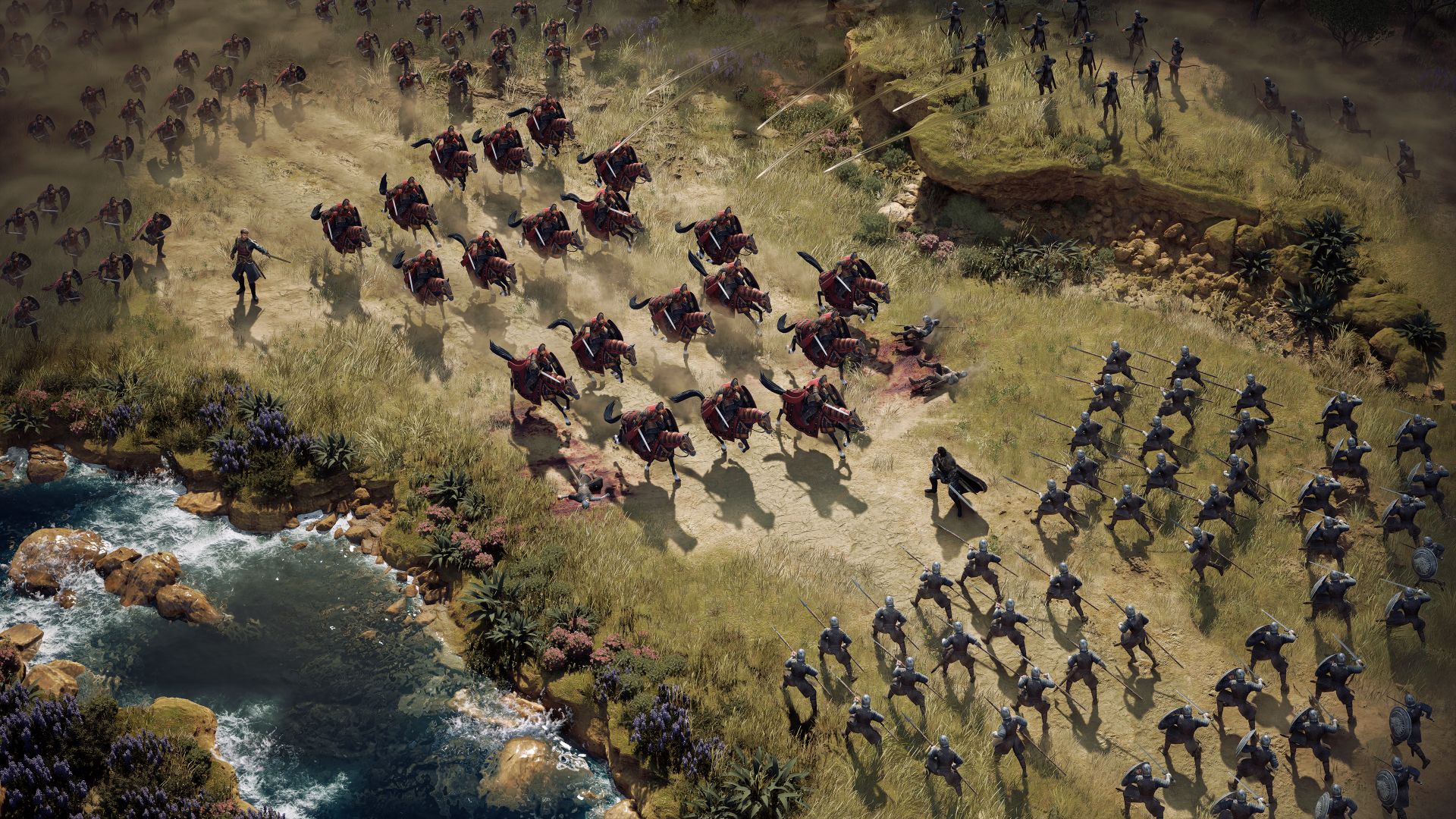
The mechanical resource limitations mean you always have to be pushing outward or planning your next expansion or stopping the other guy from expanding, a constant bickering over territory even if you’re not ready for a full-fledged fight. In this, War for Westeros encourages aggression mechanically, because the resource limitations are baked into each territory and into the number of workers and builders you can support, so the game winds up being quite vicious, which of course suits an IP built around war, particularly, you know, the big war.
Once combat hits, you get the idea pretty quickly, and it’s a nice touch that every unit has a label about what it does best. Archers don’t do well when cornered by cavalry; sturdy heavy infantry do well against skirmishers but get mauled by those archers; there are large wolves running around, and Jon Snow is there. Of course, there are the important hero units you’d expect, the personalities from the series, and they are reasonably powerful, but still human. Their presence can swing a battle, but they can also be cornered, surrounded, and overwhelmed if you’re good. This is always the line hero units walk, and it’s extremely well-handled here: you get that spark of recognition (“That’s Jon Snow!”) and then you’re immediately trying to kill them (“I should kill him!”).
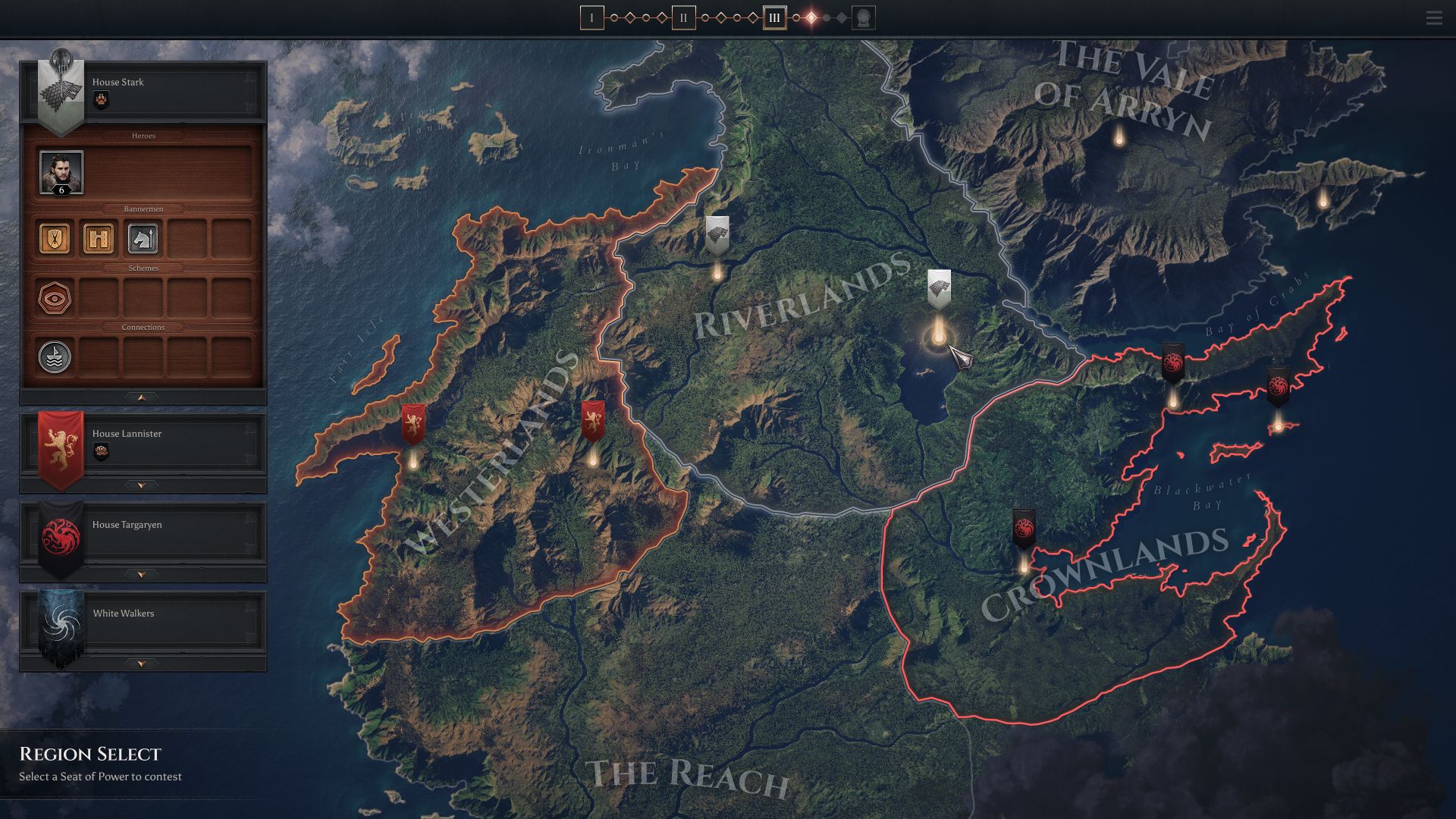
The AI was pretty competent: On Easy it was easy to kick around; on Normal it knew its build orders and objectives and could be pretty sneaky; and on Hard, it whooped my ass good. If there was a downside, it was that the two small maps meant games swiftly turned into brawls and there wasn’t a lot of time for an extended campaign, but “I wish I’d gotten to play more of it” is hardly a complaint.