













































My Hero Academia: All’s Justice has some ambitious ideas for an arena fighter, though they’re executed with mixed results. As a My Hero Academia 3D fighting game, All’s Justice is rather enjoyable and features an impressive roster – it’s just the singleplayer campaigns that struggle more, thanks to some peculiar design choices.
My Hero Academia: All’s Justice
Developer: Byking
Price: $70
Platform: PlayStation 5 (reviewed), Xbox Series X/S, and PC via Steam
MonsterVine was supplied with a PS5 code for review.
I’ve both read and watched My Hero Academia since shortly after it started, and have even reviewed the previous two Justice games here at MonsterVine. Though I think the series lost some steam towards the end, I’ve always had fun with its games, so I was ready to see what the big, potentially final Justice entry had up its sleeve. On one hand, what’s here can be a blast, but some baffling aspects of the singleplayer modes keep it from truly breaking out of the “okay anime arena fighter” stereotype.
The main combat in My Hero Academia: All’s Justice is strong, perfectly emulating the action the shonen series is known for. You’re constantly zipping around each stage, smacking your opponent using a wide variety of Quirk moves, punches, and kicks, even smashing them into floors and walls. It’s as bombastic as you’d hope, and it feels great (and fitting for a My Hero Academia game) to exchange blows with such flashy moves while decimating the surrounding area. There are deeper mechanics present as well, like the timing-based Just Guard mechanic, and a variety of attack types that can take priority over one another if used properly. It’s more depth than you usually find in this sort of game, so kudos to Byking for that.
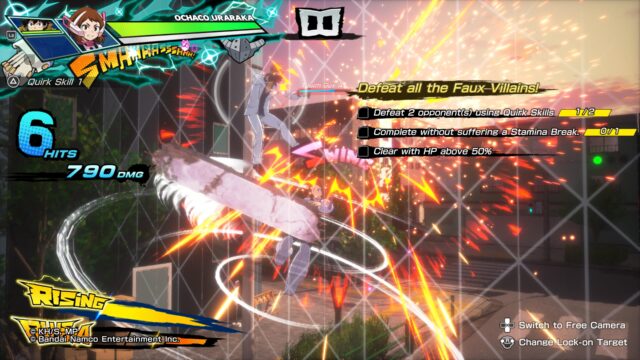
My main issue with My Hero Academia: All’s Justice comes from a lot of the Team Missions mode’s battles and encounters. For some reason, many fights pit you against numerous enemies at once, making for a lot of 3v1 brawls and the like. You can only focus on one person at a time, while all of your enemies can attack you whenever they want, leading to frequent stunlocks and frustrations as you try to juggle beating up each plethora of foes. It just makes these fights feel more clunky and dated than they need to, harkening back to the harsh type of design you’d find in many of the anime games of the sixth console generation.
Similarly, the final battle of the story mode is immensely irritating. It’s a multi-phase battle where you use different teams against the final boss, repeatedly wearing them down while dealing with almost bullet hell-esque attacks that can easily wipe out a character. I’d say it takes 15-20 minutes to go through the whole fight, while losing in any phase sends you back to the very beginning. I was frequently beaten in the last phase, which drastically changes the boss’s form and attack patterns, which can send you right back to the start before you get your bearings. I was thrilled to finally beat it, but it was more relief than satisfaction, so I hope a patch makes this fight a bit less tiresome post-launch.

Still, My Hero Academia: All’s Justice does have some exceptional singleplayer offerings. Though the mobility itself is rather janky, being able to explore an open city as your favorite heroes is a fitting touch for a superhero anime-based game. My favorite part has to be the Hero’s Diary, which lets you experience fairly inconsequential side stories centered on one of the Class 1-A students. These smaller missions primarily exist to provide fans with more pleasant, little character interactions and moments that happen outside the main plot, and I found them to be a clever, more laid-back addition to the game. The other characters even leave social media-esque comments on each other, further rounding out the world of My Hero Academia in a fun and inventive way.
My Hero Academia: All’s Justice has a massive roster.
The roster of My Hero Academia: All’s Justice is surprisingly large, especially given how often games of this sort withhold notable characters for DLC down the line. All of the major and a majority of the notable minor characters are present from the start, and a couple of variations are available by beating the story. The movesets are all creative and represent the different heroes and villains well, so no matter who your favorite character from the series is, you’re likely to enjoy how they play.
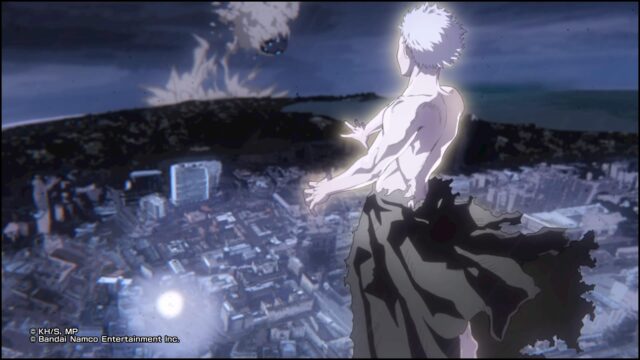
My Hero Academia: All’s Justice’s visuals are largely solid, translating Kohei Horikoshi’s style into 3D quite well. The story mode runs the gamut from impressive to underwhelming, alternating between manga-styled 3D animated cutscenes and anime stills with minor effects overlaid. It’s a shame, as the animated cutscenes look rather slick, so the contrast between them and the stills is pretty noticeable. There’s a lot of customization available, too, as you can color and dress up many of the playable characters using unlockable items, which adds further incentive to play beyond the story.
 The Final Word
My Hero Academia: All’s Justice features fun gameplay and some nifty side modes, but the unbalanced battles in the Team Missions and story mode make for a bit of an uneven experience. The playable roster and additional narrative content are great, so fans of My Hero Academia may find it worth checking out for those features alone.
MonsterVine Rating: 3.5 out of 5 – Fair