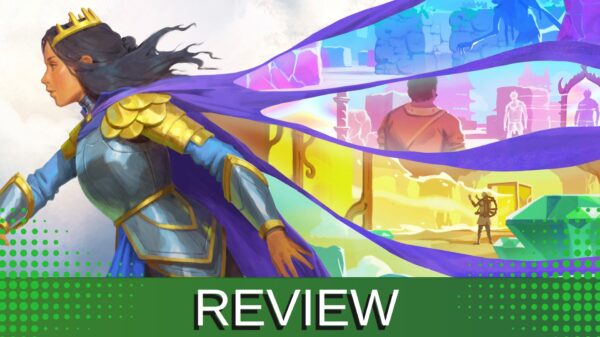






















From the moment it was revealed at the Game Awards last year, I was immediately sold on the concept of Order of the Sinking Star. To be fair, I am the target audience for developer Thekla’s unique take on puzzle games, but after watching the announcement trailer, I was immediately transported back to my childhood, where I would find myself obsessing over Rubik’s Cubes and sliding block puzzles.
Needless to say, my hunch proved correct — Order of the Sinking Star is very much the kind of game that is purpose-built for me. What I didn’t expect, however, is just how deep it would sink its teeth in, keeping me hooked as I wrestled with and solved hundreds upon hundreds of puzzles, with plenty more still awaiting me once I wrap up this review.
If you weren’t up to date on the game’s central premise, here’s a rundown. Order of the Sinking Star starts as an anthology game (of sorts). After the briefest of tutorials that introduce the controls and the central mechanic of pushing blocks around, your player character (we’ll get back to her a bit later) is dropped into the Crossroads, the central point of a world entirely different from the one she originally hails from, which also serves as a nexus point for four separate universes.
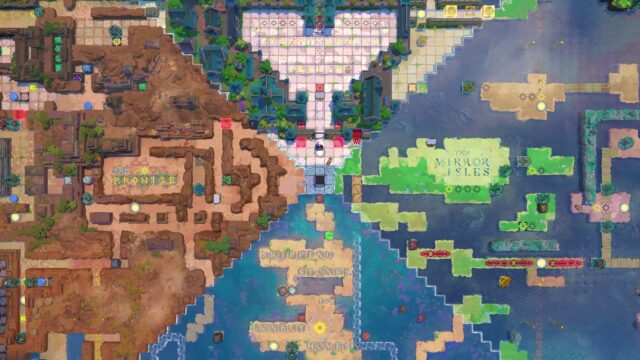
You see, those four worlds are based on four different freeware puzzle games, each with its own unique mechanics, but all four sharing similar block-pushing mechanics à la Sokoban. At the outset, you’re free to explore and tackle each of the Crossroads’ four sections as you see fit, and there’s nothing stopping you from taking a break from one in favor of trying out another.
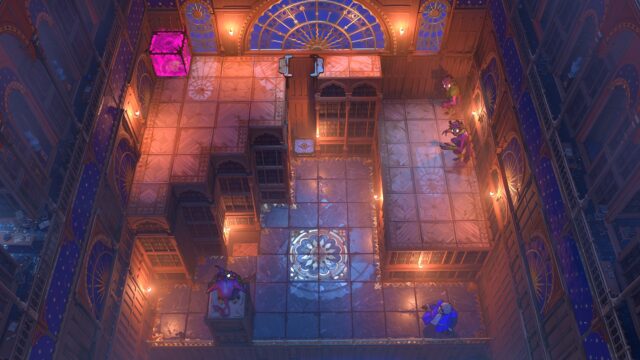
To the north lie the Hearty Heroes of Hauling, which itself is based on Heroes of Sokoban by Jonah Ostroff. This particular world serves as a great starting point for puzzle greenhorns and genre experts alike. The core premise of each individual puzzle is, generally speaking, the same across all four worlds. You’ll enter a level from the overworld, controlling one or more characters that you can swap between at will. Rather than trying to push blocks (or more specifically, crystals) onto specific squares, you’re instead tasked with getting your character(s) to specially marked exit portals. It sounds easy on paper, and to be fair, things start off simply.
For example, with the Heroes of Hauling, you’ll first play as the Warrior, who can push as many blocks as he’d like in a straight line. But it doesn’t take long for new wrinkles and layers to emerge. A few levels later, you’ll take control of The Thief, who, unlike the Warrior, can only pull blocks and other objects in the direction she’s moving. Not long after, you’ll run into the Wizard, who can’t push or pull anything, but instead swaps positions with any movable object or crystal (as well as other characters and enemies) that he turns to face and look at.
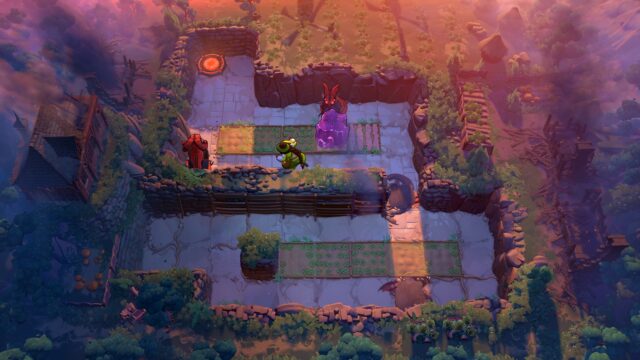
Even in the opening handful of levels, it’s remarkable just how much Order of the Sinking Star manages to extract from these simple mechanics. After learning the basics of how each character functions, levels begin to pepper in more nuances and interactions. For instance, you’ll quickly learn how the Warrior and Thief can work together, since the Warrior has the ability to push objects into corners and along the edges of walls, and in turn, the Thief can pull them out.
With the Wizard, you’ll gain a newfound appreciation for the simple act of carefully moving him around the map – remember, he automatically swaps places with other objects and characters that enter his line of sight, whether you want him to or not. And while most levels’ exit portals are usually within walking distance, they are almost always blocked by enemies, magic walls that need to be removed by placing crystals on pressure plates, or empty pits and pools of water that need to be filled by pushing an object into them. It’s rarely a question of “where do I go?” and more so “how do I get there?”
There’s a lot to be learned through experimentation alone, and the ability to undo any number of moves further encourages you to try out new ideas and discover how characters and objects interact with one another in a risk-free way. You’ll never have to worry about permanently ruining your progress, since any mistake or misstep can be undone as many times as you like.
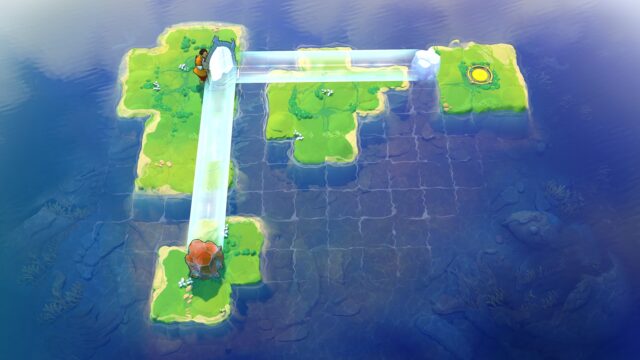
Of course, the Heroes of Hauling aren’t the only characters that demand your attention. To the east of the Crossroads lies the Mirror Isles realm, which trades the interconnected stages for smaller islands separated by water. The protagonist du jour, the mysterious Trader, doesn’t have the same skills as the Heroes of Hauling. Still, he’s able to push around mirrors, which can instantly teleport his reflection and swap his position.
Much like with the Heroes of Hauling, things start simply enough, but before long, you’ll have to contend with positioning more than one mirror around a level, pushing rocks into water to extend your area of reach, and even duplicating yourself by triggering multiple mirror teleports simultaneously.
To the south lies Skipping Stones to Lonely Homes, which, like the Mirror Isles, largely consists of levels comprised of small islands separated by bodies of water (both worlds are also based on games developed by Alan Hazelden). Rather than contending with magic mirrors, you’ll instead need to skip stones from island to island, creating new walkable platforms, diverting currents, and sending lily pads drifting away (which you can walk onto and float on if they happen to pass by you).
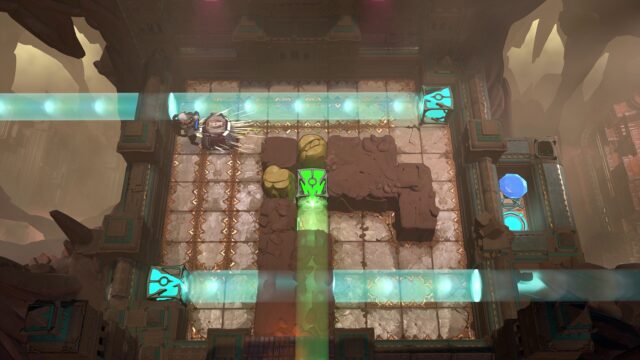
Lastly, there’s the Vault of the Beamcasters, which lies to the west. Based on the Prommest series of games by Sean Barrett, this particular universe is a bit different from the others, with less of an emphasis on pushing objects Sokoban-style. Instead, much of the puzzling comes from collecting gems to power up different beam generators that each have their own unique effect. Green beams, for instance, let you phase through solid objects, while purple beams will zip you through walls and other obstacles.
Order of the Sinking Star kicks into high gear when its four worlds get mashed together
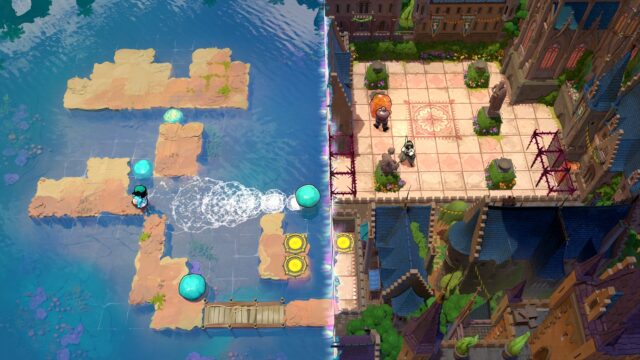
These four worlds have enough puzzles to make up an entire game on their own, but the real magic happens once you finish each of their initial campaigns. Once you do, you’ll come across mysterious gold platforms on the overworld, which act as the physical location where the four worlds begin to overlap with one another. It’s at this point that each world’s unique mechanics are mashed together, unlocking entirely new sets of puzzles for you to tackle.
What happens when the Wizard looks at an object through a mirror? Can you skip a stone through a purple teleportation beam? How can you use mirrors to reflect different beams and combine their effects? The number of combinations and permutations seems endless, but what’s more impressive is how Order of the Sinking Star rarely, if ever, repeats its puzzles. In fact, if I were to go through every stage one by one and write out exactly what rule or lesson I’m being taught, I would be shocked if I ended up with any repeats on my finalized list.
As is sort of expected from a game directed by Jonathan Blow, Order of the Sinking Star never forces its lessons down your throat or tries to lead your hand through hint systems or overt tutorialization. This is not an easy feat, mind you, but it’s accomplished through what I can only imagine was a years-long process of redesigning and reconfiguring each of its levels, to the point where there’s zero filler to be had.
In fact, with every single puzzle I played, I can confidently say that every movable object, every mirror, every piece of walkable terrain that juts out, every gap or hole in the floor, was very purposefully placed. There are no red herrings, and you’ll never stumble across a puzzle that’s simply a larger, more time-consuming rehash of a previous one. Everything is placed and curated, and that extends to the overworld too. That’s right, there are entire puzzles on the game’s overworld which you’ll need to solve to… wait for it… access even more puzzles.
Speaking of the sheer number of puzzles (which clocks in at well over 1000), this is also where my one caveat with Order of the Sinking Star comes in. If you’re a puzzle game junkie, and the idea of a game that constantly iterates on the same core mechanics and builds them up in wholly unique ways sounds like a good time, you should, without a doubt, play Order of the Sinking Star. But if you’re not a fan of puzzle games, or prefer to balance out your brain teasers with a robust story or other non-puzzle gameplay, then it might be a bit too much of a singular experience for your liking.
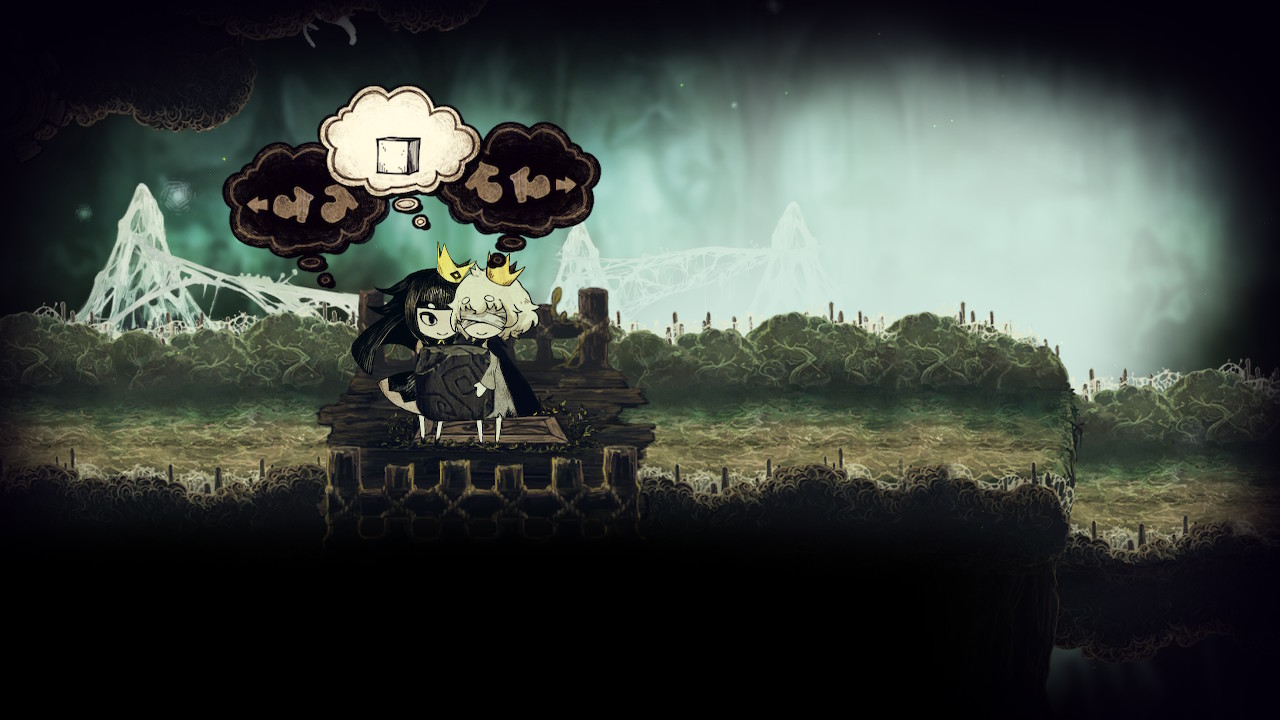
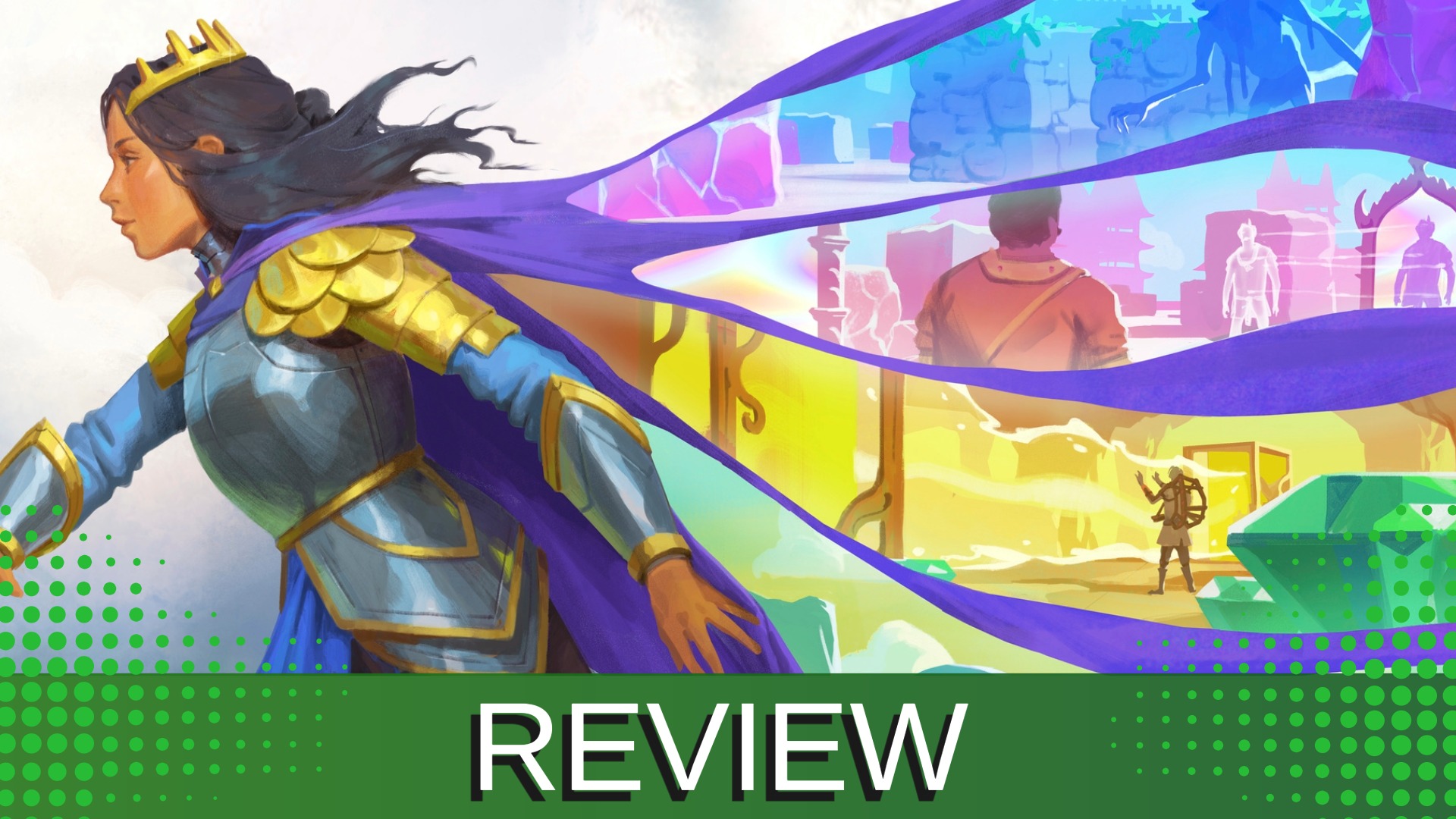
Speaking of story, I almost forgot about the Queen, who serves as your playable character when navigating the overworld. She’s been mysteriously whisked away from her own universe. As you begin exploring the Crossroads and the areas surrounding it, audio logs will begin to cue you into the nature of the world you find yourself stuck in.
I’ll be the first to admit that I have only reached the first of the three distinct endgames and am still piecing together the overarching narrative, but there’s certainly a mystery to unpack for those who enjoy that sort of thing. It doesn’t take long to discover that the titular Order of the Sinking Star is responsible for bringing together these four distinct universes, and as you progress, the barriers between these four worlds and the games they were based on begin to break down.
Excellent
The Final Word
I’ve only scratched the surface of what Order of the Sinking Star has to offer. By my estimate, I still have around 600 or so puzzles left to discover and solve, many of which have remixed the very premise of the game in some truly surprising ways that I won’t dare spoil. But with several dozen hours of playtime logged, I can safely say that it is, without exaggeration, one of the best puzzle games I’ve ever played, standing toe-to-toe with the genre greats. There are very few games on the market that are this intentional with their design and are unwavering in their dedication to a handful of core principles.
For all the moments where I found myself stuck in my tracks or banging my head against a wall, there were many more “AHA!” moments and flashes of insight and realization that made the struggles all the more worth it. Order of the Sinking Star is unparalleled in communicating ideas and concepts without saying a single word, but more impressive is that I feel like I’m having a genuine conversation with it with each puzzle I solve.