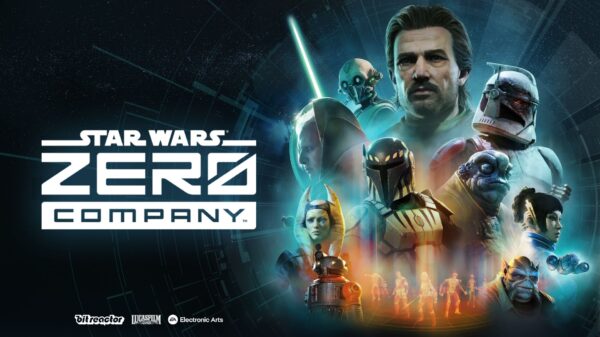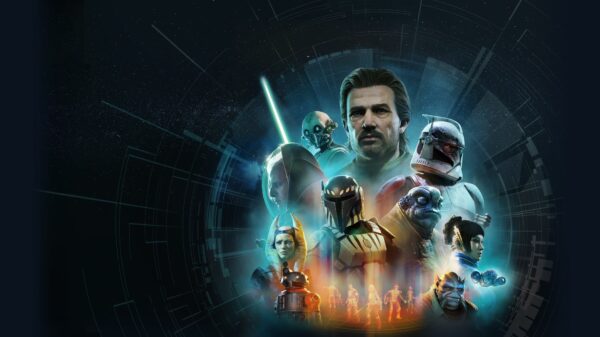















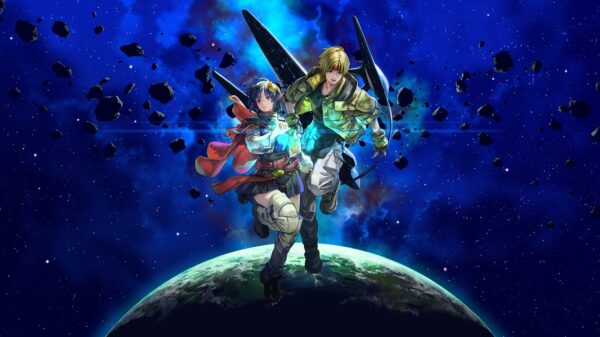


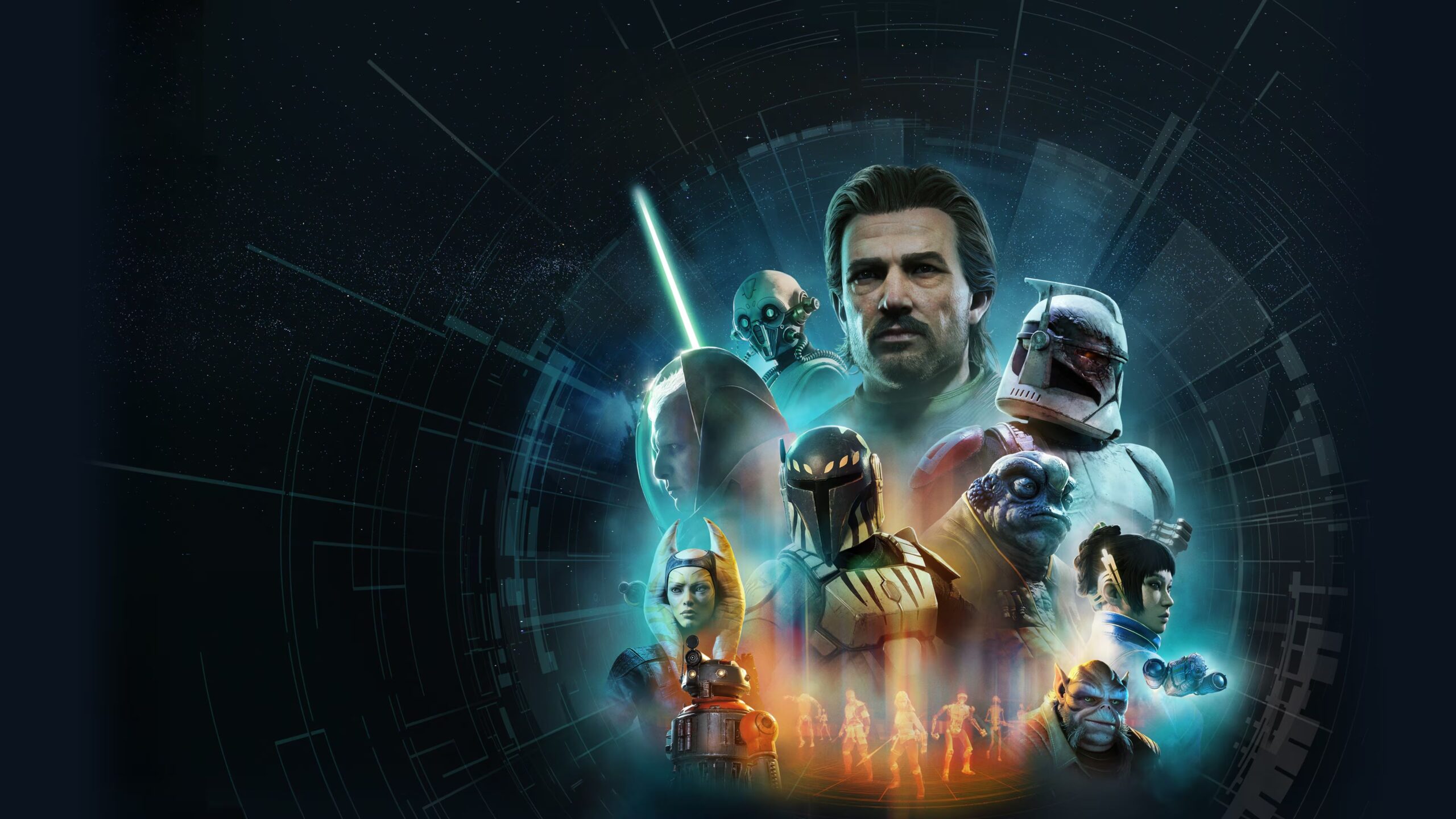

Star Wars Zero Company takes the best ideas from top-tier tactics games and effortlessly blends them into a prequel-era setting. With quick, streamlined management and deep unit customization, it makes the genre approachable for newer players without sacrificing the depth fans love. The main story feels quaint given the surrounding events in the Star Wars universe, but the cast of named units and their narratives deliver on that Star Wars goodness.
Early into Star Wars Zero Company, your band of misfits takes on a Republic contract to help take down a mysterious Separatist force known as The Infinite Coil. This strange cult gains powers from a plague, distributed via space centipedes. While this overarching story sets the pace of the game, it’s just another contract in your list.
You start each Cycle, which is basically a day, back at your base of operations. Here you can take on missions, check equipment, upgrade units, and also chat with your units. This space is explorable in a third-person view, which happens occasionally in missions as well, but it’s small enough that accessing the different menus at various stations never feels like a chore. Chatting with your units ranges from quaint, with the custom operators you can hire giving a small line or two, to more in-depth conversations about the previous mission or the personal lives of your named companions.
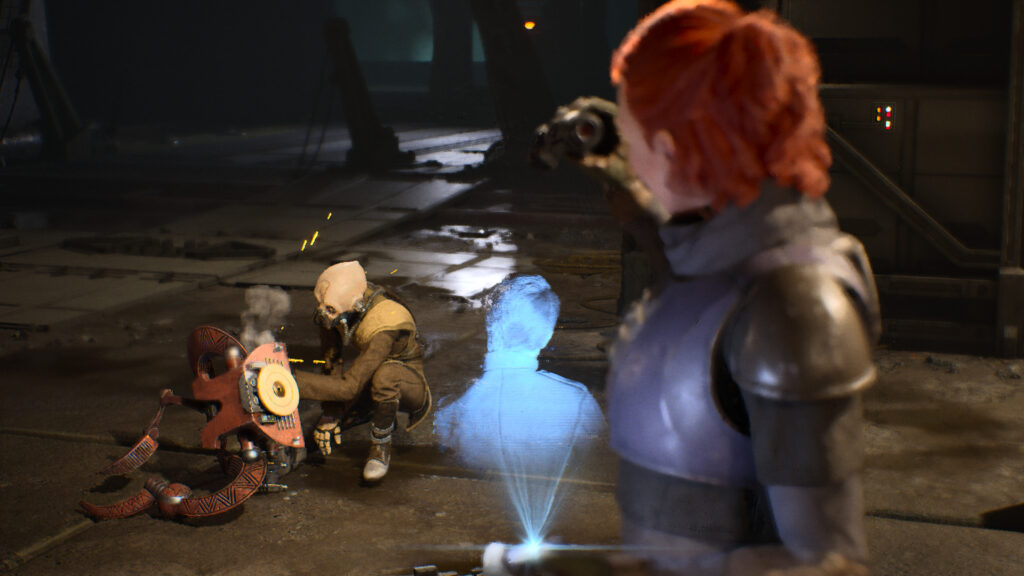
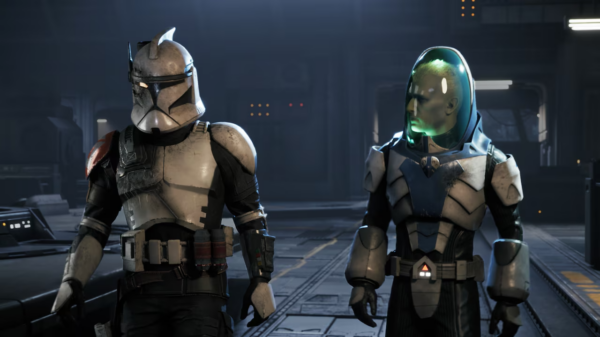
These named companions–who can die if you are playing with permadeath, depending on which mission you are on–are the narrative highlight. You have Trick, an ex-clone trooper who served with Hawks, the player character, in the Republic army, who has an exciting perspective on the Clone Army. A personal favorite of mine is Cly, a Mandalorian who can join the team in exchange for help with her manhunt; she has a dry sense of humor but a real bite to her, too.
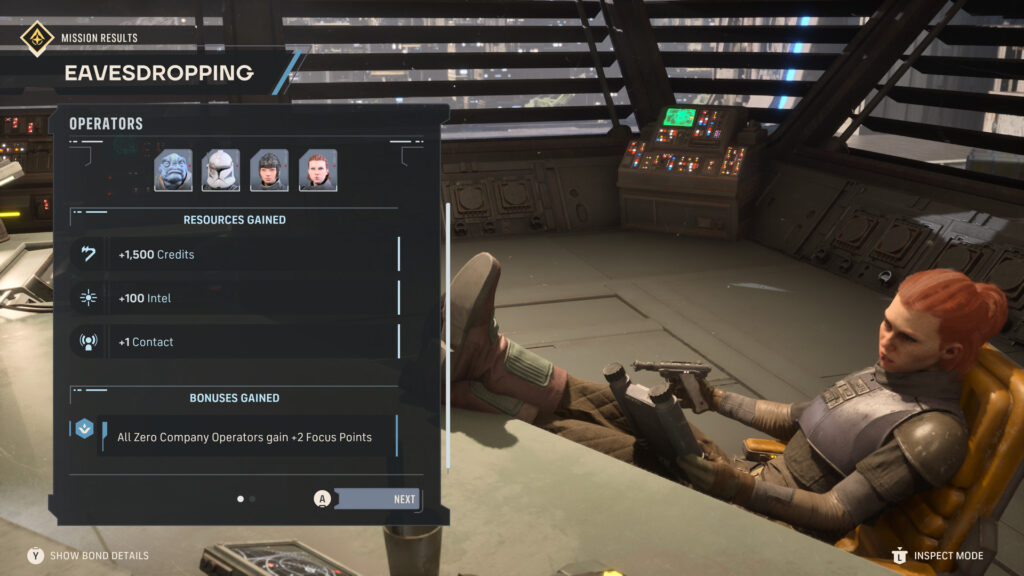
Not only do they have fun moments at the base, but you can also take on tactical missions for them when requested, boosting your bond. Every character has a bond level with every other, which increases based on decisions you make and spending time in the field together. These grant bonuses at each new level, with the highest level unlocking powerful passive bonuses.
You also earn focus points for each character through missions and bonds, which can be used to level their class abilities. Each unit has a primary class, and a secondary option is unlocked later in the campaign. You can freely refund points and swap secondary classes, so you can toy around with different combinations. My favorite was giving Trick the heavy class as his secondary. His passive ability allows him to pick himself up from an injury once per combat, and the heavy had increased defense and health, plus a taunt. I was able to get enemies to focus fire on Trick, letting him eat damage while the rest of the squad cleaned up, which was satisfying.
Before you head out on a tactics mission, you also have some intel missions that are quick, text-based choice moments, impacting the rewards you get. You have a limited amount of intel to use each Cycle, and missions will expire, so you have to make tough choices. This is incredibly engaging, and doing the math to decide which intel missions to take on is rewarding. Being able to unlock that next base upgrade because I focused on earning credits instead of items each Cycle gives me a ton of choice outside of combat. This system also makes follow-up campaigns exciting, since there are side stories and missions I couldn’t take on the first time through.
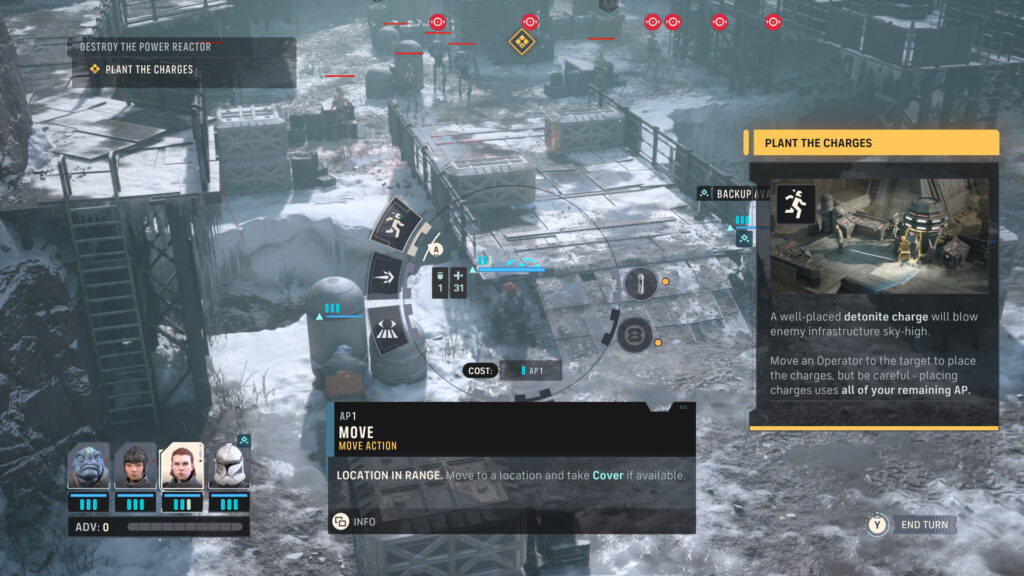
You have plenty of choice in combat too, and the synergy of your squad is at the top of the list. Each mission typically allows you to send four units, with certain story or side-quest missions having required members, typically Hawks and someone relevant to the narrative. For example, a favorite combination of mine is Jae and Cly. Jae has a passive ability that allows her to finish off an enemy below a certain amount of health at any distance, so long as she has line of sight. Cly uses a blaster that fires a single shot and costs only 1 AP, even if used multiple times. If an enemy is low, I can set them within the threshold with Cly, and Jae will finish them off, saving my more powerful shots for an enemy with higher health.
Star Wars Zero Company throws a large amount of enemies at you, and The Coil has a special power where if an enemy is taken down, they grant Resonance to the nearest Coil member, boosting their power. This creates new tension: you have to consider the order you take enemies out and how they are positioned relative to each other, leading to a ton of exciting, creative problem-solving. Your named units can become powerful, but you’re always at risk of losing one, or having to sit them out for a mission.
If a friendly unit gets knocked down, you have a couple of turns to pick them back up, but they will sustain an injury. Three injuries result in death, but perhaps even more importantly, any injuries will have to be healed back at base for a Cycle or two. This not only forces you to utilize more than just your four favorite units, but it adds pressure to think a few Cycles ahead. If Jae sustains an injury but is required for the next story mission, you’ll have to send her out with an injury if you can’t afford the instant recovery in the Bacta Tank.
On normal, injuries became pretty infrequent as I advanced deeper into the game, but bumping up to hard briefly made them a bigger consideration. Combined with the Beskar mode, which has a single auto-save file and your campaign will fail if your character falls in combat, there is plenty of challenge for people who want something tougher out of their tactics games.
Another exciting part of the combat is the ability to push enemies. Between melee attacks, concussion grenades, and Jedi powers, you have ample opportunity to move enemies around in combat. You can either toss them off ledges for instant kills, or group them together to take them out with fewer moves. It creates a fun dynamic, and it works with environmental destructibility as well. Setting up a character who does more damage in Overwatch, where they will shoot an enemy that enters their line of sight, before pushing an enemy into the zone is just one of the many ways to maximize the tools at your disposal.
A significant amount of cover in Star Wars Zero Company can be destroyed by explosives or even by blaster shots. It creates a new incentive to take risky shots at enemies. Sure, there’s only a 50% chance to hit the battle droid behind that box, but if I miss, it will destroy the cover, increasing the hit chance significantly for the next attack.
As much as I loved my time with it, Star Wars Zero Company launched in a buggy, unoptimized state. Playing on Xbox Series X, visual breaks, long pauses after confirming an action, and lost framerates were common throughout the entire game. While it never crashed or fully bugged out, the worst hold-up I had lasted a few minutes before the animations finally caught up and let me continue my turn. For a turn-based tactics game, these don’t break the experience, but it’s far too frequent to ignore.
As for the main story, the villains and their plans are bland and often downright uninteresting. What helps is your squad having strong personalities, and the time period the game takes place in is during an interesting time in Star Wars history. The game starts at a similar place in time as Revenge of the Sith, and the way the events of the galaxy feed into your story is exciting. It offers interesting, new perspectives on major Star Wars moments without ever overindulging in cameos. There are a few, but they feel appropriate in context and don’t overstay their welcome.
Good
The Final Word
Star Wars Zero Company is a worthy tactics experience, with a fun and exciting Star Wars theme. The exact time and place of the setting creates a unique feeling story, while also letting all of the staples of the universe be present in gameplay and presentation. The tactics offer a ton of depth and creativity, allowing you to put together some all-star squads. The main story doesn’t have the juice the way the setting and side stories do, and the technical faults are numerous, but that doesn’t stop this from being a fantastic tactics and Star Wars experience.